Your note-taking system is going to collapse. If it hasn’t yet, you’re either early in your career or you haven’t been paying attention. This isn’t a pessimistic take, it’s a practical one. The collapse is predictable, and once you understand why it happens, you can build something that actually survives contact with real work.
The core problem isn’t the tools. It’s that most knowledge workers have never thought clearly about why they write things down in the first place.
Capture feels productive. Retrieval is what matters.
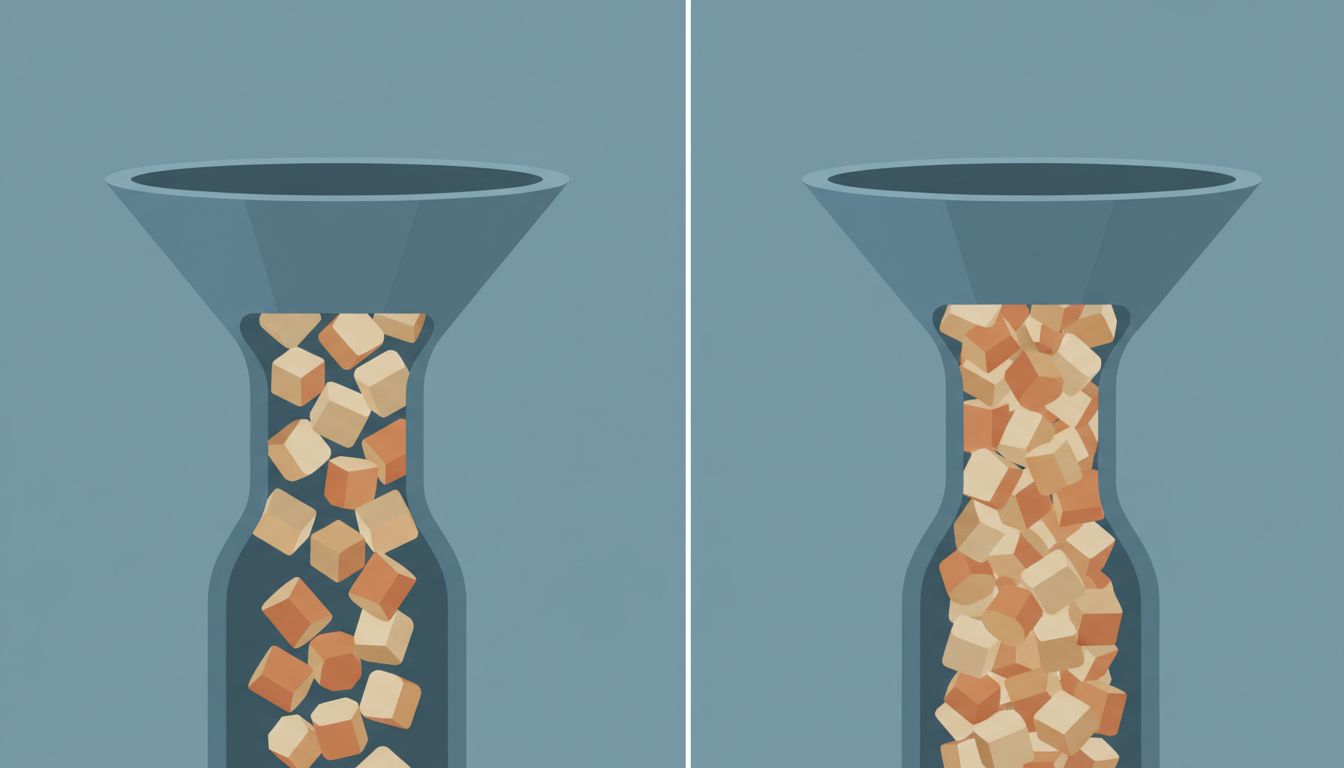
There’s a specific dopamine hit that comes from adding a note to a system. You highlight a passage, tag it carefully, drop it into the right folder, and feel like you’ve done something. You have done something, technically. But capturing information and using information are two completely different cognitive acts, and most systems optimize for the first while quietly ignoring the second.
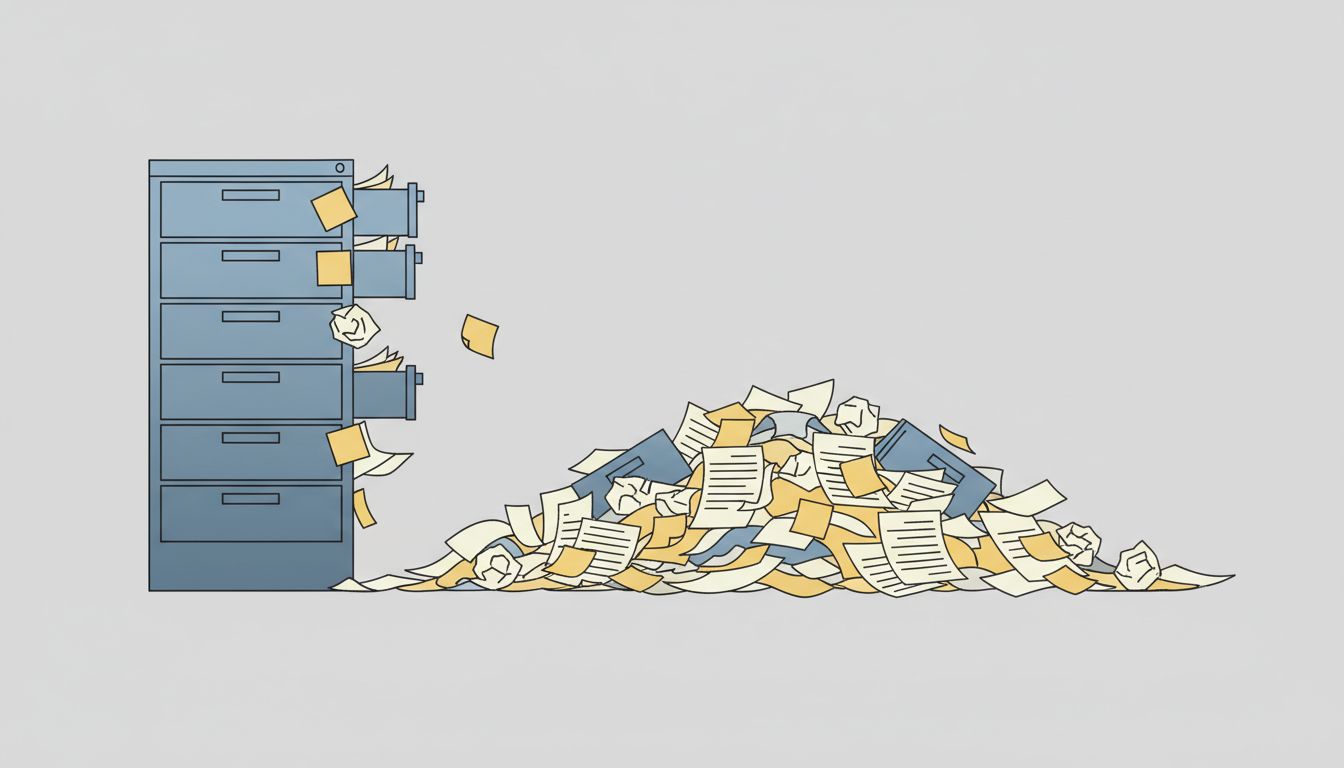
David Allen’s Getting Things Done popularized the idea that your brain is for having ideas, not storing them. The logic is sound. But what followed in practice was a generation of knowledge workers building elaborate capture rituals that turned into archives they never revisited. Notion workspaces with hundreds of pages. Roam databases with thousands of linked notes. Evernote libraries so large that searching them became slower than just Googling the thing again.
If you can’t retrieve something when you need it, it doesn’t matter that you wrote it down.
The filing problem nobody admits to
Here’s the uncomfortable truth about most organizational schemes: you have to know how you’ll want to find something before you can file it correctly. But you usually don’t know that at capture time. You know what the information is. You don’t know which future problem it will solve.
This is why folder-based systems eventually become cluttered. You made a reasonable decision at capture time, but future-you has a different question, and the filing logic doesn’t match. The more categories you create to handle this, the more decisions you have to make per note, and the more friction accumulates until you stop filing carefully and start dumping things into an inbox that never gets processed.
Tagging systems suffer from a related failure: tag inflation. You start with five tags. They seem insufficient. You add more. After a year you have sixty tags, several of which are nearly synonymous, and you’ve forgotten which ones you actually use.
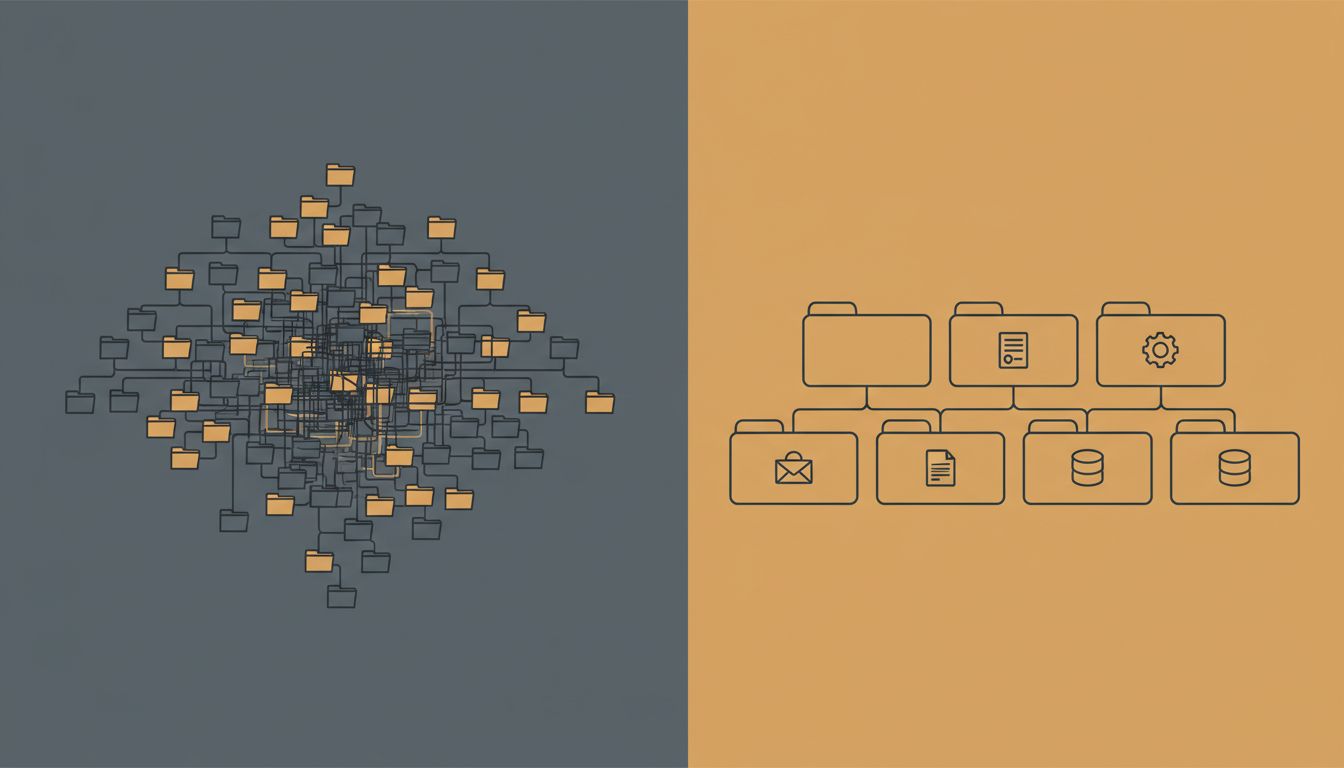
The people whose systems survive long-term tend to do one of two things. They keep their organizational structure brutally simple (sometimes just a single flat folder with good file names), or they stop trying to pre-organize and instead invest in making search fast and reliable. Neither approach feels as satisfying as a beautifully architected system. Both work better in practice.
You’re writing for a future self who thinks differently
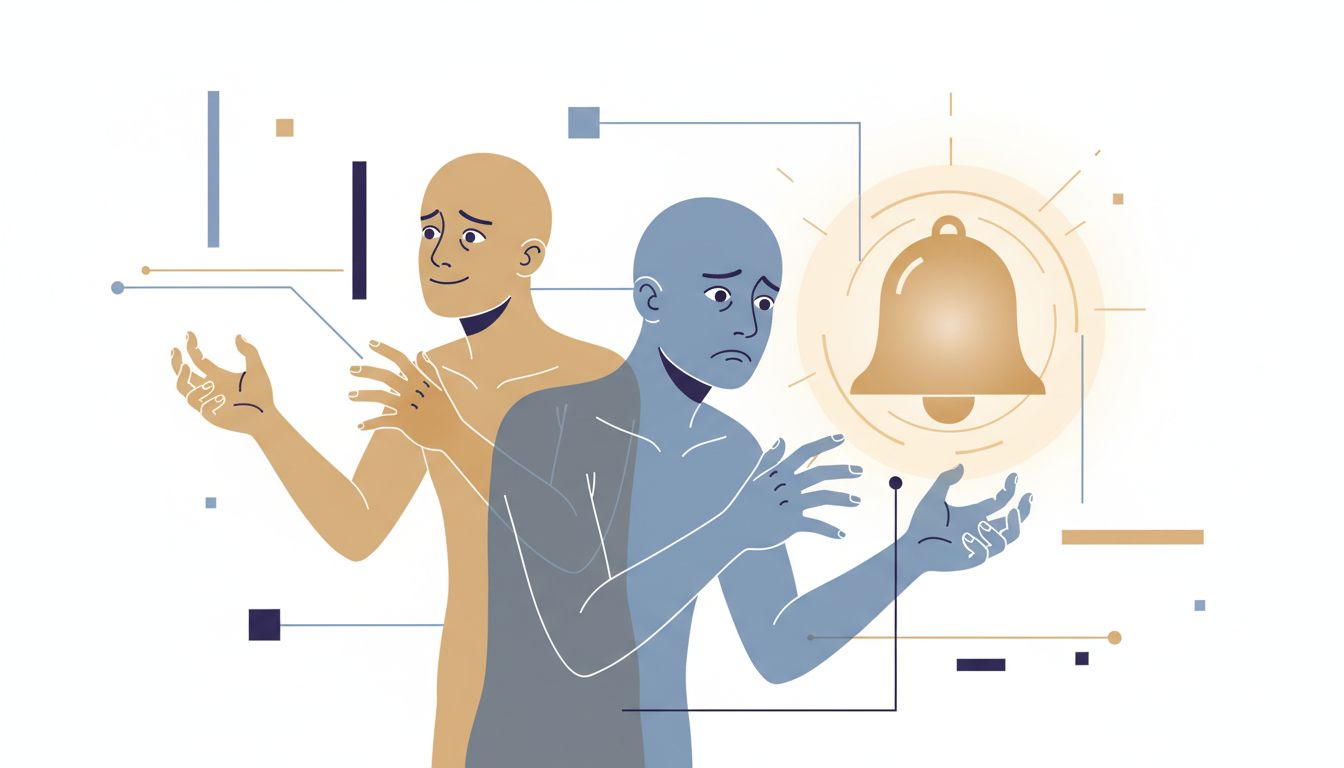
The other structural problem is that the person who writes a note and the person who reads it later are not quite the same person. Your vocabulary shifts. Your mental models evolve. The shorthand that felt obvious when you wrote it becomes cryptic six months later.
This is especially true for notes about decisions. “Went with option B” is useless without the context of what options A and C were, what constraints you were operating under, and what you were trying to optimize for. But at the moment of capture, that context feels obvious, so you skip it.
The notes that age best are the ones written with slightly more explanation than felt necessary at the time. Not full essays, but enough context that a stranger could reconstruct your reasoning. If that sounds like more work, it is. It’s also the only kind of note that actually helps future-you.
The counterargument
Some people will tell you the solution is a better tool. Obsidian’s graph view will reveal connections you didn’t know existed. AI-assisted search will surface the right note at the right time without you having to remember where you filed it. These aren’t wrong, exactly. Good tooling reduces friction at both ends of the process.
But tools don’t fix an unclear intention. If you don’t know whether you’re writing a note to process your thinking, to remember a fact, to store a reference, or to capture a decision, no graph view will save you. The tool becomes the thing you fiddle with instead of the underlying problem you should be solving. The productivity metrics that quietly mislead you tend to reward the appearance of an organized system, not the usefulness of one.
The people who benefit most from advanced tools are the ones who’ve already gotten clear on what they’re trying to do with their notes. For everyone else, a more sophisticated tool mostly means a more sophisticated way to avoid the real question.
What actually works
Three rules have held up across every knowledge worker I’ve watched manage this well.
First, write for retrieval, not for capture. Before you write a note, ask yourself: in what situation will I want this? Write the note so that version of you, searching for something specific, can find and use it.
Second, keep your structure simpler than you think it needs to be. The overhead of maintaining a complex system compounds over time. A system you actually use beats a system you admire.
Third, revisit and prune. Notes that you never review become dead weight. A smaller collection of useful notes is worth more than a large archive of things you’ve forgotten you captured.
Your system will still evolve and occasionally break down. That’s fine. The goal isn’t a permanent solution, it’s enough clarity about why you’re writing things down that you can rebuild quickly when it does.
The collapse isn’t a failure of discipline. It’s usually a sign that you built a system around how you wished you worked rather than how you actually do. Fix that first, and the tools become almost secondary.