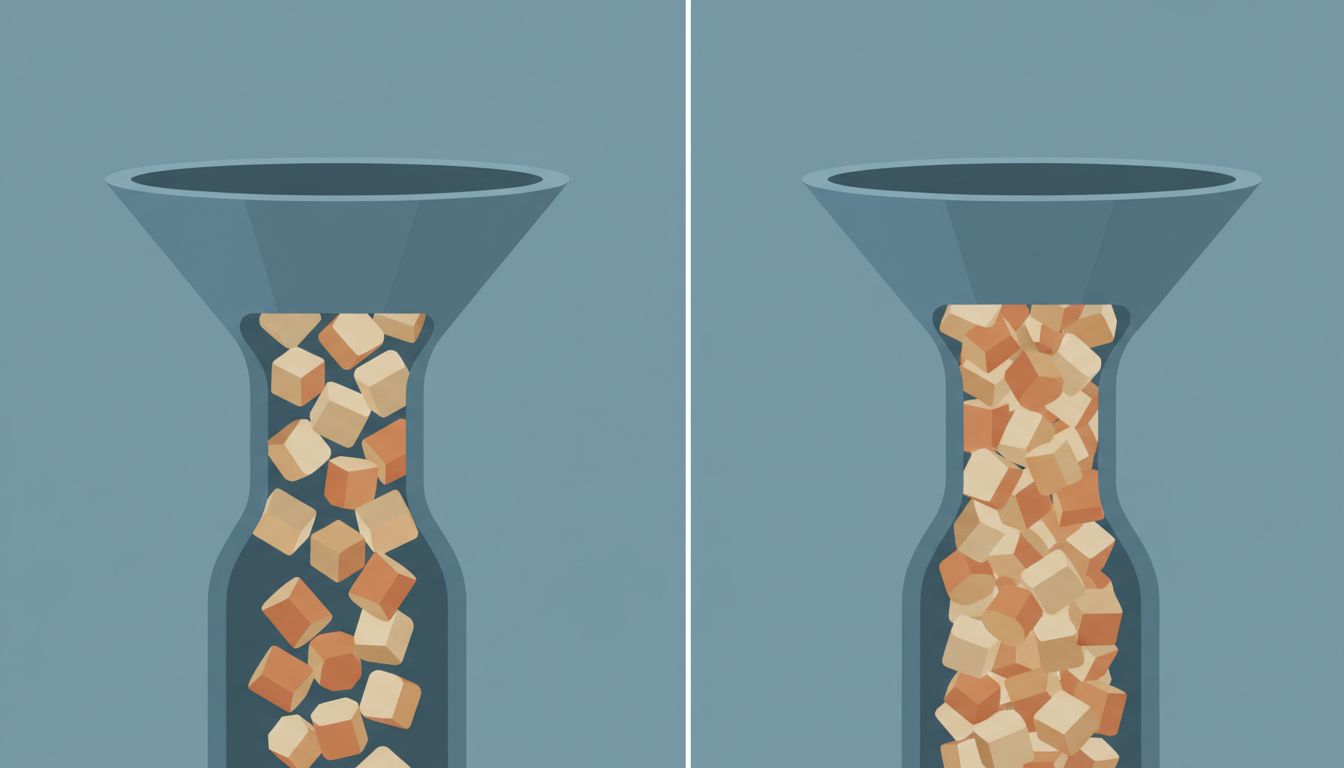

Most productivity systems are built around the wrong question. They ask ‘how much did you do?’ when the question worth asking is ‘how much did you move forward?’ Those are not the same thing, and conflating them is why you can end the day feeling busy and accomplished while your most important project sits exactly where you left it Monday.
This is not a motivation problem. It’s a measurement problem. And like any measurement problem, fixing it starts with understanding what you’re actually trying to optimize for.
The Metrics That Feel Good But Lie to You
Tasks completed is probably the most seductive false metric in knowledge work. It rewards volume, which means it quietly incentivizes you to do small, easy, completable things. A ten-minute email reply and a three-hour strategic document both count as one task. Structuring your day around task counts is like a surgeon measuring success by the number of incisions made.
Hours worked is just as bad, maybe worse, because it carries the moral weight of effort. You tried. You were present. But presence and output are loosely correlated on a good day. Research on knowledge work consistently shows that people produce their most cognitively demanding output in a small fraction of their total working hours. The rest is maintenance, administration, and the slow recovery from interruption.
Inbox zero deserves special mention because it masquerades as organization. Clearing your inbox feels like clearing a runway. But if you spent two hours on email to protect sixty minutes of actual work, you’ve made a bad trade and logged it as a win.
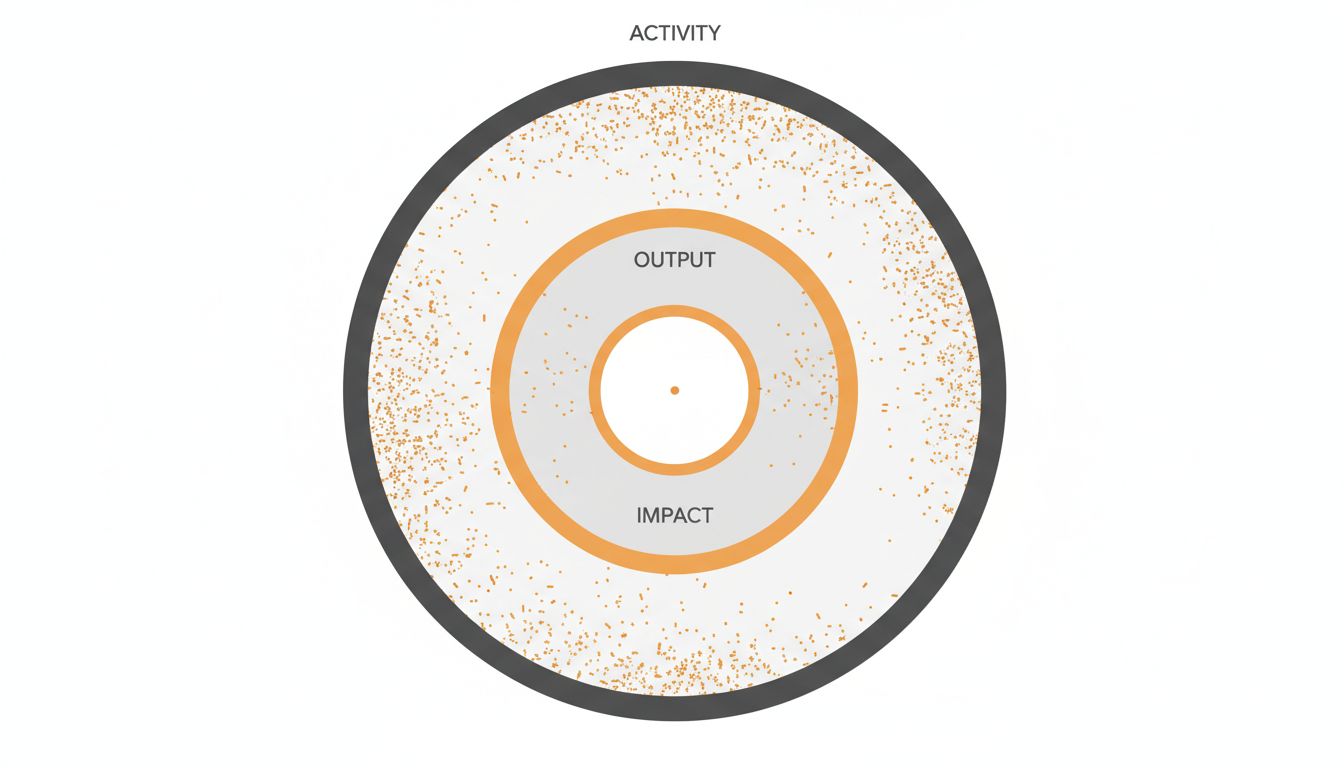
The common thread: all three of these metrics measure activity. Activity is not output. Output is not impact. Only impact matters.
What You Should Be Measuring Instead
The shift you need to make is from activity metrics to outcome metrics. Here’s a practical framework with three components.
Decisions made and committed to. Much of knowledge work is actually decision work, and stalled decisions are a primary source of invisible lost productivity. Start tracking which meaningful decisions you advanced or closed each week. Not ‘had a meeting about the pricing strategy’ but ‘decided on the pricing strategy and communicated it.’ The distinction forces you to notice how often you’re circling without landing.
Constraints removed for others. If you manage people or work on a team, some portion of your highest-value output is unlocking other people’s work. A single conversation that unblocks a colleague’s week is worth more than a dozen completed personal tasks. Try noting, even informally, when you removed a blocker for someone. You’ll start to see where you’re genuinely valuable versus where you’re just busy.
Progress on the work that compounds. Every job has tasks that repeat and tasks that build. Answering a support ticket is a repeating task. Writing documentation that eliminates future support tickets is a compounding task. Compounding work is almost always harder, slower, and more uncomfortable in the short term, which is exactly why it gets deprioritized when you’re measuring completion counts. Track separately how much time you’re putting into work that will pay dividends beyond this week.
The Weekly Audit That Takes Fifteen Minutes
You don’t need a new app or elaborate system. You need a honest weekly review with better questions. Here’s a simple structure you can use every Friday afternoon.
First, list the three things you did this week that wouldn’t have happened without you specifically. Not tasks you completed, but outcomes that needed your particular judgment, relationship, or skill. If you struggle to name three, that’s useful information.
Second, name the one thing that mattered most this week that you didn’t finish. Not because you ran out of time, but because you chose other things. Sit with that choice. Was it right? You’re not trying to generate guilt here. You’re trying to make the trade-offs visible so you can make them deliberately next week rather than by default.
Third, identify one decision that’s been waiting for you longer than it should. Make it this week, or explicitly schedule when you will. Unmade decisions are a hidden productivity tax. They consume background processing and delay everyone downstream.
This review works because it reorients you toward impact before the next week starts, rather than letting momentum carry you into more of the same activity.
Why We Default to Bad Metrics
The pull toward activity metrics is not irrational. Tasks completed is concrete and measurable. Outcome metrics require judgment, and judgment is uncomfortable because it can be wrong. Counting tasks feels objective. Evaluating whether your work actually moved something important forward requires you to have a view on what matters, and to defend it.
There’s also a social dimension. In most workplaces, visible busyness is rewarded, or at least tolerated, while visible stillness is not. The person who spent three hours thinking through a hard problem has less to show in a standup than the person who cleared a backlog. Where your attention actually goes during a workday is often shaped more by what gets noticed and praised than by what actually produces results.
The deeper issue is that bad productivity metrics are a form of risk management. If you measure tasks and hit your numbers, the failure mode is invisible. If you measure outcomes and miss, the failure is concrete and attributable. Switching to better metrics means accepting more exposure, and that takes some deliberate courage.
Start with One Change
You don’t need to overhaul your entire workflow this week. Start with one thing: at the end of each workday, write one sentence that completes this prompt — ‘Today I moved _ forward by doing _.’ Not what you did, but what moved, and by how much.
This single habit will surface the gap between your activity and your actual progress faster than any tracking tool. Some days the sentence writes itself. Some days you’ll realize, at 5pm, that nothing moved. Both outcomes are valuable. Productive people aren’t busy all the time. They’re clear, most of the time, about what they’re trying to move and whether today helped.
That clarity is what you’re actually trying to build.