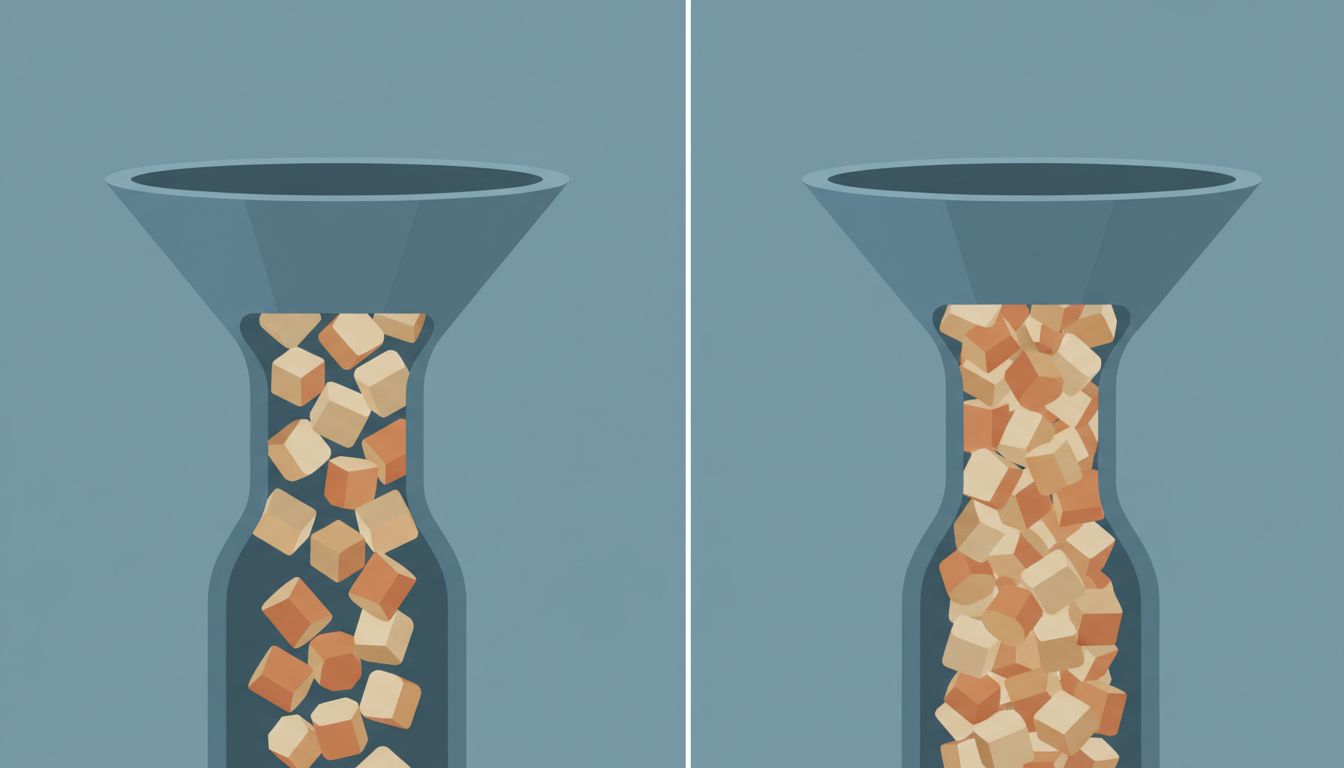
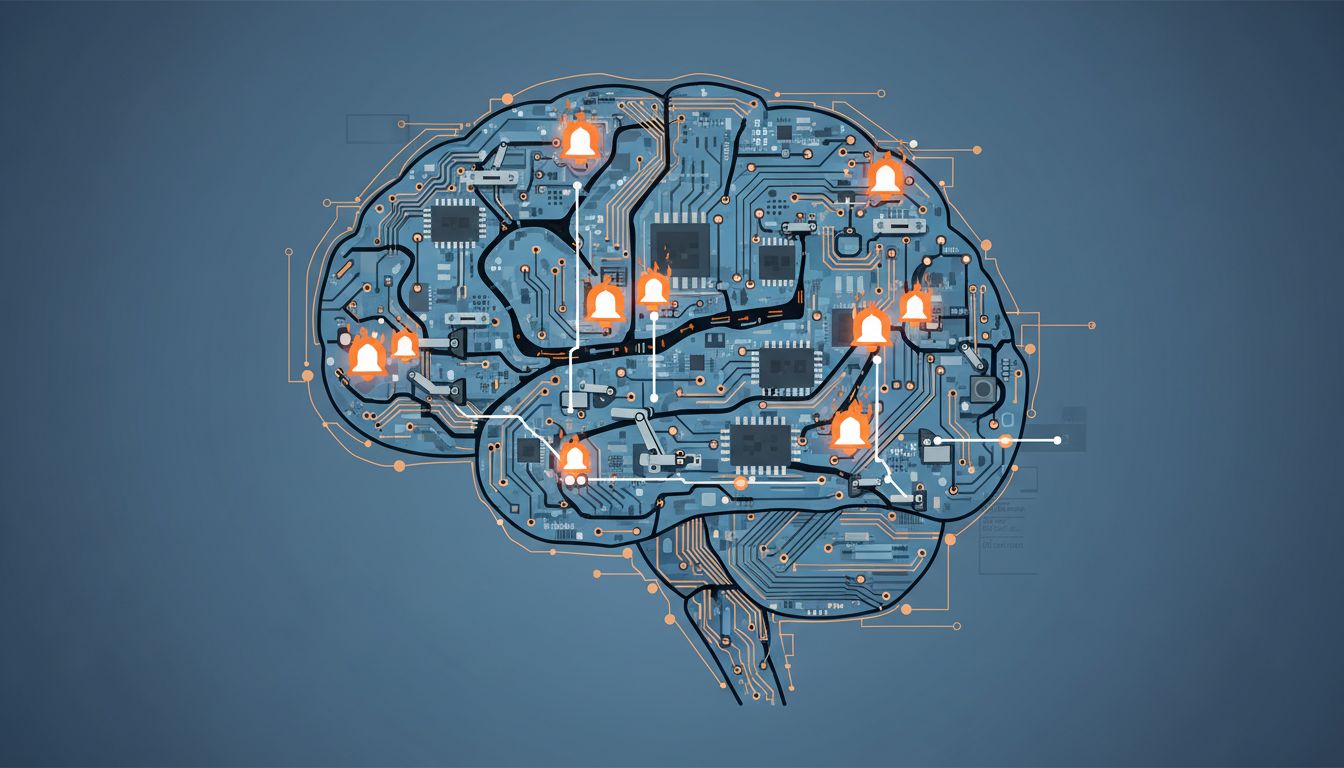
The standard narrative about distraction at work casts knowledge workers as victims. Slack is the villain. Open offices are the villain. Your manager who expects a response within the hour is the villain. This framing is comfortable, but it’s mostly wrong.
The harder truth is that knowledge workers, through years of small, individually rational decisions, trained their own nervous systems to expect and eventually crave interruption roughly every eight minutes. The notifications didn’t colonize your attention. You invited them in and then renovated your brain around them.
The Feedback Loop Nobody Noticed Building
When you first joined a workplace with Slack or Teams, responding quickly to messages felt good. It was legible productivity. You could see the output: a reply sent, a question answered, a thread resolved. Deep work, by contrast, produces nothing visible for long stretches. Debugging a gnarly system issue or writing a careful technical spec can consume two hours and leave no trace a manager would recognize as work.
So the behavior that got reinforced, through social approval and the basic dopamine mechanics of small completions, was responsiveness. Not thinking. And here’s the insidious part: once you habituate to checking for messages every few minutes, the absence of checking starts to feel wrong. Uncomfortable. Like you’re missing something. This is not a metaphor. This is how operant conditioning works, the same mechanism B.F. Skinner documented with pigeons pressing levers for unpredictable food pellets. Variable reward schedules are extraordinarily effective at building compulsive checking behavior.
Researchers studying office workers have found that it takes an average of around 23 minutes to fully regain deep focus after an interruption. Meanwhile, the average knowledge worker checks email or messaging apps far more frequently than that. The math means many workers never achieve sustained focus during a standard workday. Not because the interruptions are forced on them, but because they’ve built habits that guarantee the interruptions keep coming.
Availability Became Identity
Somewhere in the last decade, being reachable became a professional virtue in its own right, detached from whether it produced anything useful. “I’m very responsive” became a performance review talking point. Being slow to reply, even when slow meant you were deep in something important, started to carry social cost.
This created a collective action problem. If everyone on a team implicitly agrees that fast responses are valuable, then anyone who opts out of that norm pays a reputational penalty even if their actual output is superior. The rational individual move is to stay responsive. The collective outcome is a team that has essentially agreed to interrupt each other constantly and call it collaboration.
The notification settings that could fix this sit ignored in every app. Slack’s “Do Not Disturb” mode exists. Scheduled message delivery exists. Focus modes on every major operating system exist. Most knowledge workers have never configured any of them, not because they don’t know how, but because the social cost of seeming unavailable feels higher than the productivity cost of constant interruption.
The Tools Exploited an Existing Vulnerability
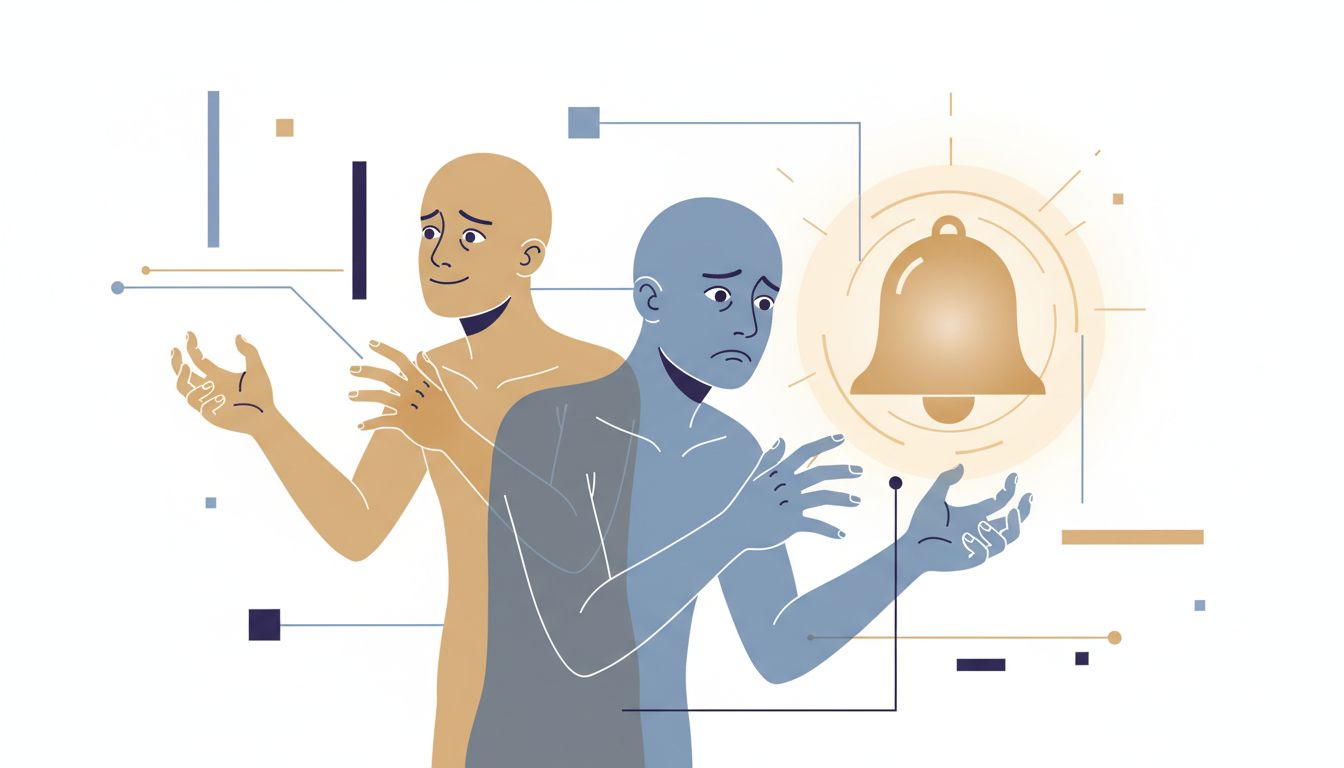
To be fair to the victimhood narrative: the tools are not neutral. Email clients and messaging apps were designed by people who understood engagement metrics and built features accordingly. Notification defaults are always set to “on.” Badge counts on app icons tap into the same anxiety that makes unread counts feel urgent even when they’re not.
But the apps didn’t create the underlying psychology. They exploited an existing human tendency toward social monitoring, the evolved instinct to track what others in your group are doing and saying. What changed is that digital communication made that monitoring possible at a scale and frequency that has no evolutionary precedent. We were handed a fire hose and we drank from it.
The async communication discourse often focuses on the wrong thing, arguing about which tool creates less friction rather than examining why workers reach for any tool at all when they’re supposed to be thinking.
The Counterargument
Some roles genuinely require high responsiveness. Incident response, customer support, anything involving real-time coordination across time zones. The eight-minute attention span might actually be appropriate if your job is triaging a production outage at 2am.
And there’s a legitimate critique of the “deep work” ideal that assumes all valuable knowledge work requires long uninterrupted sessions. Some of the best ideas in engineering come from quick back-and-forth at a whiteboard, not solitary concentration.
But these exceptions don’t undermine the core problem. The issue isn’t that interruptions are always bad. It’s that most knowledge workers have lost the ability to choose when to be interrupted and when not to be. The default is always-on, and opting out requires active effort and social capital. That inversion, where focus requires justification and availability is assumed, is what’s broken.
What Actually Changes This
The fix is not a new app. It’s not a productivity system with a clever acronym. It’s recognizing that you’ve been running a training program on yourself for years, and the curriculum was designed by accident rather than intention.
Specific behavior change matters more than philosophy here. Block time on your calendar and treat it as a meeting you cannot reschedule. Turn off notifications at the OS level, not just inside apps. Reply to messages in batches, at scheduled times, rather than continuously. The first week will feel like you’re failing at your job. That feeling is the withdrawal symptom, not a signal.
Organizations can help by making the implicit norm explicit. A team agreement that says “we do not expect responses within the hour unless the message is marked urgent” costs nothing and changes everything, because it removes the social penalty for the individual who wants to focus.
Knowledge workers didn’t lose their ability to concentrate because the modern workplace is cruel. They lost it because they made thousands of small choices that seemed reasonable in the moment and catastrophic in aggregate. The good news is that the same mechanism works in reverse. You trained yourself into this. You can train yourself out.