
The simple version
Your first hundred customers kept you alive, but they are probably not representative of the market you actually need to win. Building your product around them is one of the most common ways a startup gets stuck.
How you got those customers
Picture the early days. You launched something half-finished, and a certain kind of person signed up anyway. Maybe they found you through a personal connection. Maybe they were technical enough to tolerate rough edges. Maybe they had an unusually acute version of the problem you were solving, which meant they would have used almost anything. These people are gifts. They give you feedback, pay you early money, and tell you the product works.
The problem is selection bias so severe it would make a statistician wince. The people who adopt unfinished software from an unknown company are not average buyers. They are enthusiasts, risk-takers, people with time to invest in a new tool, or people desperate enough that their pain overrides their skepticism. In consumer products, they are sometimes just your friends.
You built your product around their feedback. Your roadmap reflects their requests. Your pricing reflects what they agreed to pay. And now, when you try to grow beyond them, nothing works the way it should.

The trap has a name
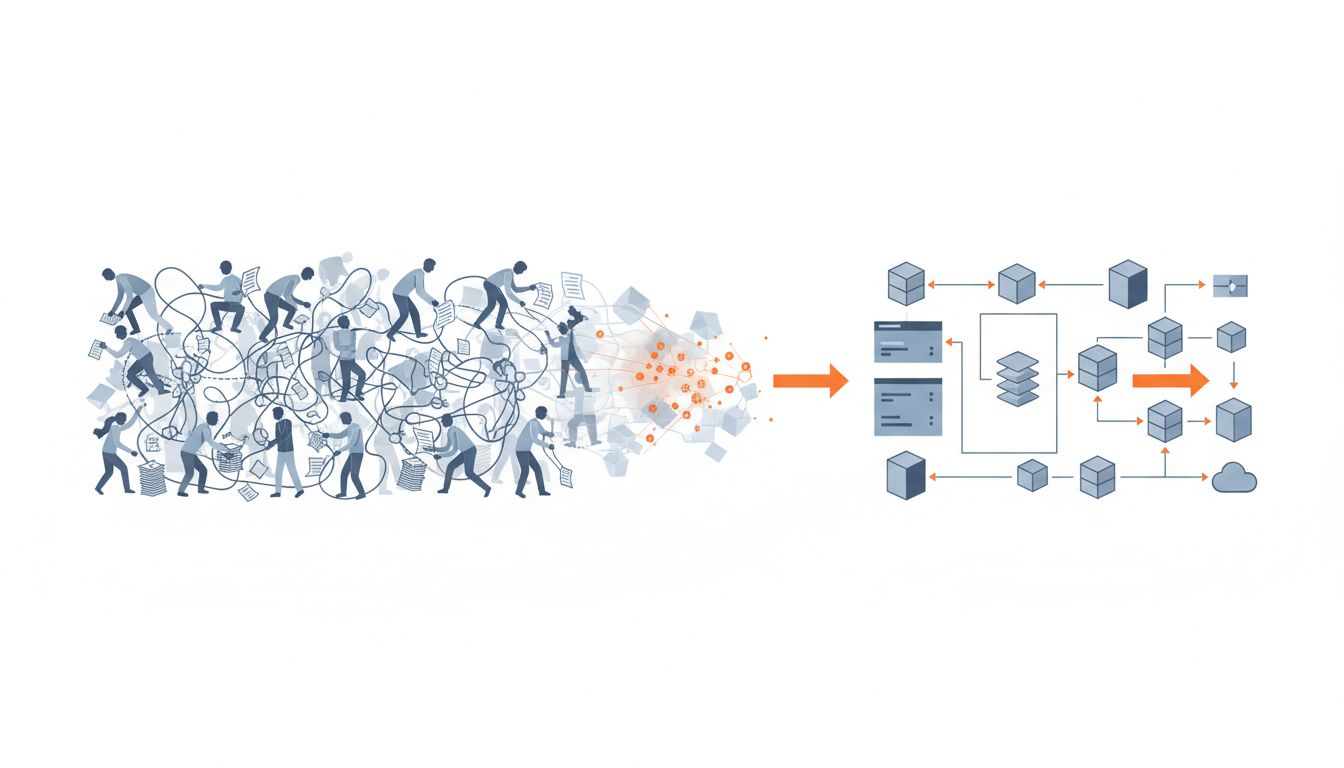
Geoffrey Moore called it the chasm, and it has been documented clearly enough that there is no excuse for being surprised by it. The buyers who come after your early adopters want something different: less adventure, more reliability, better integration with the tools they already use, and proof that you will still be around in three years. They need a different value proposition, often a different price point, and sometimes a different product.
The trap is that your first hundred customers give you a false sense of product-market fit. You have found fit with a specific micro-segment, and that segment’s enthusiasm can look, from the inside, like evidence that you have solved the problem universally. You have not.
Stripe understood this early. Their initial users were developers who would tolerate manual API integration work because they were excited about a better payments infrastructure. Stripe did not scale by optimizing for that group. They eventually built dashboards, fraud tooling, and a whole layer of features aimed at finance teams and non-technical operators who would never read an API doc. Different buyer, different product surface, same core technology.
What your early customers teach you and what they do not
They do teach you that the core problem is real. That feedback is genuinely valuable and you should take it seriously.
They do not teach you:
- What a typical buyer’s purchasing process looks like
- What objections a skeptic will raise
- How long it takes someone without intrinsic motivation to reach activation
- What integrations or compliance requirements a larger organization needs
- Whether your pricing survives contact with a procurement department
That last one catches people constantly. A founder who charged their first customers $50 a month because that felt fair, and because those customers were happy to pay it, has learned almost nothing about pricing. The enthusiast who paid $50 without blinking would have paid $200. The mainstream buyer who could genuinely afford $200 will walk away from $50 if it doesn’t come with enterprise SSO and a signed BAA.
There is a reasonable argument that charging too little is a deliberate strategy in certain market-entry scenarios. But you have to do it consciously, not because your early adopters anchored you there.
How to avoid building the wrong thing at scale
The fix is not to ignore your first customers. It is to treat them as one data point in a broader investigation rather than the definition of your market.
Start deliberately recruiting customers who look nothing like your early adopters. Find the skeptic who has budget but thinks your category is oversold. Find the procurement manager at a mid-market company who needs to check fifteen boxes before signing anything. Find the department head who will not personally configure anything and needs the product to be usable by someone with no patience for setup. Talk to all of them, even the ones who say no, especially the ones who say no.
The customer who left is worth more than ten who stayed for exactly this reason. Churned users from your second wave of growth are telling you something your loyal early adopters cannot: what happens when ordinary motivation meets your product’s actual friction.
Map your early customers’ attributes explicitly. Not just industry and company size, but behavioral attributes. Are they unusually technical? Unusually patient? Did they come through a personal referral? Do they use your product in a way that most people wouldn’t think to use it? Then ask yourself how large a market you are actually addressing if everyone in it has those same traits.
The hardest part
The people who believed in you early deserve real loyalty. They took a risk on you. But loyalty cannot mean letting their preferences veto your evolution.
This is where a lot of founders struggle emotionally. Your early customers feel like partners. Changing the product they love, repricing in ways that make them feel abandoned, or building features they will never use, all of that feels like a betrayal. Some of them will call it that.
But a startup that refuses to grow past its founding cohort is not honoring those customers. It is using them as an excuse to avoid the harder, scarier work of finding out whether the product can win a real market.
Your first hundred customers told you the idea was worth pursuing. The next thousand will tell you whether it was worth building. Those are two very different questions, and you need both answers.