The Simple Version
Language models learn from patterns in text. When you ask about something that was rare or absent in their training data, they don’t know they’re guessing. They fill in the gap with a confident-sounding answer anyway.
Why This Isn’t Just “Hallucination”
You’ve probably heard that LLMs hallucinate. That word does real work, but it hides something more specific and more useful to understand. Hallucination implies randomness, a model going off the rails. What actually happens at the edges of training data is more structured than that, and arguably more dangerous.
Think about how these models are trained. A transformer-based language model processes enormous amounts of text and learns statistical relationships between tokens (the chunks of words it operates on). For topics covered extensively in training data, those relationships are tight and well-constrained. The model has seen the concept approached from dozens of angles, corrected in various contexts, explained at multiple levels. Its internal representation of that concept is dense and robust.
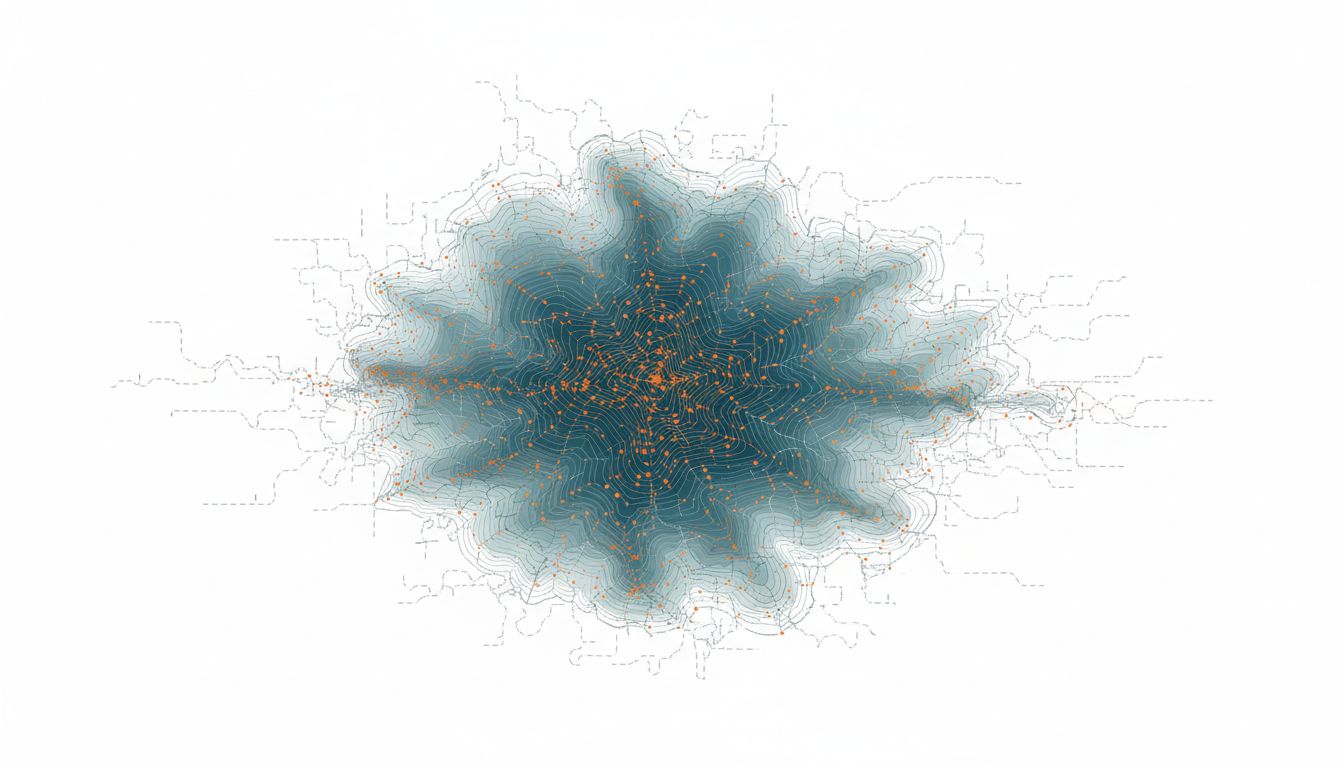
For topics at the edges, something different happens. The model has seen fragments. A few papers, a few forum posts, a few tangential mentions. It constructs a representation anyway, because that’s what the training objective demands. And here’s the thing: the architecture has no built-in mechanism to say “I only saw this five times, so I’m less certain.” The model doesn’t have a confidence meter tied to training data density. It just… outputs the most probable next token, regardless of how thin the ice is underneath.
The Smooth Extrapolation Problem
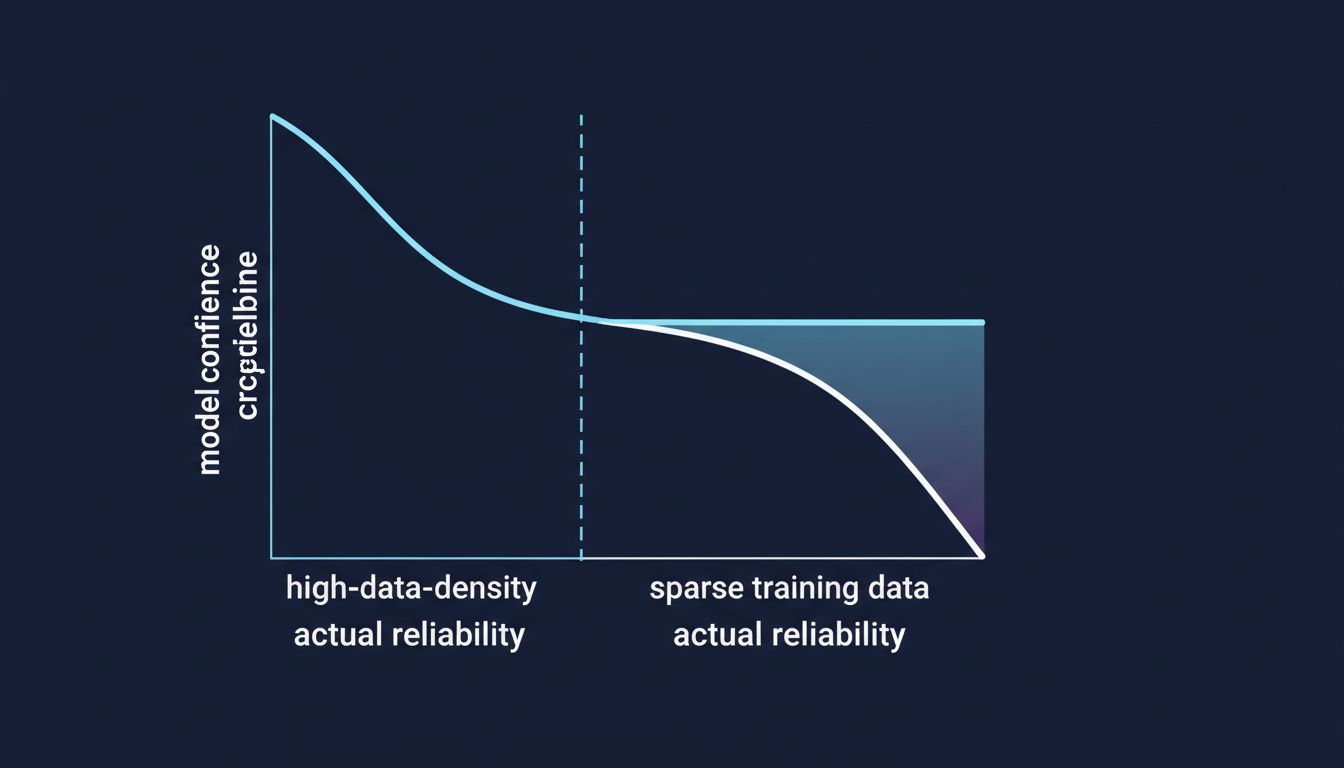
Here’s an analogy that might make this concrete. Imagine you’re fitting a curve to data points. Where you have many data points close together, your curve fits tightly and you can trust it. Where you’re extrapolating out past the last data point, the curve continues smoothly, maybe even confidently, but it’s doing so based on momentum from elsewhere. It has no idea what the actual value is out there.
LLMs do something similar. They don’t extrapolate off a cliff. They extrapolate smoothly, producing fluent, coherent, well-structured text that looks exactly like it does in regions where the model is actually well-calibrated. The prose quality gives you no signal about the factual reliability. That’s the trap.
This is especially acute in a few specific zones. First, anything that happened close to the training cutoff. Events from the last few months before the cutoff are underrepresented because the internet hadn’t fully processed and discussed them yet. A model trained through, say, late 2023 will answer questions about mid-2023 events with less reliability than questions about 2019 events, even though both are technically “within the training window.” Second, highly specialized or niche domains. Not because the model knows nothing, but because it learned from a thin slice and can’t tell the difference between the one paper it saw and the ten thousand papers that would form a real expert’s view. Third, the intersection of two domains. A model might be solid on both pharmacology and machine learning individually, but ask something that requires genuine expertise at their intersection and you’re likely asking it to bridge a gap it never actually learned.
What Calibration Looks Like (and Why Models Often Lack It)
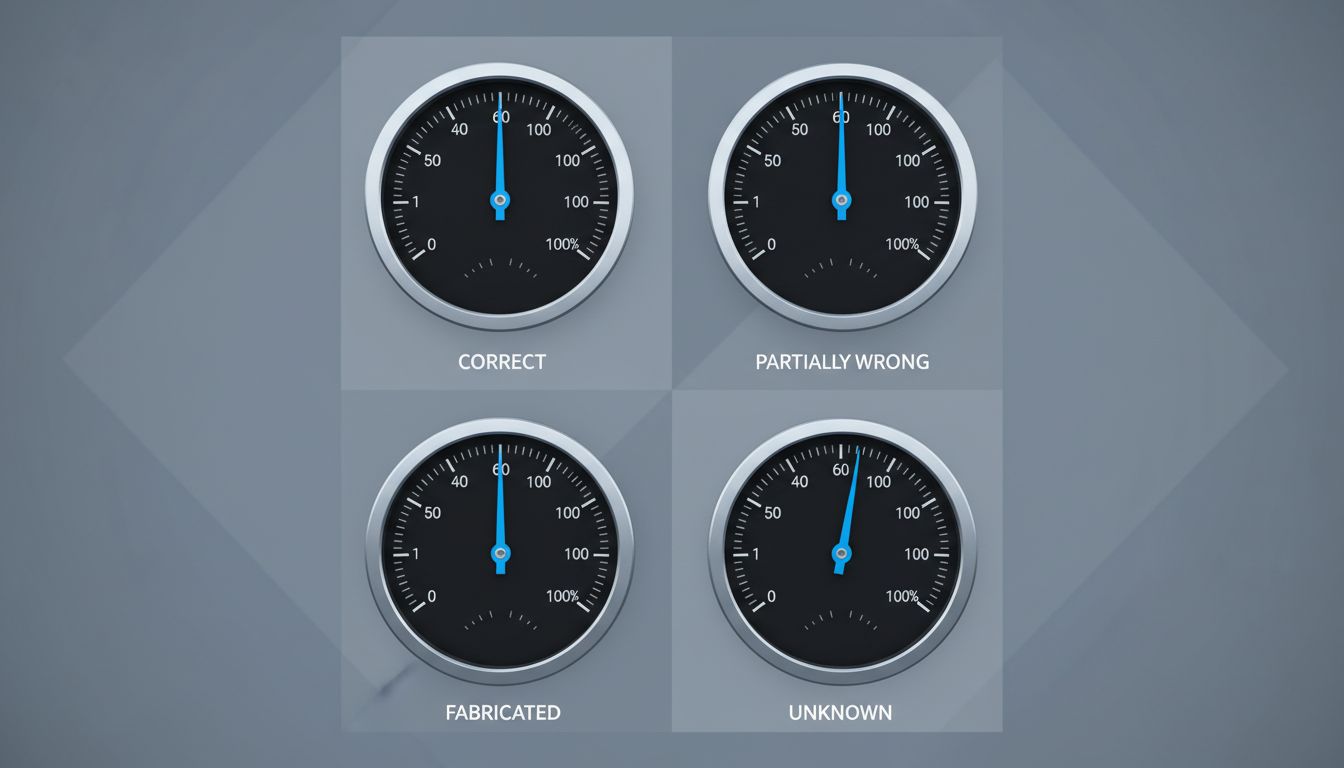
In statistics and machine learning, calibration refers to whether a model’s stated confidence matches its actual accuracy. A well-calibrated model that says it’s 90% confident should be right about 90% of the time. A poorly calibrated model might say 90% confident and be right only 60% of the time.
Most large language models are not well-calibrated in this sense, especially after fine-tuning. The pretraining process optimizes for predicting the next token, not for expressing appropriate uncertainty. Then instruction fine-tuning and reinforcement learning from human feedback (RLHF) often make things worse on this dimension: humans tend to rate confident, helpful-sounding answers higher than hedged, uncertain ones, which pushes the model toward sounding more certain than it should.
There’s a version of this worth reading about in how longer system prompts often make LLMs worse, because adding instructions that demand confident, direct answers can actively suppress whatever hedging the base model would have produced.
The result is a model that, when it encounters thin ground, does not slow down. It walks across it at the same speed it walks across solid ground, and it sounds exactly the same doing both.
How to Actually Work With This
Knowing the mechanism changes how you should use these tools.
The most practical rule: treat model confidence as a weak signal, not a strong one. A hedged answer (“I’m not entirely sure, but…”) is mildly useful information. A confident answer tells you almost nothing about whether the model is in well-mapped territory or not. You have to reason about the question itself. Is this the kind of thing that would have been extensively discussed in training data? Is it time-sensitive? Is it a niche intersection?
For code and technical tasks, this matters too. A model can write syntactically correct Python for a well-known library and produce confidently wrong API calls for a library that was new or obscure at training time. The code will look right. It just won’t run.
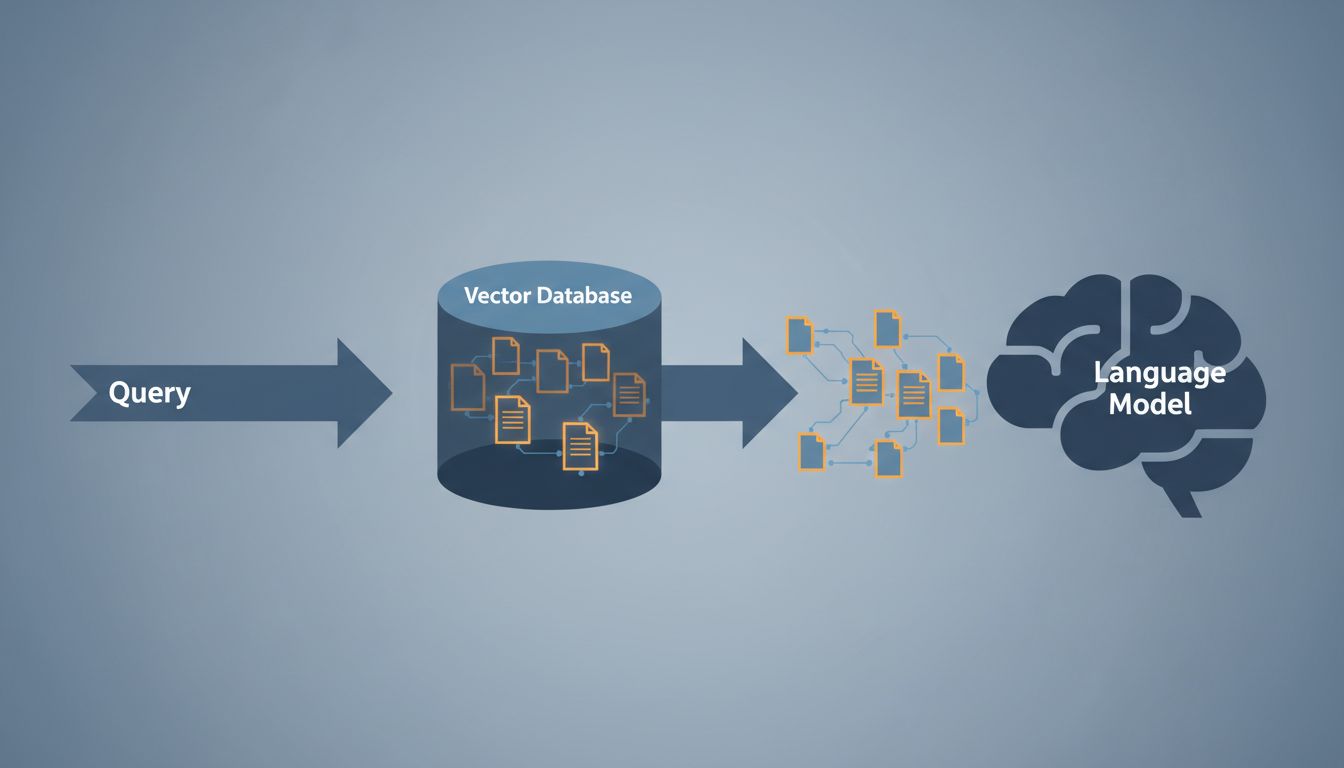
RAG (retrieval-augmented generation) helps here, not because it makes the model smarter, but because it replaces the model’s thin internal representation with actual retrieved text for a specific query. You’re essentially refilling the sparse region with real data at inference time. It doesn’t solve the problem entirely, because the model still has to reason correctly over the retrieved text, but it attacks the root cause directly.
The other practical move: ask the model to reason about its own uncertainty explicitly. “What would you need to know to be more confident in this answer?” or “What aspects of this are you least sure about?” These prompts don’t unlock hidden self-knowledge, but they do activate a different mode of generation that often surfaces the weak points in the reasoning.
The Honest Summary
LLMs are genuinely remarkable tools. They’re also, structurally, unable to flag when they’re at the edge of what they actually know. That’s not a fixable bug in current systems; it’s a consequence of how they’re built and trained. The right response isn’t distrust across the board. It’s understanding which kinds of questions are likely to be in well-mapped territory and which aren’t, and calibrating your own trust accordingly.
The model won’t tell you when it’s guessing. That part is on you.