A productivity system isn’t a tool you configure once. It’s closer to a codebase: it has dependencies, it accumulates cruft, and it reflects assumptions that stop being true. When you stop maintaining it, specific, diagnosable things go wrong. Here’s what that failure looks like, in order of how quickly it tends to happen.
1. Your Capture Layer Becomes a Tar Pit
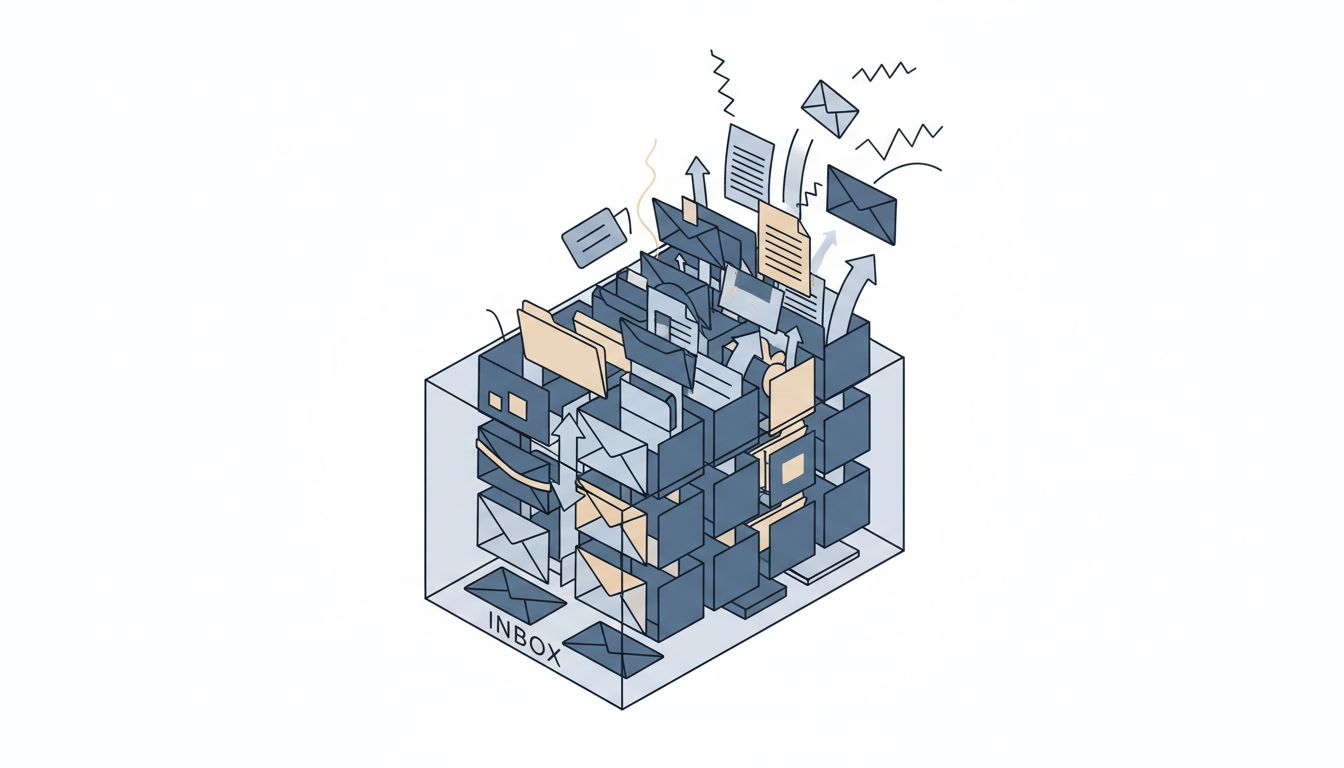
Every productivity system has an inbox: the place where things land before they get processed. GTD (Getting Things Done) calls it a capture bucket. In practice, it might be a notes app, an email folder, a Notion database, or a physical notebook. The capture layer only works if you trust that you will process it. The moment you stop processing regularly, you stop trusting it, and the moment you stop trusting it, you stop capturing into it.
This is a fast failure. Within two or three weeks of not processing your inbox, you’ll start routing around it. Tasks go directly into your head, which is the most unreliable storage medium available. The mental load of keeping things in working memory is real and measurable, even if no one has put a precise number on it. What you can observe is that you start dropping things, and then you start over-scheduling to compensate.
2. Your Tags and Categories Become Archaeology
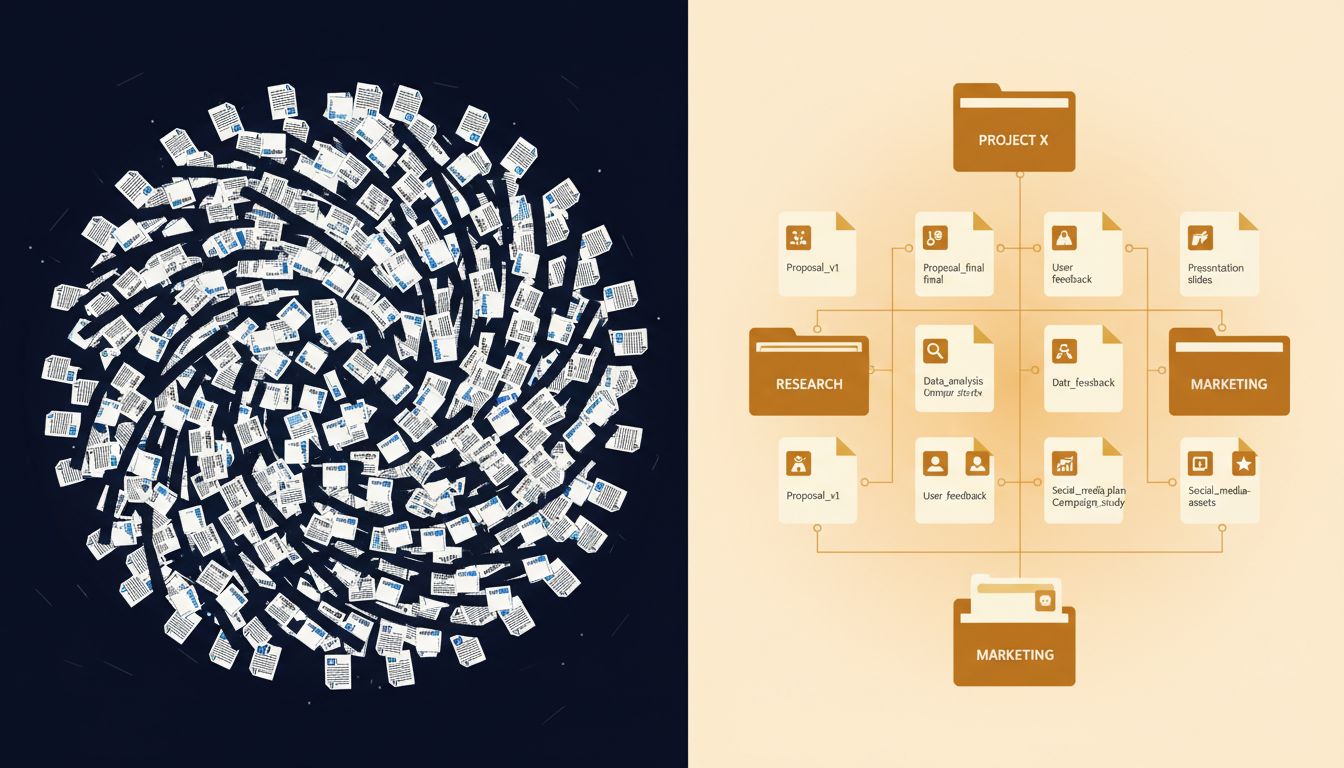
Most systems involve some kind of labeling: projects, contexts, priority levels, areas of responsibility. These labels are a snapshot of how your work was organized at the time you created them. Six months later, your work has changed shape and the labels haven’t. You end up with a @office context tag from before remote work, a personal-finance project that was supposed to contain your tax prep but now has seventeen unrelated items, and a priority system where everything is high priority because you stopped triaging.
This is the productivity equivalent of deleting dead code. The categories that once guided you now just add navigation overhead. You spend more time finding the right place to put something than you spend doing it.
3. Your Weekly Review Skips Turn Into Monthly Reviews Turn Into Nothing
The weekly review is the maintenance job in any task management system. It’s the cron job that sweeps the database, checks for stale records, and makes sure the system reflects reality. Skip it once and you’re a little behind. Skip it three times and you have a system that’s three weeks out of date, which means it’s a source of anxiety rather than clarity.
David Allen has been saying for decades that people don’t avoid their systems because they’re lazy; they avoid them because the systems stopped being trustworthy. That’s a diagnostic, not a criticism. An outdated system is actively worse than no system, because it suggests false completeness. You think you’ve captured everything, but what you’ve actually got is an old picture of everything.
4. Projects Without Next Actions Become Vague Intentions
There’s a specific kind of rot that happens to projects you haven’t touched in a while. A project without a clearly defined next action is just a worry on a list. It doesn’t move. You look at “Refactor authentication module” or “Get quote for accountant” and your brain bounces off it because there’s nothing actionable to grab.
This compounds when you haven’t maintained the system, because you have no recent context for what the next action even was. You remember that this thing matters, but not where you left it. The cognitive cost of re-entering a project you’ve been away from is significant. Programmers call this context-switching overhead. In a maintained system, your notes and next actions give you a re-entry point. In an unmaintained one, you’re reading cold code with no comments.
5. The Tool Becomes the Goal
Something strange happens when you fall behind on a system and then try to catch up: you start spending more time on the system than on the work. You reorganize your Notion workspace. You watch YouTube videos about the perfect task manager. You import everything into a new app because the old one feels tainted by failure.
This is a well-documented trap and it has a specific cause. When the system doesn’t feel trustworthy, working on the system feels productive without requiring the vulnerability of actual work. It’s organizing your desk instead of writing the report. The system becomes a displacement activity. This is how people end up with six months of abandoned PKM (personal knowledge management) setups in their screenshot folders.
6. The System Fragments Into Informal Channels
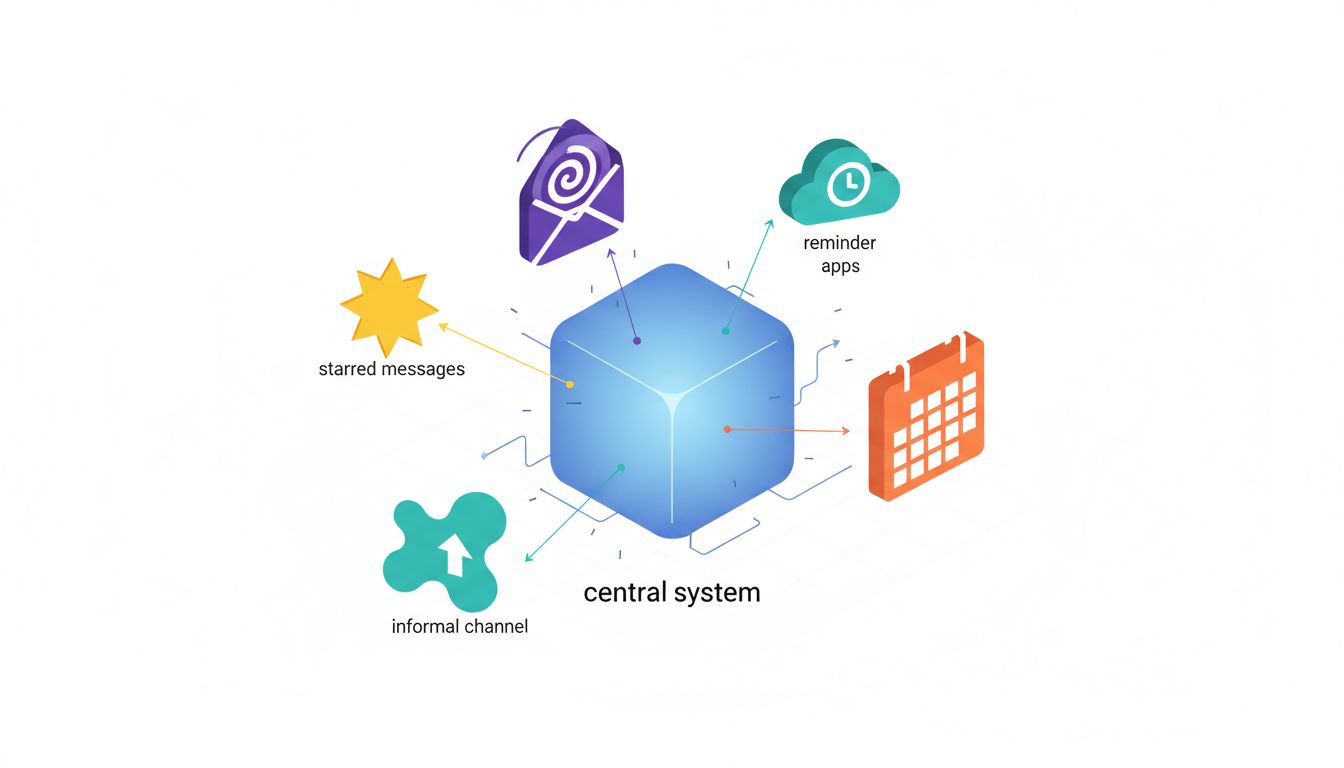
When your official system stops working, work doesn’t stop. It just routes around the breakage, the same way network traffic routes around a failed node. Tasks start living in Slack messages you’ve starred. Commitments live in email threads marked unread as a reminder. Your calendar has blocks that aren’t actually scheduled, they’re just things you hoped to do. Your phone’s reminders app has seventeen items from a year ago.
This is fragmentation, and it’s expensive. You now have to check multiple systems to know what you’re supposed to be doing. Each system has its own interface, its own failure modes, and its own notification behavior. Notifications themselves aren’t even the core problem, but the context-switching required to monitor five different inboxes makes them significantly worse.
7. You Lose the Record of What You Actually Did
This one is underrated. A maintained system doesn’t just tell you what to do next; it tells you what you’ve done. Closed tasks, completed projects, processed notes. This has practical value well beyond nostalgia. Performance reviews, billing, progress tracking on long-horizon goals, and your own sense of momentum all depend on being able to look backward with some fidelity.
When you stop maintaining the system, completed work stops getting recorded. You either mark nothing done (so everything looks perpetually open) or you delete without logging (so the record disappears). Either way, you lose the feedback loop that tells you whether your effort is actually converting into output. Without that signal, it becomes genuinely harder to estimate future work, to notice when you’re underloaded versus overloaded, and to feel any satisfaction in what you’re accomplishing.
The Core Problem Is Infrastructure Thinking
Every item on this list is a variant of the same failure: treating a productivity system like a product launch rather than ongoing infrastructure. You don’t build a monitoring system and walk away from it. You don’t write a test suite and stop running it. A system that reflects your work in real-time requires maintenance proportional to how fast your work changes.
The fix is boring: shorter review cycles, simpler taxonomies, and ruthless pruning of any part of the system that costs more to maintain than it returns in clarity. The goal isn’t an elegant system. The goal is work that gets done.