
Training an AI model on its own output is not a shortcut or an edge case. It is a slow collapse, and the field is heading toward it whether researchers plan for it or not.
The argument here is simple: synthetic data feedback loops don’t just degrade model quality, they degrade it in ways that are hard to detect, hard to reverse, and systematically biased toward confident-sounding mediocrity. This isn’t a theoretical concern. The math and early empirical evidence both point the same direction.
Errors Compound, Not Average Out
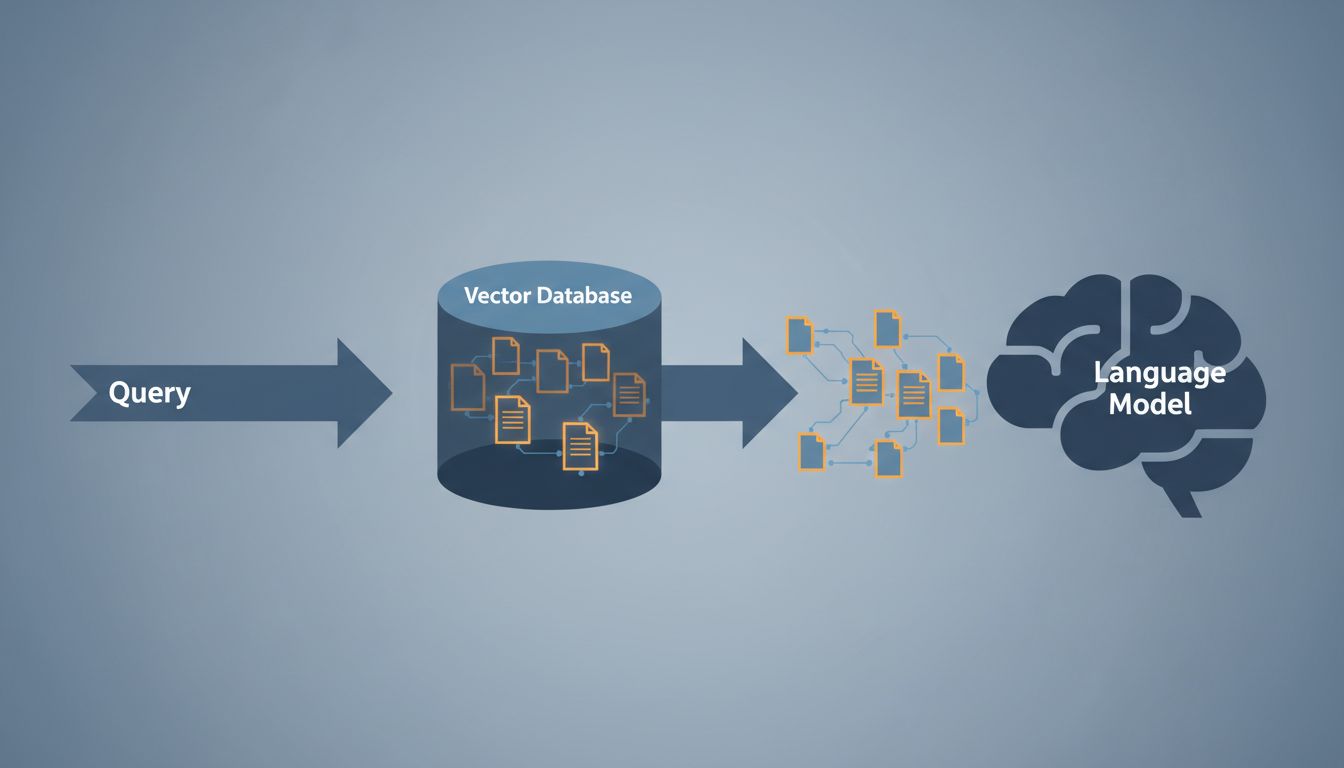
When a model generates output and that output becomes training data for the next version, you aren’t averaging over noise. You’re amplifying it. Statistical errors that appear once in generation get baked into weights. The next model treats those errors as signal. It generates slightly more text in that direction. That text gets used for training again.
Researchers at Oxford and the University of Edinburgh published work in 2024 demonstrating this process formally. They called it “model collapse” and showed that models trained iteratively on their own outputs lose the tails of distributions first. Rare but legitimate ideas, unusual phrasings, minority viewpoints get squeezed out. What’s left is an increasingly narrow, increasingly confident version of the mean.
The practical consequence: your model gets worse at exactly the things that make it useful for hard problems. Median performance stays stable for a while. Edge case performance crumbles.

The Model Has No Idea When It’s Wrong
Human-generated training data, for all its messiness, carries an implicit quality signal. A text written by a domain expert reflects actual knowledge. A poorly written forum post at least reflects a real human belief about something. The model learning from either can use context to weight them.
AI-generated text carries no such signal. The model that produced it had no idea it was wrong when it wrote something confidently incorrect. The model training on that output has no way to know it’s learning from confabulation. There’s no error signal attached to the mistake because the mistake felt like fluency from the inside.
This is the core problem. Model collapse isn’t just data contamination. It’s confidence laundering. Bad information gets wrapped in grammatically perfect, structurally coherent prose, and the next model learns to do the same.
Diversity Is What You’re Actually Losing
Language models are useful because they’re general. They can write code, explain concepts, shift registers, take different tones. That generality comes from training on a vast, diverse corpus of human output, including things that are weird, contradictory, stylistically odd, and niche.
Synthetic data feedback loops narrow that distribution over time. Each generation of training optimizes slightly more toward what the previous model thought was typical. The Oxford/Edinburgh paper found that variance collapses long before mean performance visibly drops. By the time you notice the model feels repetitive or flat, you’ve already lost the diversity that made it capable.
This is why you can’t just watch benchmark scores and call it fine. Benchmarks measure performance on known tasks. What collapses first is the model’s ability to handle tasks it hasn’t seen, edge cases, creative leaps, novel combinations. Those aren’t in the benchmark.
The Counterargument
The honest version of the counterargument goes like this: high-quality synthetic data, carefully curated and filtered, can actually improve model performance. This is true. There is real evidence that models fine-tuned on carefully selected AI-generated data, particularly for narrow domains, can outperform models trained on noisy human data for specific tasks.
But notice what that argument requires: careful curation, human oversight, domain specificity, and filtering out the bad outputs before they go back into training. That’s not a feedback loop. That’s a human-supervised pipeline that happens to use synthetic data as one input. The moment you remove the curation step and let the loop close automatically, you’re back to the collapse problem.
The optimistic version of this argument also tends to describe controlled research settings. The realistic setting is that the web is filling with AI-generated text right now, that scrapers can’t reliably filter it, and that future training runs will ingest it whether anyone plans for that or not. The careful, curated version of synthetic data training is not what’s happening at scale.
What This Means for You
If you’re building on top of foundation models, the quality trajectory of those models matters for your product. You don’t control what goes into future training runs. But you can make some practical choices now.
First, if you’re fine-tuning models for specific tasks, be careful about using AI-generated outputs as your training set without human review. The gains feel real in early evaluation and erode in ways you won’t catch until users do.
Second, treat unusual, specific, or niche outputs from current models as a resource. If the collapse hypothesis is right, future models will get worse at exactly those things. Document and preserve examples where current models genuinely surprise you.
Third, push back on the assumption that more synthetic data is always safer than less human data. Synthetic data is cheap and scalable. That’s seductive. It’s also how you end up training confidently mediocre models that benchmark well and fail interestingly.
The field has a data problem it didn’t anticipate. High-quality human-generated text is finite. AI-generated text is infinite and increasingly indistinguishable from the real thing in training pipelines. That’s not a solvable problem with better filters. It’s a structural constraint that should change how everyone building these systems thinks about the long game.