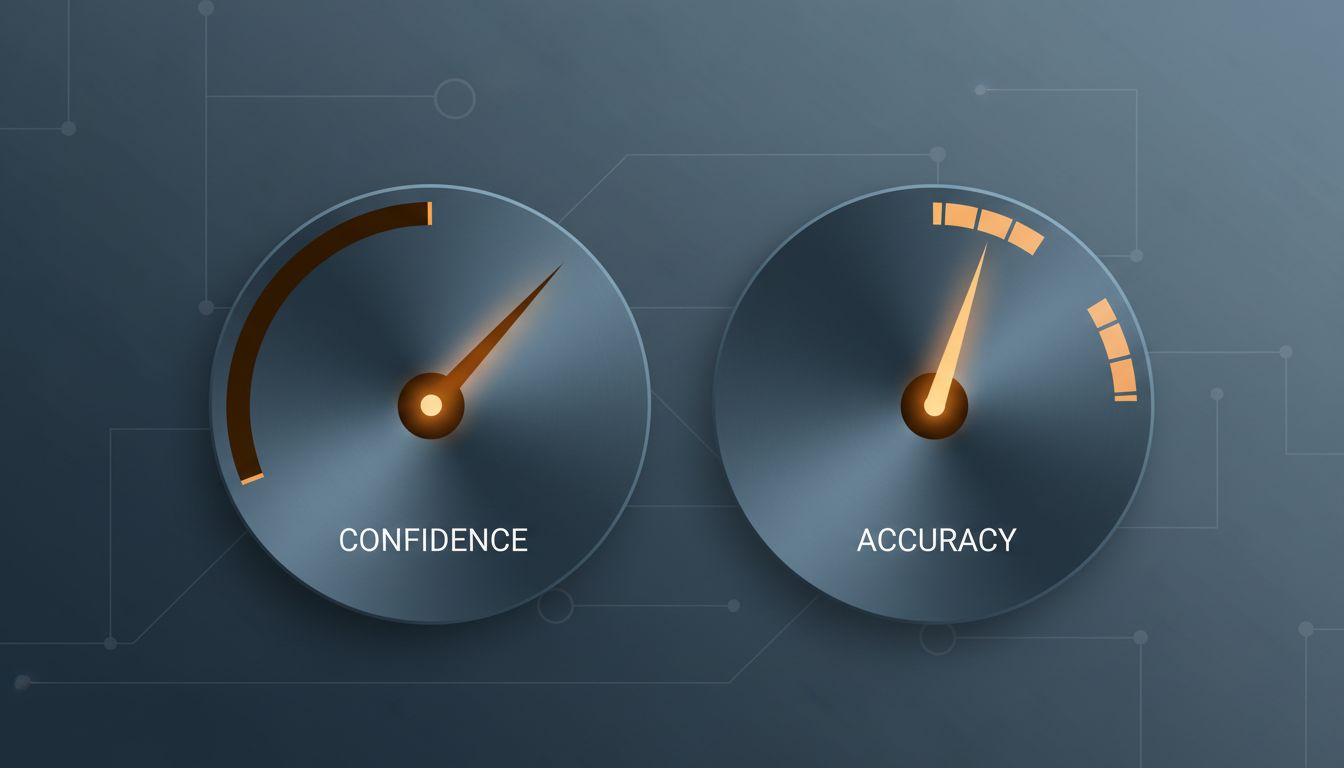
Large language models are remarkably good at sounding certain. The problem is that sounding certain and being correct are two completely different things, and the model has no reliable mechanism for distinguishing between them. This isn’t a bug that will get patched in the next release. It’s structural.
1. Confidence Is Baked Into the Output Format
When you ask an LLM a question, it doesn’t return an answer with an attached probability score. It returns prose. Fluent, grammatically correct, plausible-sounding prose. The very act of generating text in a coherent sentence structure implies a kind of authority that the model’s actual certainty doesn’t warrant.
This is a design artifact, not a feature. The model is trained to produce text that humans rate as helpful and accurate. Humans tend to rate confident answers higher than hedged ones. So the training process inadvertently optimizes for sounding sure, regardless of whether the underlying information supports that confidence. The result is a system that will describe the plot of a nonexistent novel with the same smooth authority it uses to explain how TCP/IP works.
2. Hallucinations Aren’t Random, They’re Patterned
The term “hallucination” implies something random and obvious, like a model inventing pure nonsense. In practice, hallucinations are usually plausible extrapolations that land just outside the truth. A model asked about a real researcher might correctly name their institution and field, then invent two papers that fit the pattern of their actual work but don’t exist. The wrong parts blend seamlessly with the right parts.
This makes verification hard. You can’t scan an output and flag the hallucinated sections on sight. They look identical to the accurate sections. The error rate also spikes predictably in specific domains: niche legal citations, academic papers outside mainstream coverage, local or regional facts, anything that happened recently, and anything that requires counting or precise arithmetic. These aren’t random failure modes; they’re predictable weaknesses you can reason about.
3. The Model Can’t Tell You What It Doesn’t Know
A well-calibrated reasoner, human or otherwise, knows the shape of their own ignorance. Ask a cardiologist about renal pharmacology and they’ll tell you that’s outside their area. They have a model of their own knowledge boundaries. LLMs don’t have this. They have no persistent self-model. Each query is answered without the model having any access to metadata about how confidently it should respond to this particular question given its training distribution.
Some models have been fine-tuned to say “I’m not sure” more often, which helps at the margins. But this is trained behavior, not genuine epistemic awareness. The model isn’t reporting uncertainty because it detected uncertainty. It’s producing uncertainty language because that pattern appeared in its training data in similar contexts. There’s a meaningful difference, and conflating the two leads to misplaced trust.
4. Retrieval-Augmented Generation Helps, But Doesn’t Fix This
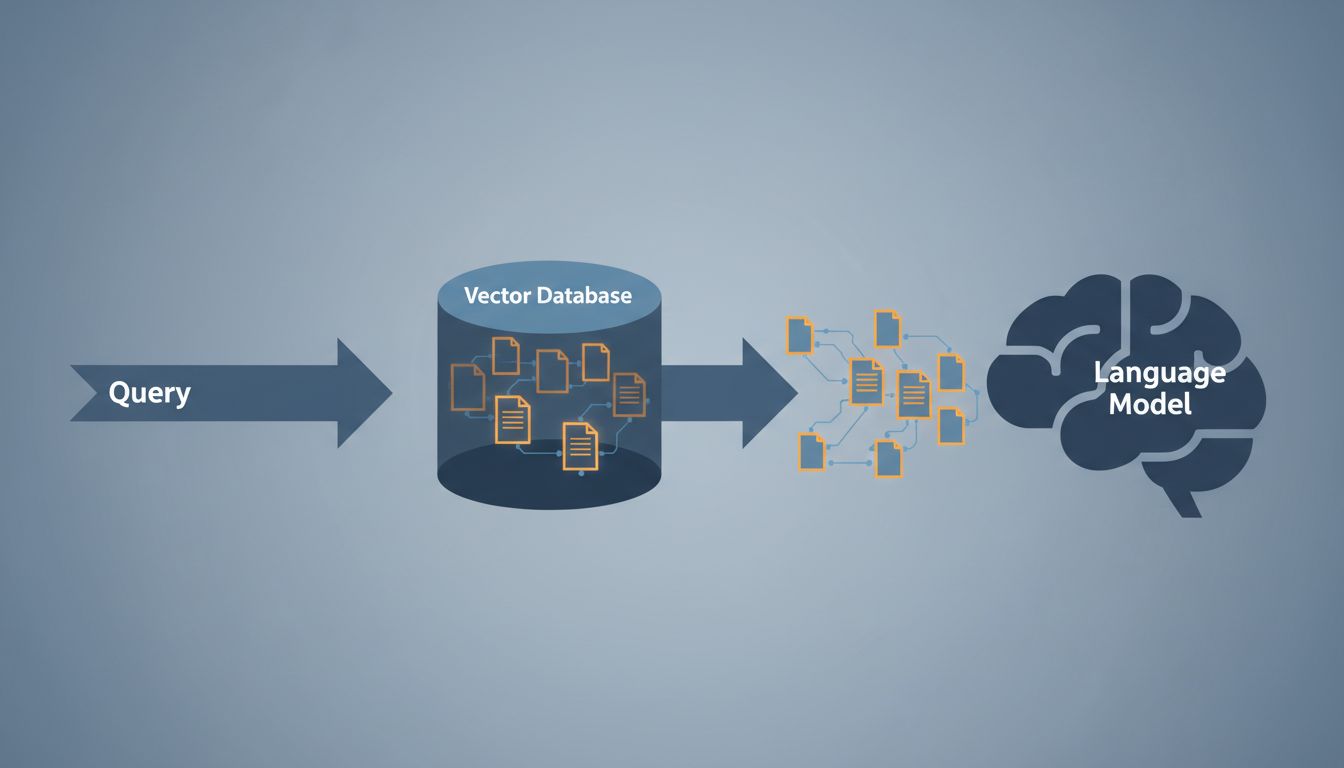
Retrieval-augmented generation (RAG) is the most common architectural response to this problem. Rather than relying on parametric knowledge baked into the model’s weights, you retrieve relevant documents at query time and feed them into the context window. The model then answers based on that retrieved content.
This genuinely reduces certain classes of errors, particularly factual staleness and niche knowledge gaps. But it introduces new ones. The model still has to synthesize and interpret the retrieved documents, and it can hallucinate within that synthesis. It can misread a source, conflate two retrieved documents, or generate a claim that’s a plausible-but-wrong inference from the material it was given. RAG shifts where the errors come from; it doesn’t eliminate the underlying overconfidence problem. If you’re building pipelines that depend on LLM accuracy, the slowest part of your AI pipeline isn’t the model, it’s usually the retrieval and verification layer you haven’t built properly yet.
5. The Stakes Scale With How Much You Trust the Output
Most LLM errors are harmless. Someone gets a slightly wrong summary of a Wikipedia article, notices it doesn’t match what they remember, and corrects it. The feedback loop is tight and the cost is low. The dangerous scenarios are the ones where the feedback loop is absent or slow.
A developer using an LLM to generate a code library for a security-sensitive application may not catch a subtle logic error until it’s in production. A paralegal using an LLM to draft a brief may not catch a fabricated case citation if they’re working under deadline pressure. A patient reading LLM-generated health information has no easy way to evaluate which parts are accurate. The model’s confidence is constant across all these scenarios. What changes is how much the person on the other end trusts it, and how equipped they are to verify.
6. Asking the Model to Check Itself Doesn’t Reliably Work
A popular mitigation is asking the model to review its own output, either by prompting it to “double-check” an answer or by running a second model as a verifier. This is better than nothing, but it’s weaker than it sounds.
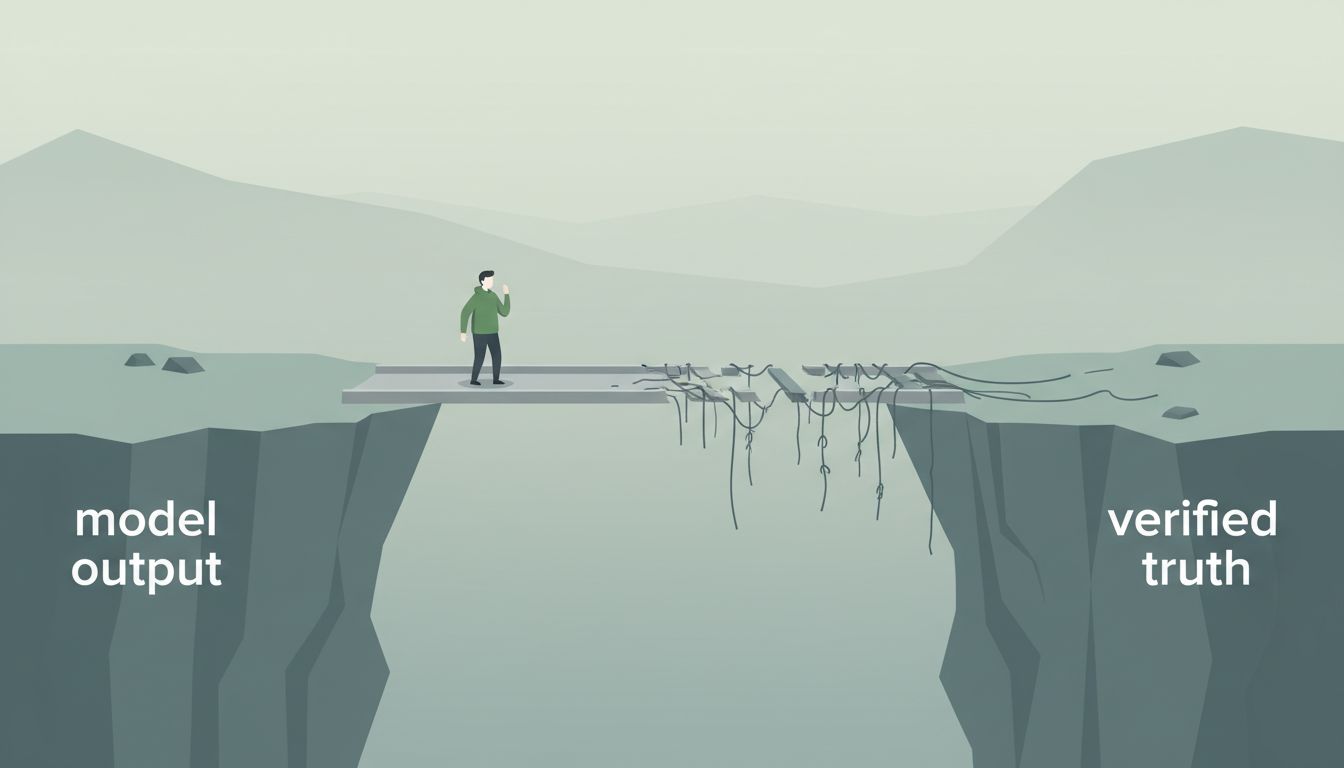
When a model generates an incorrect claim, the error usually comes from a pattern in its weights. Running the same model (or a similarly trained model) over the same output will often reinforce the same error rather than catching it. The model doesn’t have access to ground truth; it only has access to its own internal patterns. If those patterns led to a wrong answer the first time, they’ll frequently validate the wrong answer on a second pass. Self-consistency checks catch some formatting issues and obvious contradictions, but they’re not a substitute for external verification against authoritative sources.
7. The Practical Implication Is That Your Workflow Needs a Verification Layer
The right frame for using LLMs in high-stakes contexts isn’t “is this model accurate enough to trust?” It’s “what does my verification process look like, and is it actually being used?” The model is a fast, cheap, impressively fluent first draft. The question is what happens to that draft before it becomes a decision.
This is less glamorous than the capability conversation, but it’s where most of the practical safety work lives. Organizations that are getting good results from LLMs tend to have clear rules about which outputs require human review, which domains are off-limits for autonomous use, and which tasks have a built-in verification step. The ones having trouble tend to have absorbed the model’s confidence as their own, which is exactly the failure mode the model was built to produce.