The data center backlash looks new in the US, but Ireland ran the experiment years ago, and the industry’s response to a full grid should worry anyone betting on cheap AI capacity. Elsewhere today: a robot-ban waiver for Intel, a grocery-delivery sale rumor, and a headline about AI and human morality that comes with very little evidence.
1. Ireland’s data center fight is a preview, gas plants included
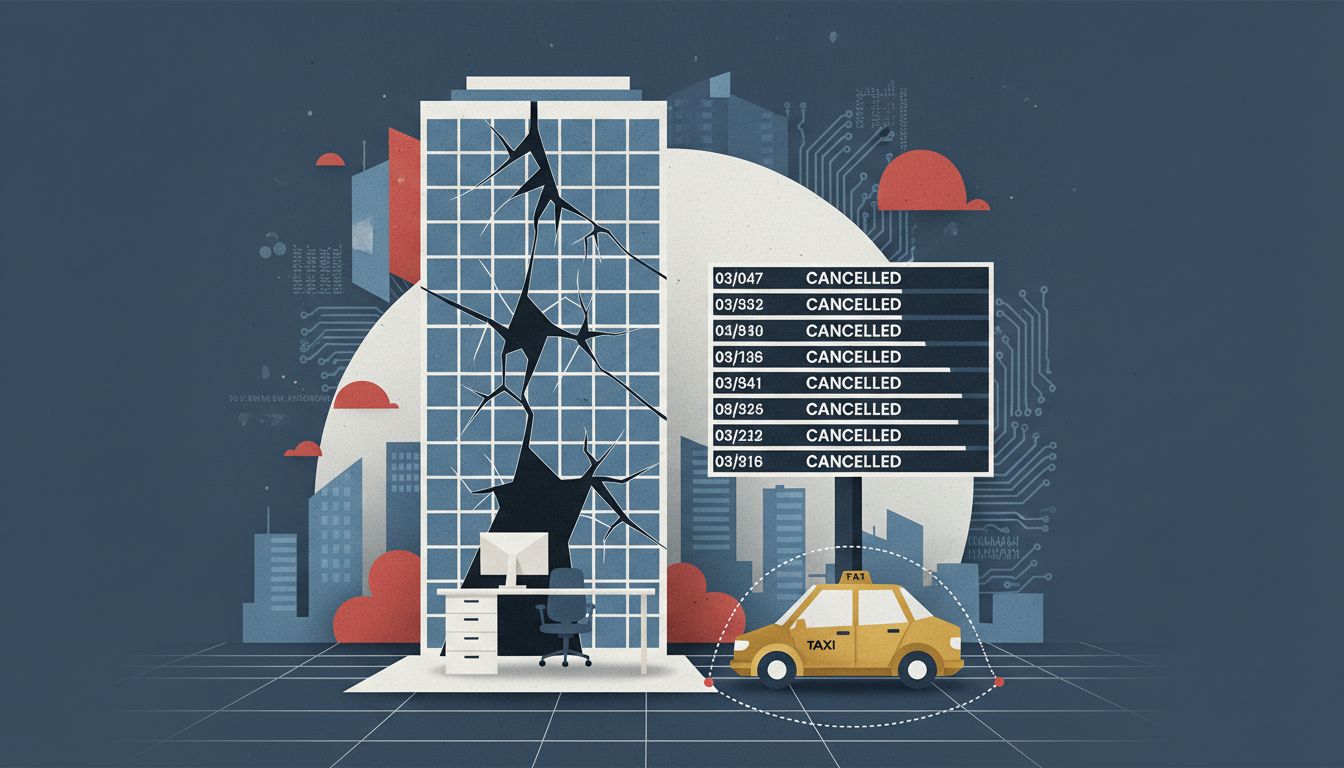
In 2021, Dublin passed a moratorium on new data centers. According to author Paris Marx, in a WIRED interview, the push came from the grid operator itself, which said it lacked the capacity to connect more of them. The industry did not leave. It looked at other parts of Ireland, then at the gas network, and eventually at dedicated gas plants. Marx also says operators lobbied for legislation letting private companies build electricity cables on what is a public grid.
That sequence resembles what Marx sees in the US today, where companies are racing to build large private gas plants. Marx is a longtime Big Tech critic with a book to promote, so the framing and the bubble talk are his. But the Irish facts are a concrete warning for operators: a restriction on grid access can push demand toward private power, which brings its own permits, emissions fights and equity questions.
His sharpest point is about the downside. Gas plants and data halls built for AI may outlast the demand for them, and he notes that chips cycled out within a few years could leave an empty building less valuable than the one Equinix bought cheap after the dotcom bust. That is a forecast, not a fact. But it is a fair question for anyone underwriting AI real estate.
2. AI models call humans ‘amoral sheep,’ but the evidence is thin
The Register’s headline says AI models describe humans as a bunch of amoral sheep. That is a vivid line, but the text supplied here contains only page navigation, with no article body. We don’t know which models were tested, how they were prompted, or what counted as an insult. The two listings are the same Register story under two URLs, not independent confirmations.
So treat the stronger claims, like hidden misanthropy baked into frontier models, as unsupported by what we have. A model asked to characterize humanity is generating text, and unflattering text doesn’t by itself show a stable belief. Developers shipping human-facing products should still test how their systems behave under adversarial prompts. But read the full study before repeating the headline.
3. Jac asks agent builders to learn yet another Python-like language
The Register reports that a Michigan professor has created Jac, a Python-like language aimed at AI agents. The text we have is only the headline, with no description of the language’s features, performance or users, so any claim about what it saves is unsupported.
The Python-like syntax suggests a bet on familiarity, since developers can read it without much retraining. But a new language also means new tooling, new hiring constraints and a smaller ecosystem than Python’s. Jac needs a clear advantage over agent frameworks in the language teams already use. Until the project shows one, it’s a curiosity worth watching rather than a migration plan.
4. Intel needed a waiver from a robot ban that was too vague
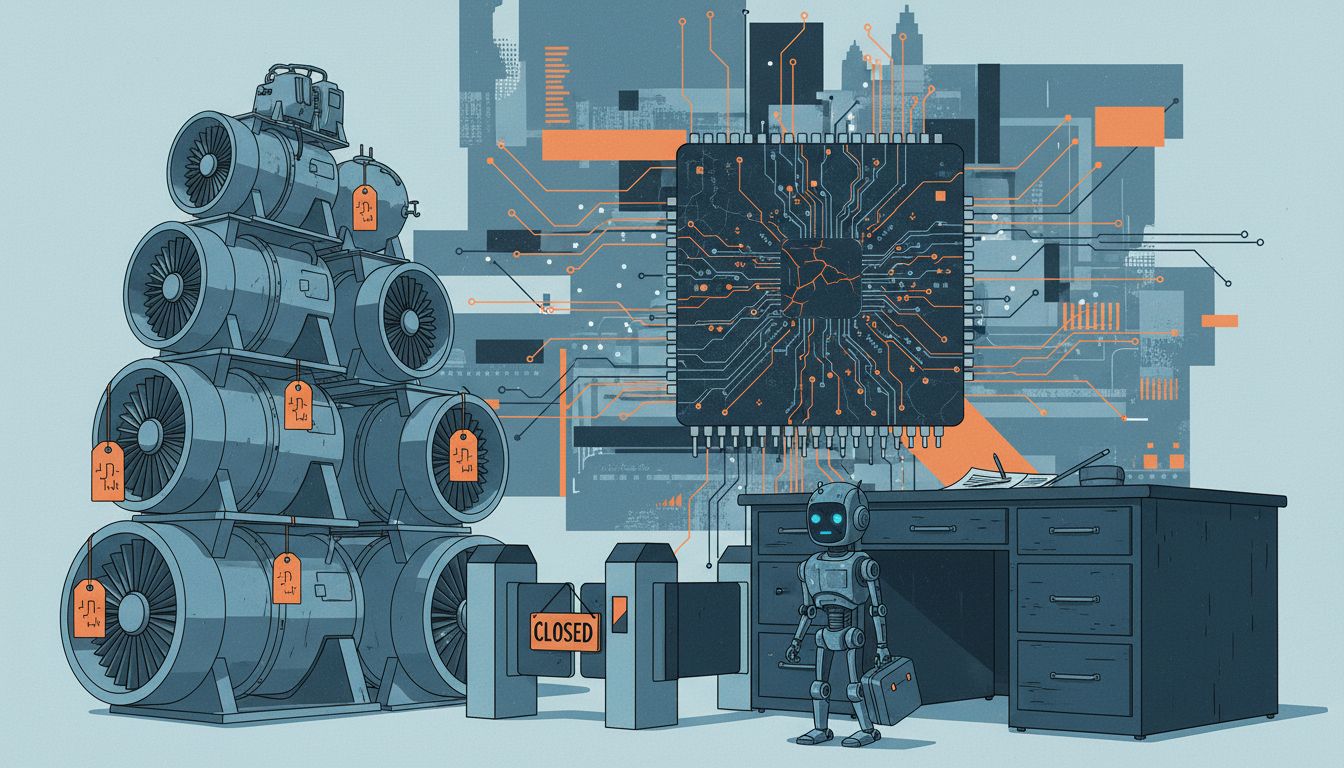
Intel has received a waiver after concerns that a vague US ban on foreign-made robots could hit chip fabs, according to Ars Technica. The only supported detail is Intel’s claim that foreign-made robotic vehicles are crucial to US chip production. The full article was not available to us.
The tension is plain from the headline alone. A policy meant to protect domestic industry caught a company building chips at home, and the fix was a waiver instead of a clearer rule. A waiver helps Intel, but it leaves open whether other fab operators face the same uncertainty and whether the rule will be rewritten. Anyone planning US capacity should want those answers before the next fab project, not after.
5. Instacart is shopping itself while its stock is up 25%
Instacart has reportedly hired an investment bank to evaluate options. The Information says it has held acquisition talks with DoorDash, and Bloomberg says it also spoke with Uber, which reportedly walked away. TechCrunch notes these are early discussions that may not lead to a sale. Instacart declined to comment.
The timing undercuts the weakness narrative. Instacart’s market cap is above $13 billion and its stock is up 25% this year, so this looks more like testing the market from strength than fleeing it. TechCrunch suggests the company may want to sell before grocery delivery gets more competitive, which is plausible but is speculation.
The market’s reaction was lopsided: Instacart jumped more than 9.2% on Friday while Uber and DoorDash fell. Investors liked the target’s price but not the prospect of the buyers paying it. If a deal emerges, the question is whether the buyers can justify it to their own shareholders.