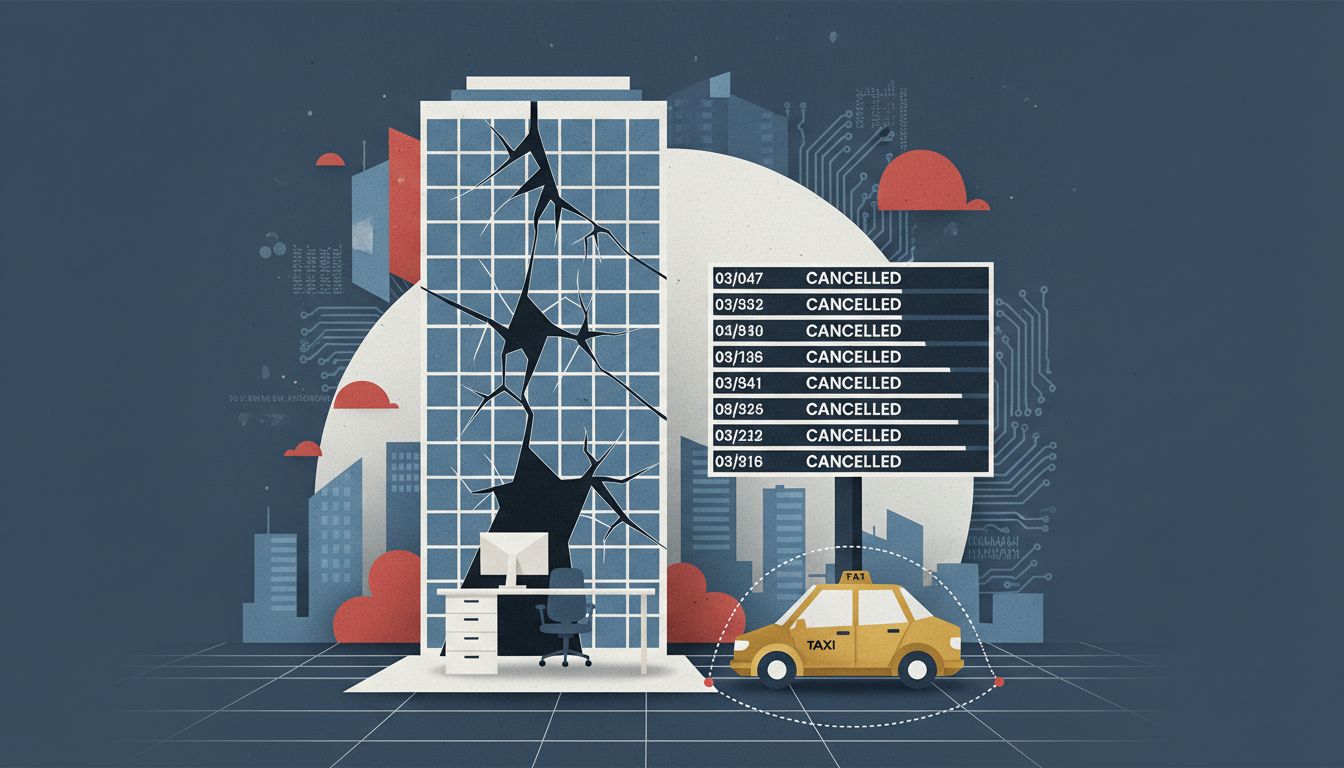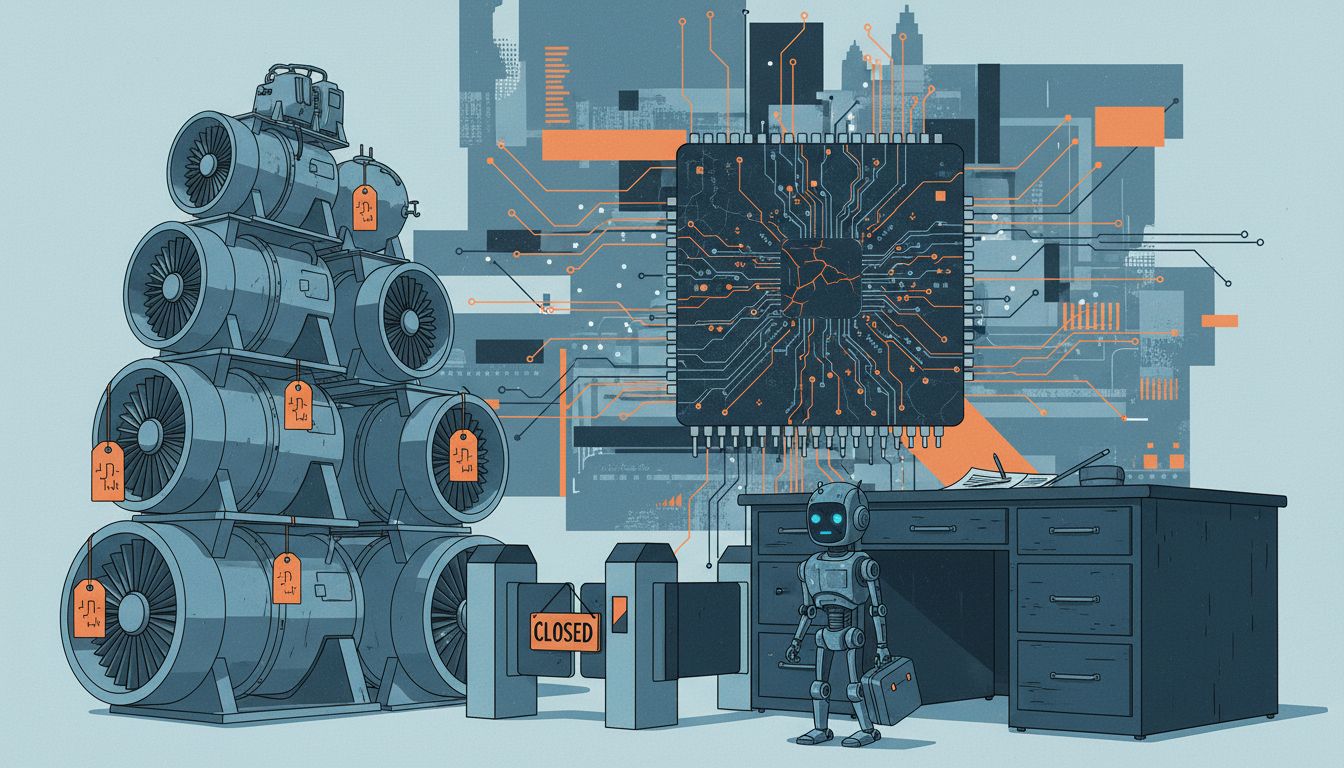
The AI buildout is still getting funded, but the buyers are changing and the terms are getting stranger. Today’s evidence: a smaller OpenAI round, a chipmaker that may guarantee a customer’s construction debt, and a court telling xAI its turbines aren’t exempt just because they’re mobile.
1. OpenAI’s mega-round gets a haircut, but not a collapse
Calling this a collapse overstates it. OpenAI has reportedly lined up $11 billion, which most companies would frame and hang on the wall. The problem is the trajectory. It was first reported to be raising $30 billion at a $1.4 trillion valuation, then at $1.25 trillion. The Financial Times now says the target is $20 billion, with a first close expected to come in below that.
The detail worth chewing on is who is filling the gap. The FT says investors from the United Arab Emirates will lead, and a retail offering for wealthy individuals could get the round to $20 billion. The Wall Street Journal reports a ‘tepid’ response from some large investors. TechCrunch ties that partly to timing: Wall Street has grown wary of heavy AI infrastructure spending, and tech stocks have sold off.
Our read: the marginal dollar is moving from institutions that scrutinize the business toward sovereign and private-wealth money. That can work, but it is a different bargain, especially with an IPO planned. None of these reports describe OpenAI’s losses or unit economics, so ‘investors doubt the burn rate’ is inference. OpenAI hadn’t commented when TechCrunch published.
2. Nvidia may co-sign a customer’s construction debt
Nvidia has already sold the shovels and financed the miners. Now it’s reportedly considering guaranteeing the mine’s construction loans. The Information reports that Nvidia is in talks to back billions in debt for Nscale’s West Virginia campus, where Anthropic has a $44.6 billion contract for the first 460-megawatt building. Bloomberg later corroborated the report. It’s talks, not a signed deal.
The structure is a residual value guarantee. If Nscale defaulted on construction payments, Nvidia would temporarily take over the facility and help find a buyer and a new tenant. Its earlier support mostly covered leases and chip purchases, not construction. The Information puts Nvidia’s investments and credit support to neoclouds and large customers at roughly $170 billion.
The case for needing a backstop is visible in the details. Nscale had about 25,000 chips running in August against a plan of nearly 500,000. Construction runoff has flooded nearby homes more than once, and Microsoft pulled out of an English site after grid power slipped into the 2030s. Neocloud stocks fell more than 30% in October.
Our interpretation: lenders seem less worried about Anthropic’s demand than about Nscale delivering on time. Nvidia’s guarantee is partly a bet that a finished Vera Rubin campus stays resellable, and partly a way to keep its own chips flowing.
3. xAI’s ‘they’re mobile’ defense fails to stop the turbine lawsuit
xAI’s argument was that its gas turbines outside Memphis don’t need air permits because they’re mobile. A federal judge has now rejected that for the purposes of the case. Judge Debra M. Brown ruled the turbines are not ‘mobile sources’ under Mississippi’s State Implementation Plan. The NAACP, represented by the Southern Environmental Law Center, alleges at least 35 turbines ran at the Colossus site without preconstruction or operating permits.
The ruling also rejected xAI’s standing arguments and its claim that citizen suits are unconstitutional. TechCrunch reports that a similar motion from the Department of Justice was denied earlier this month. This is a denial of a motion to dismiss, not a finding that xAI broke the law. The merits are still ahead.
So ‘regulatory floodgate’ is too strong. The lesson is narrower and more useful for builders: onsite gas generation is a fast way to get power, and it carries permitting and litigation risk if the paperwork isn’t there. That matters more as opposition hardens. WIRED reports at least 20 gubernatorial candidates have promised data center moratoriums or pauses, and a Siena poll found 63 percent of New Yorkers would oppose local data centers even after the state’s pause ends.
4. The hiker-chatbot problem is overconfidence, not a casualty wave
The Mount Shasta example is almost comically mundane. Three 20-year-olds brought too little food, overestimated their fitness, and summited at 7:30 pm. They admitted that relying partly on Google’s Gemini fed into the planning. One hurt his knee. A Forest Service official said they ‘kind of turned their brains off.‘
The data doesn’t show a wave of AI-caused disasters. Shasta’s office averages about a dozen rescues a year, and 2026 looks average. Wyoming search-and-rescue calls are down, at 312 so far versus 466 in all of 2025. Meanwhile, Grand Teton’s superintendent says visitors reporting AI use for travel information went from zero to 26 percent in a year.
The sharper point comes from Clemson’s Chris Flathmann: social media offers inspiration, while chatbots offer instructions, delivered with authority and tuned to tell users what they want to hear. Our read is that this is the real product risk. A wrong answer is bad, and a wrong answer that sounds like a ranger is worse. It’s also unclear how much blame the chatbots deserve: the British Columbia teen also used Google Maps and AllTrails.
5. Dartmouth’s AI-cheating warning came from a provost who lost his job over AI
Ars Technica’s headline carries the irony: Dartmouth’s provost warned about AI cheating, and his own AI use cost him his job. The excerpt we can see adds only one line: ‘People who love AI don’t always love telling others they used it.’ The full article wasn’t available to us, so what he used AI for and how it came to light are not in our evidence.
What the headline does support is a familiar governance problem. Institutions are writing rules for other people’s AI use before settling what they expect of their own leaders. Policies that bind students and faculty but not administrators don’t last long. Expect more disclosure fights where the issue is the gap between what someone says about AI and what they do.