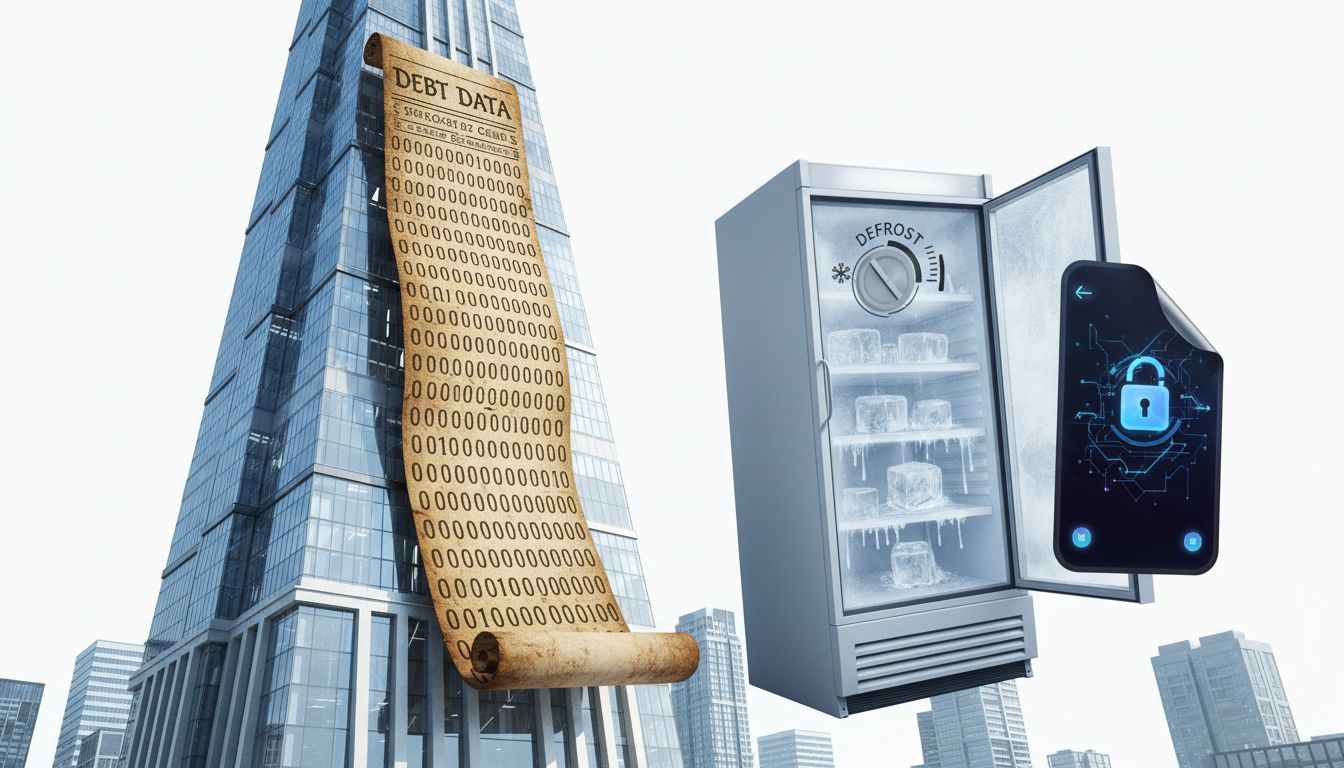
Anthropic’s prospectus has the usual doomsday risk language, but the scarier part is arithmetic. Elsewhere, refrigerators keep getting hacked in Europe, and some apps turn out to be shells for something much uglier than their store listings suggest.
1. Anthropic is going public with a very large bill attached
The good news in Anthropic’s 614-page S-1, as The Register’s reporters read it, is that the business looks better than feared. They cite an operating loss of about $693 million on $16.3 billion in net revenue. They also say revenue outpaced compute expenses two to one for the first time. The much bigger $80.7 billion loss figure, systems editor Tobias Mann says, appears to be mostly an accounting adjustment tied to equity paid to compute partners. The filing, he notes, is fuzzy on the details.
The bad news is the schedule of payments. Mann and his colleagues put Anthropic’s compute commitments at roughly $780 billion to $807 billion and counting, stretching out about two decades. Mann says that even at a 2:1 revenue-to-compute ratio, covering those bills implies something like $200 billion a year in revenue. The company itself warns that missing payments could cascade: no compute means no revenue means no next payment.
The filing’s other risks make the bet shakier. Some of Anthropic’s biggest suppliers also compete with it. Open-weight models threaten startup customers who may trade down in a downturn. And the reporters point to AWS and Microsoft telling their own engineers to ease off heavy token use. Cheaper inference could rescue the model, but it could also hand customers the pricing power.
This is one outlet’s skeptical podcast discussion, not a full audit of the filing. Even so, the argument is simple and easy to dispute: Anthropic needs demand to grow as fast as its obligations, and the filing doesn’t prove it will.
2. Europe’s fridge hacks hit a flaw researchers flagged in August
The attackers did not need a zero-day. According to TechCrunch, security researchers say the fridge hacks trace to internet-connected units from Danfoss that no longer received security updates, and Claroty had warned in August that they were exposed to remote attacks and outages.
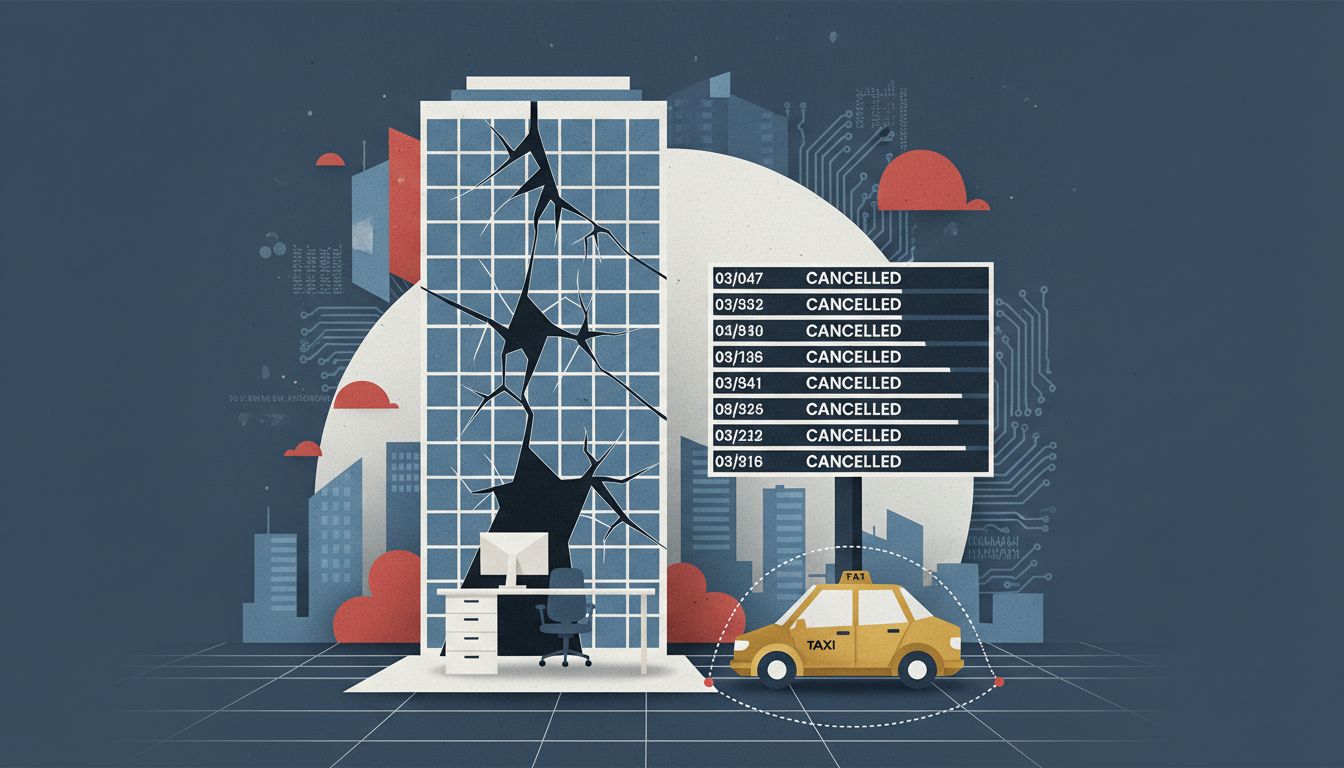
The second wave hit dozens of stores in Belgium, Ireland, Luxembourg and Sweden. Ahold Delhaize and Colruyt confirmed the attacks. Per Reuters, a Belgian company that runs Delhaize’s systems said the hackers changed the settings to defrost. An earlier wave last month in France spoiled food at hundreds of supermarkets by raising unit temperatures.
The pattern is a maintenance failure with a cleanup bill. Retailers and operators pay in binned food. An abandoned product line sat online while a public warning went unheeded, and it was easy to hit twice.
Attribution remains murky. TechCrunch reports only that U.S. defense officials are investigating whether freezers on military bases were hacked by Iran-backed hackers. That is a separate probe, not a link to the European attacks. The practical question for operators of connected equipment is simple: when a vendor stops patching, who is responsible for pulling it offline?
3. The FBI blames North Korea for a $6.3 billion Binance heist
The Register’s headline says the FBI has pinned a $6.3 billion crypto heist at Binance on North Korean hackers. The text available to us contains only that headline, so what follows is limited to it.
If the attribution holds, the figure is eye-watering and the culprit is a familiar one. What we can’t responsibly say is how the theft worked, who bore the losses, or whether Binance customers were affected. Those details decide whether this is a story about exchange security, state-backed theft, or both.
So the open question is not the one pundits will rush to ask about decentralization. It is what the FBI says about how the money left and how much has been recovered.
4. These pet-portrait apps passed review, then turned into deepfake tools
The app store listing said pet portraits. After download, depending on who you were and where you came from, it could load something else entirely. WIRED found a network of more than 400 linked apps and domains that behave this way, with the server deciding whether to show the benign version or a web interface for sexually abusive deepfakes. One apparent trigger was installing after clicking a Meta ad.
Apple’s defense is revealing. It says the apps complied when reviewed, and that developers later changed the website the app pulls content from. Apple says it has suspended tens of thousands of apps for such bait-and-switch tactics in the past year, and removed 19 apps here after WIRED asked. Google had removed most of them before being contacted. WIRED says 27 were live on Google Play in September, with more than 350,000 downloads combined.
For developers, this isn’t a story about innocent apps misused. These operators appear to be deliberate: WIRED’s researchers describe an organized operation run through a Hong Kong entity, KeLing Technology Limited, which didn’t respond to requests for comment. The lesson is that store review inspects a snapshot, while the abuse lives on a server that can change afterward. Meta says it has since acted on thousands of related ad accounts and pages, yet WIRED reports similar ads and apps were still appearing as it finished.
5. Microsoft’s Canada timezone mess has admins faking a Bogota location
Few sentences describe enterprise IT better than The Register’s headline: admins are fixing calendars and pretending they’re in Bogota. The page text we have contains only the headline and site navigation, so the cause and scope are outside what we can verify.
What the headline does show is the cost of a timezone bug: someone has to patch calendars by hand, and the workaround involves lying to the software about where users are. Bogota is presumably useful because it is a stand-in zone, but we can’t say more about why it works.
The question for Microsoft is whether a real fix arrives before the workaround becomes permanent.