Google is giving schools a way to say no to AI, as long as they’re willing to give up Search too. Elsewhere, the price of running agents is getting awkward, from a $200K personal token bill to a Gartner claim that open models do most of the work for a fraction of the cost.
1. Google lets schools refuse AI, then attaches Search to the bill
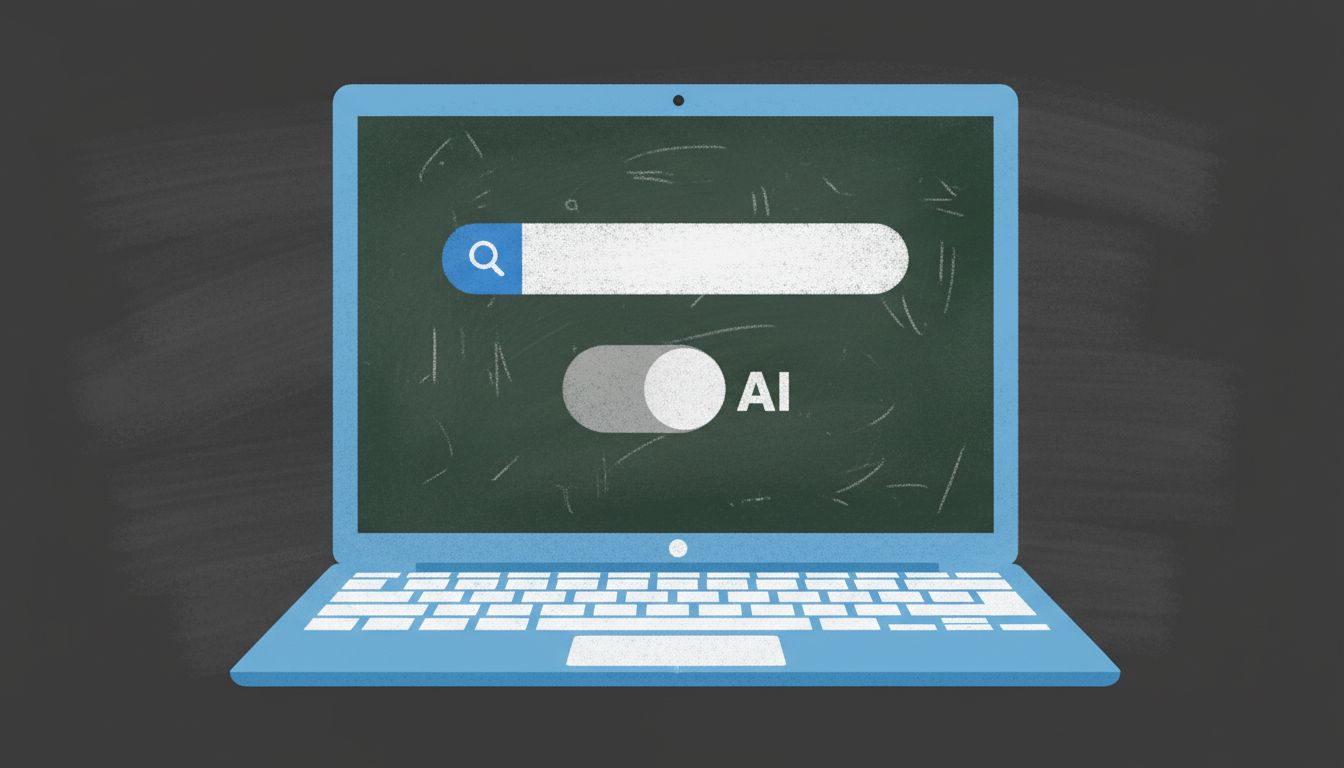
Google says that starting next year, AI tools for K-12 students will be off unless a school administrator turns them on. That covers Gemini, NotebookLM, Gemini in Classroom and Search. It sounds like a win for schools until you reach the Search part. According to TechCrunch, a school that restricts AI entirely loses access to Google Search.
Google’s Chris Phillips told The New York Times that “Search and AI are deeply integrated,” so students at those schools will see a message saying Search is unavailable. Google frames this as giving school leaders “control and confidence.” But a control with that penalty looks more like a default with a toll. Teachers who dislike AI Overviews still want students finding sources.
The leverage comes from Chromebooks and Google’s classroom footprint. Few districts can easily swap out a search engine, so most will probably accept the AI. Google says specifics will reach schools in the coming months, and the open question is whether it offers any middle path, such as Search without AI features. For now, the company’s stated position is that none exists.
2. Gartner says open models handle most agent work for far less
Gartner’s claim, as headlined by The Register, is that open models can do 90 percent of agentic work at a twentieth of the cost of a frontier LLM. The supplied text is only the headline, so the benchmark, task mix and definition of “agentic work” aren’t visible here.
Even so, the shape of the claim matters. If the cheap model handles nine tasks in ten, the frontier model starts to look like a specialist you call for the hard tenth, not a default. That is a more awkward position for a premium-priced product. The caveat is obvious: a 90 percent average hides which 10 percent fails, and in agent chains a failure can matter more than a cost saving. Anyone planning around this number should find Gartner’s methodology first.
3. A bootkit hit fully patched Windows PCs, and Secure Boot is the question
Ars Technica’s headline is blunt: a UEFI bootkit called BlackX infected fully patched Windows machines, and it asks whether Microsoft is to blame. The only detail available is the excerpt, which says BlackX exploits Microsoft’s lack of clarity around Secure Boot protections.
That wording points at a documentation and expectations problem, not a conventional unpatched hole. If so, the practical lesson is uncomfortable: “fully patched” and “Secure Boot enabled” may not mean what administrators assume. The full article was not accessible, so the mechanism and the scale of infection remain unclear.
4. mSecure says change your passwords, but not why
The Register reports that password manager mSecure is telling users to change their passwords without explaining why. That is all the supplied material establishes. There is no confirmed breach, cause or scope in the text we have.
Still, the request is a strange one from a company whose product is trust. Users can’t judge urgency without knowing what happened. Teams that rely on mSecure should treat the notice as a reason to ask the vendor direct questions, and not assume the worst or the best.
5. Garry Tan’s $200K token habit comes with a warning label
Y Combinator CEO Garry Tan told Walter Isaacson’s podcast that he spends roughly $100,000 to $200,000 a year on tokens. His agent has read his email, Dropbox and Apple Notes, including therapy notes going back 20 years, and YC runs an internal agent called Stray Light with context on founders and applicants.
It would be easy to read this as proof that agent economics are broken. Tan’s own framing is narrower. This is one heavy personal user, and he says costs have to fall before personal agents go mainstream. “It’s too expensive right now,” he said, calling his spending “a crazy privilege.“
The more interesting tension is his closing wish for a personal AI you control, set against an agent that has absorbed two decades of his private life. Who holds that data is the question his own example raises.