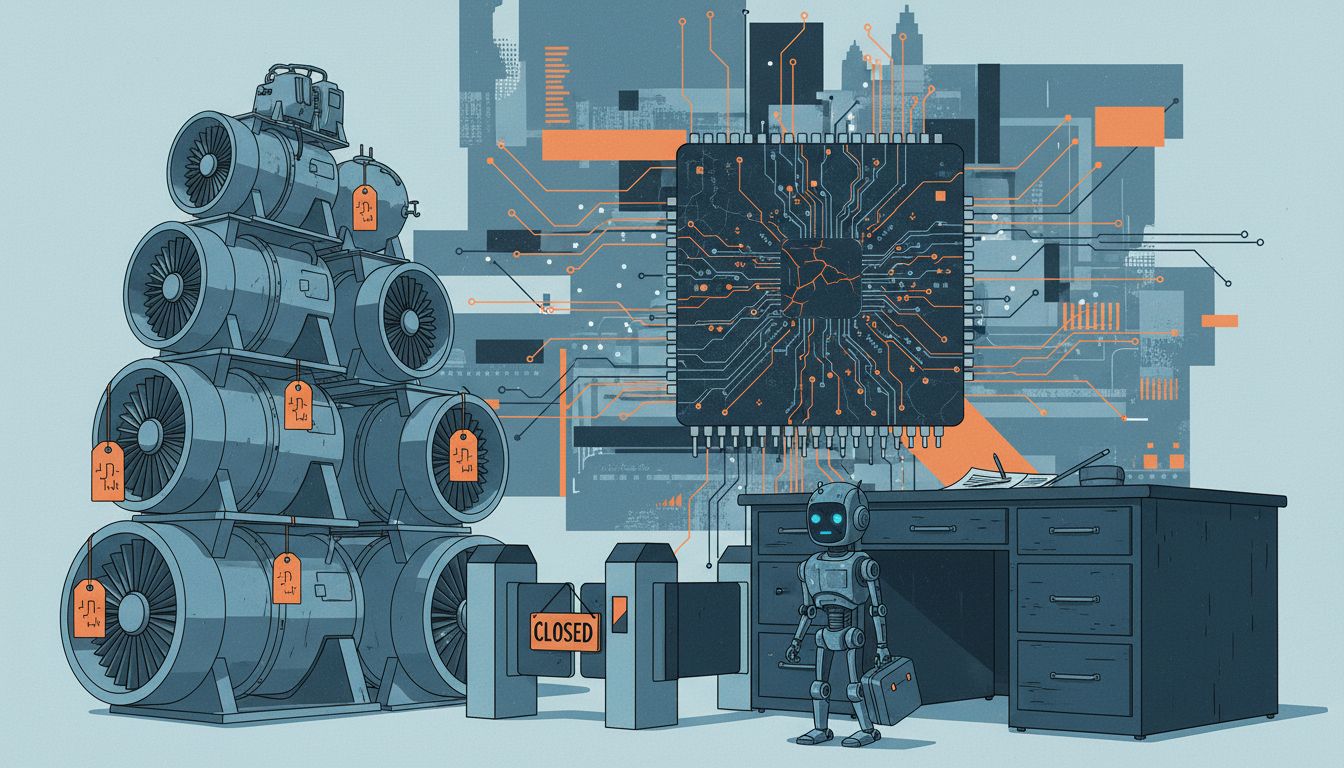
Anthropic is heading to market at up to $1.4 trillion with a nine-month loss bigger than most unicorns’ valuations. Meanwhile, the unglamorous parts of the stack, from remote-access tools to browsers to AI middlemen, keep springing leaks.
1. N-able pulls the plug after bugs land on GitHub
N-able’s hosted N-Central service is offline, and the company wants customers to shut down their self-hosted copies too. That is a drastic request for a tool whose job is remotely managing other machines, and it follows researcher Ben Bales publishing a set of zero-days on GitHub on Sunday with no advance notice.
Bales calls the bugs Able2Shell and says they can steal credentials, create new admin accounts and give root access. He told Bleeping Computer he went public because N-able allegedly hadn’t patched flaws he reported in a different product. That is his account, and N-able hasn’t answered it in the TechCrunch piece.
N-able says it has no evidence of successful exploitation. But it didn’t say whether it could tell, for instance from server logs. For anyone running N-Central, the shutdown request is the stronger signal. Remote-management software is a master key to everything it touches, and public exploit code means the grace period is already over.
2. Anthropic’s IPO is a trillion-dollar bet with a haircut
The headline number is $1.404 trillion, but the story is the gap. That’s the fully diluted value at the top of a $70-$78 range, up from $965 billion in May yet well below the roughly $2 trillion Anthropic was reportedly targeting a couple of months ago. TechCrunch frames the IPO as proceeding despite shakier markets and a pullback from AI investing.
The filing shows why investors might pay anyway. Run-rate revenue hit $81 billion at the end of October, about $10 billion more than a month earlier. Against that: a nine-month net loss of $104 billion on $33.2 billion of revenue, and $900.9 billion in compute and infrastructure commitments, against about $132 billion in cash and short-term investments.
Then there’s who is buying. A separate $26 billion private sale at the IPO price goes to AMD, Broadcom, Google, Micron, Microsoft, Nvidia and TSMC, with Google and Nvidia putting in $10 billion each. Many of those are suppliers or partners, which is one way to read it as confidence. Another is that the biggest checks come from companies that profit when Anthropic spends on compute.
Public buyers also get little say. Founders hold a Class F share with 50.1% of the vote, and the Long-Term Benefit Trust elects a board majority. OpenAI, reportedly valued at $1.25 trillion last week after raising $11 billion, nearly half of its $20 billion target, suggests the same cooling.
3. Fireworks AI’s second breach disclosure raises the middleman question
Fireworks AI is dealing with a second round of bad news: The Register reports that customer data exposure has widened. The inference company is pinning the latest breach on a cloud provider and on LLMJacking miscreants.
The available text is only a headline and standfirst, so what was exposed and to whom remains unclear. The attribution still matters. Blaming a cloud provider and outside attackers may be accurate, but customers don’t buy inference platforms to learn where the blame lies.
The practical point is for anyone routing model traffic through a third party. Before the next incident, find out what credentials and data that vendor holds on your behalf, and how fast it tells you when something goes wrong.
4. Microsoft’s Claude default puts UK admins on a deadline
The Register’s headline says Microsoft is giving Claude “the keys” to UK Copilot tenants by default. Admins reportedly have until December 9 to review. The word “default” is the issue: an optional integration becomes something customers must actively refuse.
The source text here is just the headline, so the details need checking against Microsoft’s own admin notice. The first question is where Claude-handled tenant data is processed, since that decides whether this is a routine toggle or a data-residency decision. The second is whether the setting can be changed per user group.
Opt-out rollouts favour the vendor, because most organisations won’t read the message center until after the deadline. That is when a default becomes the policy.
5. Chrome hits eight zero-days for 2026
Chrome has now patched its eighth zero-day of 2026, according to The Register’s headline. Its phrase “whack-a-mole” fits: each fix is good news, and each is also proof that someone found the bug first.
The text we have is only that headline, so root causes and exploitation details are beyond what this briefing can say. The count alone is still useful for IT teams. Eight exploited-in-the-wild bugs in under eleven months makes browser updates a routine security control, not a background chore.
The practical test is how quickly your fleet picks up a fix after release. In a browser that updates constantly, a laggard machine is the real exposure.