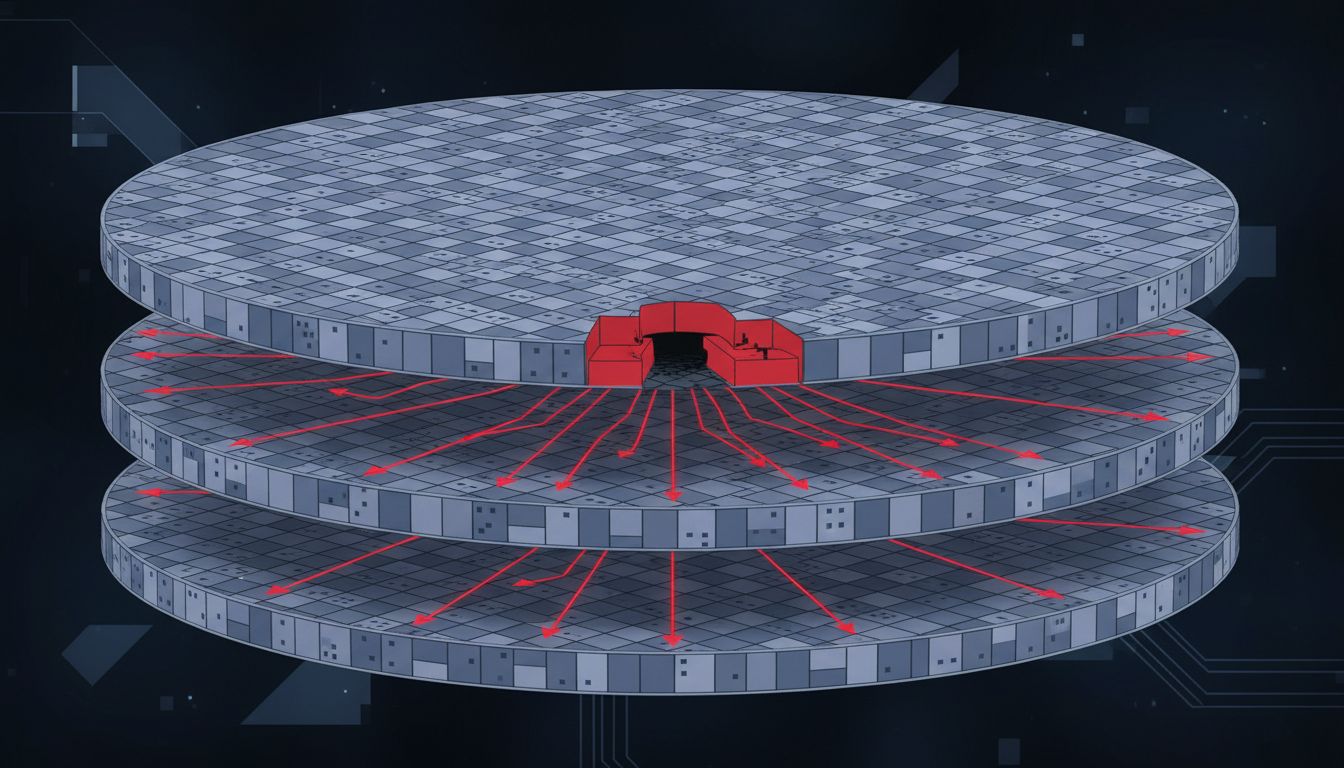

The Asymmetry Nobody Warns You About
Shipping a feature feels like progress. It has a launch date, a changelog entry, maybe a blog post. Deleting one feels like failure, even when it’s the right call. This asymmetry isn’t just psychological. It’s structural, and it shapes the decisions teams make in ways they rarely articulate.
When you add a feature, the downside is diffuse. If nobody uses it, you wasted some engineering time. When you remove a feature, the downside is concentrated. The handful of users who depend on it will notice immediately, loudly, and with justifiable frustration. That asymmetry means teams consistently err toward accumulation, shipping things they shouldn’t and keeping things they should kill.
The result is software that grows heavier with each cycle. Not just in code size, but in cognitive load, maintenance burden, and the quiet tax of keeping old behavior stable while building new behavior around it.
What “Nobody Uses This” Actually Means
Usage analytics are the first place teams look when evaluating a feature for removal. If less than one percent of users touch a feature in a given month, the instinct is to call it dead weight. That instinct is often wrong.
Usage frequency and usage criticality are not the same thing. A feature that gets triggered once a quarter by a small subset of users might be the exact reason those users pay for your product at all. Enterprise software is full of examples where a “rarely used” export format or an obscure permission model is load-bearing for a client’s entire compliance workflow. Lose it and you lose the contract, not just a power user.
This is why raw telemetry is necessary but not sufficient. Teams need to pair usage data with user research, support ticket analysis, and direct conversation. The question isn’t “how often is this used” but “what happens to the people who use it if it goes away.” Those are genuinely different questions, and conflating them is how teams make removal decisions they later regret.
The related danger is survivorship bias in the support queue. Users who figured out a workaround for a broken feature stopped filing tickets about it. The silence looks like nobody cares. It often means people cared enough to adapt.
The Dependency Problem Nobody Mapped
Features rarely exist in isolation. They appear isolated in the UI, but underneath they share data models, API contracts, and behavioral assumptions with parts of the system that will outlive them. Removing a feature cleanly means understanding every surface it touches, and that map is almost never written down.
This is the same problem that makes deleting a database column riskier than it looks. You can grep for obvious references, run your test suite, and still ship a removal that breaks something three services away because a background job was reading a field you thought was orphaned. Features compound this. They have UI state, server logic, data persistence, and sometimes external API endpoints that partners have been quietly calling for years.
At scale, this gets worse. Large codebases develop what might be called feature archaeology: the accumulation of conditional logic, database flags, and configuration options that encode years of product decisions. Removing a feature in this environment means excavating what it actually does versus what it was supposed to do, which are often different things. The engineer who fixes the bug rarely knows why it existed, and the engineer removing the feature faces the same epistemological problem at a larger scale.
The practical implication is that feature removal requires more upfront investigation than feature addition. You’re not scoping what to build. You’re auditing what already exists, including the parts that were never properly documented because the original authors left and nobody asked.
The Political Geometry of Removal
Every feature that exists was championed by someone. A product manager made the case for it. An engineer built it. A designer sweated over the interaction details. Removing it activates a specific kind of organizational immune response, because deletion implicitly says that the original decision was wrong.
This is where the hardest part of feature removal moves from technical to social. The technical challenges are tractable. They’re hard, but they’re solvable with enough investigation and careful execution. The social challenges are trickier because they involve institutional memory, ego, and the human tendency to conflate a product decision with professional identity.
Teams that handle this well tend to do a few things. They frame removal as product maturity rather than product failure. Software that can delete things confidently is more trustworthy than software that accumulates without discipline. They also involve the original stakeholders early, not as gatekeepers but as sources of context. The person who championed a feature usually knows more about why it exists than anyone, and that knowledge is worth extracting before you destroy what they built.
The teams that handle it poorly announce removals as corrections. That’s almost always the wrong frame, and it burns the political capital you’ll need for the next removal decision.
How to Actually Deprecate Something
The mechanics of responsible feature removal are well understood, but routinely skipped because they add friction to a decision that already took months to reach.
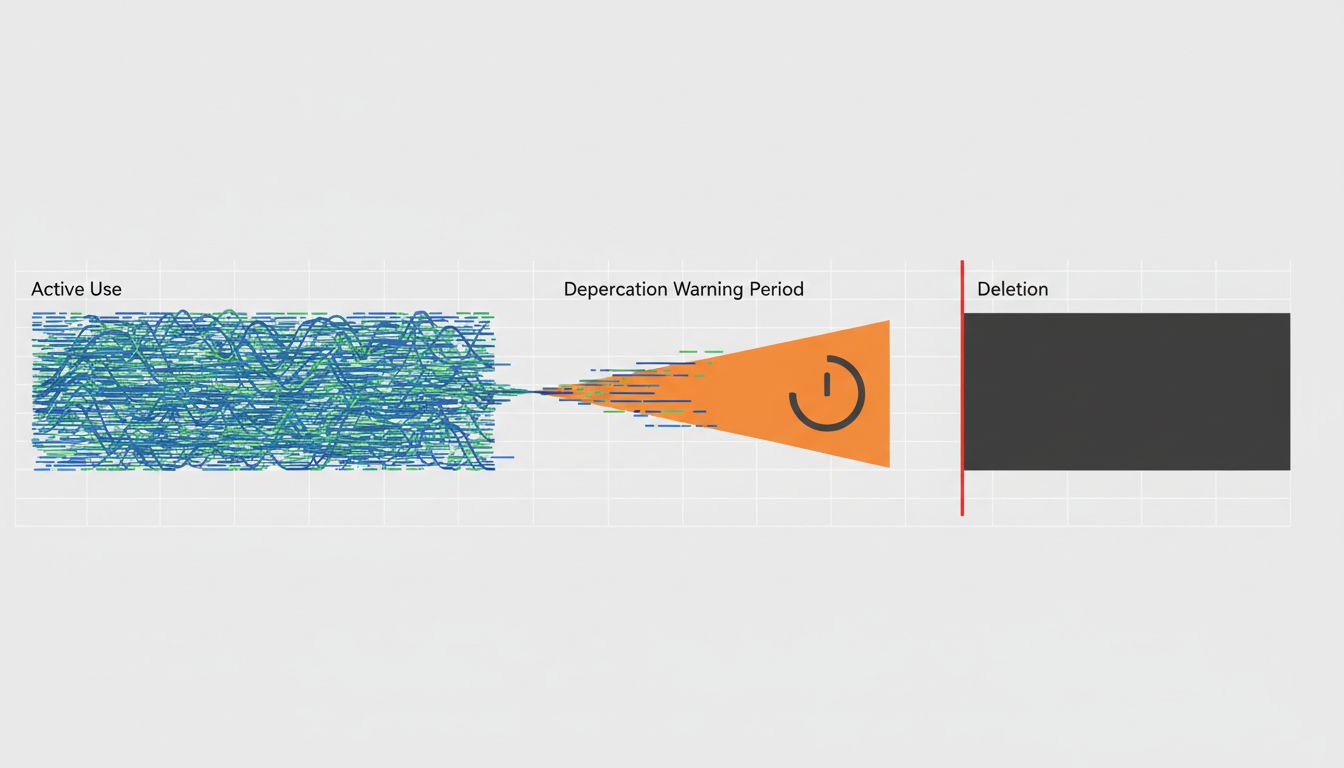
The first step is a deprecation window with real user communication. Not a changelog line that power users might find. Actual notification to the people who use the feature, with enough lead time for them to adapt. What counts as enough depends on how critical the feature is and how complex the alternative workflow is. A week is almost never enough. Months usually are.
The second step is building the off-ramp before you remove the on-ramp. If users are relying on a feature to accomplish a goal, make sure there’s a documented path to accomplishing that goal differently before you close the original path. This sounds obvious and is frequently skipped.
The third step is instrumenting the removal itself. After you deprecate and before you delete, watch what happens. Are the users who relied on the feature adopting the alternative? Are support tickets spiking in categories that suggest people are hitting the absence of something they expected? Deprecation is a feedback mechanism, not just a courtesy notice.
Finally, the actual deletion should be clean and verifiable. This is software, and clean removal of dead code genuinely improves maintainability. The temptation to leave the code in place “just in case” defeats most of the point. Feature flags and dead code paths are maintenance debt with a steady interest rate.
The Case for Doing It Anyway
None of the above complexity is an argument against deleting features. It’s an argument for doing it seriously.
Software that accumulates without shedding gets slower to change, harder to understand, and increasingly expensive to maintain. The teams working on it spend more of their time navigating historical decisions and less time making new ones. This is not a hypothetical trajectory. It’s where most mature codebases actually end up, and it compounds.
The discipline of removal is what separates products that age well from products that eventually require a ground-up rewrite because nobody could safely change anything anymore. Basecamp has written publicly about removing features as a core practice. Apple’s decision to remove the headphone jack from the iPhone in 2016 was widely criticized and ultimately shifted the industry. Neither example is evidence that removal is always right, but both illustrate that the discomfort of removal is often disproportionate to its actual consequences.
More important than any specific example is the underlying principle: accumulation is not neutral. Every feature you keep has an ongoing cost. It has to be tested, documented, supported, and kept compatible with whatever you build next. The question is never “should we pay the cost of removing this” but “which cost do we prefer to pay.” Teams that don’t ask the second question usually end up paying both.
What This Means
Feature deletion is hard because the costs are concentrated and visible while the benefits are diffuse and slow to materialize. A user who loses a workflow they depended on is immediately unhappy. The engineering team that no longer has to maintain a code path gets a benefit that accumulates invisibly over months and years.
That asymmetry won’t go away. What changes is whether your team has the processes to counteract it: rigorous usage analysis that distinguishes frequency from criticality, dependency audits before any removal decision, stakeholder involvement that extracts institutional knowledge rather than activating defensiveness, and deprecation practices that treat users as partners in the transition rather than recipients of a decision already made.
The teams that get this right build products that stay coherent over time. The teams that avoid it build products that eventually collapse under their own surface area. Deletion, done well, is one of the most sophisticated things an engineering organization can do.