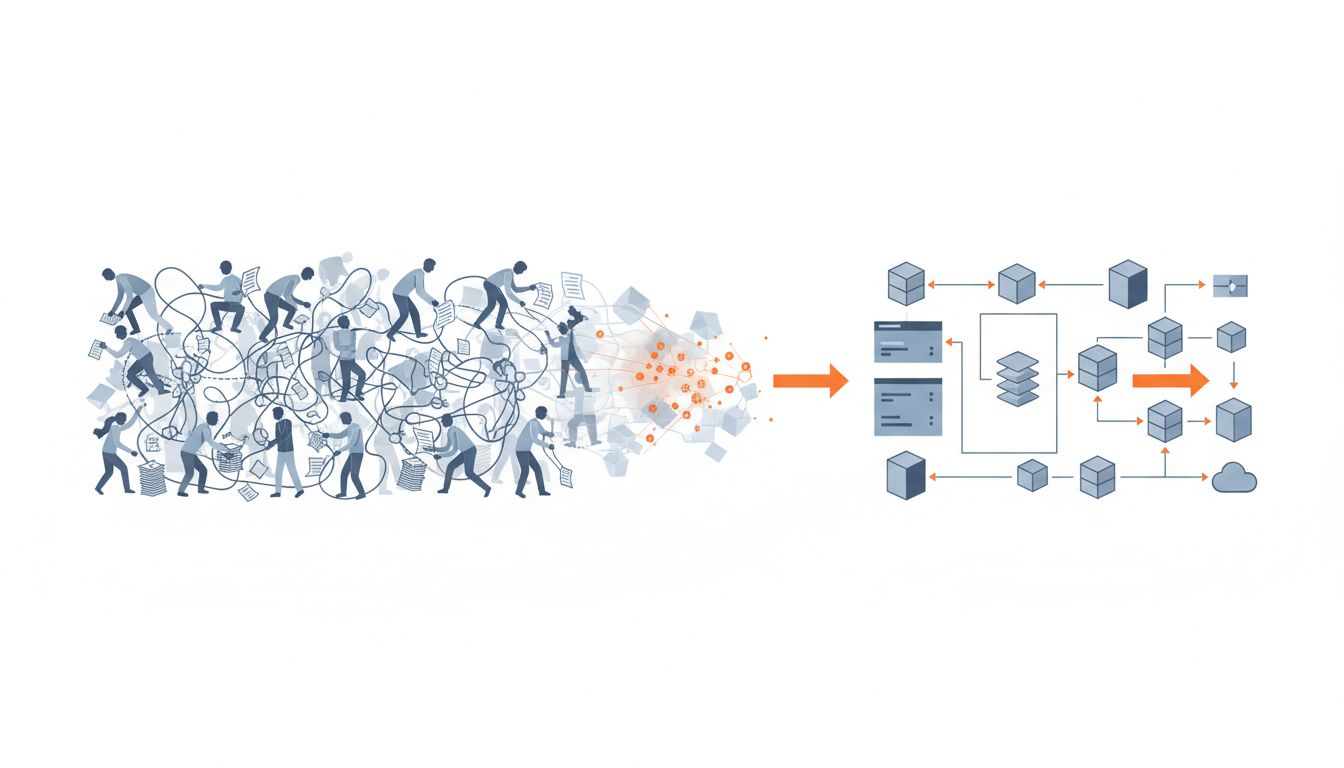
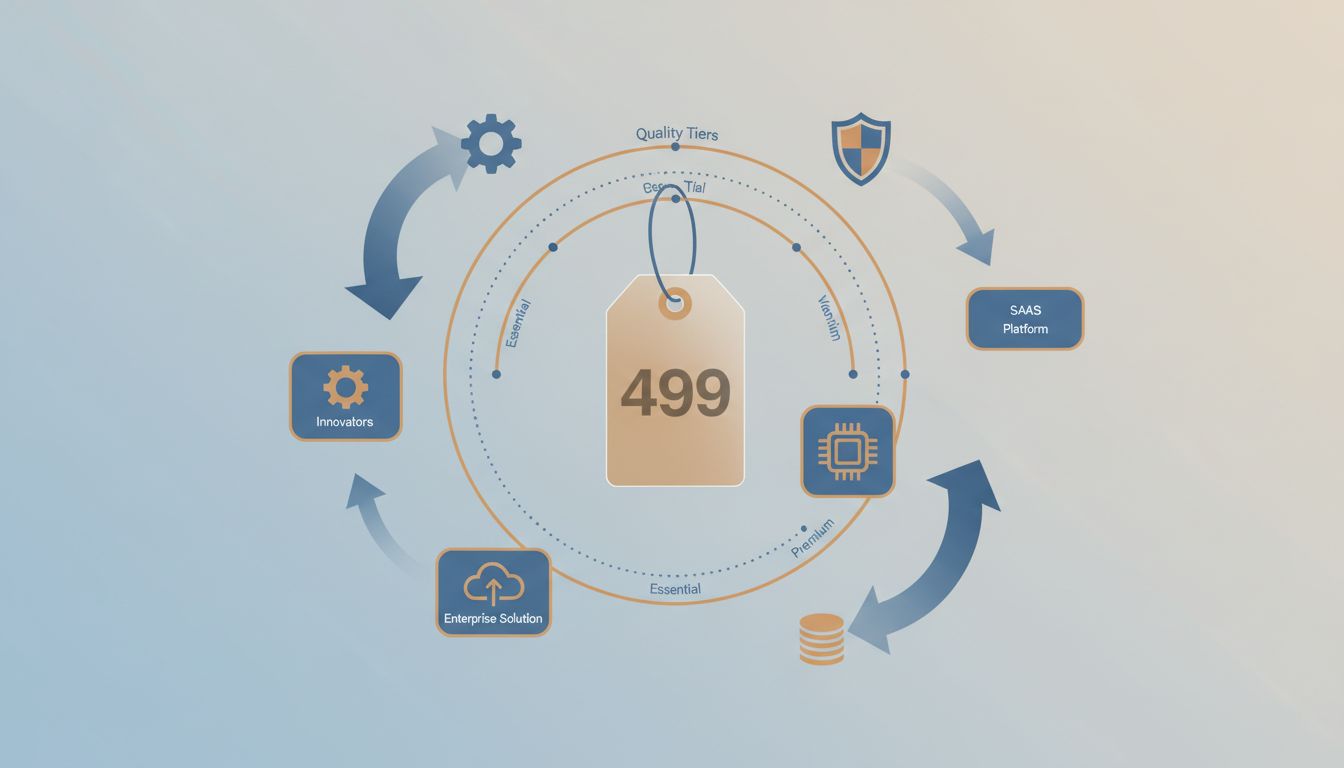
A founder I know spent three weeks running a pricing survey before his first paid launch. He tested six price points, analyzed the responses, built a spreadsheet model, and landed on $67 per month because the data said so. Six months later he was doing free trials to fill a pipeline that refused to close. The number had been optimized. The strategy didn’t exist.
This is the most common pricing mistake at early-stage startups, and it’s almost universal. Founders treat pricing as a revenue optimization problem when it’s actually a communication problem. Your price tells customers who you’re for, how seriously to take you, and what category of product they’re buying. Get those signals wrong and the number itself becomes irrelevant.
Price Is a Signal Before It’s a Revenue Stream
When a potential customer sees your price for the first time, they’re not doing mental arithmetic. They’re pattern-matching. Is this a tool or a platform? A nice-to-have or a business-critical system? Something a junior employee can expense or something that needs a VP’s signature?
Stripe launched in 2011 with a 2.9% plus 30 cents per transaction pricing model. The number wasn’t revolutionary. PayPal’s fees were in the same neighborhood. What Stripe’s pricing communicated was entirely different: no setup fees, no monthly minimums, no contracts. That structure signaled that Stripe was built for developers who wanted to move fast, not finance teams who needed to negotiate. The price architecture did more positioning work than any marketing copy.
At the early stage, you almost certainly don’t have enough data to optimize price for revenue. You have maybe a dozen customers. What you do have is complete control over what your price says about your product. Charge too little and you attract customers who will grind you on support, never expand, and churn the moment a cheaper alternative appears. Charge in the enterprise range and you’ll wait months for deals to close, which is its own kind of death if you’re pre-product-market fit.
The Real Cost of Underpricing
Every founder has heard “charge more” from every advisor they’ve ever had. Most founders hear it, nod, and go back to underpricing anyway. The advice bounces off because it sounds like generic confidence-boosting rather than a structural argument.
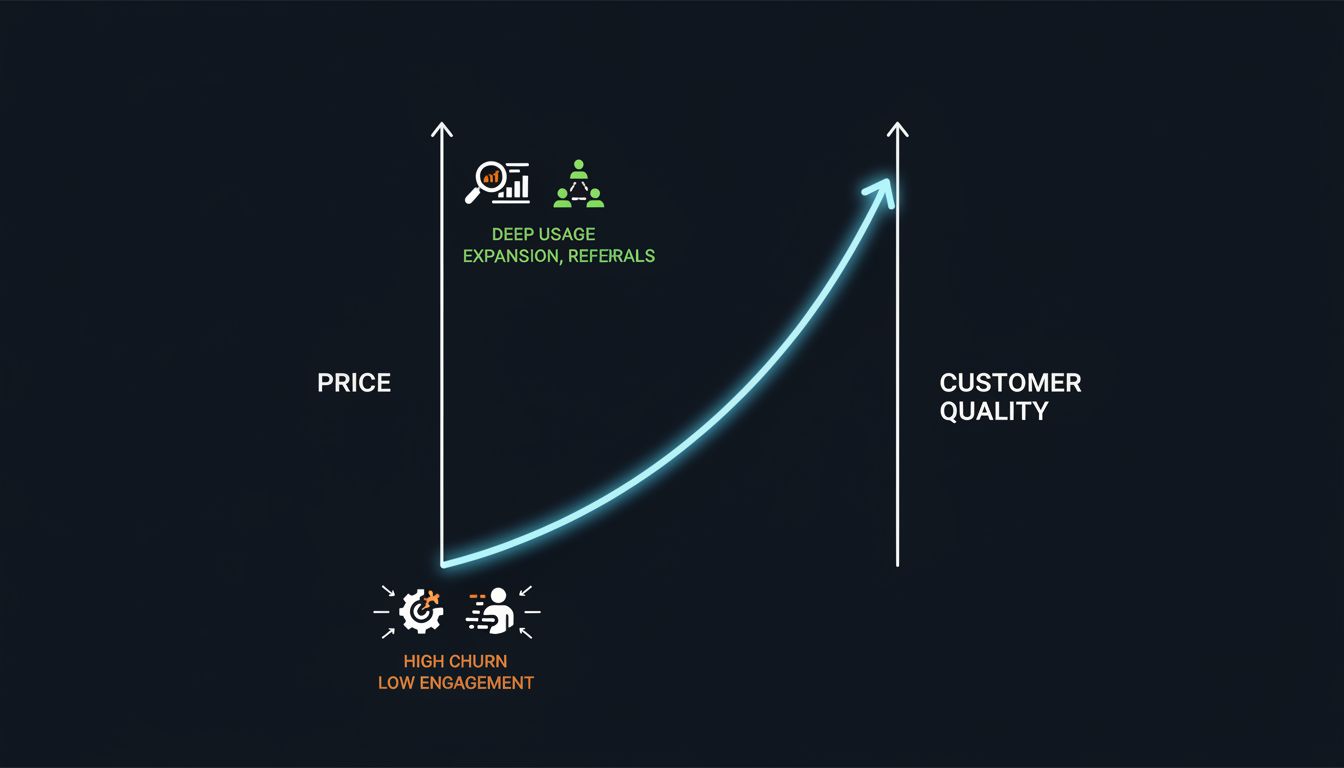
Here’s the structural argument: low prices don’t just mean less revenue per customer. They actively select for the worst customers. When you price low, you fill your pipeline with people for whom the cost was the primary reason they said yes. These customers have the least invested in making your product work, the lowest pain threshold for any friction, and the highest sensitivity to competitor pricing. They won’t give you meaningful feedback because they don’t use the product seriously enough to have strong opinions. They won’t refer others because they don’t think highly enough of the product to stake their reputation on it.
Meanwhile, customers who would have paid more, and gotten serious value at that price, self-select out because your low price signals that you’re not in their tier. The best pricing strategy turns away bad customers is a real phenomenon, not a contrarian take.
The math on this compounds fast. Ten customers at $50 who churn in four months is less valuable than two customers at $500 who stay two years and expand. But beyond the math, the high-value customers fund the product knowledge you need. They tell you what to build because they’re using the product seriously. The $50 customers just tell you what to fix because they’re frustrated.
Pricing Without Competitors Is Still Possible
The default move when you don’t know what to charge is to look at competitors and undercut slightly. This is almost always wrong, for reasons that go deeper than most founders realize.
If you’re genuinely building something new, competitors’ pricing is based on their cost structures, their customer relationships, and the value their product delivers. None of those apply to you yet. Pricing yourself as a cheaper version of an established player tells the market you’re a discount alternative, which shapes every sales conversation you’ll have for the next year.
The better move is to anchor on value delivered to your specific early customers. Not the theoretical value, not the value you hope to deliver eventually. The actual, concrete, measurable thing that happens for the three customers who are genuinely excited about what you’ve built. Ask them directly what they’d pay, but more usefully, ask them what problem you’re solving and how much that problem costs them when it’s unsolved. The answers to those questions will tell you more about your pricing than any competitive analysis.
You’re also not locked in. Early-stage pricing is not a permanent decision. It’s a hypothesis. The goal is to pick a number that lets you learn, not a number that you can mathematically justify before you’ve run any experiments.
When to Actually Change Your Price
The signal that you need to raise prices is not “we could be making more money.” That’s always true. The signal is that your close rate on qualified leads is high enough that price is clearly not the obstacle. When almost everyone who understands the product and has the problem says yes, you’re underpriced.
The signal that your pricing structure is wrong, separate from the number, is that your best customers are on your lowest tier and your worst customers are on your highest. This happens when you’ve built tiers around features rather than value. Enterprise customers don’t pay more because they get more features. They pay more because the problem is worth more to them and because the cost of the product failing is higher. Your tiers should reflect that, not a feature checklist.
Changing prices on existing customers is a different and harder problem. The startups that handle it well communicate clearly, grandfather existing customers for a reasonable period, and frame the change around value added rather than cost adjustments. The ones who handle it badly just send an email with a new number and lose the customers who were on the fence anyway.
The Number Comes Last
Get your positioning right. Know who you’re selling to and what category you belong in. Understand the actual value you deliver to the customers who care most. Design a structure (per seat, per usage, flat monthly, annual contract) that aligns your incentives with your customers’ incentives. Then pick a number that’s consistent with all of that.
The founders who agonize over $49 versus $99 are optimizing the least important variable last. The ones who grow do it the other way around.