The simple version
Every task you start but don’t finish is a small tax on your future attention. Finishing yesterday’s work clears that tax before you add new debt.
Why new work feels better than it is
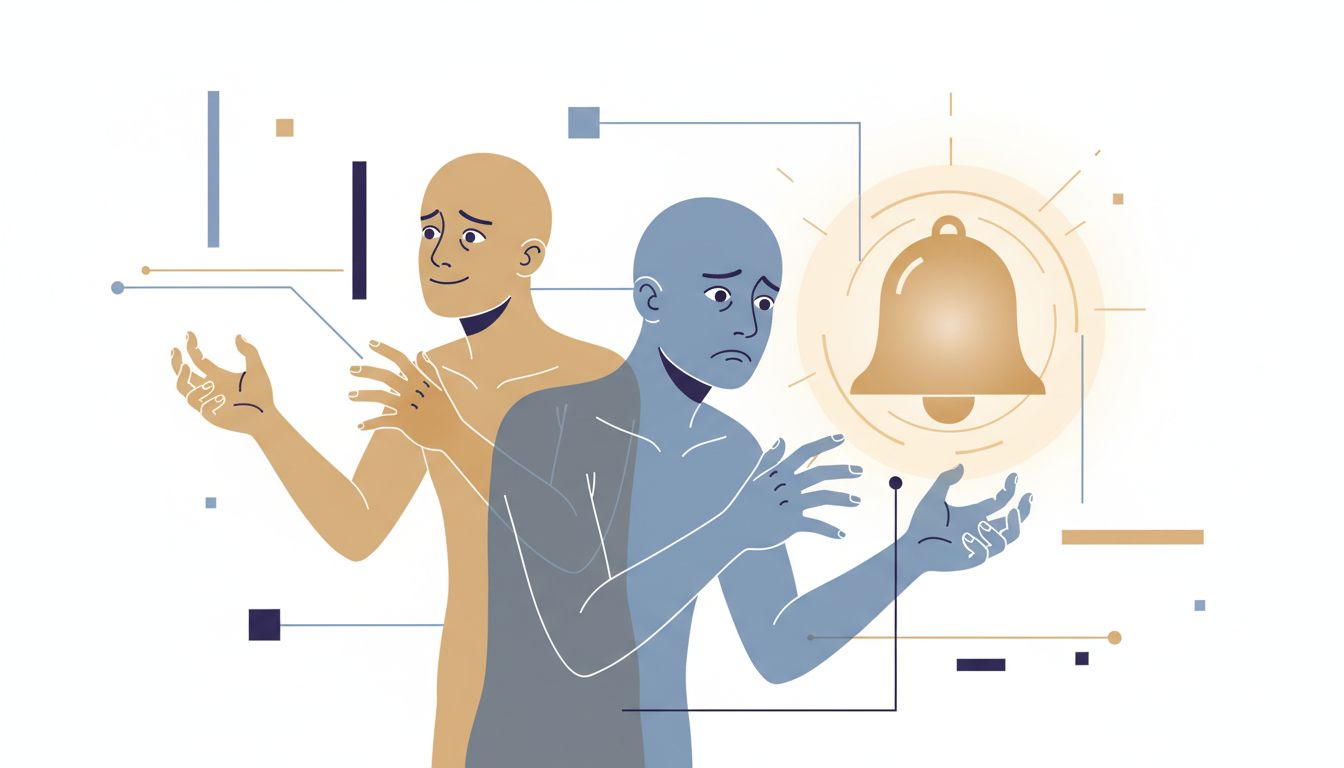
There’s a well-documented cognitive bias toward beginnings. Starting something new carries a burst of motivation, a sense of possibility, and the pleasant feeling of competence before you’ve hit any real friction. Psychologists call this the “fresh start effect,” and it’s real enough that gym memberships spike every January and every Monday morning.
But that feeling is a signal about your emotional state, not about your output. Starting ten things and finishing none of them leaves you exactly as far from done as when you began, with the added burden of ten open loops competing for attention.
This is the core problem with how most people structure their days: they optimize for the sensation of momentum rather than the reality of progress.
The open loop problem
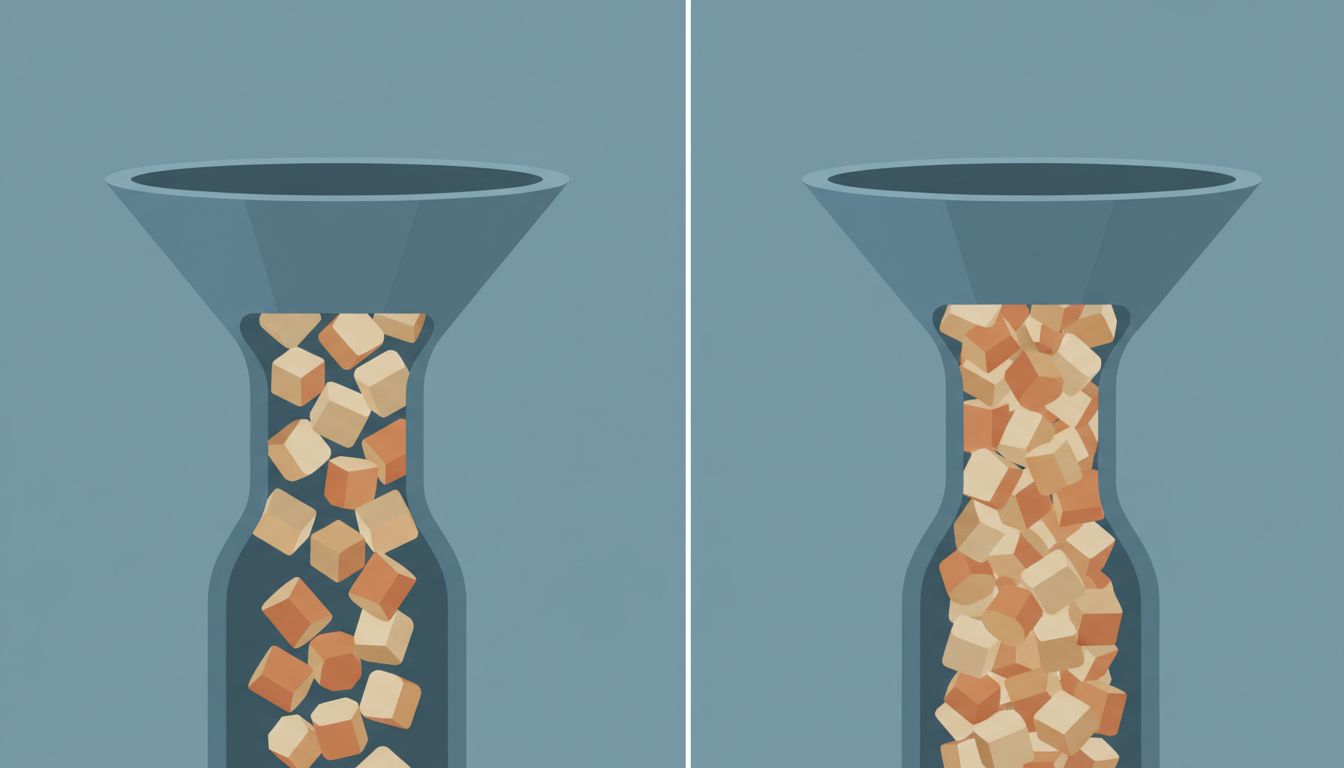
In software, we talk about “context” as the state a program holds in memory while it’s executing. When you switch between tasks, your brain does something similar. It tries to maintain the context of whatever you were working on so you can pick it back up. The problem is that human working memory is not a stack with reliable push and pop operations. It’s lossy, it degrades over time, and maintaining multiple open contexts simultaneously is expensive.
Every unfinished task is an open loop. It sits in the background consuming cognitive resources even when you’re not actively thinking about it. Psychologists Bluma Zeigarnik documented this in the 1920s: people remember interrupted tasks better than completed ones, precisely because the brain keeps a background process running to flag the incompleteness. The Zeigarnik effect is useful for memory but punishing for focus.
So when you arrive at your desk Monday morning with three half-finished things from last week and decide to start something new, you’re not working with a full tank. You’re running on a machine that’s already burning cycles on background processes.
Completion has compounding returns
Finishing something does more than just remove a task from a list. It releases the cognitive resources that task was holding. That release is immediately available to whatever you do next. Finish two or three things in sequence and you’re building a kind of productive momentum that is qualitatively different from the false start of beginning something new.
This is part of why the advice to “eat the frog” (do your hardest task first) works when it works: you’re not just clearing a difficult item, you’re freeing a significant amount of background anxiety that was draining you. The rest of the day runs on cleaner fuel.
There’s also a compounding effect on the work itself. Many tasks have dependencies. The pull request you didn’t merge is blocking a colleague. The design decision you didn’t finalize means the engineer is guessing. The email you didn’t send is holding up a decision downstream. Unfinished work doesn’t just cost you attention: it costs everyone downstream time, and often introduces errors when people fill in missing context themselves.
This is related to why finishing your to-do list is not the same as good work. Volume of completions matters less than which things you actually close out and what they unblock.
How to operationalize this
The practical application is simpler than you might expect, but it requires resisting the pull of novelty.
Before you open anything new, audit what’s in flight. Not a full project review, just a quick scan: what is 80% done? What needs one more step from you? What is sitting in someone else’s queue but could be nudged forward with five minutes of attention?
Prioritize those over new starts. The heuristic I’ve found useful is to treat anything over 70% complete as a higher priority than anything at 0%, almost regardless of the relative importance of the tasks. The closer something is to done, the cheaper it is to finish, and the higher the immediate return on the attention you spend.
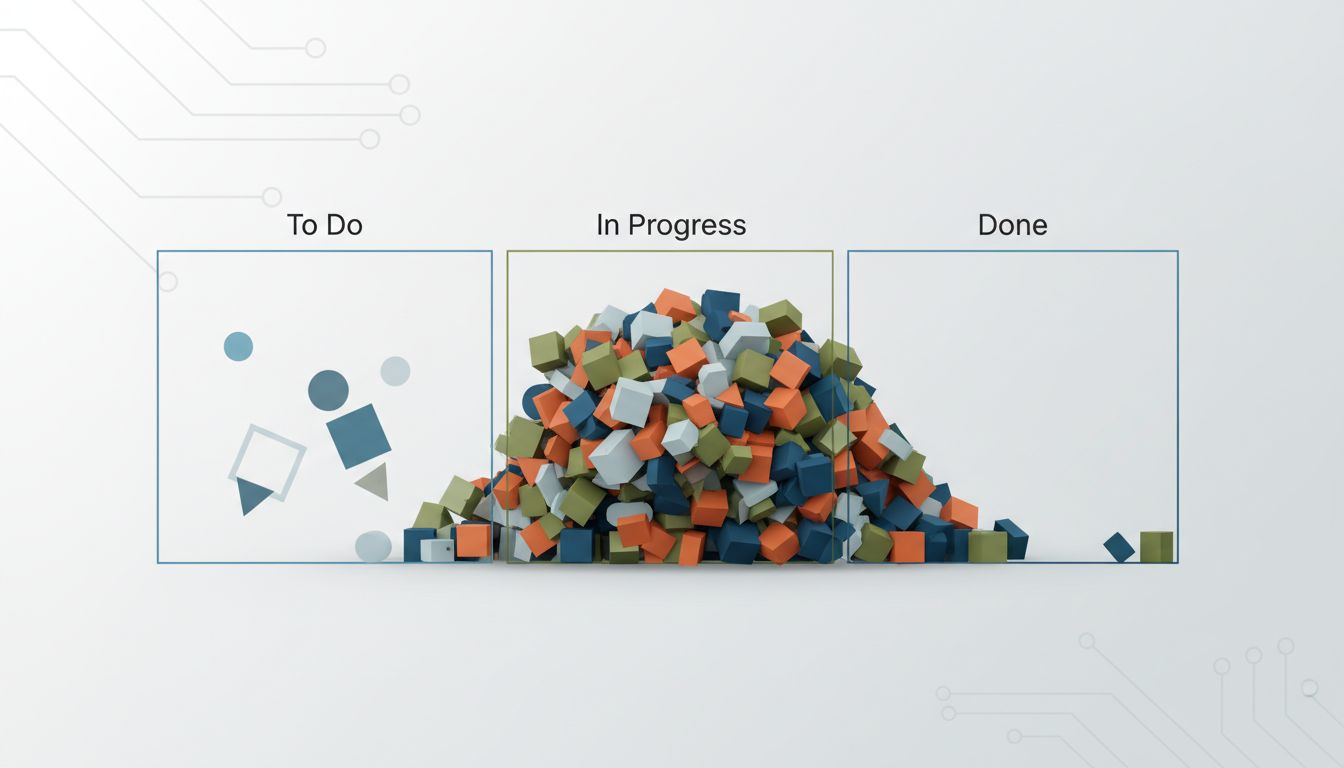
This is analogous to a concept in operations called “work in progress” (WIP) limits. Lean manufacturing and later software development methodologies like Kanban formalized the idea that limiting how many things are simultaneously in progress produces better throughput than maximizing starts. The intuition is simple: a factory floor with 200 half-assembled products is not twice as productive as one with 100. It’s slower, because coordination costs and context-switching overhead grow with the number of active items.
Your personal workflow has the same property. More in progress means more overhead per unit of actual output.
The one exception
There are cases where starting something new is genuinely the right move: when finishing yesterday’s work requires input you don’t have, when a task is blocked on someone else and cannot be nudged forward, or when a new item has genuine urgency that outweighs the cost of adding another open loop.
But notice how specific those conditions are. They require a real blocker or a real urgency, not just the feeling that today’s task seems more interesting or that last week’s problem got a little harder than expected. Most of the time when people start something new instead of finishing something old, none of those conditions are actually present. They’re rationalizing the emotional appeal of a fresh start.
The honest check is: “What would I have to finish before I could start this with my full attention?” If there’s a clear answer, finish that first. The new thing will still be there, and you’ll approach it in better shape.
Productivity advice is full of systems for capturing and organizing new work. Very little of it is about the discipline of not starting new things. That discipline is where most of the leverage actually lives.