The simple version
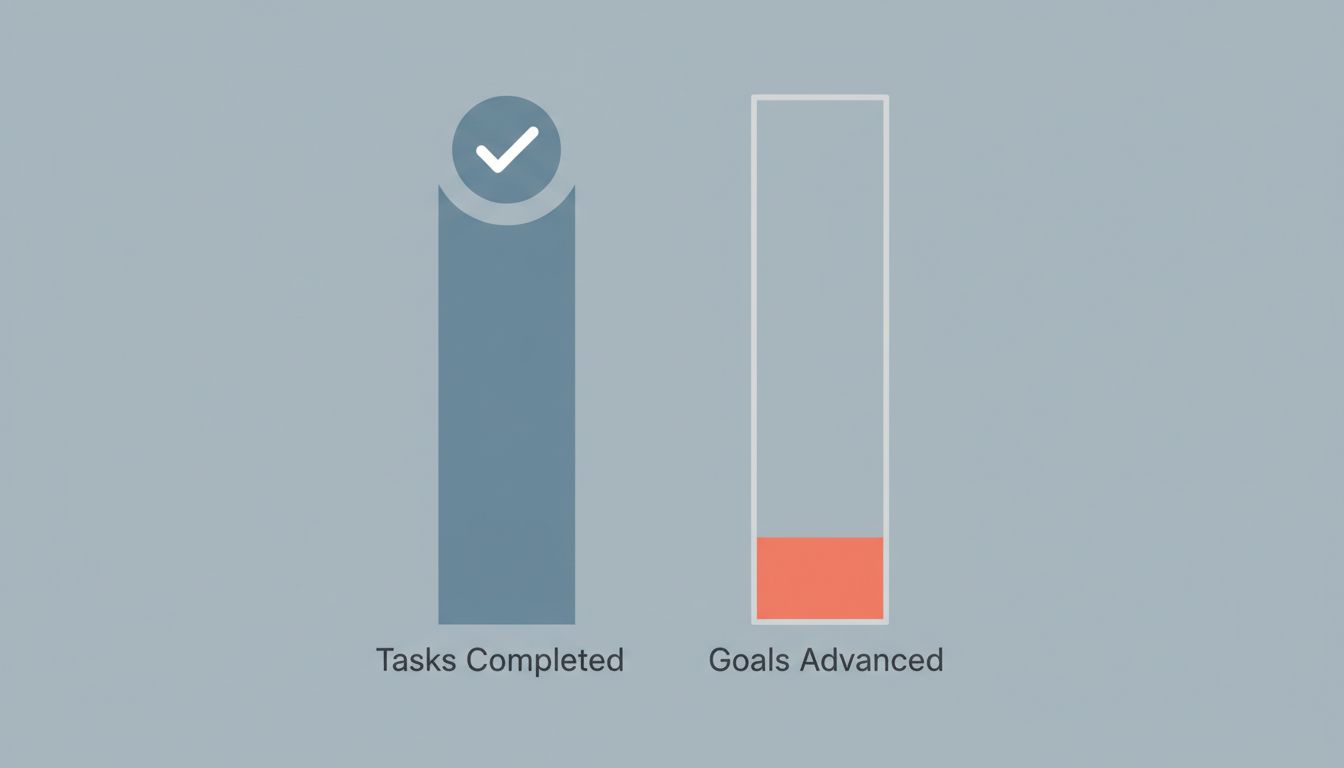
A to-do list measures whether you completed tasks, not whether those tasks mattered. Those are completely different problems, and most productivity systems only solve the first one.
Why completion feels so good (and why that’s the problem)
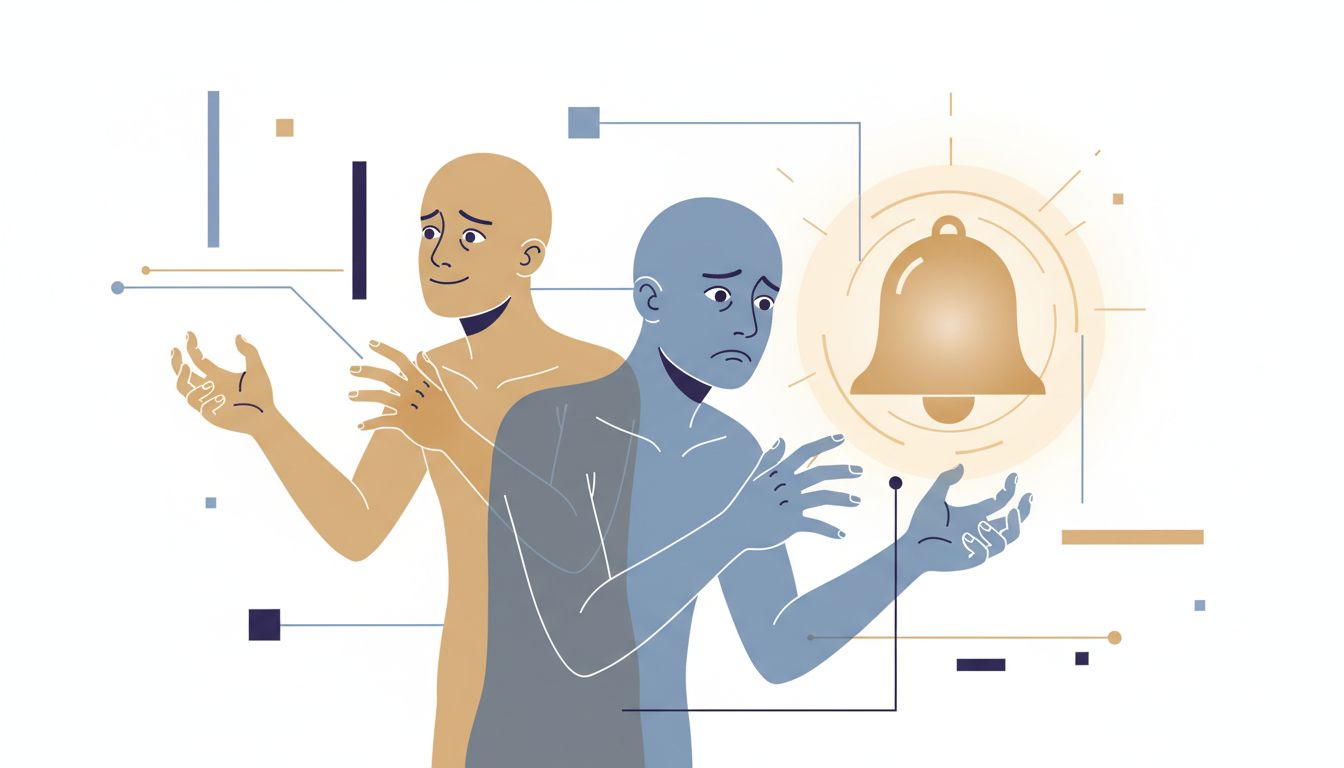
There’s a reason checking off tasks feels satisfying. Your brain releases a small hit of dopamine when you complete something with a clear endpoint. This is the same reward mechanism that makes video games compelling: discrete objectives, visible progress, clear resolution. The problem is that dopamine doesn’t know whether you were working on the right things. It just knows you finished.
This creates a feedback loop that productivity systems quietly exploit. The more granular your tasks, the more checkboxes you create, the more often you get that little chemical reward. Breaking “write quarterly report” into twelve sub-tasks feels like organization. It’s also a way to feel productive twelve times instead of once.
The issue isn’t discipline or laziness. It’s that the measurement system itself is misaligned. You’ve optimized for a metric (task completion rate) that doesn’t actually track what you care about (meaningful output). Engineers call this Goodhart’s Law: when a measure becomes a target, it ceases to be a good measure. To-do lists fall into this trap constantly.
The difference between urgent and important (and why we always pick urgent)
Eisenhower’s matrix, which separates tasks by urgency and importance, has been described so many times it’s almost become meaningless. But it’s worth taking seriously as a diagnostic tool rather than a productivity framework.
Urgent tasks have deadlines, waiting people, blinking notifications. They create discomfort if ignored. Important tasks are the ones that move your actual goals forward, but they rarely come with external pressure. Writing a proposal that could change your team’s direction is important. Responding to a Slack message that appeared twenty minutes ago feels urgent.
The structural problem is that to-do lists treat both categories identically. They’re just items. The item “follow up on invoice” and the item “rethink our onboarding flow” sit in the same list, rendered in the same font, waiting to be checked off with the same gesture. One might take four minutes. One might be the most valuable thing you could do this month. The list doesn’t know and doesn’t care.
Most people, when given a mix of urgent and important work, will default to urgent. Not because they’re shortsighted, but because urgent tasks have clearer success conditions and faster feedback. Important work is often ambiguous, uncomfortable to start, and slow to show results. The to-do list makes it easy to stay busy with urgent tasks and feel productive while the important work sits there, perpetually delayed.
How your list grows to fill available space
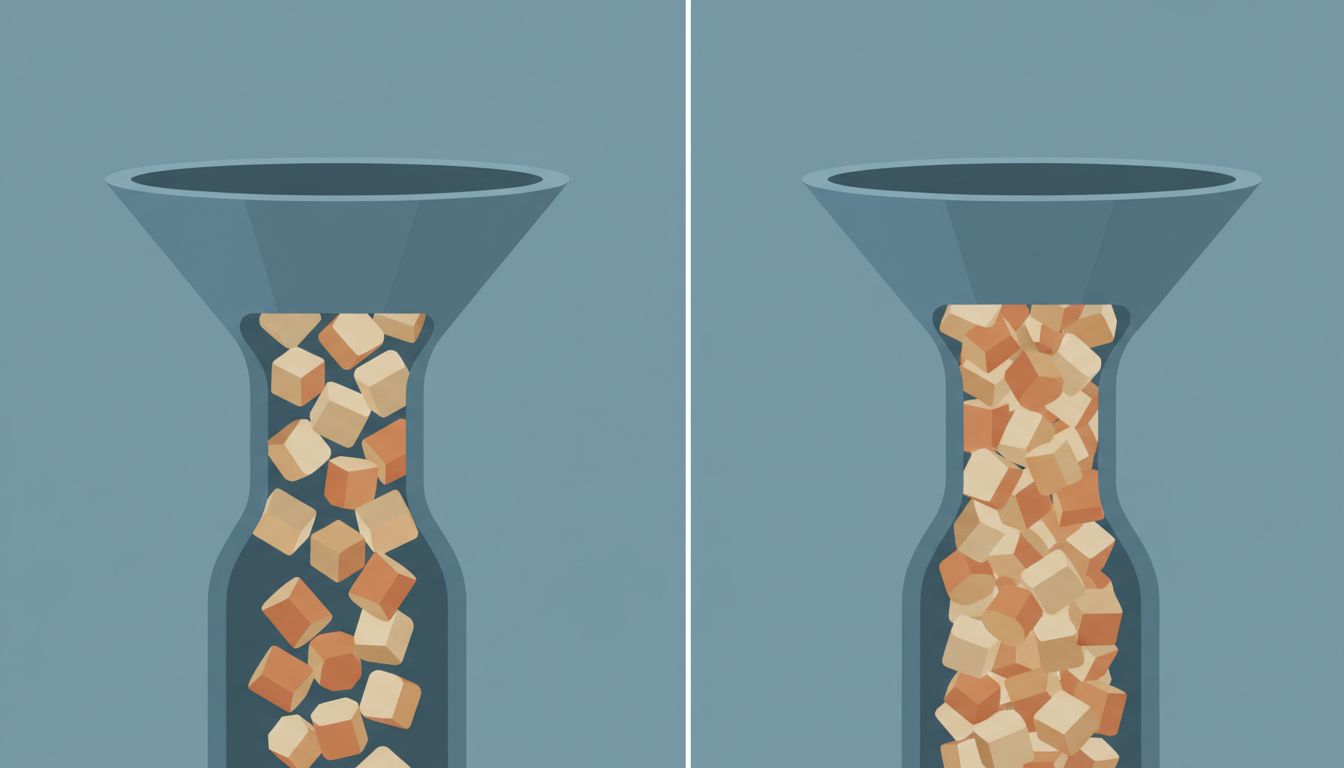
There’s a structural property of to-do lists that rarely gets acknowledged: they are input-optimized rather than output-optimized. Adding items is easy and frictionless. Removing items without completing them feels like failure. This asymmetry means the list naturally grows over time.
As your list grows, something subtle happens to how you approach it. Instead of asking “what should I work on today,” you start asking “what can I get done today.” The goal shifts from prioritization to throughput. You start selecting tasks based on how completable they are rather than how valuable they are. Quick wins accumulate. Hard, important things get pushed to tomorrow, which becomes next week.
This is also why adding more discipline often makes things worse rather than better. More discipline applied to the wrong system just means you execute the wrong priorities faster and more consistently.
What a better approach actually looks like
The fix isn’t a different app. It’s a different question asked before you write the list.
Instead of “what do I need to do,” ask “what would make this day, week, or project genuinely successful?” That answer almost never maps cleanly to a list of tasks. It’s usually one or two things that require sustained attention and that you probably keep deprioritizing.
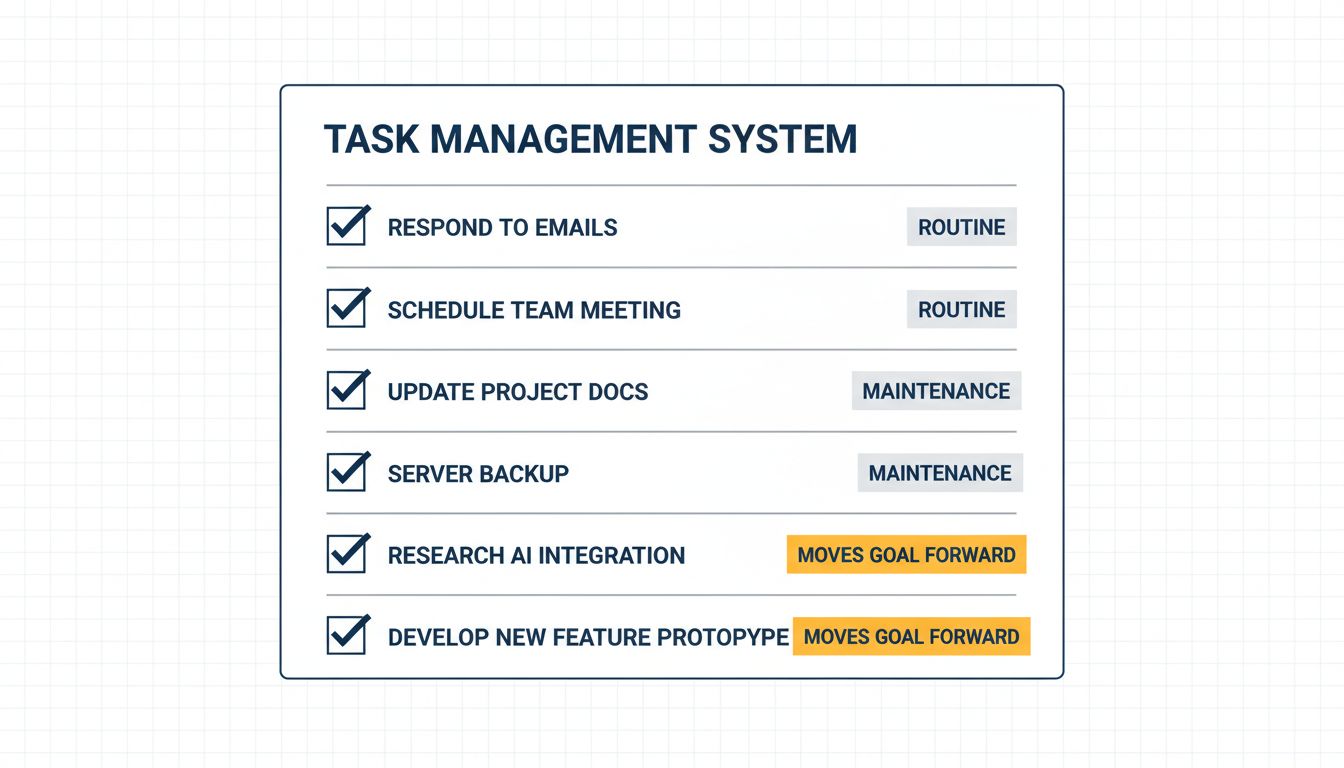
One approach that actually helps: write your to-do list normally, then look at every item and ask whether completing it moves your primary goal or merely maintains the status quo. Maintenance tasks are real and necessary, but they shouldn’t masquerade as progress. Labeling them honestly (“routine,” “administrative,” “blocking others”) separates them from the work that actually advances something.
Another approach is outcome-first planning. Before listing tasks, write down what you want to be true at the end of the day that isn’t true now. Then ask what tasks would make that outcome more likely. This sounds like a small reframe, but it consistently surfaces different tasks than bottom-up list-making does. You’ll find that some things on your existing list don’t connect to any outcome you actually care about.
The most useful reframe is treating your best focused hours as a constraint to be planned around, not spare capacity to fill. If you have two genuinely high-quality hours of deep work in a day, the question isn’t “what can I do in two hours” but “what is the single best use of these two hours.” That question has a different answer than what your to-do list would suggest.
The thing your completed list can’t tell you
At the end of a productive-feeling day, a finished to-do list tells you that you completed the tasks you planned. It says nothing about whether those were the tasks worth planning. A software team that ships every feature on the roadmap but ships the wrong features has a 100% completion rate and a failing product.
Completion is a necessary condition for good work. It is not a sufficient one. The measurement that actually matters is whether the work you did changed something you cared about changing. That’s harder to track, doesn’t produce a satisfying checkbox, and can’t be gamified. Which is exactly why it’s easy to ignore while you’re busy finishing your list.