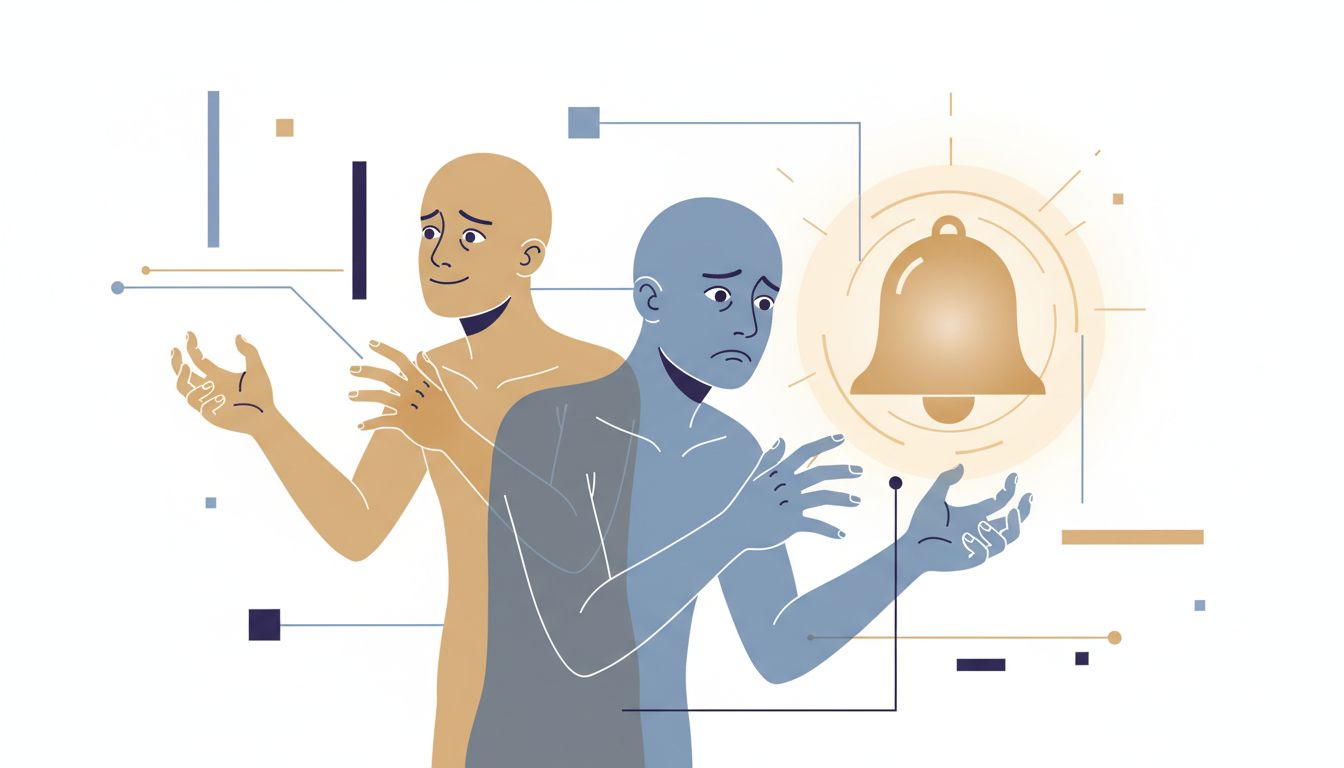

Most meeting advice focuses on the wrong moment. You get tips on how to run better standups, how to write better agendas, how to end on time. All of that is downstream of the actual problem: a large fraction of the meetings on your calendar were never load-bearing to begin with. Canceling one occasionally is a relief, but it doesn’t fix anything. It just delays the reckoning.
This matters more now than it used to, because knowledge work has gotten genuinely harder to coordinate. Teams are larger, more distributed, and more asynchronous than at any point in the history of office work. The natural response to coordination difficulty is to schedule more meetings. That response is almost always wrong.
Why Meetings Get Scheduled in the First Place
Meetings are the path of least resistance when something feels uncertain. You don’t know if a decision has been made, so you call a meeting to confirm. You don’t know if two teams are aligned, so you set up a sync. You feel like a project is drifting, so you add a weekly check-in. Each of these is a reasonable instinct in isolation. The problem is that they compound.
There’s a concept in software systems called coupling (the degree to which components depend on each other’s internal state). High coupling is considered a design smell because it makes systems fragile and hard to change. Meetings are the organizational equivalent of coupling. Every recurring meeting is a hard dependency between people’s time. Add enough of them and you get a system where no one can do anything without coordinating first, which requires more meetings.
The irony is that the meetings called to fix coordination problems often make coordination worse. They occupy the uninterrupted blocks of time that would otherwise be used to do the work that needs coordinating. You show up to the sync having made less progress than you’d hoped, because your morning was full of syncs.
The Real Cost Is Not the Time in the Room
A one-hour meeting with eight people is not a one-hour cost. It’s eight hours of time, plus the context-switching overhead for each person before and after. Context switching is expensive in a way that’s easy to underestimate. Research on deep work (notably Cal Newport’s framing, building on earlier cognitive science on attention residue) suggests that recovering full focus after an interruption can take fifteen to twenty minutes. A meeting at 2pm doesn’t just cost you 2pm to 3pm. It costs you roughly 1:45pm to 3:15pm, or more.
Now multiply that across a recurring weekly meeting and you’re looking at a significant fraction of your team’s productive capacity evaporating into a standing calendar event that nobody is actively defending.
The other cost is harder to quantify but more important: meetings displace asynchronous thinking. When you can call a meeting to resolve ambiguity, you’re less motivated to write a clear document that resolves it permanently. The meeting consumes the afternoon; the underlying confusion persists until the next meeting. The document you share is not the document everyone reads, but an imperfect document is still searchable, revisable, and available to people who weren’t in the room.
What Makes a Meeting Actually Necessary
A meeting earns its place when it does something that written communication genuinely cannot do. Real-time negotiation between people with conflicting interests is one example. When two teams have incompatible requirements and the decision involves trade-offs that need to be argued through, a meeting is often the right tool. The back-and-forth of synchronous conversation has a bandwidth that Slack threads don’t replicate well.
Creative brainstorming is another case, with a caveat. The research on group brainstorming is mixed at best (the classic Osborn model from the 1950s has been repeatedly challenged by studies showing that nominal groups, people brainstorming individually then combining results, often outperform interacting groups on idea generation). But there’s a specific kind of building-on-someone-else’s-thought that happens in real-time conversation and that’s worth preserving for the right problems.
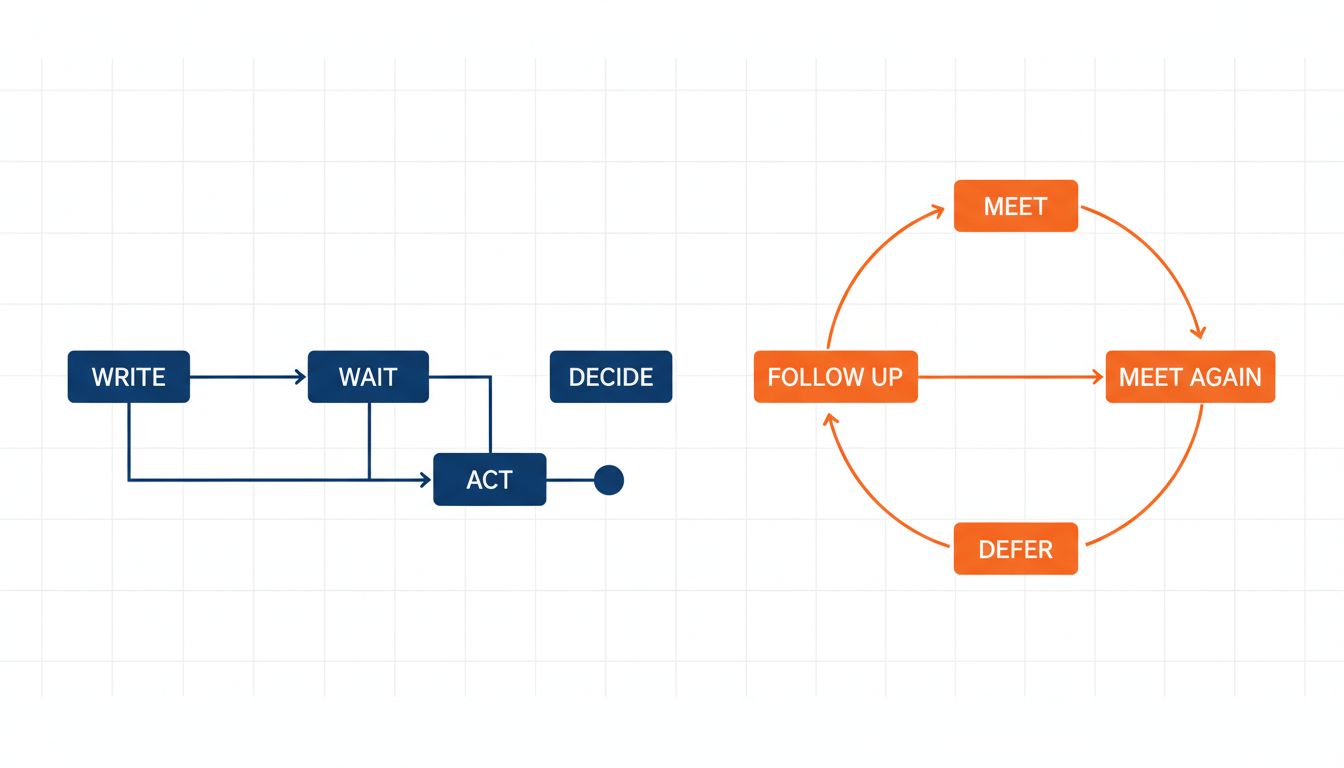
The test I find useful is this: could you make this decision or reach this outcome by writing a three-paragraph document and waiting twenty-four hours for responses? If yes, you probably don’t need a meeting. If the decision requires live back-and-forth, has genuine time pressure, or involves emotional stakes where tone matters, a meeting is justified. Most meetings don’t pass this test. Most meetings exist because someone felt uncertain and a meeting felt like doing something about it.
Canceling Is Not the Fix
Canceling a meeting is a one-time intervention. It doesn’t address the system that produced the meeting. If your team has a culture of scheduling meetings to manage uncertainty, canceling one bad meeting means another will appear in its place within a few weeks. You’re treating a symptom.
The actual fix requires making the alternative easier than the meeting. That means investing in written communication that’s actually clear (not just a Confluence page nobody reads, but a document with a stated decision, reasoning, and owners). It means establishing norms around response time for async messages so that people don’t schedule a meeting just to get a reply. It means making the default for ambiguous situations a written question rather than a calendar invite.
Distributed teams often get this right out of necessity. When you can’t spontaneously walk over to someone’s desk, you develop the muscle of writing things down. What distributed teams know about focus that offices don’t is partly that asynchronous communication, done well, produces more durable decisions than a conversation that lives only in people’s memory.
The analogy I keep coming back to is technical debt. Every unnecessary recurring meeting is a little bit of debt against your team’s attention. You can service that debt by canceling things periodically, but the balance keeps growing until you address the underlying pattern. The question isn’t whether yesterday’s meeting was worth canceling. The question is whether you’ve changed anything that will prevent an equivalent meeting from appearing on next month’s calendar.
Probably not yet. That’s the work.