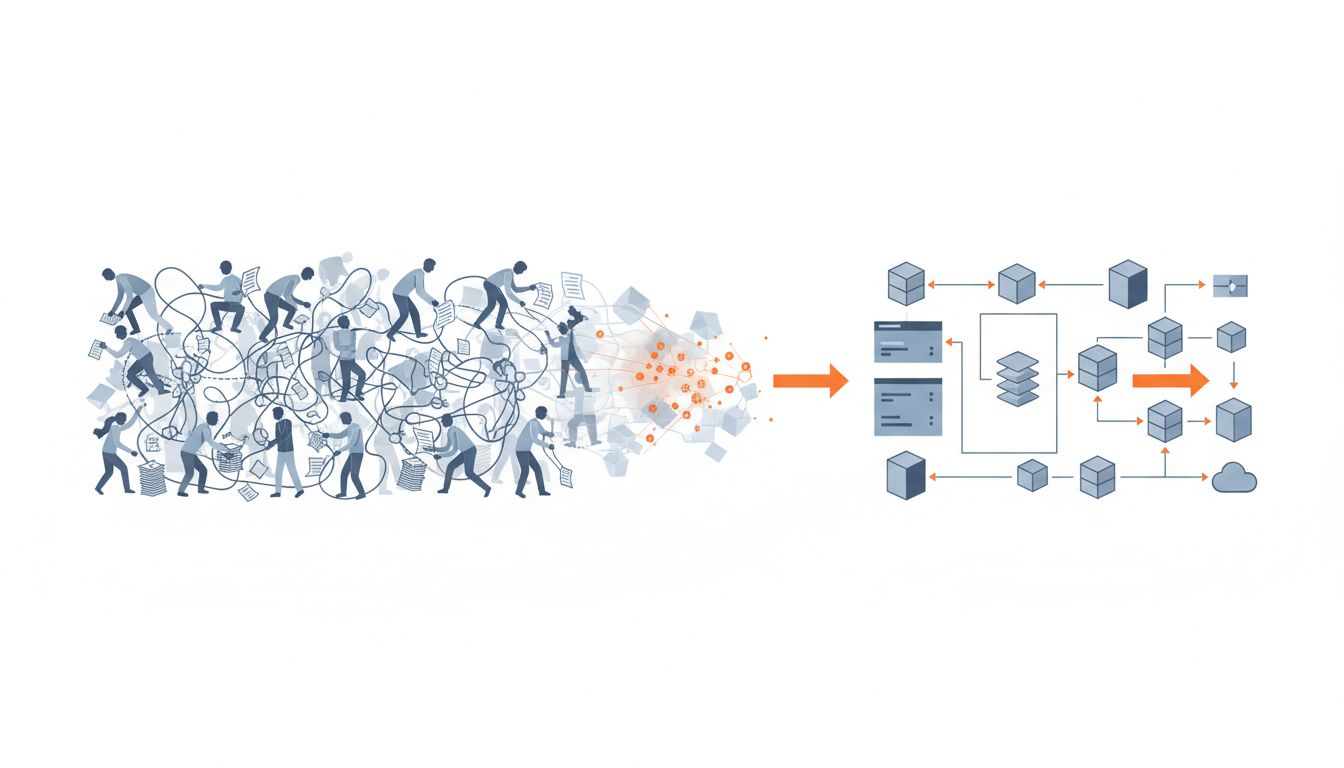
A founder I know spent three months chasing a customer who wouldn’t stop negotiating. Every call was another round of ‘what can you do for us on price?’ They finally landed the deal at a 40% discount. That customer then became their most demanding, least profitable account, filed a churn survey calling the product ‘mediocre,’ and left six months later. The founder told me afterward: ‘I should have known from the negotiation who they were going to be.’
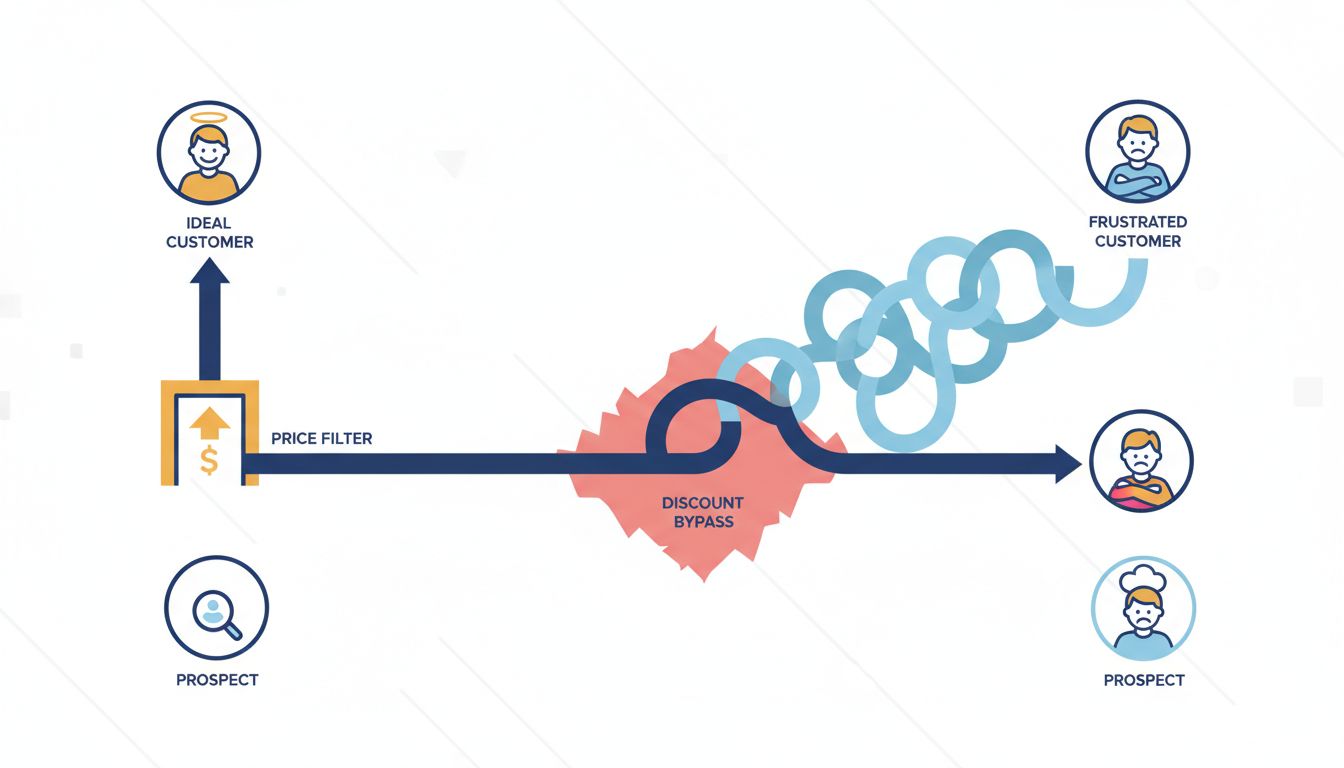
Pricing is the first filter a potential customer passes through. Most startups treat it as a revenue calculation. The smart ones treat it as a customer qualification system.
Why Price Signals More Than Cost
Every price point communicates something beyond the dollar amount. It tells a potential buyer what kind of relationship you expect to have with them, what tier of problem your product solves, and implicitly, who else is using it.
When Basecamp (then 37signals) launched with a paid-only model at a time when freemium was becoming the dominant playbook, they weren’t being contrarian for the sake of it. They had learned from their consulting work that clients who paid from the start engaged differently than ones who didn’t. Price created skin in the game on both sides. Jason Fried has written about this directly: customers who pay tend to take the product more seriously, give better feedback, and stick around longer.
This isn’t just about commitment psychology. Price filters by urgency. If someone has a real problem your product solves, a reasonable price is a hurdle they’ll clear without much drama. If they’re shopping casually, that same price sends them away. For an early-stage startup still figuring out product-market fit, casual shoppers are a trap. They inflate signup numbers, dilute feedback signals, and consume support bandwidth while contributing almost nothing to your understanding of whether the core product actually works.
The Freemium Trap
Freemium gets held up as a growth hack, and for consumer products at massive scale, it can be. Spotify and Dropbox built real businesses on it. But those companies had cost structures and conversion economics that made the math work. For most B2B startups, especially in the early innings, a free tier is a customer filtration system running in reverse.
Free users cluster around a specific type: curious, low-urgency, unwilling to advocate internally for budget. They’re often individual contributors who found your product on their own and are using it without organizational sanction. They give you feedback shaped by their constraints, which are not the constraints of the buyer you actually need to reach. You end up building features that serve people who will never pay you.
The founders who figure this out usually do it the hard way. They spend six months with a free tier, accumulate thousands of users, and then look at their data and realize that every paying customer they have looks nothing like their free users. The free users wanted X, the paying customers wanted Y, and the product got pulled in the wrong direction.
What ‘Value-Based Pricing’ Actually Means in Practice
You’ll hear that startups should price based on value, not cost. True, but abstract. Here’s what it looks like concretely.
If your software saves a mid-market company 10 hours of analyst time per week, and that analyst costs $80,000 a year fully loaded, you’re delivering roughly $40,000 in annual value. Pricing at $500 per year doesn’t just leave money on the table. It signals to buyers that you don’t understand what your product is worth, which makes them wonder if you understand what their problem is worth. Enterprise buyers, specifically, are wary of vendors who undercharge. Underpricing can read as desperation or inexperience.
Conversely, a price that represents a real fraction of the value delivered starts a different conversation. The buyer is now thinking in ROI terms rather than cost terms. That’s a better negotiation to be in, because ROI math is defensible and cost-cutting conversations are a race to zero.
Value-based pricing also forces you to know your customer’s world well enough to quantify what you’re doing for them. Startups that can’t articulate this usually haven’t talked to enough customers yet. The pricing exercise reveals the gap.
Tiers as Segmentation, Not Just Upsell
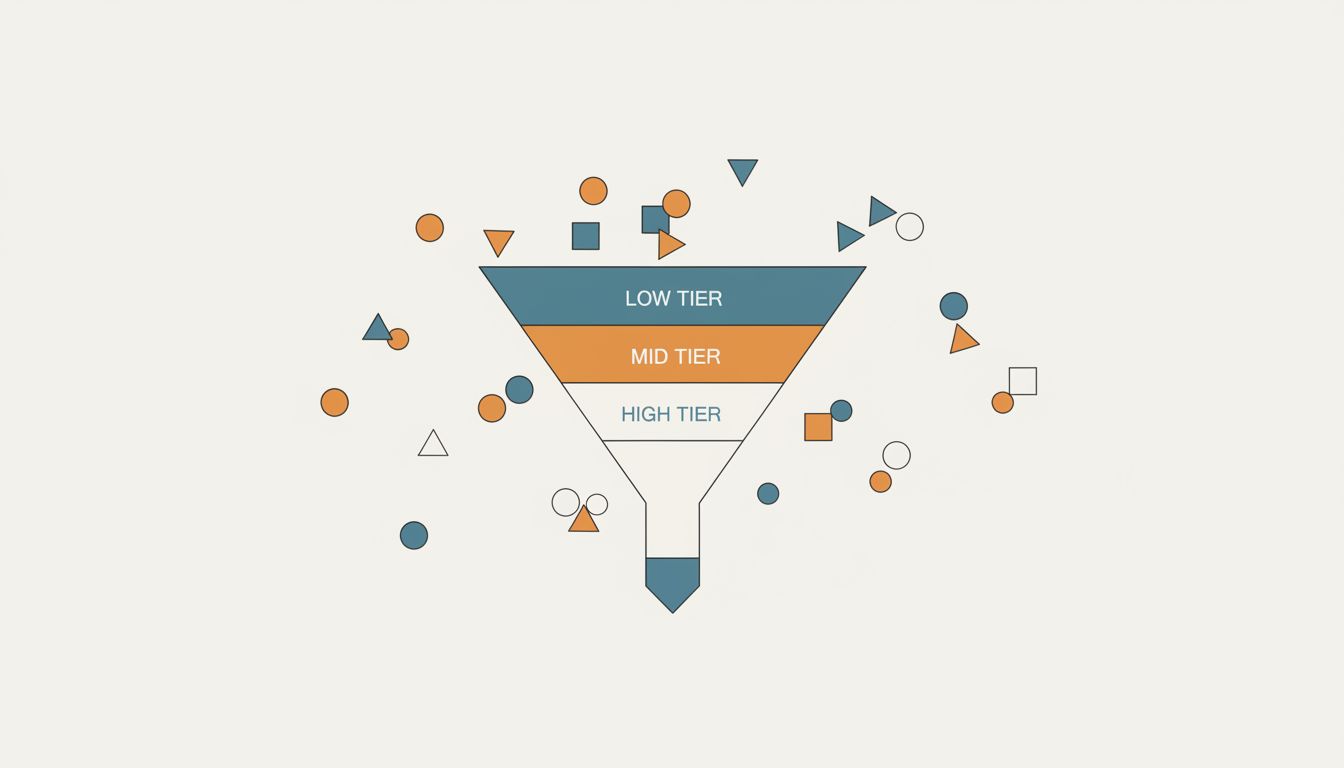
Good pricing architecture does two things simultaneously: it segments the market by use case and company size, and it creates a clear upgrade path. But most startups design their tiers for the second goal and ignore the first.
The segmentation function matters because different buyers have fundamentally different needs, budgets, and decision-making processes. A 10-person startup using your product looks nothing like a 500-person company using it, even if they’re in the same industry. If your pricing tier forces them into the same bucket, you’re going to frustrate both.
Well-designed tier boundaries aren’t arbitrary feature gates. They map to real organizational thresholds: individual contributor vs. team vs. department vs. enterprise. The feature differences between tiers should reflect the actual concerns that arise at each of those levels, things like admin controls, audit logs, SSO, and custom contracts, because those are the things that become important as you move up the org chart.
The practical upshot: when a prospect self-selects into a tier, they’re telling you who they are. A company that immediately asks about enterprise pricing before you’ve had a single call is signaling that procurement, legal, and IT are going to be involved. A company that signs up for the mid-tier on a credit card is telling you they’re moving fast and have budget authority at the team level. These are genuinely different sales motions, and your pricing structure should surface that distinction as early as possible.
How Discounting Breaks the Filter
Every time you discount significantly to close a deal, you’re overriding your own filter. Sometimes that’s a conscious trade-off, a strategic account you want as a reference customer, a market you’re trying to penetrate. But most discounting happens not from strategy but from impatience or fear of losing a deal.
The customers who are most aggressive about discounting are usually the ones telling you the most about their relationship to value. If someone believes your product is worth $10,000 and you’re charging $12,000, they’ll negotiate professionally and accept something reasonable. If someone is grinding you down to $4,000, they don’t think it’s worth $12,000 in the first place. You can close that deal, but you’re starting the relationship with a customer who has already decided you overcharge. That’s a difficult position to recover from.
Discount culture also spreads internally. Sales teams that hit quota through heavy discounting develop habits that are hard to unwind. You end up with a revenue base that looks healthier than it is, because your net revenue retention math gets ugly when customers who bought at 40% off come up for renewal and expect the same.
The Customer You Don’t Want Is Also Real Information
There’s a version of customer selection that’s purely defensive: avoid bad customers to protect margins and team sanity. That’s true, but there’s an offensive version too.
When you understand why your pricing repels certain types of buyers, you learn something about your positioning. If enterprise companies consistently balk at your price because procurement requires a security review you can’t support yet, that’s a product gap. If small teams love you but can’t afford you, your lowest tier might be too high or your product might not yet solve a problem acute enough for that segment to prioritize.
The customers who don’t buy are almost as valuable as the ones who do, if you pay attention to the reason. Most startups don’t have a structured way to capture this. Lost deal analysis tends to focus on competitive losses and ignore pricing-driven losses, which is backwards if pricing is doing active filtering work.
As your first pricing will inevitably be wrong, the real skill is reading the signal in who bounces and why, then adjusting not just to capture more revenue but to attract more of the right customers.
What This Means
Pricing strategy is really customer strategy in numerical form. The startups that figure this out stop asking ‘what should we charge?’ and start asking ‘who do we want, and what does a price that attracts them and repels everyone else look like?’
That reframe changes everything downstream. It changes how you design tiers, how you handle discount requests, how you interpret churn, and how you use early customer behavior as a signal for product direction. It also makes pricing decisions feel less arbitrary, because you’re not just guessing at what the market will bear. You’re making intentional choices about who gets through the door.
The founder who spent three months closing that nightmare customer, he told me later he’d seen the warning signs in the negotiation. He just didn’t trust what he was seeing. The price negotiation wasn’t about price. It was a preview of the relationship. He learned to trust that preview.