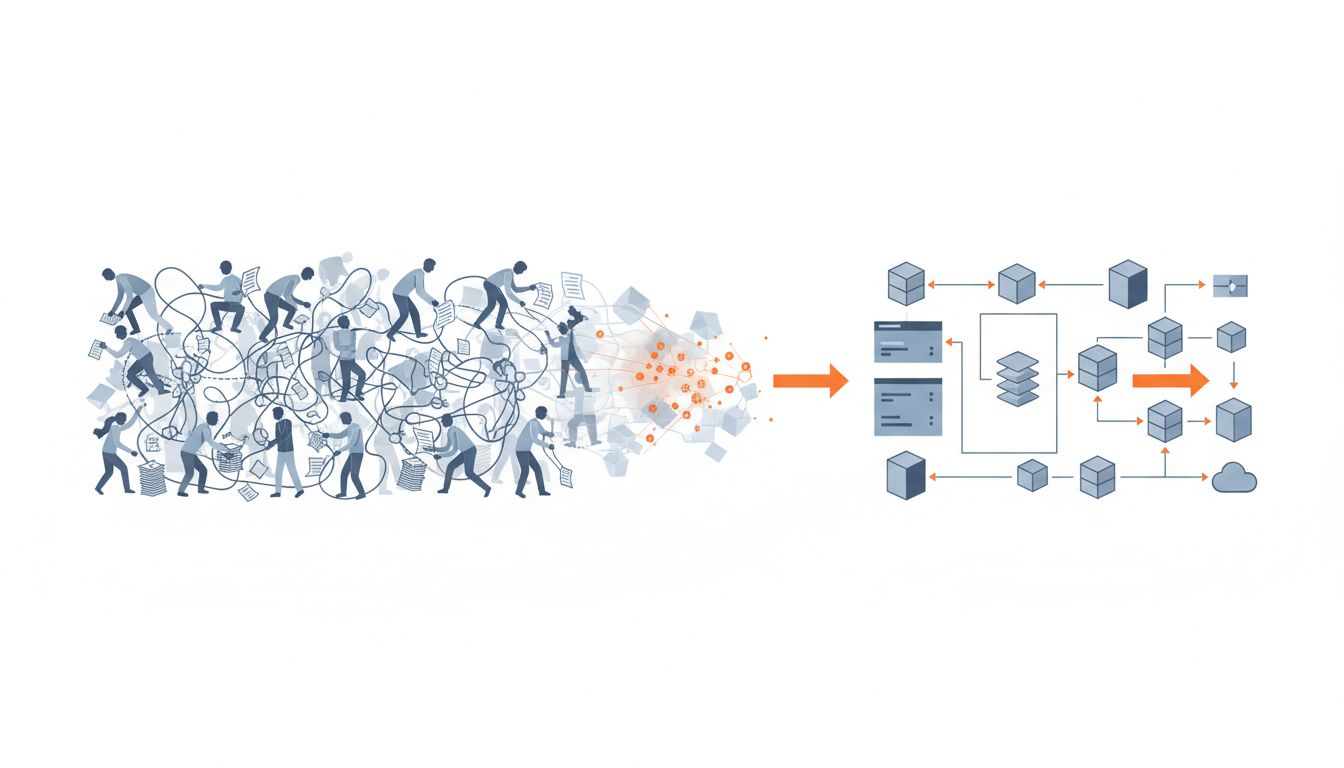
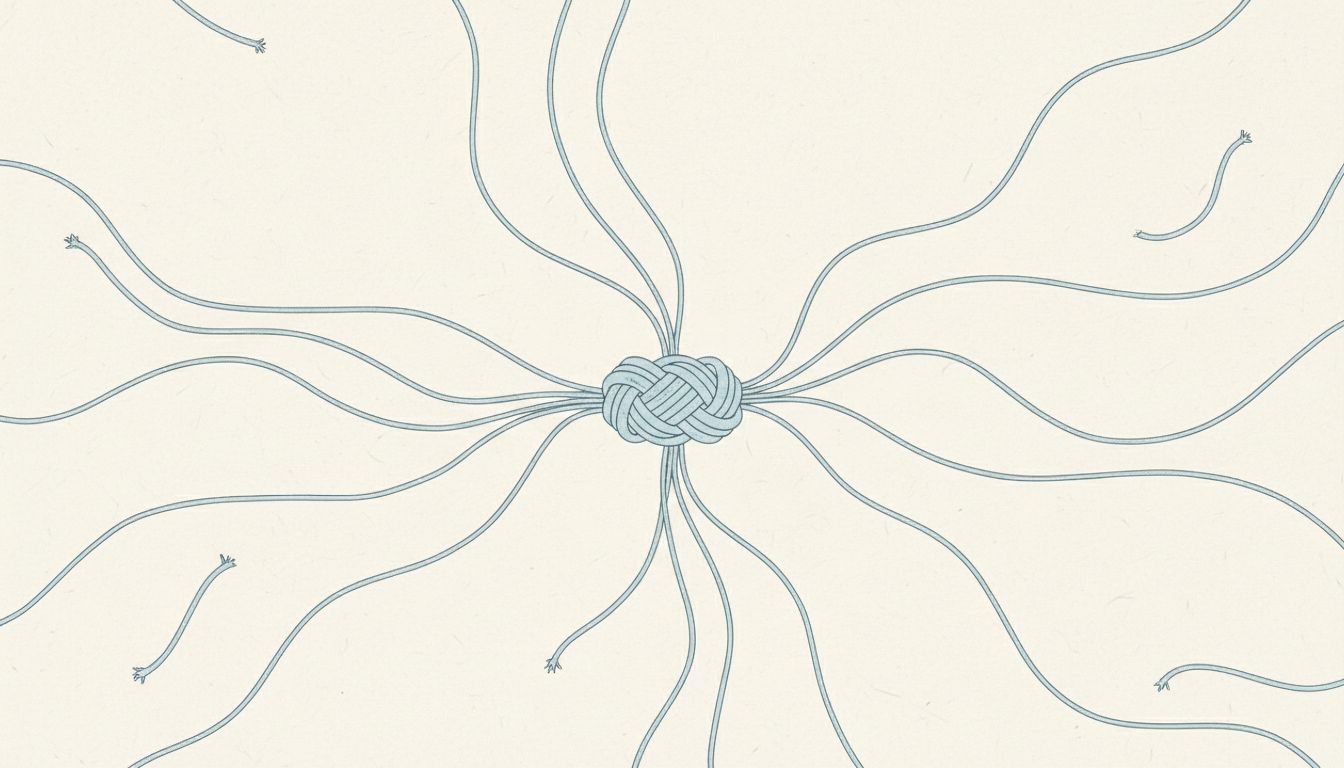
Picture the early days of your startup. You’ve got ten customers. They found you, they love you, they reply to every email. You hop on calls with them constantly. Their feature requests feel like gospel because they’re the only signal you have. You build what they ask. They renew. You build more of what they ask. Eighteen months later, you’re trying to close a Series A and your product looks like a bespoke consulting project for a handful of companies that don’t represent anyone else in the market.
This is one of the most common and least-discussed ways startups fail quietly. Not with a bang. Just with a funnel that never converts, a sales cycle that never shortens, and a product that solves increasingly specific problems for an increasingly narrow slice of buyers.
Here’s the uncomfortable truth: your first customers are wrong for scale, and you should have known that from the start.
They Found You Because They Were Desperate, Not Because You Were Ready
Early adopters are a self-selecting group. They came to you when your product was rough, your positioning was vague, and your support was just you answering tickets at midnight. Normal buyers don’t do that. Enterprise procurement departments don’t do that. The people who signed up anyway had unusually high pain, unusually high risk tolerance, or both.
Those are not typical buyer characteristics. They’re outliers. And if you optimize your entire product, pricing, and go-to-market strategy for outliers, you’ve built something that appeals to a very thin sliver of the actual market. The mainstream buyer who could scale your revenue tenfold has different needs, different objections, and a fundamentally different relationship to risk.
Their Feedback Is Signal and Noise Mixed Together
Early customers give you a lot of feedback. Most founders treat this as pure gold. It isn’t. It’s ore. Some of it is valuable insight about real problems. A lot of it is personal preference, edge cases specific to their industry or company size, or workarounds for problems that only exist because your product is immature.
The problem is that you can’t always tell which is which in year one. You’re so close to the product, so grateful for any input, and so desperate for retention that you treat every feature request as a signal worth acting on. You build the integration their specific stack requires. You add the reporting format only their ops team uses. You tune the workflow for how they happen to be organized.
None of that work generalizes. Every hour spent on it is an hour not spent building something that would make the next hundred customers convert faster.
They Set a Price Anchor You’ll Struggle to Escape
First customers almost always pay less than what the product will eventually be worth. That’s fine and expected. What isn’t fine is letting that anchor define your pricing strategy going forward. Pricing too low kills startups faster than charging too much, and the discount you gave your first five customers to get them in the door can become a ceiling that’s almost impossible to raise without burning the relationship.
Worse, those customers become internal reference points. When a sales rep quotes a new prospect and the prospect pushes back on price, someone in the room will eventually say “but we have customers paying X.” You’ve handed your negotiating position to buyers who never should have defined it in the first place.
They Create Organizational Gravity
Customers who’ve been with you from the beginning have informal power. They know your founders personally. They have your cell number. When they have a problem, it becomes everyone’s problem. Support, product, engineering, all of it bends toward keeping them happy.
This is good customer service. It is terrible company strategy. The longer it goes on, the more your organization optimizes for the needs of a small set of legacy accounts rather than the needs of the market you’re actually trying to win. New customers feel the difference. They get the product shaped by someone else’s requirements, and the support from a team that’s already stretched managing relationships that predate them.
Month two churn is a sales problem, not a product one, but the product problems created by early customer capture feed directly into retention failures downstream. You can trace the line if you look for it.

The Counterargument
The obvious pushback is that without early customers, there’s no company at all. You need those first logos to survive, to learn, to get to the next round. And that’s true. This isn’t an argument against acquiring early customers. It’s an argument against confusing early customer acquisition with product-market fit.
Paul Graham famously told founders to do things that don’t scale, and he was right. The high-touch, bespoke, over-indexed-on-early-customers phase is necessary. The mistake is staying in it too long, or letting it define your roadmap past the point where it stops generating generalizable insight.
The founders who do this well are honest with themselves about which phase they’re in. They’re grateful for early customers. They serve them well. And they’re deliberate about the moment when the question shifts from “what does this customer need?” to “what does the next thousand customers need?”
Those are different questions. The sooner you can hold both at once, the better.
Conclusion
Your first customers saved your company. They believed in you before you’d earned it. But they also, through no fault of their own, shaped your product, your pricing, and your organizational habits in ways that can make scaling harder than it needs to be. The work of building a scalable company includes, at some point, a conscious and sometimes uncomfortable process of reorienting away from the customers who got you here and toward the customers who will take you where you’re going. That reorientation isn’t betrayal. It’s the job.