Clever code is a liability dressed up as a virtue. The programmer who writes it is optimizing for the wrong audience: themselves, at the moment of writing, in the particular mental state that made the cleverness legible. Everyone who comes after, including that same programmer six months later, is on their own.
This is not an abstract complaint. It is a structural problem in how software teams accumulate debt, lose velocity, and eventually watch good engineers quit in frustration. The cult of cleverness has real costs, and the industry has been slow to reckon with them honestly.
The Machine Is Not Impressed
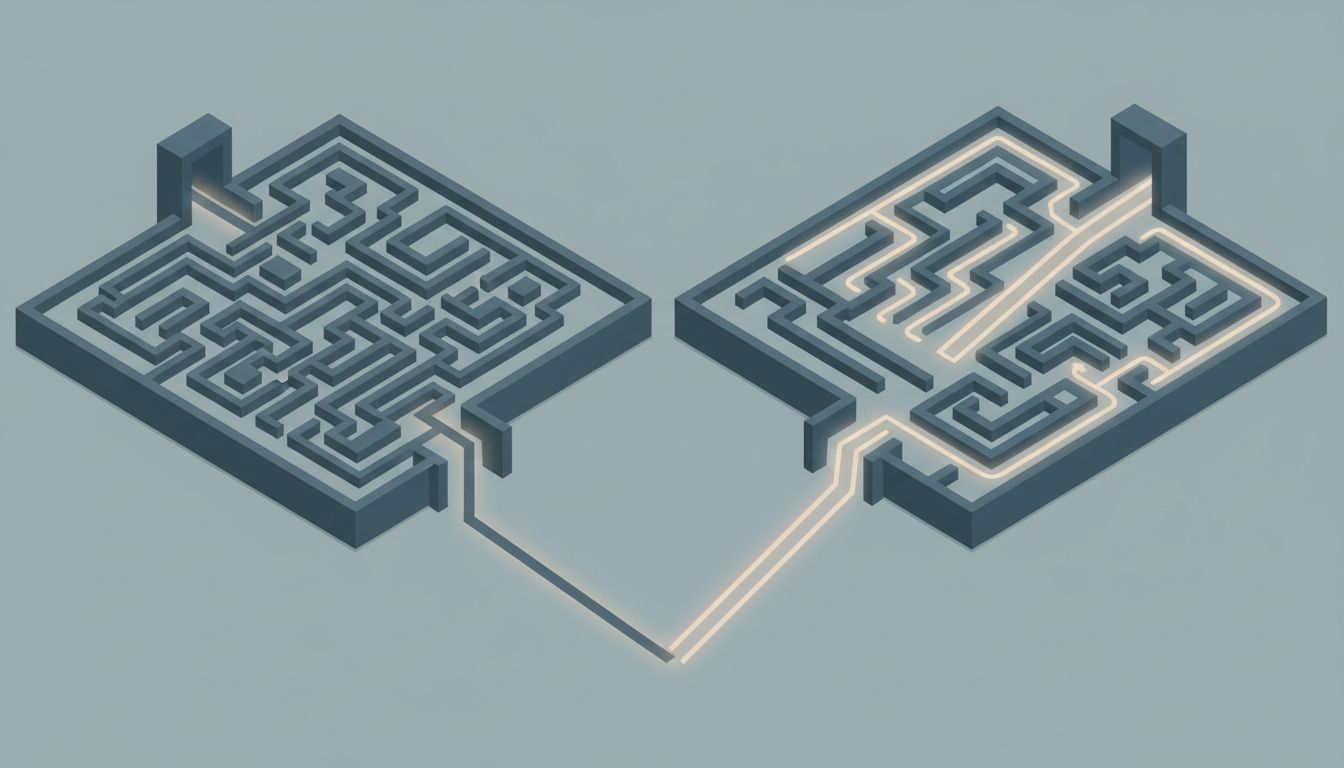
A compiler or interpreter reduces your code to instructions. It does not reward elegance. A one-liner that nests three higher-order functions and two ternary operators produces the same bytecode as a version spread across ten lines with named variables and clear branching. The machine gets what it needs either way. What differs is what the human gets, and the human always loses when the author prioritized their own satisfaction over the reader’s comprehension.
This matters more than it used to. Modern codebases are not primarily written for machines. They are written for teams, across time, under conditions of staff turnover and changing requirements. Code that cannot be understood quickly is code that cannot be safely modified. Code that cannot be safely modified becomes a trap.
Cleverness Concentrates Risk
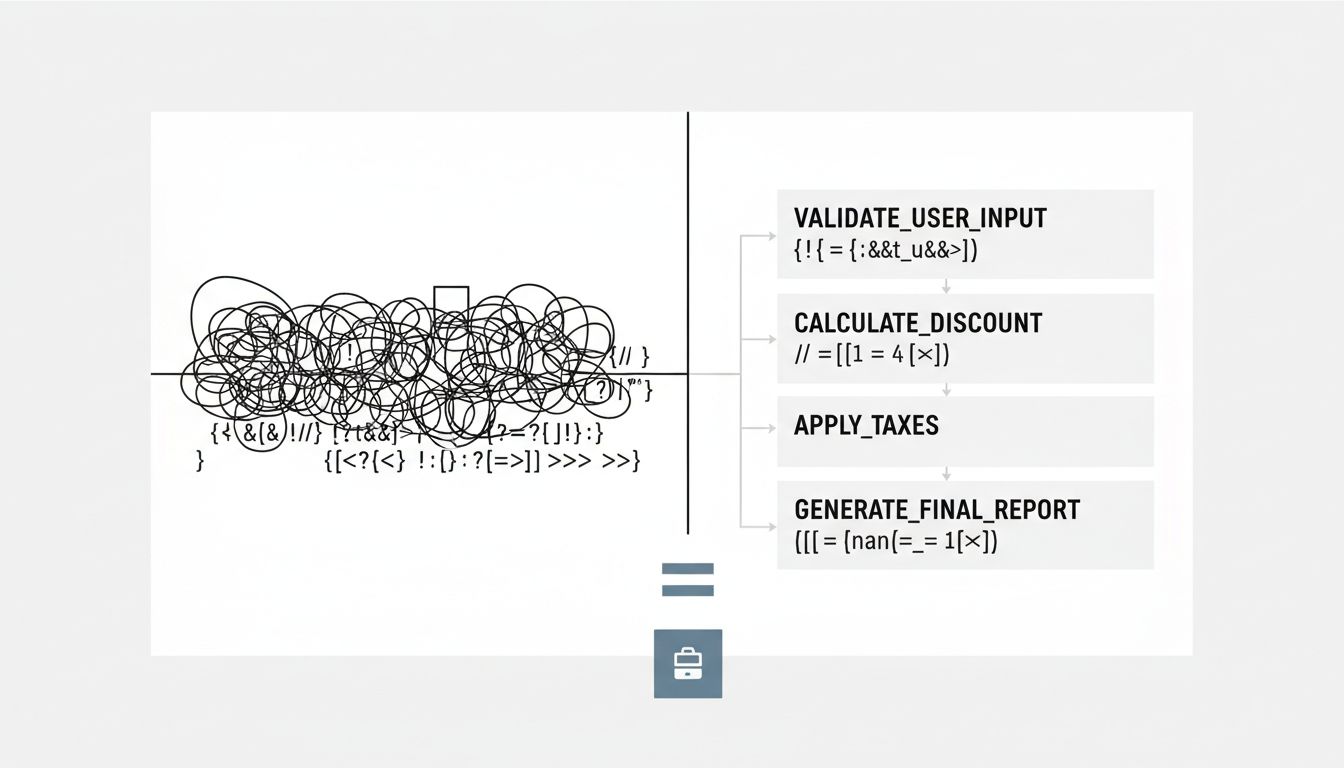
When a piece of code requires significant cognitive load to parse, it effectively becomes owned by whoever wrote it. Modifications require re-deriving the original author’s intent before making any change. That creates a single point of failure with a human face.
This is related to a broader pathology in engineering teams. As we’ve noted before, adding engineers doesn’t linearly scale output, and a big reason is coordination cost. Clever code makes coordination cost worse. It creates pockets of the codebase that are opaque to newcomers, slow to review, and dangerous to touch. The clever author, often long gone, has effectively taxed every future engineer who encounters their work.
Security research has documented this pattern. Complex, densely written code is consistently harder to audit for vulnerabilities. The XZ Utils compromise that nearly affected OpenSSH distributions in 2024 succeeded in part because the malicious code was embedded in a build system that few people understood deeply enough to scrutinize. Obscurity is not just a readability problem. It is a security surface.
Readability Is a Team Sport
The strongest argument for readable code is not philosophical. It is economic. Every hour a developer spends deciphering someone else’s clever abstraction is an hour not spent shipping. Across a codebase and a year, that compounds badly.
Google’s internal research on code review (documented in their engineering practices publications) consistently finds that code clarity is the single biggest factor in review speed. Code that requires multiple back-and-forth exchanges to understand costs multiples of what clear code costs. The time lost is invisible on any individual PR and catastrophic in aggregate.
Readable code also has a forcing function that clever code lacks: if you cannot explain what a piece of code does in plain language, you may not fully understand it yourself. Writing clearly is often how you discover the holes in your own thinking. The discipline of the document you wrote for yourself but can’t read later applies with equal force to code.
The Counterargument
Some pushback is legitimate. There is code that is necessarily complex, where the domain itself demands sophisticated constructs. Cryptographic implementations, parsing engines, certain algorithms operating on constrained hardware: these can look like cleverness from the outside while representing genuine technical necessity on the inside. Demanding that every piece of code read like a beginner tutorial would produce slow, bloated software.
The distinction worth drawing is between incidental complexity and essential complexity. Essential complexity is what the problem requires. Incidental complexity is what the programmer added. Good engineers minimize the second while managing the first. Clever code almost always introduces incidental complexity, because its goal is expression rather than clarity. The programmer is showing what they can do. The code does not benefit from the performance.
Performance optimization is also a real constraint. Sometimes a less readable version is genuinely faster and the performance matters. But this should be proven, not assumed. Profile first. Then, if you must obfuscate for speed, document exhaustively. The comment explaining a dense optimization is not optional; it is the cost of admission.
The Bottom Line
The compiler does not grade on style. It does not know about your elegant recursion or your beautifully composed pipeline of lambdas. It produces an artifact either way. The question is what you leave behind for the humans who follow.
Code is read far more often than it is written. Every decision that makes a codebase harder to read is a decision that will be paid for, repeatedly, by people who had no say in it. Writing clearly is not a beginner habit to be outgrown. It is the mark of an engineer who understands that software is a team effort stretched across time, and who takes that seriously.