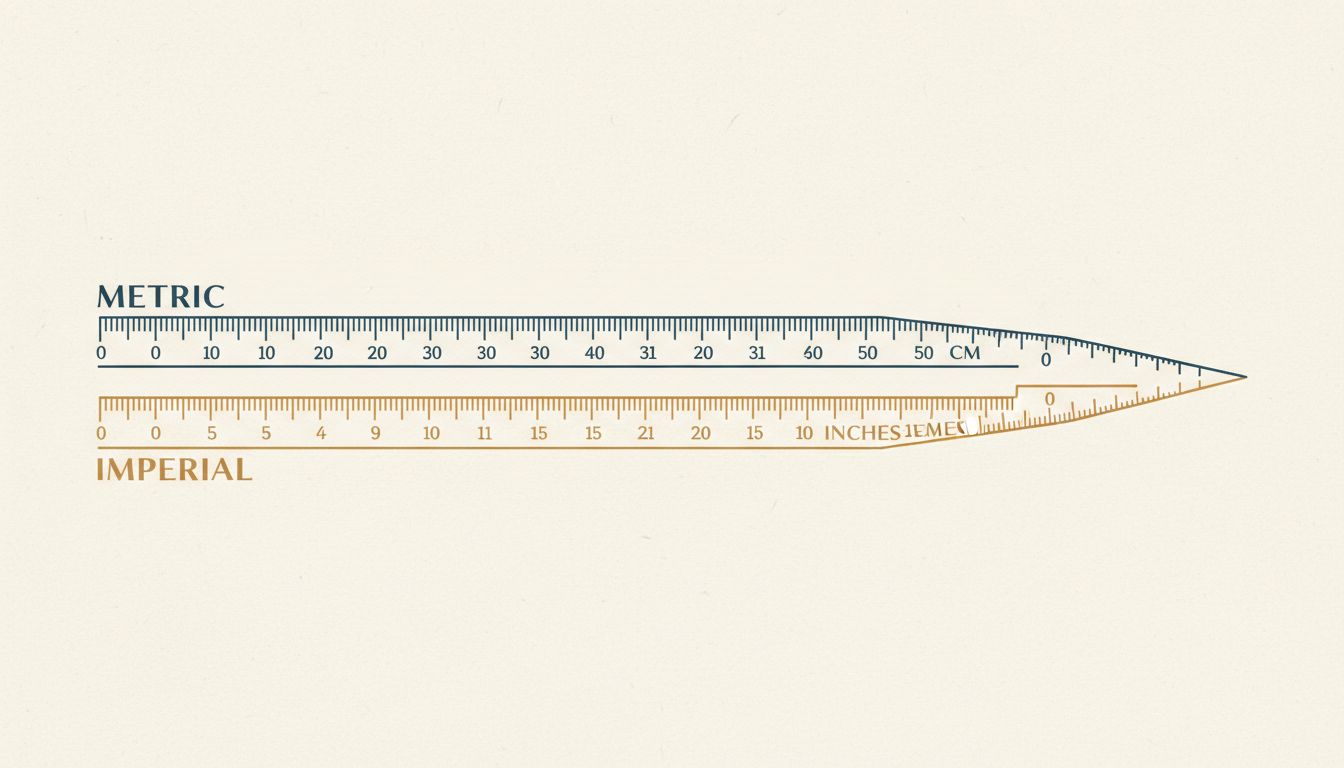
In 1999, NASA lost a $327 million spacecraft because one engineering team used metric units and another used imperial units. The Mars Climate Orbiter burned up in the Martian atmosphere. The software worked exactly as written. That was the problem.
The navigation software on the ground transmitted thruster force values in pound-force seconds. The spacecraft expected those values in newton-seconds. No error was thrown. No alarm fired. The code compiled cleanly, executed faithfully, and steered a spacecraft 60 miles too close to Mars. The compiler did precisely what it was told. Nobody had told it what any of it meant.
This is not a story about unit conversion. It is a story about the foundational gap between a programmer’s intent and a program’s behavior, and why closing that gap is one of the hardest problems in software engineering.
The Setup
Lockheed Martin built the navigation software for the Mars Climate Orbiter’s ground support system. NASA’s Jet Propulsion Laboratory built the spacecraft’s onboard systems. Both teams were competent. Both teams followed their own specifications correctly. The interface between them, a software module called SM_FORCES, had a clearly documented output unit. That documentation was wrong, or rather, it was right for one team and invisible to the other.
For nine months, the spacecraft drifted slightly off course on every trajectory correction. Each correction assumed the previous one had been calculated in the same units. It had not. The error compounded quietly across 286 million miles.
The review board’s post-mortem identified the root cause in plain language: the software produced results in the wrong units, and nothing in the system detected this. No type system enforced the constraint. No interface contract required consistent units. The code said what it said. It did not say what it meant.
Why Type Systems Exist (And Why They Are Not Enough)
The obvious lesson, the one taught in introductory software engineering courses, is that you should encode units into your type system. In a strongly typed language, a value of type NewtonSeconds cannot be passed to a function expecting PoundForceSeconds without an explicit conversion. The compiler catches the mismatch before the spacecraft launches.
This is correct. It is also insufficient.
Strongly typed languages have existed since before the Mars Climate Orbiter launched. Ada, a language designed specifically for safety-critical systems and mandated by the Department of Defense, was available and in use at the time. The Lockheed Martin team used Fortran, which lacks Ada’s type rigor, but the deeper issue was not the choice of language. It was the choice of what to make explicit.
Every type system forces programmers to declare some properties of their data and lets them skip others. The question is always which properties matter enough to enforce at compile time. Units of measurement are an obvious candidate in physical simulation code. But the general principle is harder: what do you leave implicit, and what happens when the implicit assumption is wrong?
The compiler, whatever the language, will faithfully execute whatever you wrote. It has no model of spacecraft trajectories, no understanding that 4.45 newton-seconds and 1 pound-force second are the same physical quantity, no way to notice that your nine-month average trajectory correction is 23 kilometers off per day. It processes symbols. The meaning behind those symbols is entirely your problem.
The Same Failure, Different Decades
The Orbiter disaster is memorable because of its cost and drama, but the underlying failure repeats constantly in less cinematic contexts.
In 2020, a widely cited analysis of COVID-19 modeling code found that several independently written models produced different outputs from identical inputs. Investigators traced many discrepancies to inconsistent assumptions about time units in rate parameters, some models treated a parameter as a daily rate, others as an annual rate, and the variables were named in ways that didn’t distinguish between them. The code was syntactically correct. The models disagreed about reality.
In financial software, the same class of bug produces wrong prices rather than dead spacecraft. Traders have lost money on systems where one component calculated in basis points and another in percentage points, where both were stored as plain floating-point numbers with no type-level distinction. The numbers flowed through the system cleanly. The trades were wrong.
The pattern is consistent: meaning lives in the programmer’s head. The code carries the symbol. When the two diverge, the compiler sides with the symbol.
What We Can Learn
The Mars Climate Orbiter review board made three primary recommendations. Verify units at software interfaces. Build independent validation into mission-critical navigation. Require interface documentation to be tested, not just written.
All three recommendations are correct. None of them are exotic. All of them require deliberate work that is easy to skip when a deadline approaches.
The broader lesson is about the cost of implicit contracts in software. Every time a function accepts a plain integer or a bare floating-point number, the programmer is making an implicit claim: that callers will pass values with the right units, the right scale, the right frame of reference. The compiler does not enforce this claim. It cannot. It doesn’t know the claim exists.
This is why experienced engineers develop an almost reflexive suspicion of bare numeric types in systems where physical quantities matter. It’s why domain-driven design places such emphasis on making business concepts explicit in code, not just in comments. Comments are for humans. Type systems are for compilers. If you want the compiler to help you, you have to express your meaning in a language the compiler actually speaks.
There is a harder implication here that the post-mortems tend to understate. The Mars Climate Orbiter did not fail because engineers were careless. It failed because they were careful in parallel, each team careful within its own context, without sufficient shared context between them. The code was a meeting point between two teams’ mental models, and the meeting point was underspecified.
Software interfaces are always agreements. The compiler enforces the syntax of those agreements. The meaning is something two human teams have to maintain together, deliberately, over time. When teams grow, turn over, or work across organizational boundaries, that shared meaning erodes. The code doesn’t notice.
A spacecraft can coast for nine months on a wrong assumption before anyone realizes the trajectory is off. In software systems that run quietly in production, the timeline can be longer. The compiler compiled it. The tests passed. Everything was fine until it wasn’t.