The simple version
Your compiler flags certain comparisons between numbers as suspicious. Most developers dismiss these as pedantic noise. Some of those comparisons silently produce wrong answers that only surface under specific conditions.
The warning nobody reads
If you’ve written C or C++, you’ve almost certainly seen this: warning: comparison between signed and unsigned integer expressions. It appears constantly, usually in loop conditions, and most teams treat it like a spell-check flagging a word they’ve deliberately chosen. They suppress it, or set their warning level low enough that it never shows up, and move on.
This is a mistake. The warning exists because signed and unsigned integers don’t just differ in their range. They differ in how the processor interprets the same bit patterns, and when you compare them, the compiler has to resolve a type mismatch by converting one to the other. The rule it follows is not intuitive, and the result can silently flip the logic of a comparison.
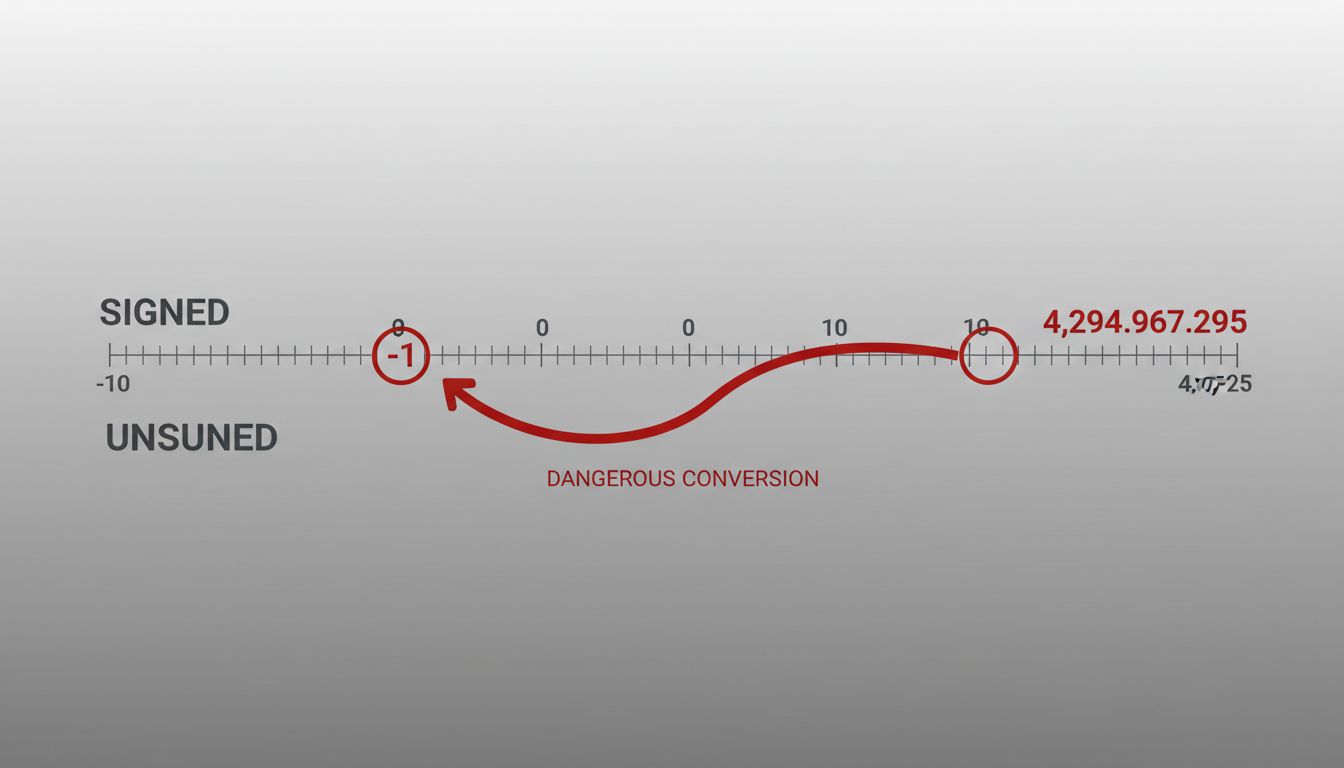
Here’s the concrete problem. A signed integer can be negative. An unsigned integer cannot. When C compares a signed value to an unsigned value, it typically converts the signed one to unsigned first. If the signed value was negative, that conversion produces a very large positive number. So a check like if (user_input < buffer_size) can evaluate to false even when user_input is -1, because -1 converted to an unsigned type becomes something like 4,294,967,295 on a 32-bit system. That’s not smaller than your buffer size. It’s enormous. Your guard condition just evaporated.
Why this produces real damage, not just theoretical risk
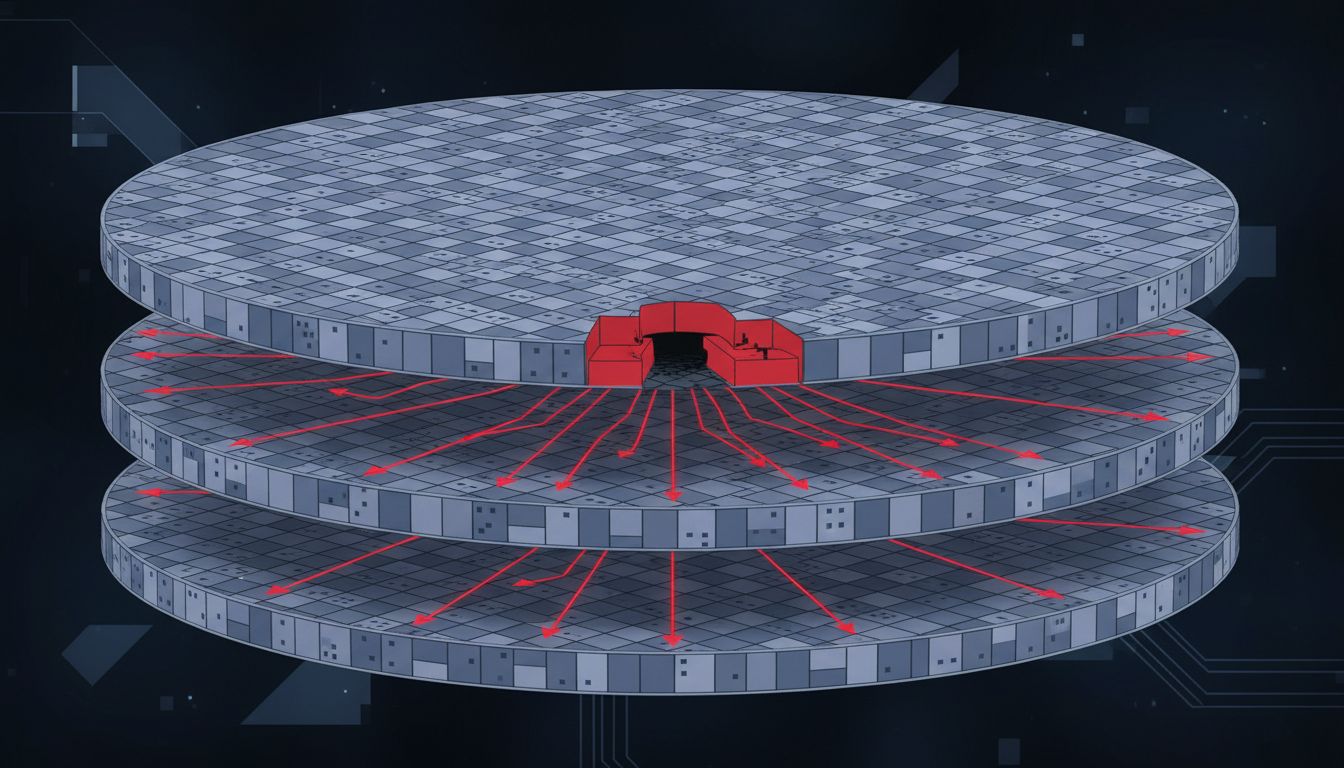
The Heartbleed vulnerability in OpenSSL, disclosed in 2014, is the most expensive example of what happens when memory length checks fail. The specific mechanism was different (a missing bounds check on a length value), but the underlying pattern is the same: a numeric comparison that was supposed to prevent reading past a boundary didn’t do what the developer assumed. The result was two years of private keys, passwords, and session tokens being readable from servers across the internet.
Signed/unsigned confusion has its own documented history. The gets() function was infamous partly because length handling was broken by design, and that same class of error, where a number that should be bounded can wrap around to something enormous, appears regularly in CVE reports for network-facing software. The National Vulnerability Database has catalogued hundreds of integer overflow and signedness errors over the years, many of them in code that compiled without errors and with only suppressed warnings.
The pattern that makes these bugs particularly dangerous is that they’re conditional. Code with this flaw works correctly for every normal test case. It only misbehaves when the signed value is negative, which in many contexts means it only misbehaves when a user or attacker deliberately provides unexpected input. Tests pass. Code review passes. The bug sits dormant until someone finds it from the outside.
This connects to a broader point about bugs that don’t announce themselves. Concurrency bugs follow the same logic: they’re invisible during normal operation and only surface under conditions that don’t arise in testing.
Why developers are trained to ignore this
The compiler warning ecosystem has a signal-to-noise problem. Turn on all warnings in a large C++ project and you may see thousands of them on the first build, most pointing at stylistic choices or patterns that are locally correct even if abstractly suspicious. Developers learn quickly that treating every warning as a blocker makes them unable to ship. So they develop a hierarchy, consciously or not: errors stop work, warnings are aspirational.
This hierarchy is reinforced by tooling culture. Many build systems ship with warning levels configured conservatively. Many open-source projects accumulate warning suppression pragmas like barnacles. New contributors see the suppression as the established pattern and follow it. The warnings become part of the background noise.
There’s also a confidence problem. Signed/unsigned comparison warnings often appear in code that works in practice, because the signed value in question is always positive in normal use. Developers look at the code, reason through it, decide the warning is over-cautious, and suppress it. This reasoning is correct for the code as they’ve tested it. It fails to account for what happens when the code receives input it was never tested against.
What to actually do about it
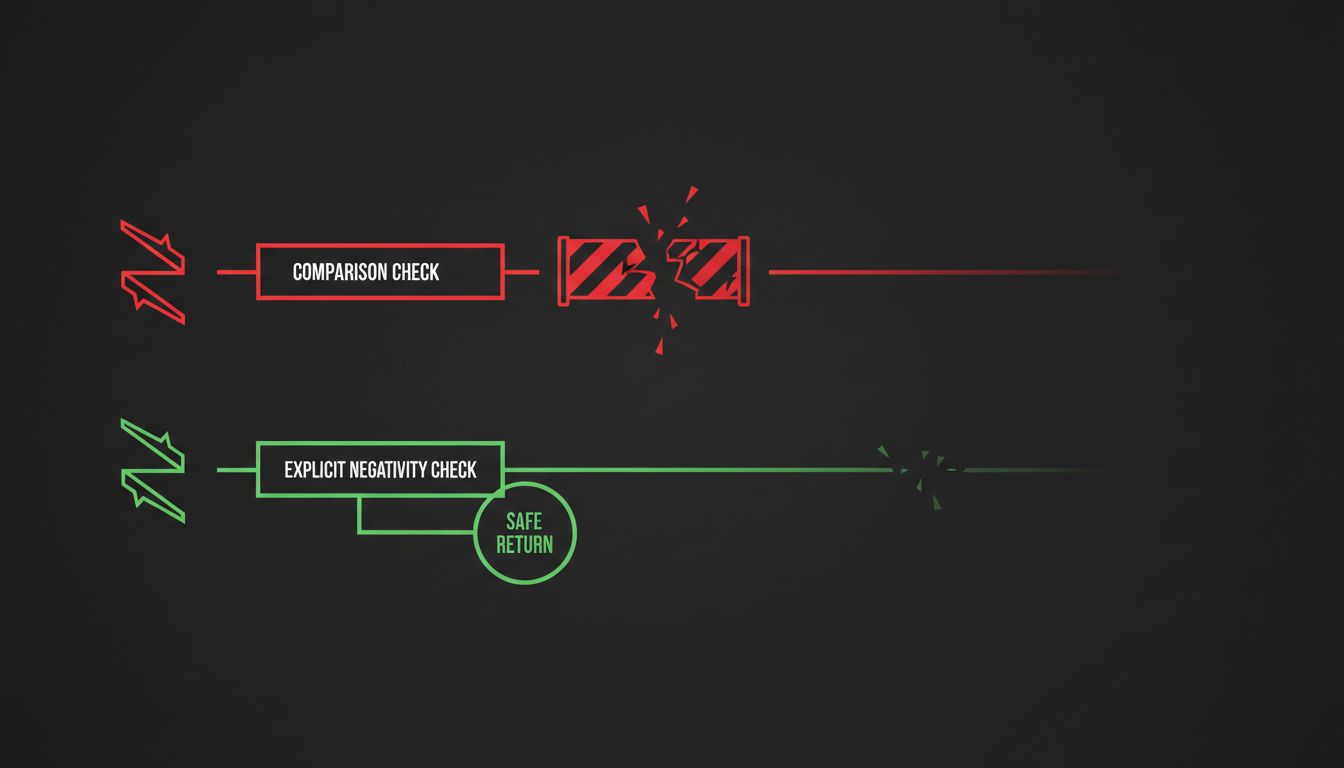
The practical fix is not to suppress the warning but to resolve the type mismatch explicitly. If a value logically cannot be negative (an index, a count, a size), declare it as an unsigned type or as size_t from the start. If a value can legitimately be negative, validate it before using it in a comparison with an unsigned quantity. A single explicit check, if (value < 0) return error, placed before the comparison, eliminates the ambiguity.
Modern tooling helps. Clang’s -Weverything flag is too aggressive for daily use, but -Wsign-compare in isolation is not. Enabling it specifically, treating it as an error in new code, and gradually clearing it from existing code is achievable without stalling a team. Rust eliminates the problem structurally: comparisons between signed and unsigned types don’t compile at all, forcing the developer to decide explicitly what conversion they intend.
Some teams use static analysis tools like Coverity or PVS-Studio specifically because they catch this class of issue more reliably than compiler warnings alone. These tools model how values flow through a program and can identify cases where a variable might be negative at the point of an unsigned comparison, even when the compiler can only see the local types.
The broader discipline here is treating warnings as information rather than interruptions. A warning is the compiler telling you that it can’t guarantee the code does what you think it does. In most cases that’s a false alarm. In some cases it’s the only notice you’ll get before a production incident. Deciding categorically that a warning class is noise, without reading what the warning is actually about, is how teams end up shipping bugs they had a chance to catch for free.