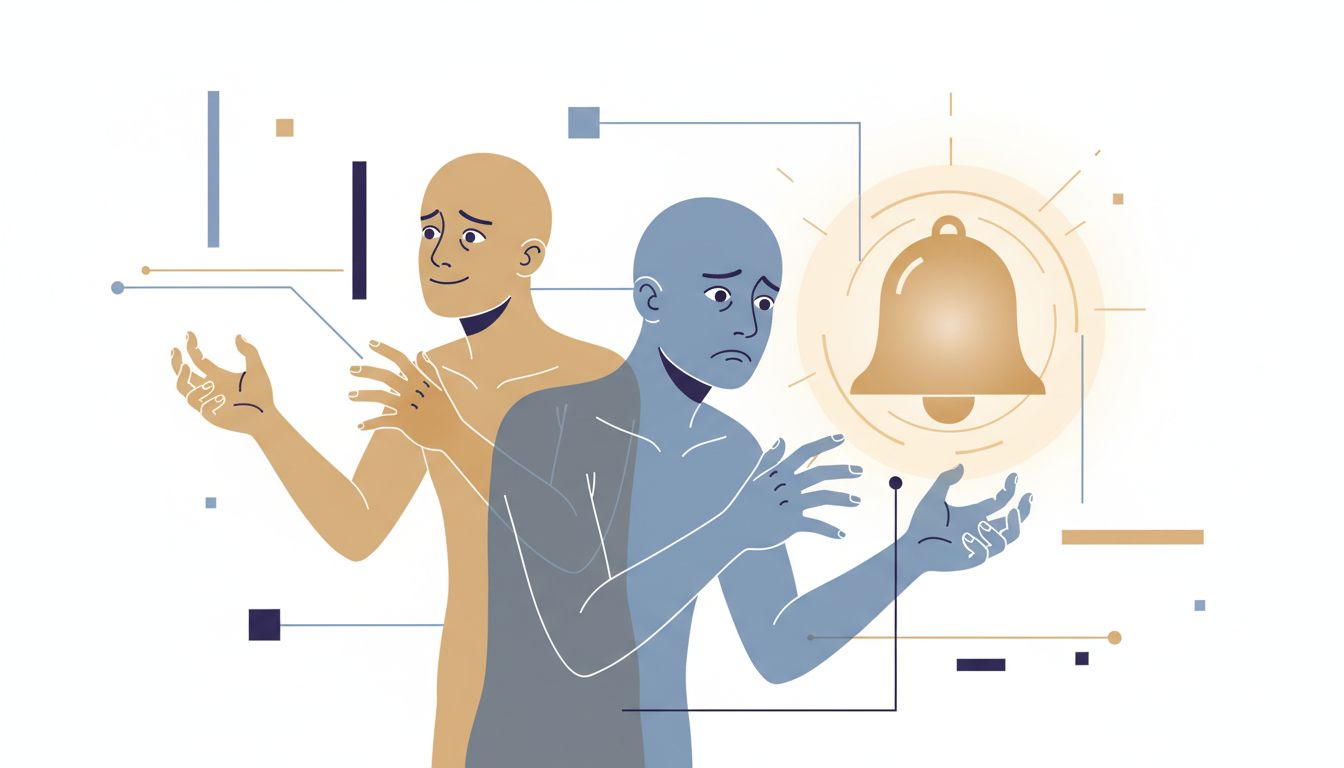

The calendar invite arrives. Twelve people, one hour, a vague agenda about “aligning on Q3 priorities.” You decline, send a two-paragraph Slack message instead, and go back to what you were doing. Later, someone tells you the meeting was productive. You’re not sure you believe them.
Here’s what actually happened: your two paragraphs forced you to think. The meeting let twelve people avoid doing the same.
This isn’t a complaint about meetings. It’s an observation about how knowledge work actually functions, and why the medium you use to communicate is doing more cognitive work than you’ve probably given it credit for.
Writing Forces Compression, Talking Allows Drift
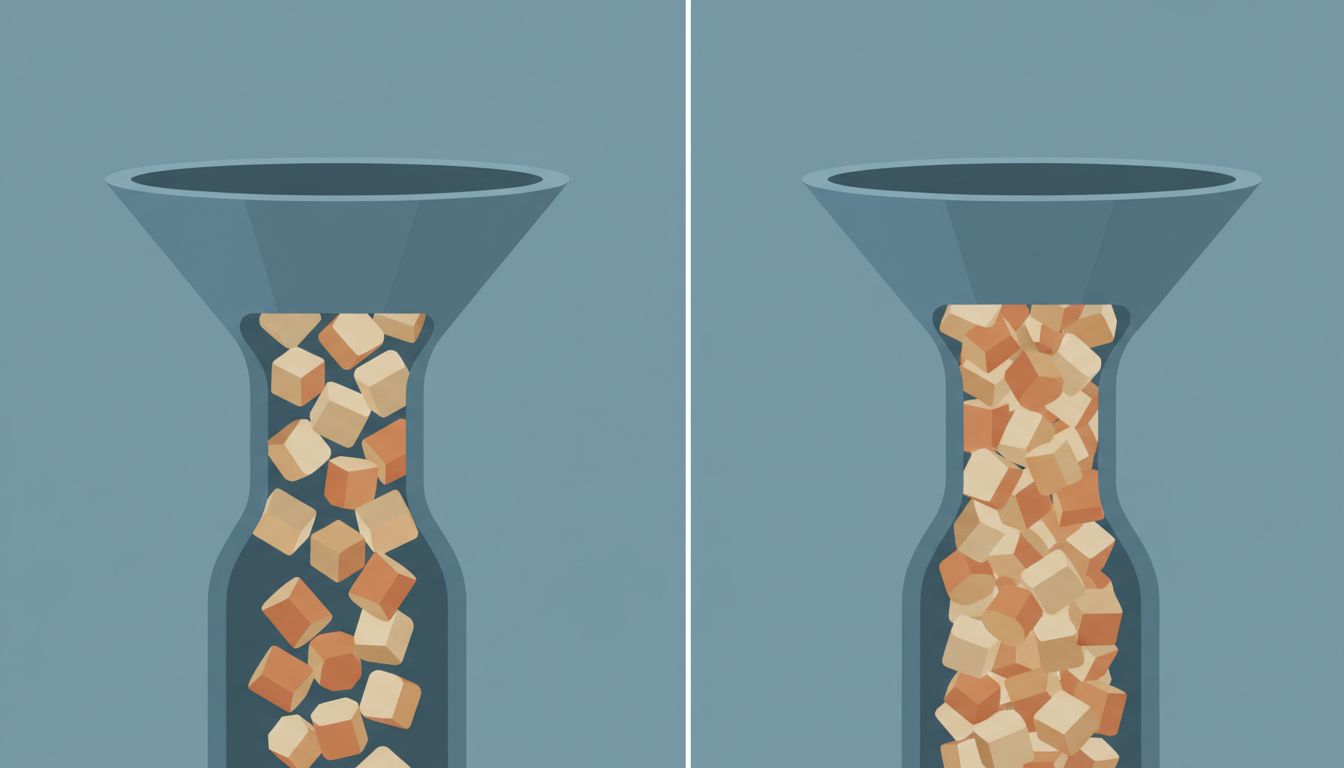
When you write something down with the intent to communicate it, you have to resolve ambiguity before it leaves your head. You can’t gesture vaguely at a concept the way you can in speech. You can’t rely on a sympathetic listener to fill in the gaps. The act of writing is, among other things, a forcing function for clarity.
This connects to something worth reading about directly: compression is one of the most underrated skills in engineering. The same principle applies to communication. When you compress your thinking into a document or a message, you’re doing real cognitive work before the conversation starts rather than during it.
Meetings operate differently. In a synchronous conversation, you can surface half-formed ideas and let the group metabolize them. Sometimes that’s valuable. Often it means twelve people spend an hour watching one person think out loud, and leave with a vague sense of alignment that dissolves by Thursday.
The research on this is consistent enough to be worth taking seriously. Studies on nominal group technique (a structured method for idea generation that separates individual thinking from group discussion) repeatedly show that groups produce more diverse and higher-quality ideas when members think independently before converging. The convergence still matters. But doing it too early collapses the idea space before it’s been explored.
The Hidden Cost Isn’t Time, It’s Context
Most critiques of meeting culture focus on time: X hours wasted, Y dollars of salary burned in a room with bad lighting. That framing misses the worse cost.
Context switching is expensive in a way that clock time doesn’t capture. Research by Gloria Mark at UC Irvine has shown that after an interruption, it takes people an average of around 23 minutes to return to a task at the same level of focus. A one-hour meeting in the middle of a workday doesn’t cost one hour. It costs the meeting plus two recovery windows plus whatever you were building toward before the calendar notification fired.
For developers and other people doing complex sequential reasoning, this matters enormously. Deep work (Cal Newport’s term for cognitively demanding tasks requiring extended focus) doesn’t just need time, it needs uninterrupted time. A 30-minute block is not half as valuable as a 60-minute block. It might be a tenth as valuable, depending on what you’re building.
The meeting you canceled didn’t just give back its own time. It preserved the context around it.

Async Isn’t Just a Substitute, It Has Different Properties
There’s a common way of framing async communication that subtly undersells it: “when you can’t meet synchronously, use async instead.” This positions async as a fallback, a compromise when real coordination isn’t possible.
That gets it backwards for a significant category of work.
Async communication has structural advantages that synchronous communication can’t replicate, regardless of logistics:
It creates a record. A Slack thread, a shared doc, a pull request comment thread: these are searchable, quotable, and available to people who weren’t in the room. The decision made in a meeting evaporates unless someone writes notes. The decision made in a doc comment is already written.
It equalizes participation. In a meeting, the loudest and most confident voice tends to dominate, regardless of the quality of its ideas. In async, the person who takes a day to formulate a careful response gets equal representation with the person who had an immediate reaction. For introverts and non-native speakers, this difference is not subtle.
It accommodates timezone-distributed teams without asking anyone to sacrifice their morning. This is less interesting conceptually but worth naming because it’s where a lot of teams learn the async lesson first.
It separates the thinking from the reacting. One of the worst dynamics in meetings is the pressure to respond before you’ve thought. Async removes that pressure. You can sit with a proposal, notice the edge case on the third read, and raise it without having to do that in real time while someone watches you think.
None of this means meetings are useless. It means they’re good for specific things: decisions that need genuine back-and-forth to resolve, relationship-building that requires presence, situations where someone is stuck and needs real-time help. The mistake is using them as the default instead of a specialized tool.
The Document That Replaced the Meeting
Consider how Amazon does it. Jeff Bezos famously banned PowerPoint in executive meetings in favor of six-page narrative memos. The meeting starts with everyone reading the memo in silence. Discussion follows. The argument is that slides allow you to hide weak thinking behind bullet points and confident delivery, while a narrative memo requires you to actually work out the logic.
Whether or not you work at Amazon, the underlying insight is transferable. A well-written document forces the author to confront contradictions, fill gaps, and take positions before the audience arrives. It means the audience arrives informed rather than needing to be brought up to speed during the meeting itself.
This is why the pre-read exists, and why it so rarely works in practice: people don’t read it. The pre-read only works if the meeting can genuinely start from “everyone has read this.” Otherwise you’re doing async-then-sync where the sync part re-explains the async part, and you’ve added overhead without adding value.
A better version of this pattern is when the document is the meeting. You write it, people comment asynchronously over 24-48 hours, decisions get recorded inline, and a synchronous call (if needed) is short and focused only on the genuinely unresolved questions.
Why We Default to Meetings Anyway
If async has these structural advantages, why do calendars stay full?
Partly it’s inertia. Meetings are the tool most people learned in office environments before distributed work normalized alternatives. The pattern is deeply grooved.
But there’s also something less flattering going on. Meetings produce the feeling of productivity without requiring the evidence of it. You can attend a meeting and leave having said things, nodded at things, “aligned” on things, without having produced anything a week later you could point to. A document doesn’t let you off that hook. A document is evidence. It’s revisitable. It says exactly what you thought, and your thinking is either good or it isn’t.
This also connects to why your most important work gets scheduled last. Meetings feel urgent in a way that deep work doesn’t, so they expand to fill the calendar while the actual thinking gets pushed to Friday afternoon.
There’s also a social dimension. Declining a meeting can feel like declining the relationship, signaling that you don’t care about the people in it. This is a cultural problem more than a logical one, but it’s real, and ignoring it leads to async advocates who are technically right but organizationally ineffective.
Building the Habit Without Burning the Culture
Moving toward more async work isn’t primarily a tooling problem. Notion, Confluence, Linear, Loom: the tools exist and work reasonably well. The harder part is building norms where async communication is seen as a first-class contribution rather than a workaround.
A few things that actually help:
Start decisions in writing, not in a meeting invite. If you’re initiating something, write down the problem, your proposed approach, and the question you need answered. Send it before you schedule anything. Often you’ll get what you need without meeting at all.
Be explicit about response windows. “I’d love thoughts by Wednesday” is more actionable than posting into the void and hoping people check it. Async works because it gives people flexibility; that flexibility needs boundaries to function.
Record decisions where they live. If a discussion happens in Slack, write a brief summary somewhere more permanent before it scrolls away. The value of async accumulates through the record it creates; that value only exists if the record is maintained.
Protect synchronous time for what it’s actually good for. When you do meet, make it count. A 25-minute focused call to resolve a genuinely ambiguous decision beats a recurring one-hour check-in every time.
What This Means
The meeting you canceled was probably the right call, but not for the reason you usually hear (“meetings are wasteful”). It was the right call if canceling it forced someone to write something down, and if that written thing did the thinking that the meeting would have distributed across twelve people without anyone owning it.
Async communication, at its best, isn’t a time-saving measure. It’s a thinking-forcing measure. The overhead of writing carefully, the constraint of not being able to gesture and hedge in real time, the permanence of having your reasoning visible to anyone who looks: these aren’t bugs. They’re the mechanism.
The question isn’t whether to have meetings. It’s whether a given communication genuinely needs to happen in real time, or whether forcing it into writing would produce something better. Most of the time, the writing wins.