The simple version
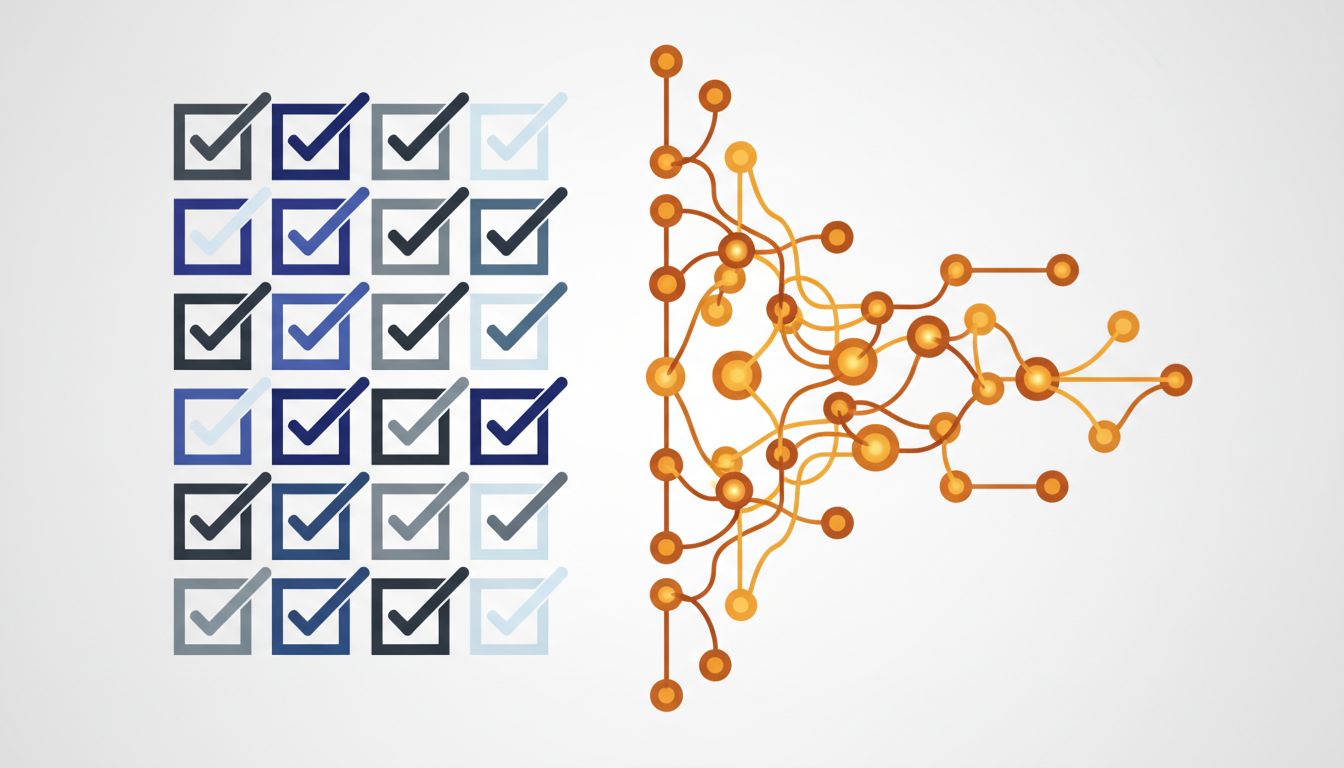
Task lists capture work that has already been defined. Most of your highest-leverage work is the act of defining what work needs to exist at all.
What task lists are actually good at
A task list is a queue of discrete, actionable items. “Send invoice to client,” “fix the pagination bug,” “book travel for conference.” These are all well-formed tasks: they have a clear start state, a clear end state, and the path between them is either known or easily discoverable.
This is genuinely useful. The cognitive load of remembering forty small obligations is real, and offloading them to a list frees up working memory for actual thinking. David Allen’s Getting Things Done framework, whatever you think of its more elaborate rituals, got this part right: your brain is bad at storage and good at processing, so stop using it as a hard drive.
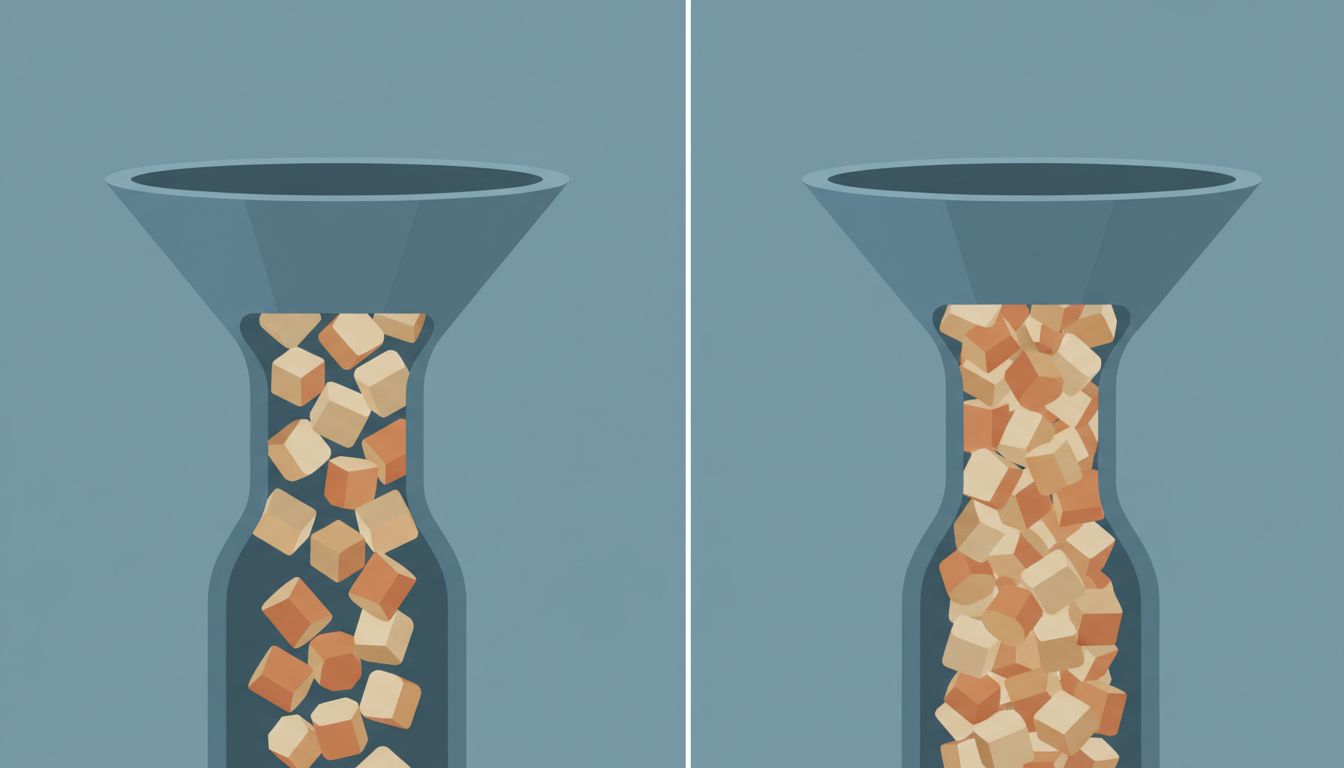
But here’s where the model breaks down. Tasks lists are optimized for execution, not for discovery. They’re pull queues, not sensors.

The work that doesn’t fit
Consider a few categories of work that move projects forward but resist being written down as tasks:
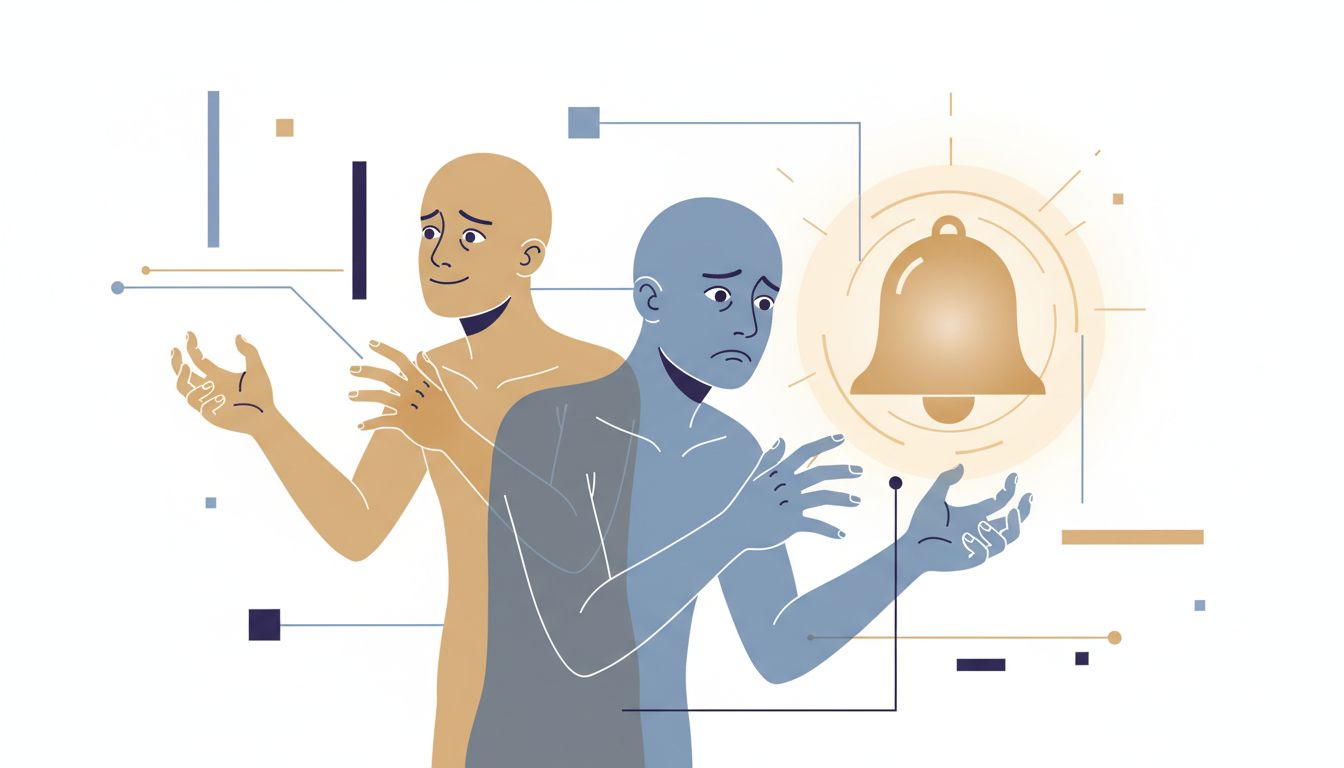
Noticing something is wrong. A senior engineer walks past a whiteboard, glances at an architecture diagram, and realizes that the proposed caching layer will cause consistency problems under a specific race condition. That moment of recognition isn’t a task. It’s pattern-matching built from years of watching similar systems fail. You can’t schedule “notice the flaw in the design” on a Tuesday afternoon.
Asking the question nobody asked. A product manager sits in a roadmap review and says, “Wait, are we sure users actually want this, or did we just assume they did?” The meeting stops. Three assumptions get examined. One feature gets cut. Two months of engineering work disappear from the roadmap. That question wasn’t on anyone’s task list. It was the most valuable thing that happened that week.
Knowing when to stop. Deciding that a project should be killed, that an approach should be abandoned, that a meeting should end without a decision because the room doesn’t have enough information yet, these are judgment calls. They require reading signals that aren’t in any ticket tracker.
Connecting the dots. A designer on a payment flow recalls a conversation from six months ago about a compliance concern and realizes it applies to what’s being built right now. That connection isn’t discoverable by a task management system. It happens in a brain that has been paying attention.
None of this shows up in Jira. None of it shows up in Notion. It doesn’t show up because it can’t be captured in advance. The work only becomes visible in the moment it happens.
Why we undervalue invisible work
There’s a reason knowledge workers default to task lists even when they don’t serve the highest-value work. Tasks are legible. They can be assigned, tracked, completed, and reported. They satisfy the organizational hunger for visibility and accountability.
Work that doesn’t fit this mold tends to get classified as either “meetings” (which feel expensive) or “thinking” (which feels indulgent). Neither framing is accurate. The senior engineer who prevented the caching disaster wasn’t “in a meeting” or “thinking.” They were doing their job at the level their experience warrants.
Software teams have a particularly acute version of this problem. Ticket-based workflows create pressure to translate all work into trackable units. The result is that important work either gets tortured into ticket form (“research caching approaches” is a bad ticket that gestures at a real problem) or it gets ignored because it can’t be tracked. As related to this, there’s a reason why your most important work gets scheduled last: schedulable work crowds out work that can’t be scheduled.
What to do about it
You can’t task-list your way to better judgment. But you can create conditions where high-value invisible work is more likely to happen.
Protect unstructured time, but be honest about what it’s for. Blocks of calendar time labeled “focus time” are often used for catching up on email. That’s fine, but it’s not the same thing as giving your pattern-matching system time to run. Actual thinking time means sitting with a problem without a defined output, which feels uncomfortable and unproductive until it suddenly isn’t.
Take the “but wait” thought seriously. Most people have a moment of hesitation before agreeing with something in a meeting. They dismiss it as imposter syndrome or not wanting to slow things down. Quite often, that hesitation is your subconscious pattern-matcher flagging something real. Developing the habit of saying “hold on, I want to understand this better” before moving on is a practice, not a personality trait.
Review, don’t just execute. The most important thing a task list can do is prompt reflection. Spending ten minutes before a work session looking at what’s on the list and asking “is this the right problem?” catches misaligned work before it’s done. Not every time, but often enough to matter.
Build in forcing functions for judgment-heavy work. Architecture review sessions, pre-mortems, and explicit “is this still the right thing to build?” checkpoints in a project create structured space for the kind of noticing that doesn’t happen spontaneously when everyone is heads-down executing.
The uncomfortable conclusion
The most productive people you know probably don’t have the best task management systems. They have good judgment about where to direct attention, a habit of asking the uncomfortable question, and enough slack in their schedule to notice things. None of that is capturable in a productivity app.
Task lists are a solved problem. They’re useful, and the tools for them are mature. The hard part of knowledge work was never remembering to send the invoice. It was always figuring out which problems are worth solving in the first place, and no app has figured out how to put that on a checklist.