
The Simple Version
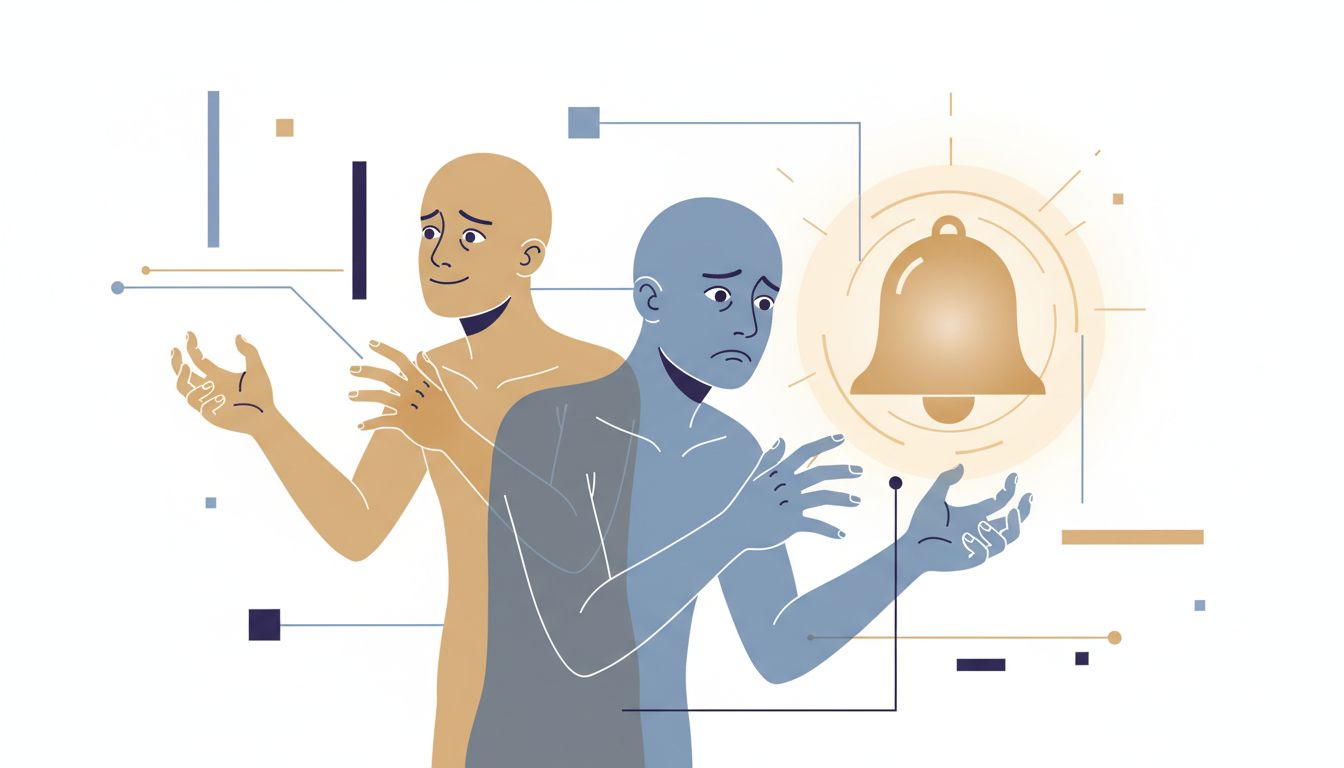
Your brain is wired to treat urgency as a proxy for importance. This works fine in emergencies and terribly in office environments, which is why you spend Thursdays answering emails instead of doing the thing that actually matters.
Why Urgency Feels Like Importance
Urgency is easy to measure. A deadline is a number. A meeting request arrives in your inbox. A Slack message turns a channel red. Importance, by contrast, is abstract. Writing the architecture proposal that could unblock three engineers for a month has no alarm attached to it. Nobody pings you when you haven’t started it.
This creates an asymmetry that your scheduling instincts were never built to handle. Your instincts evolved to respond to the loudest signal, and calendars, notification badges, and inbox counts are all louder than the quiet importance of deep work.
Psychologist Amos Tversky and Daniel Kahneman called the underlying mechanism availability bias: we judge the probability and importance of things by how easily they come to mind. An unread email is cognitively available in a way that an unstarted strategic project simply is not. You can’t see it sitting there. It doesn’t ping you. So it waits.
The result is what Dwight Eisenhower reportedly used to describe as a distinction between urgent and important tasks, a heuristic later popularized as the Eisenhower Matrix. The matrix itself is fine, but it misses the real problem: most people know intellectually that their big project matters more than their inbox. They just can’t feel it when they sit down to work.

The Scheduling Logic That Makes It Worse
Here’s where it gets structural. Most people schedule their days reactively, which means they fill time with whatever is in front of them and push everything else to “later this week.” Later this week becomes next week. Next week becomes a project that’s technically in progress but never actually moves.
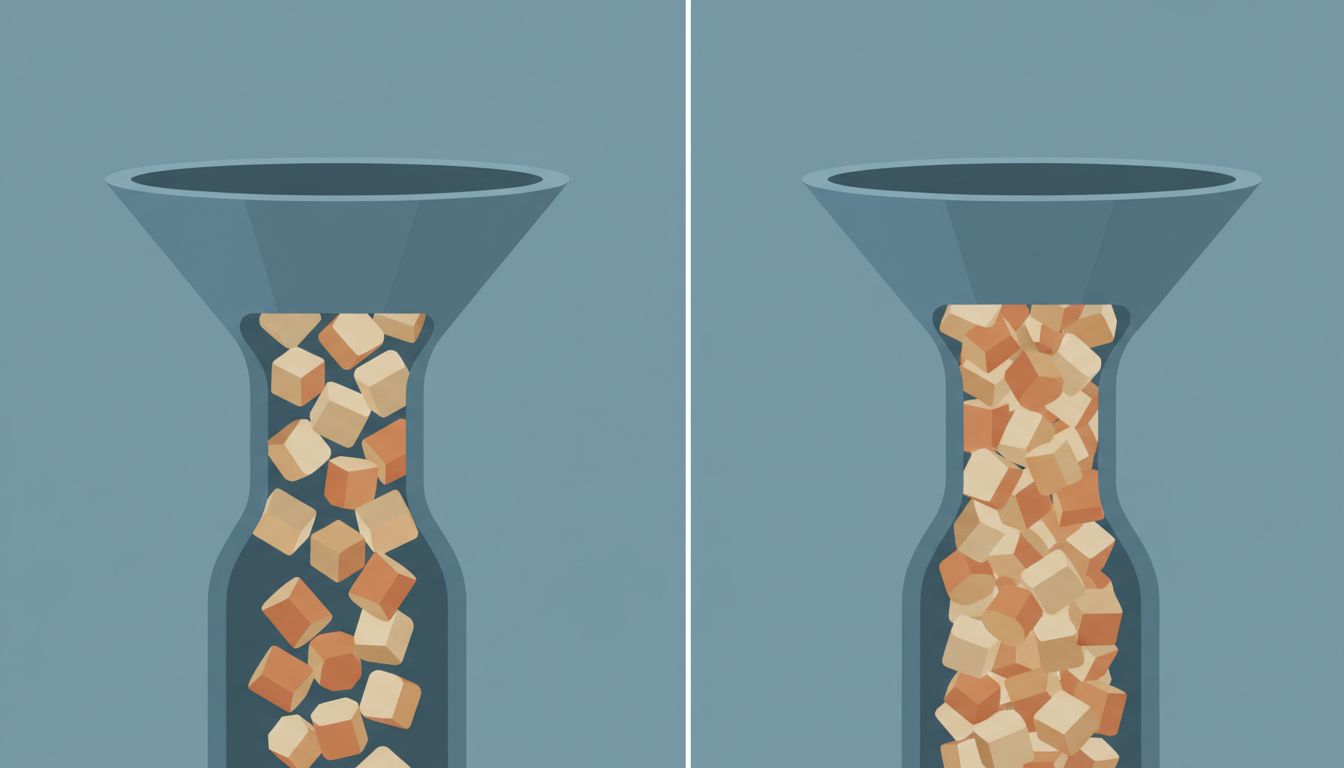
This pattern has a specific failure mode in knowledge work: large, important tasks get fragmented into whatever time remains after the urgent stuff is handled. You get 20 minutes before a meeting, so you open the document and write a paragraph. Then you get pulled into something else. Then it’s 4pm. The task was technically touched, but it didn’t advance in any meaningful way.
Cognitive load research consistently shows that complex intellectual work requires something like 15 to 25 minutes just to reach full engagement. If your available block is 20 minutes, you’re spending almost all of it getting into the problem rather than solving it. You feel busy. You are busy. The important work barely moves.
This is related to what Cal Newport describes as shallow versus deep work: tasks that can be done in fragmented time versus tasks that require sustained, uninterrupted focus. Shallow work expands to fill whatever time you give it. Deep work shrinks to nothing if you don’t explicitly protect it.
Why Task Lists Make This Worse, Not Better
Most productivity systems optimize for task completion, which sounds right but creates perverse incentives. A task list rewards you with the same checkmark for responding to a Slack thread as for shipping a feature. The satisfaction is identical. The cognitive cost is not.
Smaller, completable tasks create a feedback loop that feels like progress. Smaller tasks feel productive but often make you slower is a real phenomenon, not a motivational cliché. You can spend an entire day closing tickets and leave feeling accomplished while the thing that actually mattered sat untouched.
There’s also a planning failure that happens at the list level. When you write “work on architecture doc” as a task, you’ve created something that has no clear starting point, no clear ending point, and no time estimate. It’s vague enough that your brain will always find something more tractable to do instead. The task list becomes a graveyard for important-but-undefined work.
The fix is not a new app. The fix is forcing your important work to compete fairly.
How to Stop Scheduling Important Work Last
The most reliable intervention is time-blocking: treating your important work as if it were a meeting that cannot be moved. Not “I’ll work on this when I have time” but “Tuesday 9am to 11am is for this and nothing else.” The calendar becomes a forcing function rather than a record of other people’s demands on your time.
This sounds obvious and is genuinely hard to do because it requires saying no to things that feel urgent. You will get a meeting request for Tuesday at 9am. You will feel the pull to accept it. The meeting feels concrete and bounded; your blocked time feels negotiable because nothing external is enforcing it.
The second intervention is making important work concrete enough to start. “Write architecture doc” is not a task. “Draft the data flow section, covering how auth tokens propagate through the service mesh” is a task. Specificity removes the startup cost. You sit down, you know exactly what you’re doing, and you start.
The third thing, which most productivity advice underplays, is sequencing. Do your most important work first, before the day generates urgency. If you check email before you start your deep work, you’ve imported someone else’s priorities into your morning. Your brain is now partly occupied with what you read, and the important work you meant to do competes with that residue. Many developers who protect their mornings report that two focused hours before 10am outperform anything they could accomplish in a fragmented afternoon.
None of this requires a new system. It requires recognizing that urgency and importance are different axes, and that your current environment is heavily optimized to make urgency win. You have to actively counterweight that. The work that matters most will almost never announce itself loudly enough to compete on its own.
Schedule it first, make it specific, and protect it like a meeting with someone who matters. Because it is.