
The simple version
Your brain has a limited window each day when it does its best analytical and creative work. Most work schedules are designed to fill that window with the easiest, most interruptible tasks available.
Why cognitive peaks matter more than total hours
Not all hours are equivalent. Circadian rhythm research, including work published by chronobiologist Till Roenneberg and colleagues at Ludwig Maximilian University, has established that alertness, working memory, and executive function all follow a predictable curve across the day. For most people (not everyone, but most), that curve peaks in the late morning, dips after lunch, and recovers partially in the late afternoon before declining again in the evening.
The peak isn’t just “feeling awake.” It’s a measurable difference in the brain’s ability to hold multiple things in working memory simultaneously, suppress irrelevant information, and make connections between ideas. The kind of work that requires all three at once, writing complex code, designing systems, making hard decisions, working through an unfamiliar problem, is exactly the work that suffers most when done off-peak.
The off-peak hours aren’t wasted. They’re actually better suited for routine processing: responding to emails that require one-sentence answers, filling out forms, reviewing documents you mostly agree with, attending status updates. The issue is that most people have it completely backwards.
How meetings colonize your peak hours
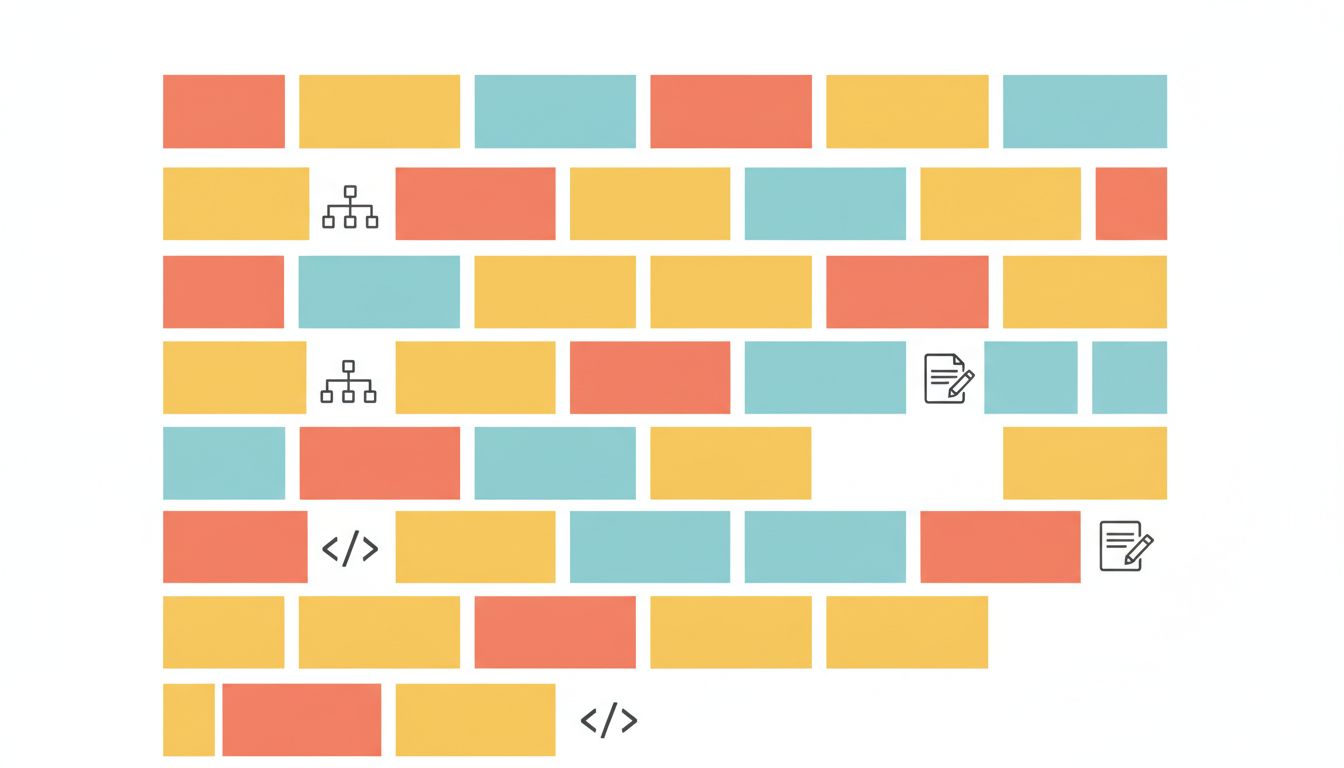
Meetings tend to cluster in the morning. This isn’t arbitrary. Morning meetings feel productive because everyone is alert and engaged. Participants show up ready to talk. Decisions get made. The meeting feels like it went well.
What’s invisible is the cost. A 10am meeting doesn’t just consume its scheduled hour. It also fragments the time before and after it. Research by Gloria Mark at UC Irvine found that after an interruption, it takes an average of around 23 minutes to return to a task with the same level of focus. A 10am meeting with a 9am preparation window and an 11am recovery window has effectively consumed three hours of your morning, including the best three hours you had.
This compounds at the organizational level. When one person’s calendar gets scheduled, they become available to schedule someone else. Morning meeting culture spreads through teams the way a virus spreads through a population: once enough people are infected, the meeting is the only time everyone is available, which makes the next morning meeting inevitable.
The task allocation problem
Here’s the thing that’s easy to miss: the mismatch isn’t just about meetings. It’s also about how people choose what to work on when they do have unscheduled time.
A blank calendar slot in the morning creates pressure to feel productive immediately. The easiest way to feel productive immediately is to clear things from a queue: answer the emails that piled up overnight, respond to Slack messages, review the pull request someone flagged, triage the support tickets. These tasks have clear completion states. You do them and they’re done. They produce a satisfying sense of forward motion.
Deep work doesn’t behave that way. Starting a hard problem means sitting with discomfort for a while before you make any visible progress. It’s cognitively expensive to get into, and it’s easy to tell yourself that you’ll do it “once you’ve cleared the easy stuff first.” By the time you’ve cleared the easy stuff, your peak window is gone.
This is essentially a scheduling system optimized for completion rate on low-value tasks rather than high-value output. The inbox hits zero. The important project barely moved.
What a better allocation actually looks like
The fix isn’t complicated to describe, though it requires real discipline to implement. Protect a block of peak hours every day and treat it as a non-negotiable constraint on your schedule, the same way you’d treat a flight you need to catch.
In practice this means: no meetings before a certain hour (11am is a reasonable starting point for most morning-peak people), notifications off during the protected block, and a pre-committed task waiting for you when you sit down. The pre-commitment matters because deciding what to work on is itself a cognitive load that burns working memory before you’ve done anything. Decide the night before.
The tasks that go into this block should require genuine concentration: writing that needs to be good, not just complete; code that has unsolved architectural questions; analysis where you’re not yet sure what the answer is. Anything where the first draft is usually wrong and getting to the good version requires iteration.
Everything else, the email, the reviews, the status meetings, belongs in the afternoon. Your afternoon self is still competent. They’re just not at their best for hard problems.
For teams, the intervention looks different. It means building meeting-free morning blocks into shared calendars and being willing to hold that norm even when it’s inconvenient. It means accepting that some async communication will have a few hours of latency. That tradeoff is almost always worth it.
The reason this is hard
Nothing here is technically difficult. The problem is that organizations reward visible busyness and punish visible stillness. A person sitting quietly at their desk working through a hard problem looks less productive than a person in a meeting room with a whiteboard full of diagrams. This is a measurement problem masquerading as a productivity problem.
If you manage people, the most useful thing you can do is make clear, explicitly and repeatedly, that output is what matters and that protecting thinking time is a legitimate professional priority. If you don’t manage people, you’re mostly on your own, which means you have to be willing to decline some morning meetings and absorb the mild social friction that comes with it.
Your peak hours aren’t renewable. You get a fixed number of them per day, and you’re already spending them on something. The question is whether that something is worth the cost.