
Prompt engineering has a dirty secret: your prompts are not durable artifacts. They are snapshots of how a particular model behaves on a particular day, and that behavior changes constantly beneath your feet.
This is not a theoretical concern. It is an operational reality that teams building on top of large language models are quietly running into, and most of them have no system in place to catch it before it hits production.
Models change without warning
OpenAI, Anthropic, Google, and others update their models regularly. Sometimes these updates are announced. Often the behavioral changes are not. A model version pinned to gpt-4 does not mean frozen behavior. OpenAI has acknowledged that the underlying model served by a given identifier can change, and the changes are not always trivial.
When a model update shifts how the system interprets tone, follows formatting instructions, or handles edge cases, a prompt that produced clean structured JSON last month might start returning prose explanations. A prompt that reliably refused off-topic requests might become suddenly more permissive. You find out when something downstream breaks, not before.
Prompts are load-bearing and untested
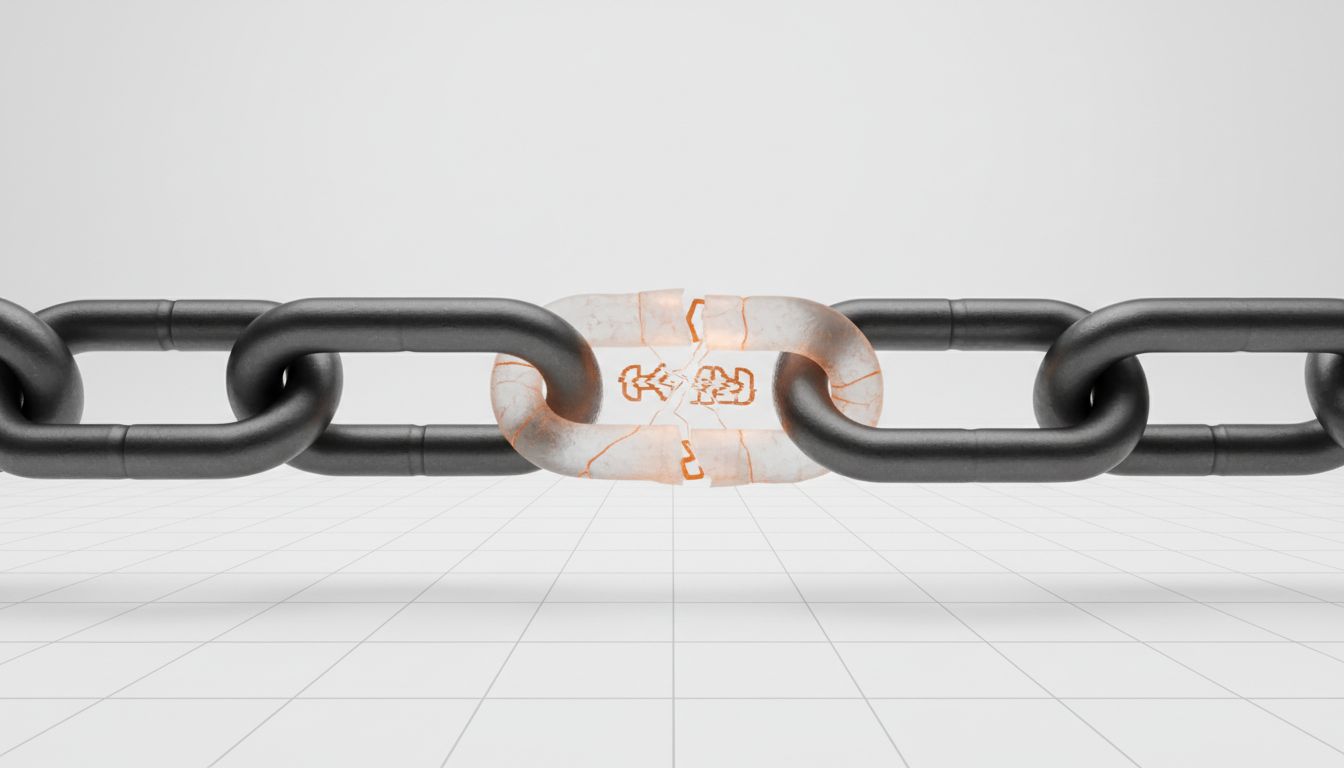
The deeper problem is that most teams treat prompts like configuration comments rather than code. They are written once, refined until they work, and then left alone. There are no unit tests for prompts. There is no continuous integration watching for behavioral drift. If a prompt is generating a critical output, such as a customer-facing summary, a classification label, or a structured data extraction, that logic is effectively untested infrastructure.
Compare this to how seriously the same teams treat their database queries or API integrations. A schema change triggers alarms. A third-party API change gets caught by contract tests. But the prompt that formats your billing summaries? It just runs, quietly, until it doesn’t.
This is the same category of problem described in how LLMs handle context they were never trained on: you are relying on behavior that was never formally specified, only empirically observed.
Sensitivity to phrasing is nonlinear and unpredictable
Even without model updates, prompt fragility is baked into how these systems work. LLMs are sensitive to phrasing in ways that feel almost random. Changing “do not include” to “exclude” can shift output structure. Moving an instruction from the beginning of a prompt to the end can flip which instruction wins when they conflict. Adding a new line can change tokenization in ways that affect behavior.
This sensitivity means that any prompt touched by a second person, slightly reformatted by an editor, or copied into a new context carries real risk of behavioral change. The prompt that worked is not a transferable specification. It is a specific string of characters that happened to produce a desired output from a specific model at a specific temperature setting. Change any variable and you may be starting over.
Organizational memory is also fragile
Perhaps the most overlooked failure mode is human turnover. The person who wrote and refined the critical prompt often carries all of the institutional knowledge about why each word is there. When they leave, or when six months pass and no one remembers the reasoning, the prompt becomes a black box. Teams then modify it based on intuition, break something subtle, and have no baseline to compare against.
Code has version history and comments. Prompts, in most organizations, live in a shared doc, a Notion page, or directly in a codebase with a single-line commit message that says “update prompt.”
The counterargument
The reasonable pushback here is that for many use cases, prompt drift is not a big deal. If you are using an LLM to brainstorm or summarize internal documents, some variation in output quality is acceptable. You are not running a safety-critical system.
Fair enough. But the threshold for “critical” keeps moving as teams integrate AI outputs further into their workflows. What starts as a manual review step becomes a trusted pipeline stage. What starts as an internal tool becomes customer-facing. By the time prompt reliability actually matters, there is often no testing infrastructure in place to even detect a problem, let alone diagnose it.
The organizations that will handle model updates gracefully are the ones that built evaluation frameworks when things were still low-stakes.
Treat prompts like infrastructure
The fix is not complicated, even if it requires discipline. Prompts that drive anything consequential need regression tests: a set of inputs with expected or acceptable outputs that you run against every model update and every prompt change. Version them explicitly. Store the reasoning behind key phrasing choices alongside the prompt itself. Pin model versions where consistency matters more than capability improvements, and make the decision to upgrade deliberate rather than automatic.
None of this is new thinking. It is just software engineering applied to a new artifact type that teams have not yet learned to take seriously.
The prompt that works today is working on borrowed time. The only question is whether you will know when it stops.