

In the summer of 2004, Basecamp shipped. 37signals had built the project management tool to solve their own problem, charged a flat monthly fee for it, and watched it generate more revenue in its first six weeks than the company had projected for the full year. By any measure, it was a spectacular start.
Then growth slowed. Not collapsed. Slowed. And it stayed slow, deliberately, for years.
This is not a cautionary tale about failure. It’s something more instructive: a case study in what happens when a profitable software company has its best quarter and then has to decide what that success actually means.
The Setup
Before Basecamp, 37signals was a web design consultancy with a modest reputation and a sharp blog. Jason Fried and David Heinemeier Hansson were vocal about software bloat, about the absurdity of feature lists, about the idea that constraints produced better products than budgets did. These weren’t just aesthetic preferences. They were the company’s operating philosophy, and that philosophy was about to be tested at scale.
When Basecamp launched and the money started coming in, 37signals faced the standard founder’s dilemma: pour the revenue back into growth, hire aggressively, raise outside capital to accelerate, or stay small and let the product compound. Every investor and growth-stage playbook of that era pointed toward the former. The market window was open. Competition was forming. You don’t win by staying still.
37signals stayed still. Not out of timidity, but out of a conviction that growth for its own sake would corrode the thing that made the product good: the small team’s ability to make fast, opinionated decisions without the friction of coordination overhead.
What Happened
The company added products slowly. Highrise, a lightweight CRM, came in 2007. Campfire, a team chat tool, had launched in 2006. Each product was built by a small team, priced simply, and designed to be useful without requiring enterprise sales. 37signals never hired a traditional sales force. They didn’t build a formal marketing department for years. At a time when SaaS companies were racing to add seats, features, and funding rounds, 37signals was writing books about working less.
By the early 2010s, Basecamp had hundreds of thousands of paying customers and a headcount that would embarrass most venture-backed companies of comparable revenue. The business was, by almost any traditional metric, underperforming its potential. It was also, by almost any quality-of-life and per-employee-productivity metric, doing exceptionally well.
The slow growth after that initial strong quarter wasn’t an accident or a failure of ambition. It was the product of a specific decision: that the best quarter shouldn’t automatically authorize the next set of hires, the next round of feature development, the next layer of management. That a record result is not a mandate.
Why This Matters
The pattern 37signals navigated is more common than it appears, and the companies that handle it badly outnumber the ones that handle it well by a wide margin.
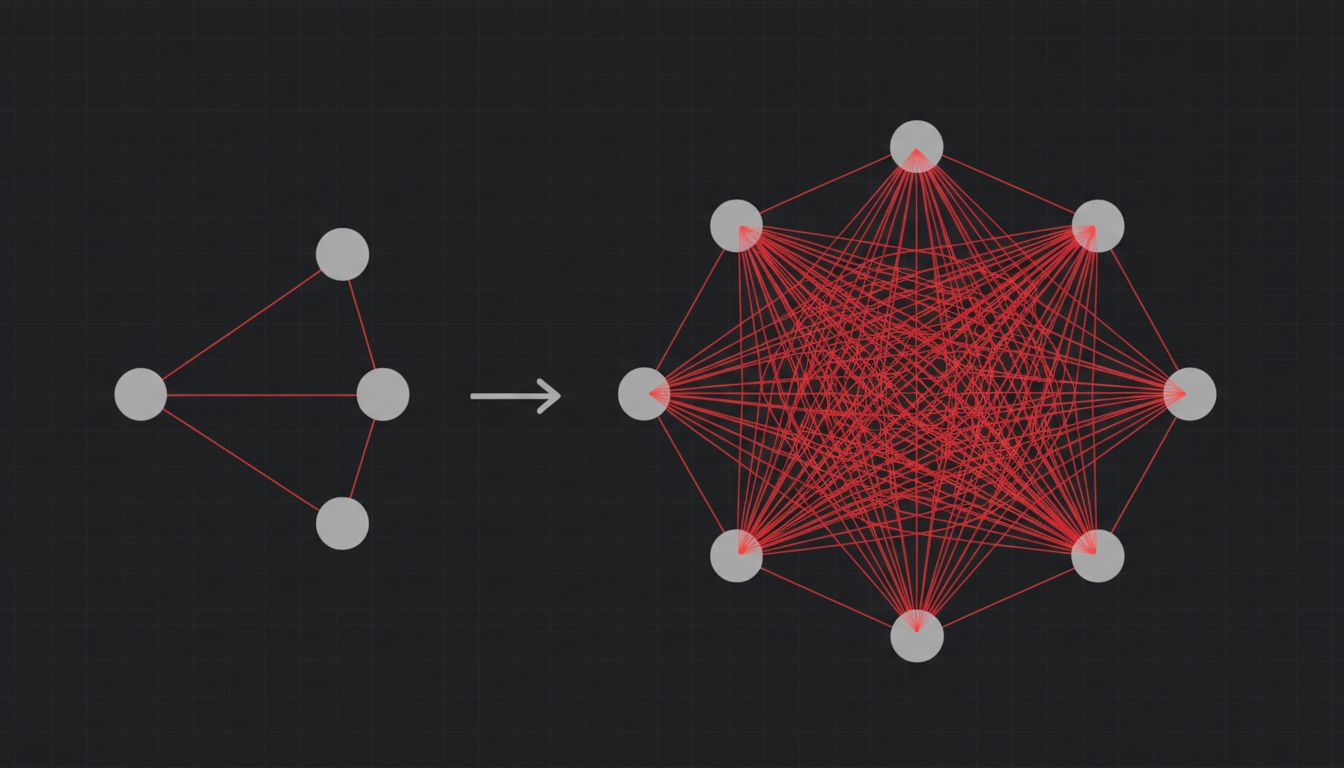
Here’s the mechanism. A software company has a breakthrough quarter. Revenue is up, margins look good, and there’s suddenly capital to deploy. The instinct, reinforced by nearly every investor and business school framework, is to treat that capital as fuel. Hire into the momentum. Expand the sales team. Build the features that enterprise customers keep requesting. Move fast while the tailwind is there.
What this instinct misses is that the breakthrough quarter often happened precisely because the company was small. The product was coherent because one or two people made all the decisions. Support was fast because the team was close to the product. Sales closed because the founder was on the call. The thing that generated the record quarter is the thing that aggressive hiring threatens to eliminate.
This is not an argument against growth. It’s an argument about timing and mechanism. The question isn’t whether to hire, it’s whether the company has figured out how to preserve the conditions that made the product good as it scales. Most haven’t. Most hire anyway.
The specific damage shows up six to eighteen months after the hiring wave. Coordination costs rise. Decision-making slows. Product quality, which is almost impossible to measure directly, starts to slip in ways that show up first in support ticket volume and then in churn. By the time the metrics confirm what the team already sensed, the structural cause is buried under several layers of new org chart.
What We Can Learn
The 37signals story is sometimes misread as a manifesto against scale, which is unfair to both the company and the lesson. Fried and Hansson were not anti-growth. They were anti-growth-as-reflex. The distinction matters.
The more precise lesson is about what a best quarter actually tells you. It tells you that the current configuration is working. It does not tell you that a larger, faster, more-staffed version of that configuration would work proportionally better. Those are different claims, and conflating them is where things go wrong.
Profitable software companies are particularly vulnerable to this error because they have the resources to act on the impulse without external pressure forcing a pause. A company that needs to raise money to grow has to convince investors, which provides at least some friction. A profitable company can just do it. The constraint that would otherwise force hard thinking about mechanism and readiness isn’t there.
The companies that navigate this well tend to do a few things consistently. They treat headcount as a last resort rather than a first response to revenue. They ask what, specifically, more people would do that current people cannot, and they require a real answer. They recognize that the second hire matters more than the first precisely because it sets the template for how growth happens, not just whether it happens.
They also resist the pressure to interpret a good quarter as validation of a strategy rather than execution. Validation of strategy requires multiple quarters across different conditions. A single good result might mean the strategy works. It might also mean the team got lucky with timing, or that a competitor stumbled, or that a single large customer skewed the numbers. Hiring into a single quarter’s results is hiring into noise.
37signals eventually did grow, and eventually did change its structure, and eventually did rename itself Basecamp after its flagship product. None of that happened on a schedule dictated by revenue highs. It happened when the company decided it was ready, which is a slower and less legible process than the standard growth playbook prefers.
The slower growth after the best quarter wasn’t a constraint they overcame. It was the strategy. That’s the part most companies miss.