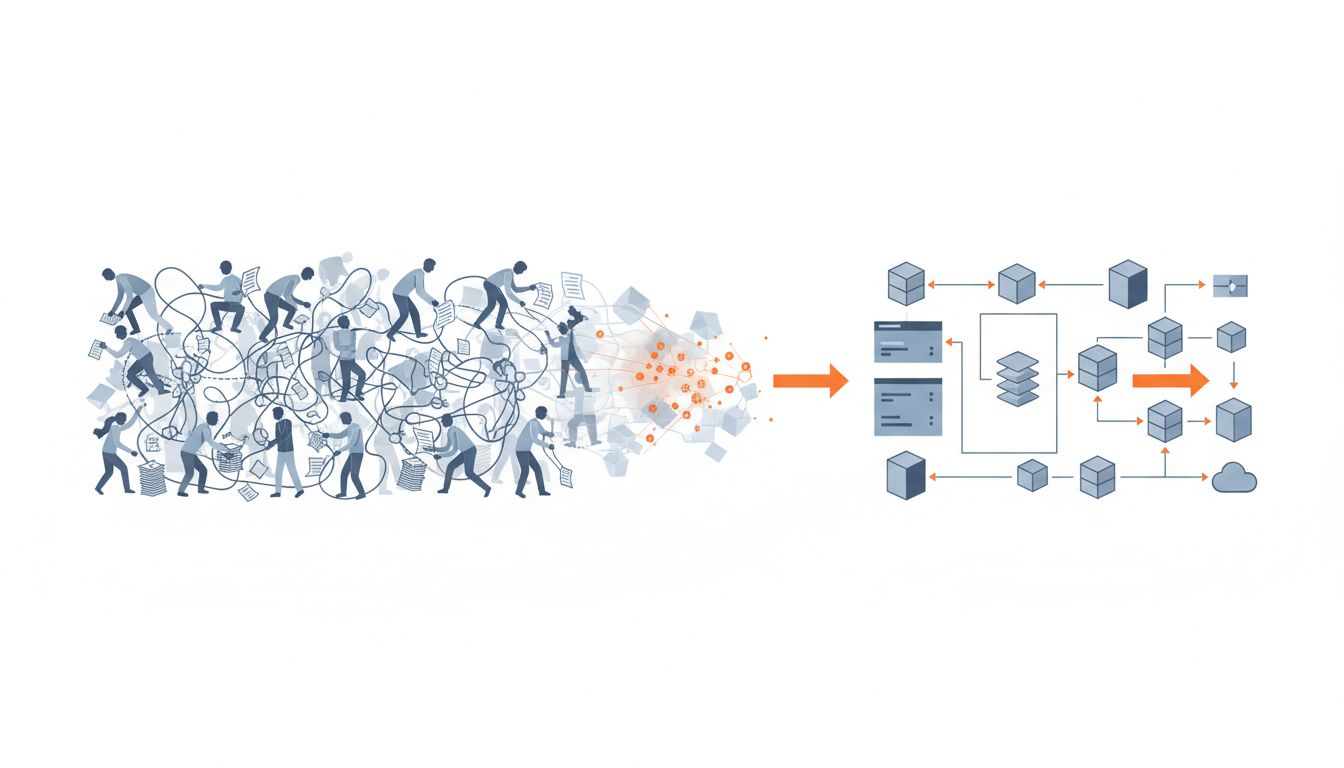
I’ve watched a specific failure pattern play out more times than I’d like to count. A brilliant founder builds something genuinely novel. The first eighteen months are electric. Then growth plateaus, the team doubles, investors start asking harder questions, and the founder does what they’ve always done: build. What they needed was someone to make the organization capable of executing on what they’d already built. They didn’t have one, and eventually, they didn’t have a company.
We have a founding mythology problem. The canonical startup story centers on the visionary, the one who saw what others couldn’t. That person matters enormously. But the second founder, the one who joins early enough to share the origin story but brings fundamentally different instincts, is often the reason any of it works at all.
Vision alone is not operational
Founders are, almost by definition, selected for their ability to hold a conviction against social pressure. That’s what it takes to start something from nothing. But that same trait, applied internally, is corrosive. It produces organizations that are great at generating ideas and terrible at finishing them.
The second founder brings a different cognitive posture. Where the first founder asks “what could this be?” the second asks “what does this need right now?” This isn’t lesser thinking. It’s complementary thinking, and without it, companies spend years in a permanent state of almost-there.
Wozniak built the Apple I and Apple II with a specificity and completeness that made them actually shippable. Jobs had vision; Wozniak had closure. Most early Apple products that reached customers did so because one person knew how to finish a thing. The mythology collapsed them into the same archetype, but they weren’t.
The second founder absorbs the shocks the first one can’t see
Founders are often too close to their product to receive negative signals clearly. Customers hedge. Early employees don’t push back. Investors frame concerns as questions. The second founder, because they’re not the author of the original vision, can actually hear what’s being said.
This sounds soft. It isn’t. Companies die from this. They die from iterating on a version of the product that isn’t working because nobody with authority is willing to say it isn’t working. The second founder provides the internal permission structure for honest assessment. They’re not protecting their founding thesis. They can look at the numbers without their identity getting in the way.
This is related to why your first hire will define culture more than you will. Culture isn’t what founders decree; it’s what gets modeled by the people who have credibility and aren’t the founder. The second founder, by virtue of being there early and clearly not being the boss, shows everyone else how to actually operate.
They handle the transition from insight to institution
Every successful startup eventually has to become a company. Processes, hiring standards, communication structures, financial discipline. Founders who are good at this exist, but they’re genuinely rare. The more common pattern is a founder who is extraordinary at zero-to-one and actively destructive during the one-to-ten phase, not out of malice but because the skills are different and the founder keeps reaching for the tools that worked before.
The second founder is often the one who builds the institution while the first founder keeps pushing the frontier. This isn’t a subordinate role. It’s arguably harder. Building an organization that can execute reliably, without extinguishing the energy that made the company worth building, requires a different kind of intelligence than founding vision.
The companies that fail here are easy to spot: lots of founder press, chaotic internal operations, high early-employee attrition, and a pattern of almost-launches. They have vision. They’re missing someone whose job is to make vision land.
The counterargument
The obvious objection is that many successful companies were built by solo founders or founders who held both roles. Bezos is the standard example. You can also point to companies where second founders became limiting, where the “operational” instinct calcified into bureaucracy and killed the thing it was trying to protect.
That’s fair. The second founder isn’t a guarantee; they’re a forcing function. A bad one can be worse than no one. And there are genuinely rare founders who carry both orientations, who can toggle between “what should exist” and “how do we ship this” without losing either.
But those people are not the norm, and building your strategy around being the exception is how companies die optimistically. Most founding teams that succeed have this dynamic in some form, even if it’s distributed differently than the two-person model suggests.
What this actually means
If you’re a first founder, the most important talent decision you’ll make isn’t your first engineer or your first sales hire. It’s finding the person who can do what you can’t, who is close enough to the origin to have credibility and different enough to push back on you. That person is not your VP of Operations. They’re a co-founder in function, even if not in title.
The second founder into a market wins by learning from the pioneer’s mistakes. The same logic applies internally. The second founder into your company wins by seeing what the first one is too invested to see.
Vision got you here. Someone else’s judgment is how you get further.