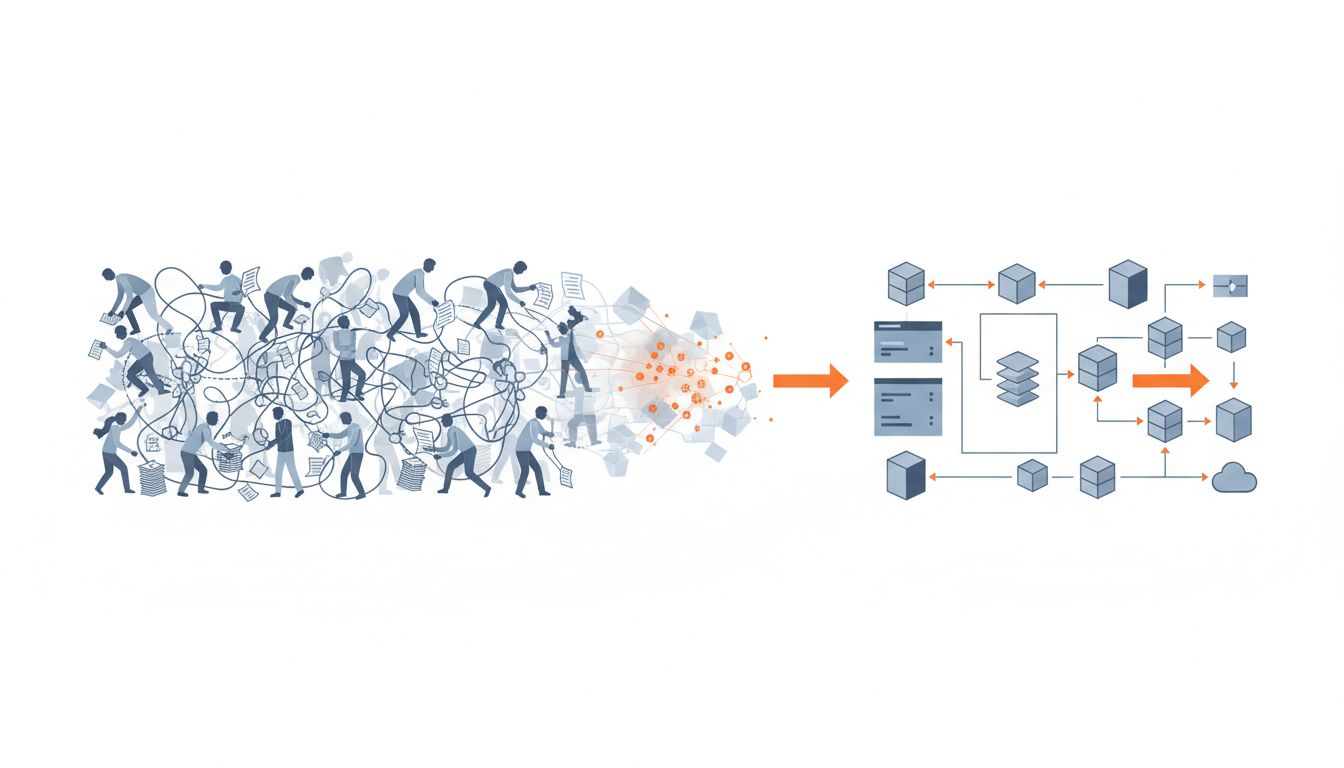

A founder I know raised a Series A on the back of three months of hockey-stick growth. By month nine post-raise, she had 60 employees, a sales team, and a churn rate that was eating the company alive. The growth hadn’t proven product-market fit. It had just made the eventual reckoning more expensive.
Most startup advice exists on a spectrum between “grow faster” and “be more capital efficient,” as if the problem is always the dial setting rather than the underlying machine. The truth is that premature scale and terminal stagnation produce the same outcome. They just have different stories attached to them at the funeral.
Here are the specific ways that happens.
1. Both Mistakes Are Built on the Same Misreading of Signals
The company that doesn’t grow often tells itself a story about being “early” or “building for the long term” while sitting on flat metrics. The company that grows too fast tells itself a story about momentum while ignoring the quality of that momentum. Both are doing the same thing: substituting a narrative for evidence.
Revenue that comes from discounting, heroic sales effort, or a single anomalous channel isn’t product-market fit. It’s product-market approximation, and it won’t hold when you try to systematize it. The founders who scale on top of this discover their unit economics don’t work at volume. The founders who stay small and don’t interrogate their stagnation miss the signal that the market is telling them something.
In both cases, the company dies from willful misreading. The fast one just burns more cash getting there.
2. Hiring Ahead of Revenue Is Lethal. So Is Hiring Behind It.
The canonical blitzscaling move is to staff up aggressively on the assumption that growth will continue. When it doesn’t, you get a company built for a future that never arrived, with the overhead of 80 people and the revenue of 20. The layoffs follow, and so does the cultural damage that makes recovery harder.
But understaffing is its own trap. A company that refuses to hire because it’s “staying lean” will find that it can’t capture the growth window when it opens. Markets don’t wait. Competitors who hired ahead of you will have the sales capacity, the engineering bandwidth, and the customer success coverage to take accounts you couldn’t service.
The right hiring cadence follows real signal, not projected signal. You hire when specific bottlenecks in your current capacity are costing you verifiable revenue, not when a spreadsheet model says growth should require X headcount. Your first hire will shape culture more than almost any decision you make, but every subsequent hire either validates or distorts what you’re building.
3. In Both Cases, the Product Stops Improving
This one catches founders off guard. When a startup grows too fast, the engineering team gets consumed by scaling infrastructure, fixing fires, and building integrations that enterprise customers are demanding. The core product freezes while the company sprints around it. Users notice. The product that won them over stops getting better.
The stagnant company has the opposite problem: without growth pressure, there’s no urgency to ship. Roadmaps get theoretical. Features get debated rather than tested in production. The team optimizes for internal consensus rather than user outcomes.
Both companies end up in the same place: a product that doesn’t improve fast enough to stay relevant. The fast-growth company gets there through resource misallocation. The slow-growth company gets there through complacency. The competitive outcome is identical.
4. Customer Concentration Becomes Catastrophic at Either Extreme
A startup scaling fast will often get there by landing a few large accounts early. This feels like validation. It is validation, but it’s also a structural fragility that compounds with speed. When you’re hiring and spending against a growth curve, losing one of those accounts doesn’t just hurt, it can break your financial model entirely.
The slow-growth company has a different version of this problem. Without a broad customer base, every difficult renewal conversation is existential. You can’t afford to take positions in your product roadmap that might alienate any single account because any single account is too large a percentage of revenue.
Both companies end up building for customers instead of markets. That’s a terminal condition for a startup, which should be building for a large market even if it only has a handful of early customers proving the thesis.
5. The Team That Grows Too Fast Gets Dumb. The Team That Doesn’t Grow Gets Stale.
High-growth companies hire fast and consequently hire badly. The institutional knowledge of why decisions were made gets diluted by people who weren’t there. Onboarding is inadequate because there’s no time. You end up with a company where a significant portion of the team doesn’t actually understand what the company does or why, and the original ten people who do are stretched too thin to fix it.
The stagnant team has the inverse problem. The same people have been working on the same problems for too long. They’ve lost the ability to see the product with fresh eyes. They’re optimizing for the product they built rather than the product the market needs. New hires who might bring useful outside perspective often leave because the culture has calcified around the founding team’s assumptions.
As distribution tends to win over design, what you actually need is a team that can think clearly about both, without either the chaos of over-hiring or the insularity of a frozen core group.
6. Both Paths End With a Founder Who Has Lost the Thread
The fast-growth founder is now managing managers, sitting in investor calls, and fielding requests from a board that wants quarterly numbers explained. The original insight that started the company, that tight feedback loop between builder and user, is buried under process. The founder has become an executive of a company they barely recognize.
The slow-growth founder is exhausted in a different way. They’ve been grinding without momentum for long enough that the original conviction has eroded. Every week of flat metrics is a small argument against their own thesis. They start making small pivots to try to manufacture movement, and the product loses coherence.
In both cases, the company stops being an expression of a clear idea about what the market needs. It becomes an organism trying to survive. Those are different things, and the market has a reliable way of telling you which one you’ve built.