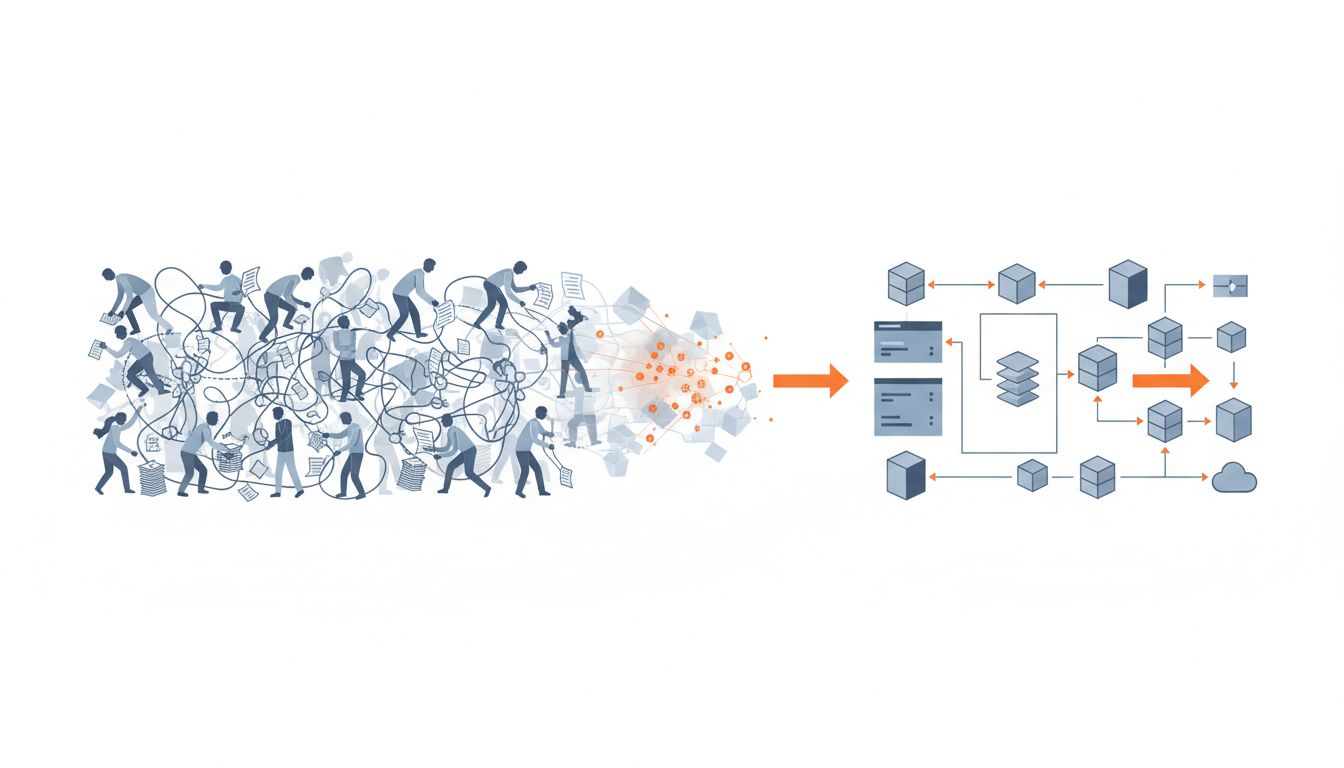

A founder I know spent eight months building a recruiting tool before talking to a single paying customer. When he finally did, the first three prospects said some version of the same thing: “We’d love to try it, but can you walk us through how it works first?” He had no demo worth showing. He lost all three. The product wasn’t the problem. The problem was he’d never thought about what he was actually selling in the pre-product phase, and he’d spent those eight months in the wrong place.
Every startup sells before it has a product. The ones that grow understand what they’re offering at each stage. The ones that fail assume the product will do the selling once it exists.
1. A Credible Point of View on the Problem
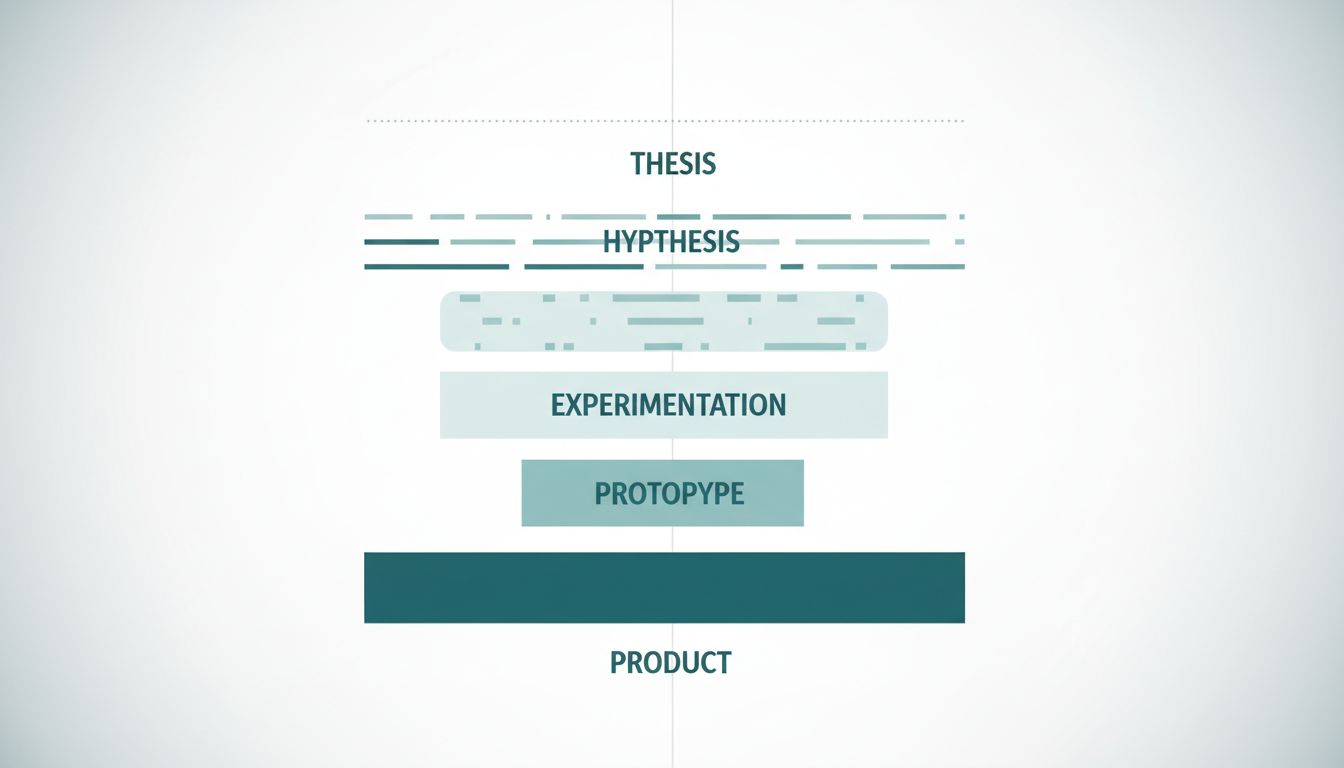
Before you have software, you have a thesis. Your thesis is that a specific problem is worse than people admit, that existing solutions are inadequate, and that you have a non-obvious insight about how to fix it. That thesis, delivered well, is genuinely valuable to the right buyer.
This isn’t a pitch. A pitch is asking for something. A point of view is offering something. The best early-stage founders I’ve watched operate more like analysts than salespeople. They walk into a room and say, “Here’s what we’re seeing across thirty conversations in this space, here’s why the current approaches are failing at the seams, and here’s the lever we think nobody’s pulling.” Buyers lean in. Not because the product exists, but because the diagnosis is accurate and they’re living with the problem.
The mistake is treating this as a step to skip, a thin justification layer before you get to the real demo. It’s not. For many early customers, the point of view is what they’re paying for access to.
2. Belief That the Future They Want Is Possible
Salesforce didn’t win its first enterprise customers in 1999 because the software was obviously better than Siebel. It won because Marc Benioff convinced a certain type of buyer that hosted, subscription-based CRM was not only viable but inevitable, and that being an early adopter meant being on the right side of history before the crossing.
That’s not a product feature. That’s a narrative about where the world is going and where the customer will land if they act now versus later. Founders underestimate how much early buyers are purchasing conviction, specifically the conviction that they are not making a risky, embarrassing bet on a company that will fail.
This is why the founder’s own belief matters tactically, not just emotionally. Doubt in the room is contagious. Groundedness, the kind that comes from having genuinely done the work and stress-tested the idea, is also contagious.
3. A Reduction in Decision-Making Anxiety
Buyers at large organizations who sign early-stage deals are taking on personal risk. If the vendor fails, they look bad. If the implementation is a disaster, they own it. Part of what they’re buying from you is a justifiable reason to say yes to their own internal committee.
This is why the best early-stage founders invest heavily in things that feel like table stakes: a clean, professional deck, references who will actually pick up the phone, a credible advisory board, a clear contract that doesn’t feel like it was written at 2am. None of these are the product. All of them reduce the perceived risk of the decision.
I’ve watched founders lose deals not because the product was weak but because the buyer couldn’t construct a defensible internal case for moving forward. The product was fine. Everything around the product made it look like a gamble.
4. Access to the Founder’s Attention
Early customers who know what they’re doing are buying something most vendors can’t offer: direct access to the people building the thing. When something breaks at 11pm, the founder answers. When a feature request is business-critical, it goes into the next sprint. When they need to understand the roadmap, they get a real conversation, not a canned slide.
This is a genuine, time-limited advantage and founders who fail to articulate it are leaving value on the table. The first full-price customer can be dangerous for other reasons, but the access dynamic cuts both ways: you learn what they actually need, and they get leverage over a product that can still be shaped.
Be honest about this. Tell early buyers: you’re not buying a finished system with an SLA, you’re buying a partnership where your pain shapes the roadmap. Some buyers don’t want that. The ones who do are often your best early customers.
5. Social Proof in Advance
This one sounds circular, but it isn’t. Early buyers in a category are often motivated by being seen as early buyers. The logo on your deck. The case study you’ll write together. The conference talk where they describe the problem they were trying to solve and how they found you.
This is most pronounced in B2B, where being publicly associated with a new category can be a competitive signal. Being the first major retailer to adopt a new fulfillment approach, or the first law firm to use a new contract analysis tool, is a positioning move for them, not just for you.
You can sell this explicitly. Not by promising coverage you can’t deliver, but by offering to build the story together and giving them editorial control over how it’s told. That’s a real thing of value, and it costs you almost nothing to offer.
6. A Shortcut Through Their Own Confusion
Many buyers, especially in emerging categories, don’t fully understand their own problem yet. They know something is broken. They’ve tried some things. They have a vague sense that there’s a better way. What they’re missing is a framework for thinking about the problem clearly.
If you’ve done the work, you have that framework. You’ve talked to dozens of people in their situation. You’ve mapped the failure modes. You know the vocabulary that makes the problem legible. Walking a buyer through that framework, even before your product exists, is valuable. It organizes their thinking in a way that makes them more effective at their job right now.
The first-mover myth aside, there is one thing first movers get to do that followers don’t: define the terms. If you’re early enough in a category, you get to name the problem and frame what solving it looks like. That framing becomes the thing buyers use to evaluate everyone, including you.
The founders who understand all of this share one habit: they stop thinking about the pre-product period as a waiting room and start treating it as a selling environment with its own rules. The product is coming. In the meantime, there’s real work to do.