

Why Hiring a 10x Engineer Can Slow Your Team Down
The 10x engineer exists. This is worth stating plainly because the concept gets dismissed as folklore by people who’ve never worked alongside one, and oversold as a silver bullet by people who’ve hired one once and credited them for everything that went right. Individual engineers do vary enormously in output, problem-solving range, and the quality of their architectural instincts. Studies of programming productivity going back to the 1960s, including Sackman, Erikson, and Grant’s foundational 1968 research, documented skill differentials of 10-to-1 or greater between individual programmers. The spread is real.
But individual productivity and team productivity are different quantities. Conflating them is the mistake that quietly taxes engineering organizations every time they hire for raw individual brilliance without thinking carefully about what happens next.
The Bandwidth Problem Nobody Advertises
When you hire someone dramatically more capable than the surrounding team, you create an information gradient. The senior engineer sees solutions that others don’t, holds design context that isn’t written down anywhere, and makes decisions faster than they can explain them. This is not a character flaw. It’s just what expertise looks like from the outside.
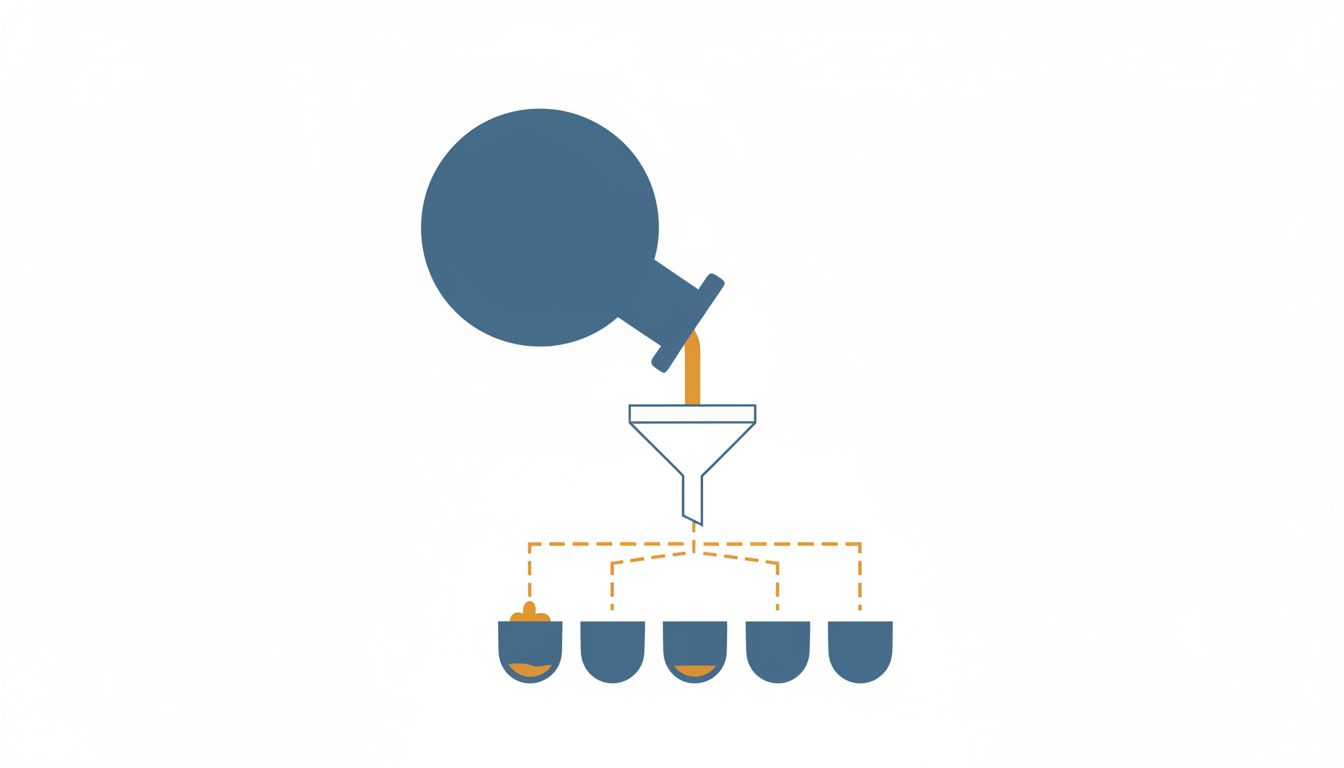
The problem is that software is a team sport with deep dependencies. Code gets reviewed, questions get asked, architecture decisions get pressure-tested. Every one of those interactions is now asymmetric. The 10x engineer answers a question in two minutes that takes the asker two days to fully absorb. The review cycle slows because comments require background the reviewer doesn’t have. Decisions that should be distributed start funneling through one person because everyone has learned that the fastest path to an answer is to ask them directly.
You hired someone to accelerate output. You’ve accidentally created a bottleneck.
How Stars Become Single Points of Failure
There’s a well-documented phenomenon in organizational psychology called the “alpha geek” pattern. One person accumulates so much implicit context, so much tribal knowledge, that the team cannot function at normal speed without them. Requests queue behind their availability. Deployments get delayed because they’re the only person who understands the legacy integration. Vacation becomes a minor organizational crisis.
This isn’t hypothetical. It’s the backstory behind half the “we have a bus factor of one” postmortems you’ve read. The person at the center of those postmortems is almost always the most capable engineer on the team, not the weakest. The gap between their knowledge and everyone else’s grew so large that no one noticed the team had become structurally dependent on a single node.
As hiring a second engineer won’t make you twice as fast explored, adding engineering capacity doesn’t scale linearly even under normal conditions. Add a massive skill differential and the nonlinearity gets worse, not better.
The Morale Arithmetic Is Harder Than It Looks
Expertise gaps create social dynamics that engineering managers are often reluctant to name out loud. When someone on your team consistently sees three levels deeper into every problem, writes code that others struggle to read, and completes in an afternoon what takes others a week, the psychological effect on the surrounding team is rarely motivating. It’s more often demoralizing.
This is especially true for mid-level engineers who are still building their technical identity. Being outpaced by a clear peer is useful friction. Being outpaced by someone who operates on what feels like a different plane is corrosive to the confidence that produces good engineering in the first place. Engineers start second-guessing proposals before they make them. They route around their own judgment. The team’s collective velocity drops not because any individual got worse, but because you’ve suppressed the initiative that makes a team function.
Attrition often follows. The engineers with the most options leave first, which means you lose the people best positioned to eventually close the gap.
The Knowledge Transfer Illusion
Companies rationalize the 10x hire partly on knowledge-transfer grounds. Bring in someone exceptional and they’ll raise the floor for everyone. The team will learn from them.
This happens, but far less than expected, and the conditions for it are specific. Knowledge transfer requires the expert to invest heavily in teaching rather than building, which is a different job than the one they were hired to do. It requires psychological safety on the receiving end, which the morale dynamics described above often undercut. And it requires the kind of tacit knowledge to be transferable at all, which the most valuable knowledge rarely is. You can watch a world-class surgeon operate a hundred times and still not be one.
The engineers who genuinely elevate teams are usually not the ones with the highest individual ceiling. They’re the ones who combine strong technical judgment with an unusual appetite for making the people around them better, for writing documentation no one asked for, for reviewing code in ways that teach rather than correct. That combination is genuinely rare and worth paying for. It’s also a different profile than raw 10x output.
What Organizations Get Wrong About Scarcity
There’s an economic distortion at work in how companies think about exceptional engineers. Because 10x talent is scarce, it gets treated like a resource to acquire and hoard. Engineering leaders compete fiercely for it, budget fights happen over it, and once it’s in the building, pressure mounts to extract maximum individual output from it.
This framing misses where the value actually sits. In most software organizations, the constraint isn’t raw technical capability. It’s coordination, clarity, and the compounding returns from a team that improves together. Throwing scarce individual talent at a coordination problem doesn’t fix the coordination problem. It usually deepens it.
The organizations that use exceptional engineers well tend to deploy them on problems that genuinely require individual genius: the novel algorithm, the security architecture, the performance bottleneck that no one else can see. They don’t deploy them as the default owner of everything hard, which is what happens by default when you haven’t thought carefully about the structural effects of the hire.
The Team Design Question You Should Ask First
Before making a high-ceiling hire, the more useful question is: what is the actual shape of the constraint on this team? If the team is blocked by a specific hard problem, a 10x hire on that problem domain may be exactly right. If the team is blocked by ambiguous requirements, unclear ownership, or too many competing priorities, a brilliant engineer is going to be frustrated and the team is going to be slower for their presence.
This is also a sequencing question. Early-stage teams benefit enormously from strong individual contributors because the coordination overhead is low and one person’s judgment can substitute for process. As teams scale past ten or fifteen engineers, the leverage shifts toward people who multiply others. Hiring a brilliant individual contributor into a twenty-person team with coordination problems is solving for the wrong variable.
The 10x engineer isn’t a bad hire. A 10x engineer dropped into the wrong team structure, at the wrong stage, solving the wrong kind of problem, is an expensive way to make things worse.
What This Means
The case against chasing 10x talent isn’t that exceptional engineers don’t exist or don’t matter. It’s that individual output is the wrong unit for team performance, and optimizing for it exclusively produces predictable, avoidable failures.
The useful reframe: instead of asking “how do I hire the best engineer I can find,” ask “what skill profile would most improve how this team functions as a system.” Sometimes that’s a genuine technical superstar. More often, especially at scale, it’s someone with strong judgment, high communication bandwidth, and an instinct for making the people around them better rather than dependent.
The teams that compound fastest over time are rarely the ones with the highest individual talent peaks. They’re the ones where knowledge moves freely, initiative is distributed, and no single person is the ceiling for everyone else’s growth.