The Uncomfortable Arithmetic of Venture Capital
Most venture capital funds lose money on most of their investments. This is not a dirty secret, it is the stated design. A typical early-stage fund expects to write off a third of its portfolio entirely, get modest returns on another third, and make its entire profit on one or two companies. The math is not subtle: if a fund deploys $100 million across twenty companies and one of them returns $400 million, the fund looks like a success even if the other nineteen return nothing. That single outcome is not a bonus. It is the model.
What the model obscures is where those outlier companies actually come from. The instinct is to imagine that top-tier funds simply have better pattern recognition, that they identify the winners early and back them with conviction from the start. The record says otherwise.
What Power Law Distributions Actually Mean
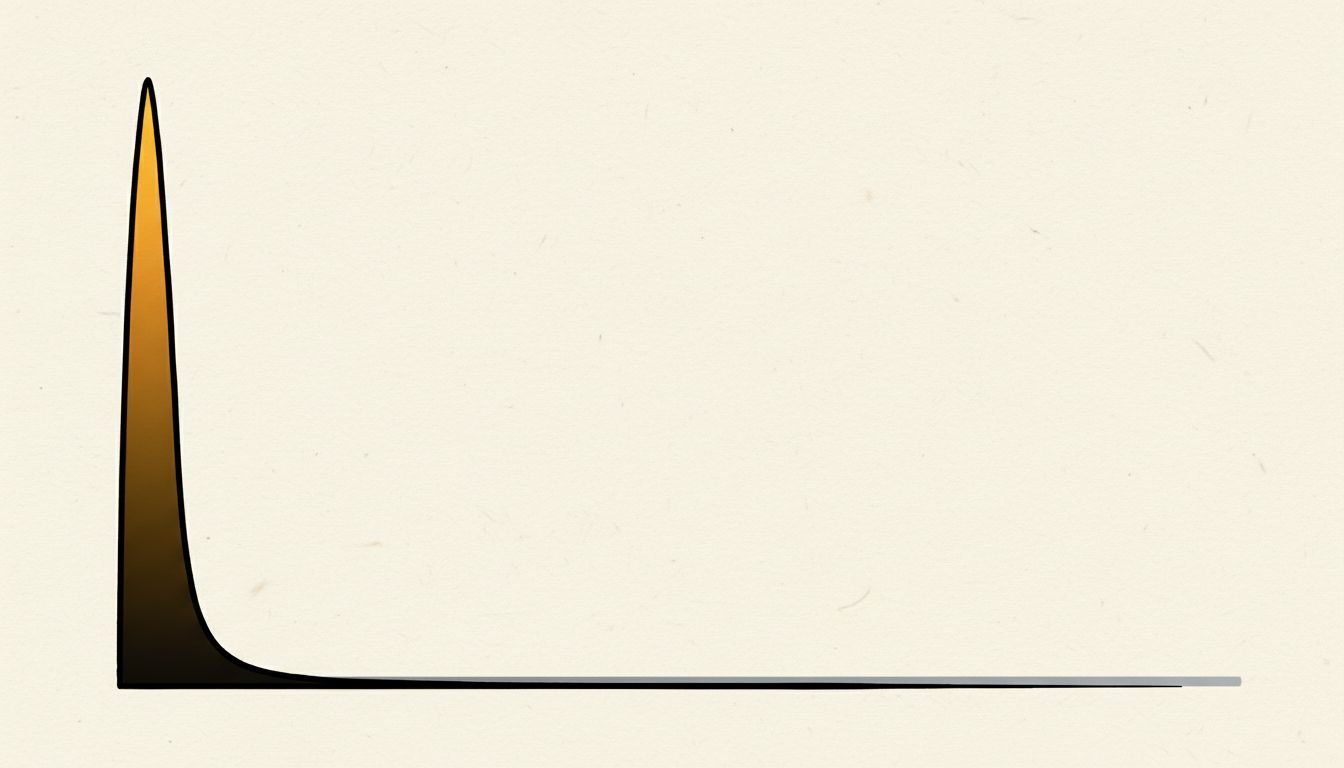
The term “power law” gets thrown around as jargon, but the underlying reality is stranger than most people appreciate. In a normal distribution, outcomes cluster around a mean. Most observations are average. In a power law distribution, the top outcomes are not just bigger, they are orders of magnitude bigger than everything else combined.
Venture capital follows a power law with unusual severity. Research by the Kauffman Foundation has documented that a small fraction of investments accounts for the overwhelming majority of returns across the industry. The top-performing funds are not producing many good outcomes. They are producing one or two extraordinary ones. The difference between a top-quartile fund and a median fund often comes down to whether the partnership happened to hold one specific company.
This creates a statistical environment that human beings are almost neurologically unequipped to reason about. We are trained by everyday experience to expect that effort and quality produce roughly proportional rewards. In venture, a company that is twice as good does not produce twice the return. It might produce a hundred times the return, or it might produce nothing. The linear intuitions that make someone a good operator or a good analyst become actively misleading when applied to portfolio construction.

Why the Near-Cuts Are the Ones That Matter
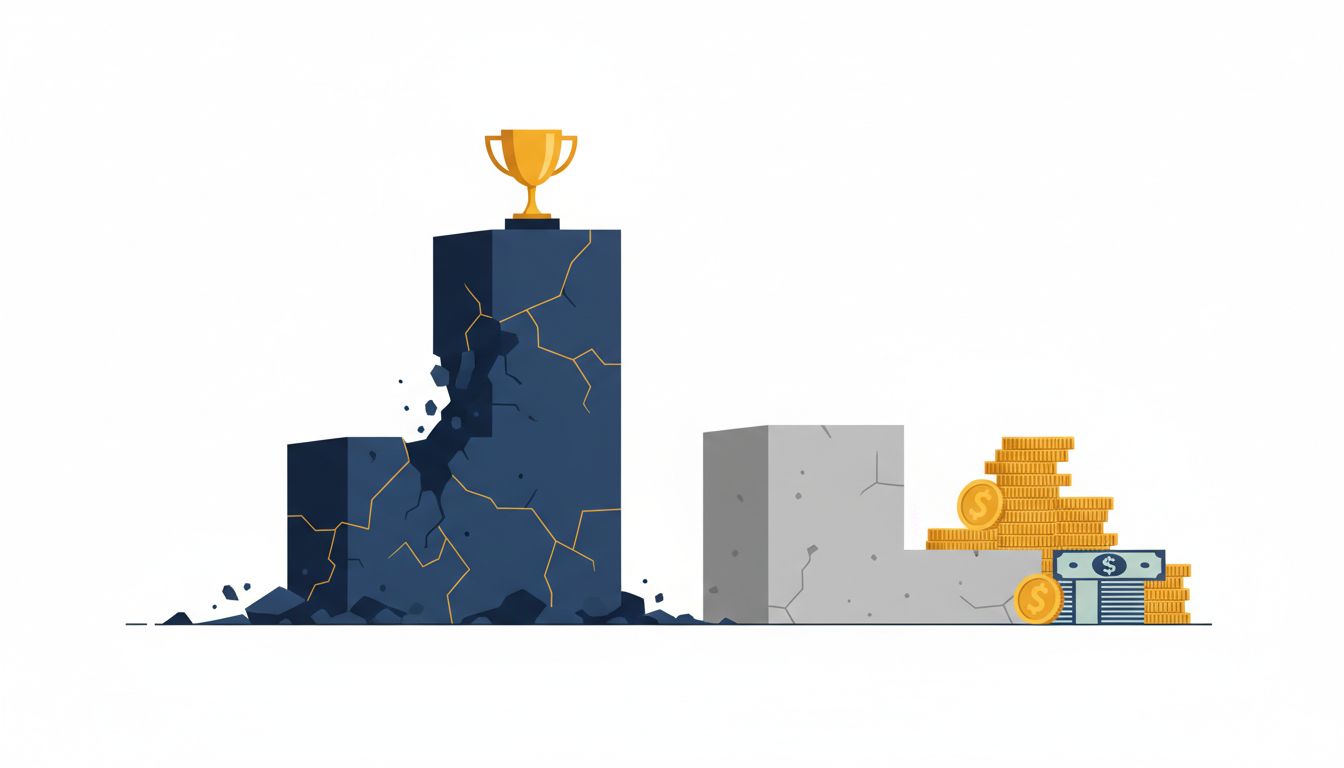
Here is where the mechanics get counterintuitive. If winners are rare and enormous, and if even experienced investors cannot reliably identify them in advance, then the worst investment decision a fund can make is dropping a position early.
The pattern surfaces repeatedly across the industry’s history. Benchmark’s investment in Uber was famously contentious inside the firm before it was made. Sequoia very nearly did not fund Google, and the partnership’s enthusiasm was mixed even after the term sheet was signed. Peter Thiel’s first investment in Facebook came after Zuckerberg essentially blew off a scheduled pitch meeting. In each case, the company that would eventually define the fund’s legacy was the one the investors were least certain about.
This is not a coincidence. It reflects the nature of genuinely transformative companies. A startup that everyone immediately agrees is an obvious winner is either competing in an established market where the upside is capped, or it is so legible to incumbents that it will be copied or acquired before it scales. The companies that break records tend to be doing something that looks, at the moment of investment, somewhere between weird and reckless. They survive internal skepticism precisely because something about them is hard to dismiss entirely.
The Follow-On Problem
The near-cut problem gets worse when you move from initial investment to follow-on decisions. Every venture fund faces recurring moments where it must decide whether to participate in subsequent funding rounds for its existing portfolio companies. These decisions have enormous consequences because ownership percentage at exit determines actual returns.
A fund that owns eight percent of a company at Series A but does not follow on will find itself diluted to perhaps two or three percent by the time the company exits. The fund that maintained or increased its position owns three or four times as much of the same outcome. The difference between a fund that made money and one that returned a generation of wealth can come down to a single pro-rata decision made during a period of internal doubt.
The uncomfortable implication is that the hardest follow-on decisions are also the most consequential ones. When a portfolio company is performing well and enthusiasm is high, every investor wants to put more money in. The valuation reflects that enthusiasm, which limits the upside. When a portfolio company is struggling, the valuation is low and the ownership opportunity is highest. This is exactly the moment when most partnerships are tempted to reduce exposure rather than increase it.
Airbnb raised money during the 2009 recession at terms that reflected genuine existential uncertainty. The investors who doubled down during that period captured a meaningfully different outcome than those who hedged.
The Institutional Pressure That Makes This Worse
Venture firms are not monolithic. They are partnerships, usually small ones, where investment decisions are made by committee and where managing partners are accountable to limited partners who have their own reporting requirements. This institutional structure creates pressures that systematically push against holding difficult positions.
Limited partners want regular updates. They want to see markups in the portfolio, which are increases in the stated value of investments, and they are uncomfortable with positions that have been written down or left flat for several years. A fund that has a struggling company it still believes in faces pressure to either show progress or reduce exposure. The path of least resistance is often to stop following on, which is the functional equivalent of abandoning the position.
Inside the partnership itself, a struggling portfolio company becomes a political object. The partner who championed the original investment has reputational skin in the game. Other partners who were skeptical have an incentive to be vocal about their skepticism when things go badly. Decision-making at exactly the moment when long-term thinking matters most gets contaminated by short-term institutional dynamics.
This is the environment in which the crucial decisions are made about the companies that will determine fund performance. It is not an environment optimized for conviction.
What Founders Should Take From This
The power law dynamic has implications that run well beyond portfolio theory. For founders raising capital, understanding that your investors are operating in a near-cut environment clarifies some behaviors that otherwise seem irrational.
When a firm that led your Series A seems lukewarm about your Series B, it is often not a measured judgment that your company has peaked. It is an artifact of partnership dynamics, portfolio performance, and the fund cycle the firm happens to be in. A firm in the middle of a struggling fund is less likely to follow on aggressively than one that has already written off its losers and is in cleanup mode. These factors have nothing to do with your company’s prospects.
It also means that founder persistence through genuinely difficult periods is not just a character virtue. It is structurally necessary. The company that breaks out is usually the one that survived a period when reasonable people doubted it. If you fold at the first signal of investor hesitation, you may be abandoning the position at exactly the moment when the upside is highest. Your runway calculations matter enormously here, and most founders are underestimating how much time they actually need to survive to the other side of a rough period.
Why The Industry Does Not Fix This
If the near-cut pattern is well documented, why do venture partnerships continue to structure their decision-making in ways that produce it? The answer is that the incentive structure for individual partners is not aligned with the incentive structure for fund performance.
A partner who champions a struggling company and is proved right becomes a legend. A partner who champions a struggling company and is proved wrong has, in some firms, ended their career. The asymmetry encourages caution at exactly the moments when boldness produces returns. Nobody gets fired for recommending the partnership reduce its exposure to a company that subsequently fails. Many people have suffered for sticking with one that looked like a failure for three more years before it worked.
The firms that generate consistently extraordinary returns over decades tend to be ones that have figured out how to structurally insulate investment decisions from this institutional pressure. That usually means a culture where the partner who brought in the deal has genuine authority to maintain the position without going back to committee, and where the partnership has internalized that distributed decision-making on follow-ons is a reliable way to get median outcomes.
What This Means
Venture capital returns are almost entirely determined by a small number of companies, and those companies are disproportionately the ones the partnership debated hardest. This is not a paradox. It is a direct consequence of what makes a company capable of generating returns large enough to move a fund.
For investors, the practical upshot is that the value of diversification is often overstated and the value of conviction is understated. Owning a larger stake in fewer, carefully held positions beats owning a smaller stake in many positions where the fund stops following on when things get complicated.
For founders, it means that investor hesitation during a difficult period is weakly correlated with your actual prospects. The investors who later claim they always knew you would succeed are the ones who nearly did not follow your next round.
And for anyone trying to understand why so much capital seems to flow to companies that look inexplicable until they do not, the answer is usually that someone, somewhere in a partnership meeting, was talked out of walking away.