

The Simple Version
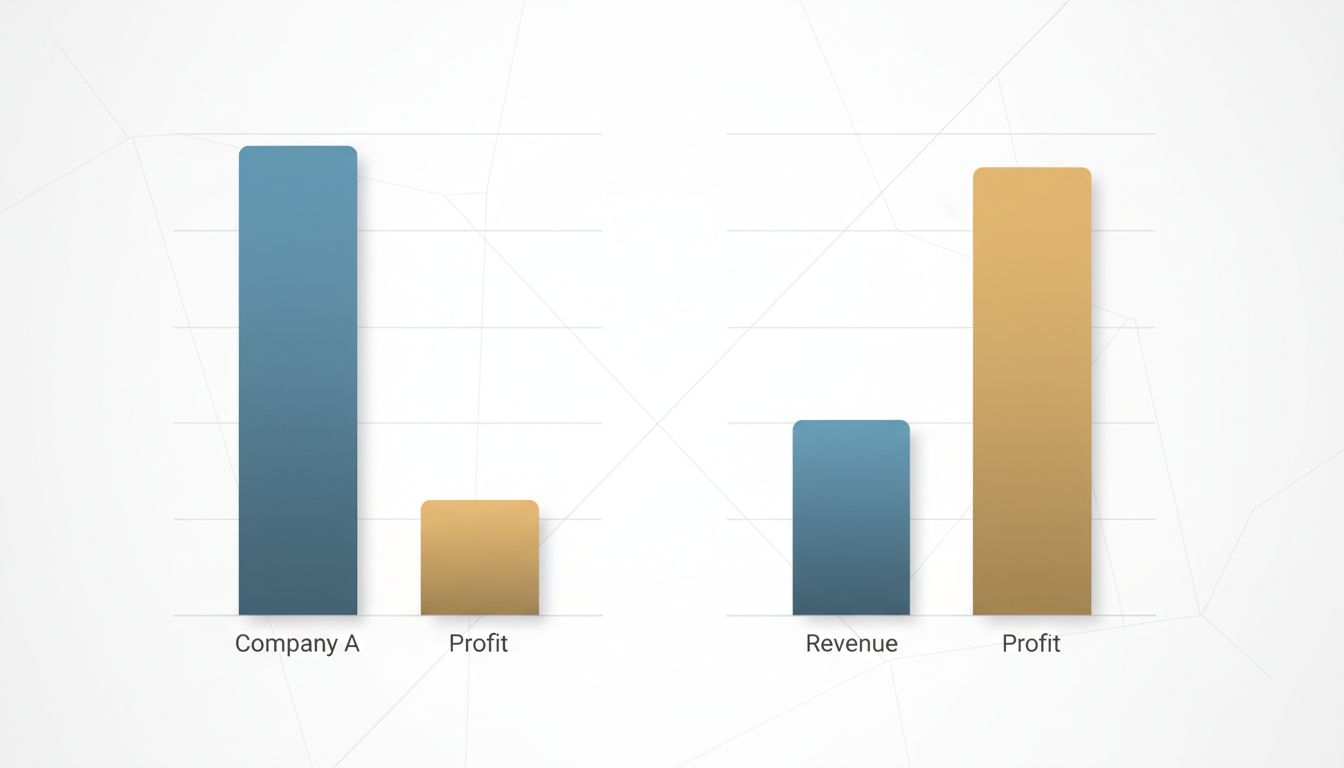
Being number one in a tech market is expensive. The company that wins the most customers often spends so much defending and extending that position that the company in second place ends up keeping more of the money.
Why Winning Costs So Much
There is a persistent myth in tech strategy: capture the market, then print money. The reality is that market leadership is a maintenance-intensive asset. The leader owns the most customers, which means they field the most support tickets, attract the most regulatory scrutiny, and become the default target for every competitor’s comparative advertising.
More consequentially, the market leader has to defend everywhere. A challenger only has to win somewhere. This asymmetry is brutal in practice. Microsoft had to compete with Google on search, Apple on mobile, Salesforce on enterprise software, and Amazon on cloud infrastructure, often simultaneously. Each of those battles required real capital and real engineering time, whether Microsoft won or lost. Google, when it entered search, had one job.
This is not an abstract principle. It shapes where the profits actually land.
The Challenger’s Structural Advantages
Second-place companies benefit from a set of advantages that rarely get named directly.
They don’t pay the market-education tax. The leader spent years convincing customers that this category of product is worth buying at all. The challenger arrives after that work is done, inherits the demand, and competes only on differentiation. Salesforce educated the market on cloud CRM. Microsoft Dynamics and HubSpot showed up later and competed for a market that already understood why it needed CRM software.
They can pick their battles. A challenger doesn’t need to serve every customer segment. They can find the customers the leader underserves, which is usually a specific segment with a specific problem that the leader’s broad product doesn’t solve elegantly. This produces better unit economics because sales and marketing efforts are focused, not scattered.
Their cost structure scales from a smaller base. A company with 20 percent market share and a lean operation can run at margins that a dominant player with four times the revenue can’t match, because the dominant player has accumulated complexity: more products, more integrations, more enterprise commitments, more legacy infrastructure to maintain.
Adobe is an instructive case. For years, Quark dominated desktop publishing. Adobe had Photoshop and a collection of adjacent tools, but Quark held the professional page layout market. When Quark stumbled on its transition to OS X, Adobe released InDesign and took the market quickly. Adobe had spent years building profitable businesses in adjacent segments rather than burning cash trying to unseat Quark directly. It entered the fight with stronger fundamentals.
The Attention Problem at the Top
Market leaders face an organizational problem that rarely shows up in their earnings calls. Leadership demands attention. Not just executive attention, but engineering roadmap attention, product prioritization attention, and partnership attention. A company that owns a market has to show up everywhere that market touches: every major conference, every analyst briefing, every enterprise RFP.
This is not idle speculation. There’s a well-documented pattern in enterprise software where the market leader becomes the default inclusion in every evaluation, which sounds like an advantage but operates as a tax. Every evaluation the leader participates in and loses is time and personnel cost with zero return. Challengers get invited to fewer evaluations, but they win a higher percentage of the ones they enter, because they’ve been selective about where they compete.
The resource-allocation pressure compounds this. The leader’s product team is pulled toward enterprise customizations for large accounts, because those accounts represent significant revenue and make vocal demands. The challenger’s product team can build for their chosen segment without interruption. Over time, the challenger’s product often becomes technically superior in the niche that matters to the customers who generate the most profit per dollar spent acquiring them.
Margins Tell the Real Story
Revenue market share is the number that gets written about. Profit margin is the number that determines whether a company actually creates value for its owners.
This distinction matters more in tech than in most industries because tech companies often run at scale without proportional cost increases, which means margin percentages are meaningful and comparable. A company with 15 percent revenue share and 35 percent operating margins is, in the ways that count, a better business than a company with 40 percent revenue share and 12 percent operating margins. The former compounds wealth. The latter spends it defending a trophy.
The pattern holds outside software too. In smartphones, Samsung has sold more units globally than Apple for most of the past decade. Apple captures a disproportionate share of the industry’s total profit because it ceded volume competition to Samsung and focused on a premium segment it controls. Apple is not technically the market share winner by units. It is unambiguously the profit winner.
This connects to a broader point about what “winning” a market actually means. As we’ve covered before, being second into a market often produces better outcomes than being first, because the pioneer bears the costs of failure and education. The same logic extends to market position over the long run.
What This Means If You’re Building
The implication for founders and operators is direct: chasing number-one market position as a strategic goal, independent of the economics, is a mistake. The questions worth asking are different ones. Which customer segment produces the best margins? Where is the current leader stretched thin? What does focused competition look like versus broad competition?
Market leadership can be a great outcome. But it’s a lagging indicator of good strategy, not the strategy itself. The companies that sustain profitability over time tend to have been disciplined about which customers they serve and which fights they take. That discipline is often more visible in second place than at the top.
Being the leader in a tech market means you own the category. Being the smart number two sometimes means you own the profits.