Every time you type a URL, your computer asks a chain of servers it has never vetted and accepts their answers on faith. That arrangement, baked into the internet’s core architecture since 1983, is one of the most consequential trust decisions in computing history. And almost nobody who relies on it understands what they’re actually agreeing to.
The thesis here is simple: DNS is not a lookup table. It is a delegation chain, and the difference matters enormously for how we think about internet reliability, security, and control.
What Actually Happens in That First Second
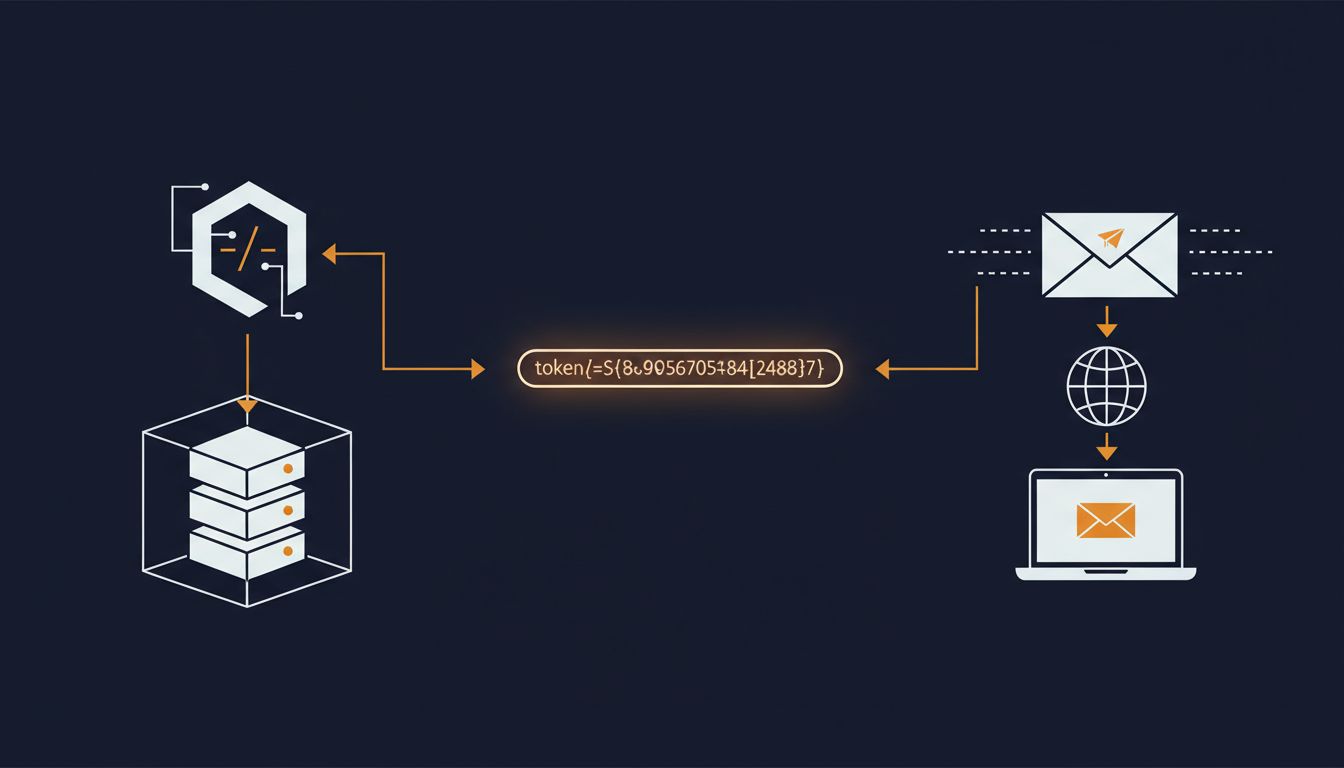
When you type nytimes.com into your browser, your computer does not know where that is. It asks a resolver, typically operated by your ISP or a public provider like Cloudflare (1.1.1.1) or Google (8.8.8.8). If the resolver has seen this domain recently, it serves a cached answer. If not, the real work begins.
The resolver contacts one of 13 root server clusters (operated by organizations including NASA, ICANN, and Verisign) and asks which servers are responsible for .com. The root server doesn’t know the answer to your question. It only knows who to ask next. The resolver then contacts the .com registry, operated by Verisign, which points it to the authoritative nameservers for nytimes.com specifically. Those nameservers finally return an IP address. Four separate institutions, none of which know each other’s internal operations, have each contributed a piece of your answer.
This round trip typically completes in under 100 milliseconds. The fact that it works reliably is genuinely remarkable. The fact that most people assume it is a simple database lookup has led to some expensive misunderstandings.
The Trust Is Structural, Not Verified
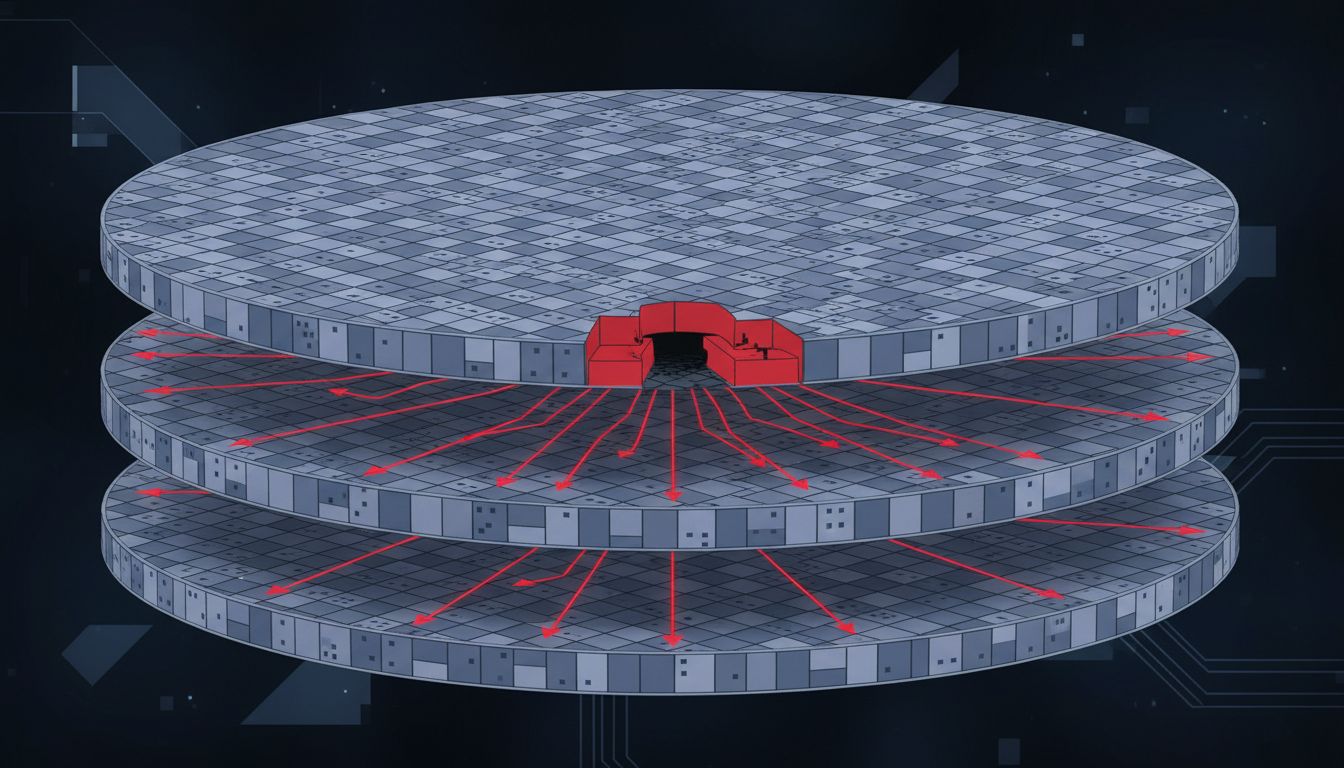
At no point in this process does your computer cryptographically verify that the answers it receives are legitimate. Traditional DNS responses are unsigned. A resolver asking a root server for referrals receives plain text UDP packets. An attacker positioned between your resolver and any upstream server can, in principle, inject a forged response and redirect your traffic.
This vulnerability has a name: DNS cache poisoning. The most famous demonstration came in 2008 when security researcher Dan Kaminsky discovered a fundamental flaw in DNS that allowed forged records to be injected into resolvers at scale. The coordinated disclosure that followed was one of the largest emergency patch deployments in internet history. DNSSEC, a set of extensions that add cryptographic signatures to DNS responses, was designed to close this gap. Deployment has been slow. As of recent measurements, fewer than half of major domain operators have enabled it, and many resolvers do not enforce validation even when signatures exist.
This matters practically. The 2016 Dyn DDoS attack, which took down large portions of the internet including Twitter, Spotify, and Reddit, exploited DNS’s centralization rather than its lack of authentication. But the underlying fragility is the same: the system was built for a cooperative network and has been retrofitted for an adversarial one.
The Hierarchy Means Someone Always Has More Control Than You
The delegation model is also a control model. ICANN governs the root zone. Verisign has a contract to operate .com. Your registrar controls whether your domain stays pointed at your servers. Your ISP or chosen resolver decides whether to follow DNSSEC validation rules or quietly ignore them.
At each layer, a different organization holds a lever over your connectivity. Governments have used this lever. Turkey blocked Twitter in 2014 by having ISPs return false DNS responses for Twitter’s domains. Users routed around the block within hours by switching to Google’s public DNS, which illustrated both the fragility of ISP-level DNS manipulation and the fact that switching resolvers transfers your trust to a different organization rather than eliminating the dependency.
This is not a hypothetical concern for businesses. Companies that experienced outages because their DNS provider had a bad day know that their own servers being fully operational provides no protection when nobody can resolve their address. The relationship between infrastructure and reliability is almost always more dependent on systems outside your control than internal monitoring suggests.
Speed Is the Reason None of This Has Been Fixed
The engineering case for keeping DNS lightweight is real. The root servers collectively handle hundreds of billions of queries per day. The UDP-based, low-overhead design is a significant reason the system scales. Adding mandatory cryptographic verification to every resolution would increase computational load and latency at every step.
This is a genuine tradeoff, not an excuse for negligence. DNSSEC adds overhead. Encrypted DNS protocols like DNS-over-HTTPS (DoH) and DNS-over-TLS (DoT), which prevent eavesdropping on queries in transit, have their own performance costs and introduce new centralization risks (if everyone uses the same DoH provider, that provider becomes a high-value surveillance or failure point).
But this reasoning has also been used to justify decades of delay. The Kaminsky vulnerability was discovered in 2008. DNSSEC existed before that. Progress has been slow not primarily because of technical difficulty but because the parties with the most control over deployment (large ISPs and registrars) had the least incentive to invest in the upgrade.
The Counterargument
A reasonable objection is that DNS has worked well enough for decades, and that the threat model requires fairly sophisticated attackers. Cache poisoning attacks happen, but they are not routine. The root server system has survived sustained DDoS attempts with minimal user impact. For most use cases, the current system is reliable enough to be treated as infrastructure.
This is fair as far as it goes. The internet is full of systems that work despite architectural decisions that would horrify a security engineer reviewing them fresh. BGP has a known trust problem that the internet has chosen to manage through relationships rather than cryptography. DNS is in similar company.
But “reliable enough for now” is not the same as “well-understood by the people who depend on it.” The danger is not that DNS will catastrophically fail tomorrow. The danger is that engineers, product managers, and executives make architectural decisions based on a mental model of DNS as a simple, instant, reliable lookup service, when the reality involves multiple independent authorities, meaningful latency, complex caching behavior, and verification gaps that have been known and unaddressed for years.
What This Means for Anyone Building on It
DNS is infrastructure, and infrastructure rewards the people who understand it in detail. Knowing that DNS responses are cached with TTLs you set means you can control how quickly changes propagate (and how long an outage lasts if you need to fail over). Knowing that your registrar is a critical single point of failure means you should treat registrar account security as seriously as server security. Knowing that DNS-over-HTTPS exists and what it trades off means you can make an informed choice about resolver configuration rather than accepting your ISP’s default.
The delegation chain asking strangers for directions is not going away. Understanding who those strangers are and what they can actually do to your traffic is the minimum required to build reliably on top of it.