The Companies That Charge the Most Per Seat Grow the Fastest
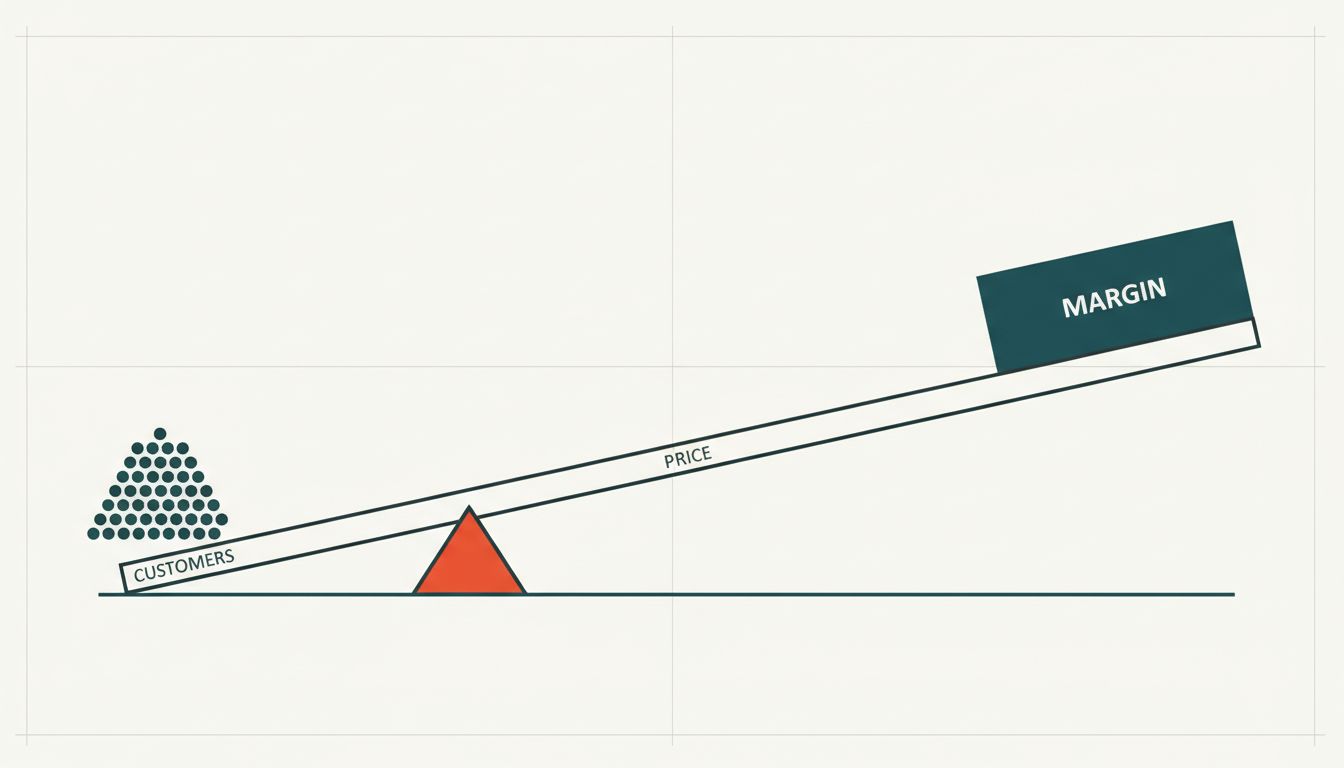
High prices aren't a growth obstacle. For B2B software, they're often the engine. Here's why the math works the way it does.
Jordan Rivera is a startup strategy writer who has spent a decade in the venture capital ecosystem. From seed-stage founder to growth-stage advisor, Jordan writes about the real decisions founders face, the ones that rarely make it into press releases.
High prices aren't a growth obstacle. For B2B software, they're often the engine. Here's why the math works the way it does.
Everyone celebrates the first customer. The second one is the only signal that actually tells you something useful.
Pricing below your costs doesn't buy you time. It just makes you fail slowly, then suddenly, with a customer base you can't actually serve.
The software holding up the internet is often maintained by unpaid volunteers. Here's why that's a structural problem, not a gratitude problem.
Raising money before you have leverage feels like progress. It's usually the opposite. Here's what it actually costs you.
Early adopters save your startup. They also, if you're not careful, define it in ways that make scaling nearly impossible.
Most startups that survive their first product die on their second. It's not bad luck. It's a set of structural traps that repeat with eerie consistency.
Discounting your way to early traction feels like progress. It's usually the first step toward building a business that can't survive.
The customers who save your startup in year one are often the ones who quietly strangle it in year three. Here's why.
It's not the enterprise plan doing the heavy lifting. The real margin engine is one tier up from your cheapest option, and most founders never fully understand why.
Success teaches the wrong lessons. The habits that got you through your first company are often exactly what will sink your second.
Most founders set prices by asking 'what's fair?' The actual question is different, and getting it wrong quietly kills companies.
Three of tech's biggest companies nearly collapsed serving customers who were never going to make them successful. The pattern is more common than founders admit.
The companies that give their core product away for free are now worth more than the ones who locked it behind a paywall. Here's why the math actually works.
When a VC backs your competitor, it feels like betrayal. It's actually a deliberate portfolio strategy with a specific financial logic founders rarely see clearly.
Most founders treat market focus as a constraint to overcome. The ones who win treat it as a weapon.
Chasing product-market fit too early is one of the most reliable ways to build a company that fits the market that exists instead of the one that's coming.
Figma's pricing wasn't aggressive. It was a statement about what kind of company they were building and who they were building it for.
Join thousands of readers who get our weekly breakdown of the most important stories in technology.
Free forever. Unsubscribe anytime.