
The Asymmetry Nobody Talks About
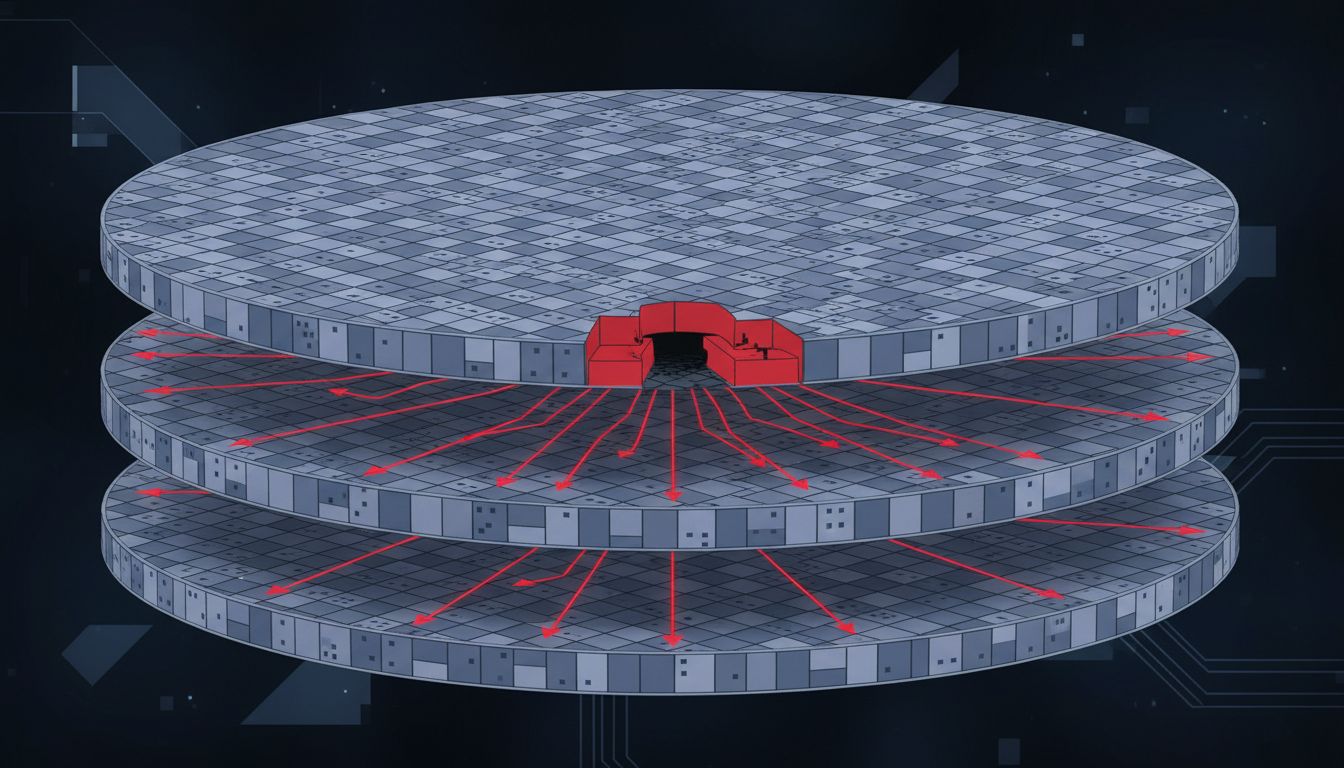
Building a feature generates a pull request, a Jira ticket closed, a demo moment. Deleting one generates complaints, rollbacks, and a post-mortem. The asymmetry is not accidental. It reflects something deep about how engineering teams measure success, how users form dependencies, and how codebases accumulate weight over years of decisions made in different contexts by people who may no longer work there.
The standard framing treats deletion as a technical problem: find the dead code, remove the API endpoint, clean up the database tables. In reality, the technical work is the easy part. The hard part is everything that happens before a single line is touched.
Why Features Don’t Die When They Should
The economic case for removing underused features seems obvious. Every feature in production carries maintenance cost, security surface area, documentation burden, and cognitive overhead for new engineers trying to understand the system. A feature used by 2% of users can still consume a meaningful fraction of on-call attention if it sits on an unstable integration or requires specialized knowledge to debug.
Yet teams rarely remove features proactively. Several forces work against it.
First, usage data is almost always incomplete. Most teams can tell you how often a feature was clicked, not how much value it delivered. A report that runs once a month for a single user looks like low usage. If that user is the CFO running quarterly board analysis, the feature is load-bearing in a way that no analytics dashboard will show you.
Second, the person who championed the feature originally has often moved on. Nobody in the room owns the decision anymore, which means nobody is comfortable making it. Inaction becomes the default not because it’s correct but because it’s safe.
Third, removal has asymmetric visibility. Users who quietly relied on a feature will complain loudly when it disappears. Users who never touched it will never praise you for cleaning it up. The feedback loop punishes deletion and ignores accumulation.
The Technical Trap: Dependencies You Didn’t Know You Had
Assume a team has done the organizational work and decided a feature should go. Now the technical reality asserts itself.
Modern software doesn’t have clean edges. A feature that appears isolated in the UI is often threaded through shared data models, authentication flows, caching layers, and event pipelines. The engineers who built it made sensible local decisions at the time, and those decisions left traces everywhere. Database tables acquired foreign keys from other tables. Background jobs developed soft dependencies on a queue that the feature created. A mobile client built three years ago still calls an endpoint that was supposed to be deprecated eighteen months ago.
This is the hidden cost of the technical debt that accrues silently. Deletion forces it into the open. When you try to remove something, you discover exactly how much other code trusted that it would be there.
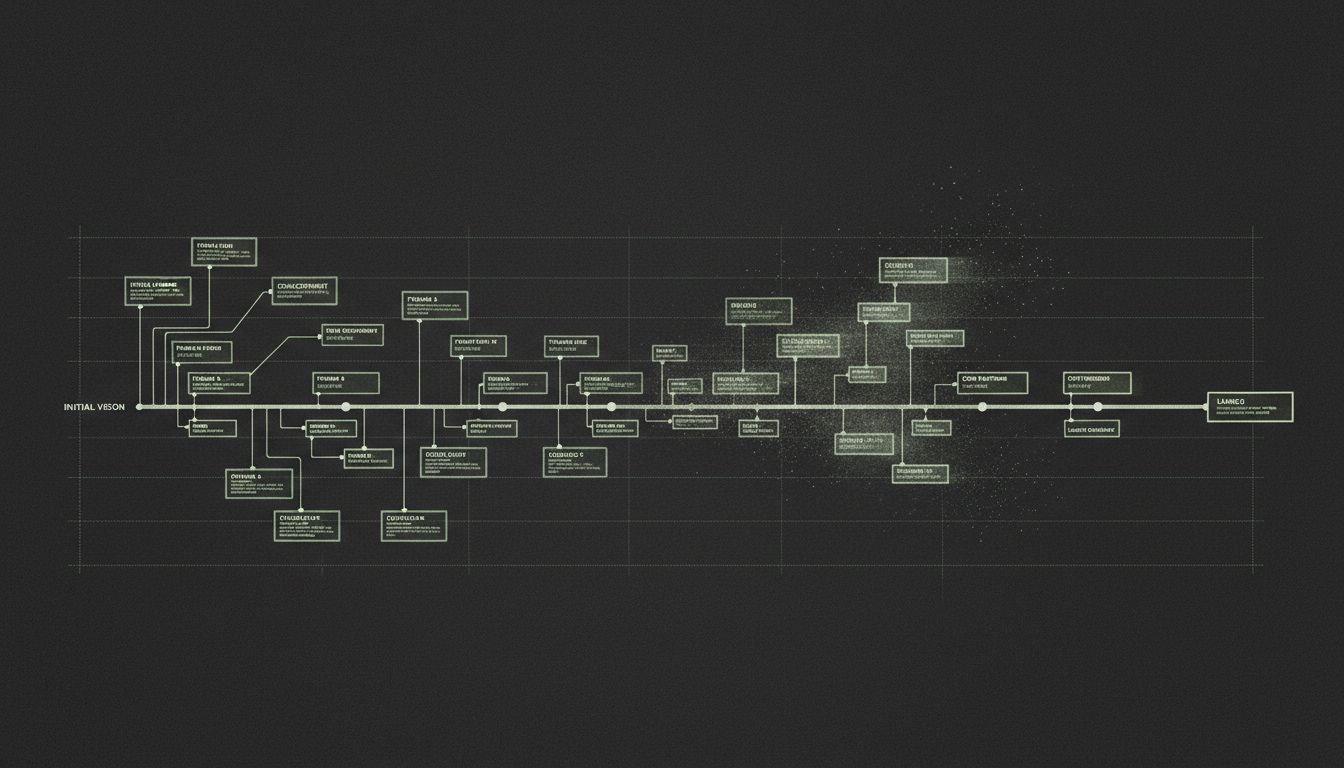
The safest deletion process involves several phases: dark launch removal (stop calling the feature but keep the infrastructure), traffic monitoring, a deprecation period for external consumers, then a staged teardown of the infrastructure itself. Done correctly, this takes months. Done incorrectly, it takes minutes and produces an incident.
Google has retired products and APIs with this kind of methodical care, and they still generate significant customer backlash. Smaller teams with less formal processes often skip the monitoring phase and discover hidden dependencies only when something breaks in production.
The Political Problem Is Worse Than the Technical One
Product decisions don’t exist in isolation. Features represent past commitments to customers, sometimes contractual ones. Enterprise sales teams often close deals by promising specific functionality. Removing a feature that a customer explicitly cited during purchase negotiation creates legal exposure, not just a support ticket.
Beyond contracts, there is the internal politics of sunk cost. The engineer who spent six months building a feature will resist its removal more than anyone who inherited it. The VP who approved the roadmap item doesn’t want to explain why it’s being deleted. Product managers who defined the requirements feel implicated. None of these incentives are irrational at the individual level; they’re just collectively terrible for the product.
This political resistance is one reason that large companies accumulate features the way old houses accumulate furniture. Every addition was someone’s good idea once. Removal requires an explicit decision to override that past judgment, which reads as criticism even when it isn’t.
The teams that handle this best tend to establish formal criteria upfront. If a feature falls below a defined usage threshold for two consecutive quarters and generates more support volume than revenue-weighted value, it goes through a deprecation review. Making the criteria explicit before the politics arrive changes the decision from a personal judgment to a process outcome.
Versioning as a Partial Solution and Why It Fails
The instinct to avoid conflict often produces versioning as a compromise. Instead of deleting the old behavior, the team releases v2 alongside v1, promising to maintain both indefinitely. Users who rely on the old feature keep access. New users get the improved version. Problem solved.
This is almost always wrong, or at least temporary.
Maintaining two versions of the same capability means testing both, documenting both, and routing support tickets to whoever understands each. Over time, the v1 path gets less investment, develops bugs that don’t get fixed, and becomes the dark, unmapped part of the codebase that nobody wants to touch. The compromise that avoided short-term pain creates long-term fragility.
Stripe has managed API versioning better than most companies at scale, pinning individual API consumers to the version they integrated against and absorbing the maintenance cost of that commitment. It works for them partly because they have the engineering resources to sustain it and partly because their API versioning model was designed with this from the beginning. Retrofitting that discipline onto a product that wasn’t built for it is a different problem.
For most teams, versioning is a delay, not a solution. The deletion decision gets deferred to a later date when it may be even harder to make.
What Good Deprecation Actually Looks Like
The teams that remove features well share some practices worth isolating.
They communicate early and specifically. A deprecation notice that says “this feature will be removed in a future release” is functionally useless. A notice that names a date, explains the reason, and points to an alternative gives users something to act on. Twilio’s deprecation notices have historically included migration guides and specific timelines, which reduces support burden and positions the removal as a product improvement rather than a subtraction.
They measure actual impact before deciding, not just click data. This means talking to the users who appear in the usage logs, and also looking for users who might not show up there. Support tickets, sales call transcripts, and direct outreach to high-value accounts can surface the CFO-doing-quarterly-analysis problem before it surfaces as a crisis. What lost customers teach you about your product applies here too: the users who leave after a deprecation are your best source of information about what the feature was actually solving.
They treat the code removal as a project with an owner and a deadline, not a background task. Deprecations that lack ownership drift indefinitely. The endpoint keeps receiving traffic. The database tables stay populated. The feature is “deprecated” in name only, which means the team still carries all the maintenance cost without the honest acknowledgment that they’ve decided to keep it.
Finally, the best teams accept that some users will be unhappy and treat that as a known cost, not a failure signal. The goal is not zero complaints. It’s removing something that was costing the product more than it was delivering, which nearly always means disappointing someone.
What This Means
The decision to delete a feature is harder than it looks because it sits at the intersection of incomplete data, organizational politics, technical entanglement, and customer commitments. Each of those problems is solvable in isolation. Together they create enough friction that most teams default to accumulation.
The practical upshot is that deletion should be planned for at creation. Features built with explicit sunset criteria, instrumented to capture real usage value rather than just interaction counts, and scoped to avoid unnecessary cross-system dependencies are dramatically easier to remove later. The deprecation process starts, in a meaningful sense, the day the feature ships.
Teams that internalize this build leaner systems over time. Teams that don’t eventually reach a codebase where the cost of understanding what exists exceeds the cost of starting over. That calculation shows up in hiring velocity, onboarding time, and the slow degradation of engineering confidence that precedes most major rewrites. Deletion isn’t maintenance. It’s strategy.