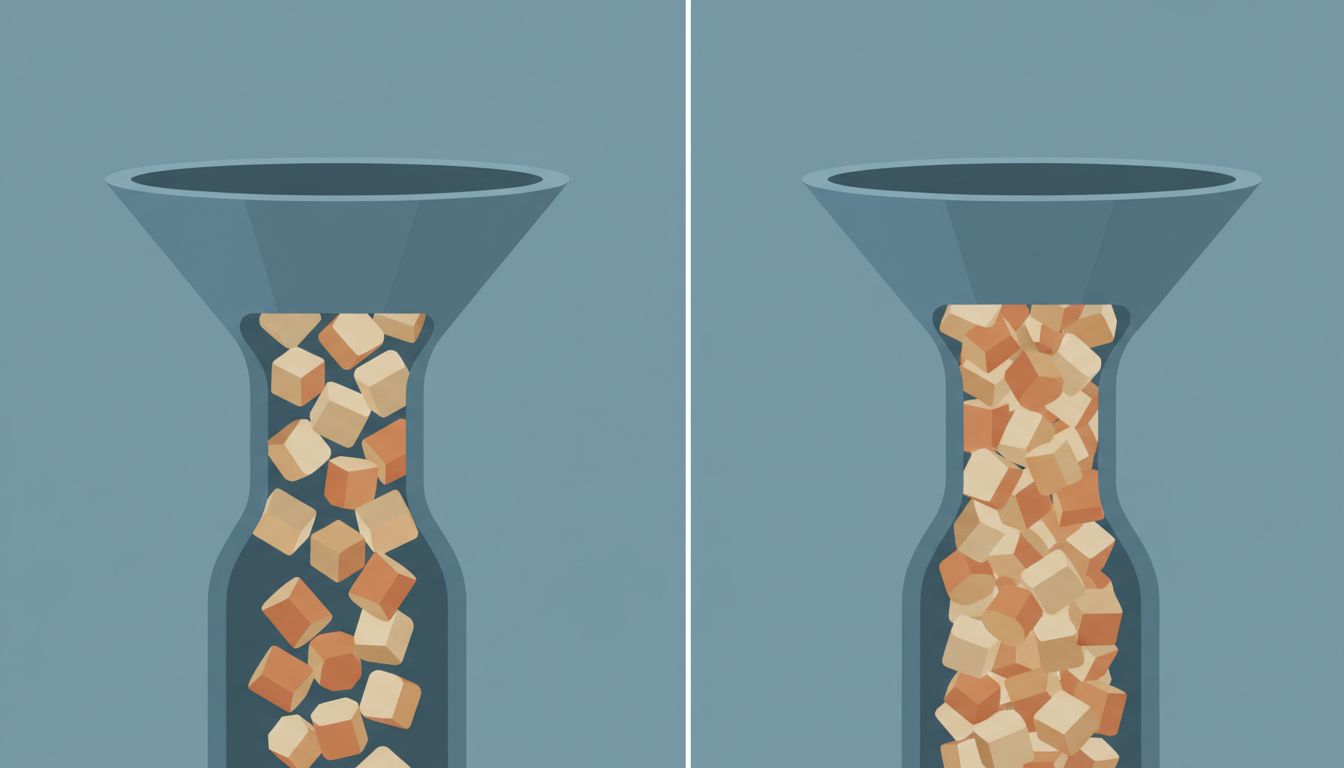

There is a version of productivity advice that gets repeated so often it has started to feel like physics. Finish early. Set hard boundaries. Protect your evenings. Disconnect at five. The logic sounds airtight: rest more, recover fully, show up sharper the next day.
For a narrow group of workers, this is genuinely good advice. For most knowledge workers, it quietly undermines the conditions that make their work any good at all.
The Problem With Treating Knowledge Work Like Shift Work
Shift work has a natural boundary. A nurse who finishes a twelve-hour shift and goes home is not carrying unfinished cognitive threads with them. The work is either done or it’s handed off. Their recovery is straightforwardly physical.
Knowledge work doesn’t partition that cleanly. A product manager halfway through mapping out a strategy, a writer three-quarters through a first draft, an engineer in the middle of debugging a tricky concurrency issue: these people are not just physically tired. They are mentally mid-sentence. Forcing a hard stop doesn’t end the work, it just moves it underground. The problem keeps running in the background, burning cognitive resources all evening while producing nothing.
This is not a metaphor. Research on the Zeigarnik effect, named for Soviet psychologist Bluma Zeigarnik, shows that incomplete tasks occupy working memory more persistently than completed ones. The original studies found that people recalled interrupted tasks roughly twice as well as finished ones. That’s useful in some contexts. In the context of your evening, it means you’re not actually resting. You’re hosting a background process you didn’t ask to run.
What Early Finishing Actually Cuts Short
The instinct behind early finishing is to protect your best hours. But there’s a specific kind of cognitive state that knowledge workers spend most of their careers chasing and rarely name directly: the moment when a hard problem starts to give. You’ve been circling something for hours, and then something clicks. The connections form. You can see the shape of the answer.
That state doesn’t materialize on demand. It accumulates. It requires sustained exposure to the problem, a willingness to sit with discomfort, and enough time in the chair that your brain has exhausted its quick-answer heuristics and moved into something more generative. Cal Newport’s work on deep work documents this in practical terms: the ability to produce at an elite level requires long, uninterrupted stretches of concentration, and that capacity atrophies if you don’t practice it.
Cutting work off at an arbitrary hour doesn’t protect this capacity. It starves it. If you never let yourself push through the uncomfortable middle portion of hard problems, you get very efficient at the surface layer and progressively worse at the depth.
The Recovery Argument Is Weaker Than It Sounds
The strongest case for early finishing is the recovery argument: sleep more, stress less, come back fresher. This is real, and sleep deprivation is genuinely a serious productivity problem. But the recovery argument proves too much. It could justify finishing at noon. The question is whether finishing earlier actually produces better recovery, or whether it just shifts when you’re distracted.
For people who finish early but remain mentally attached to unfinished work, the recovery is mostly illusory. You’re not resting, you’re ruminating. Studies on work-related rumination consistently find that the ability to psychologically detach from work, not the hour you stop, is what predicts recovery quality and next-day performance. Detachment is a skill, and it has almost nothing to do with clock time. Some people can fully detach after a long session. Others can’t detach after a short one because they know the problem is unresolved.
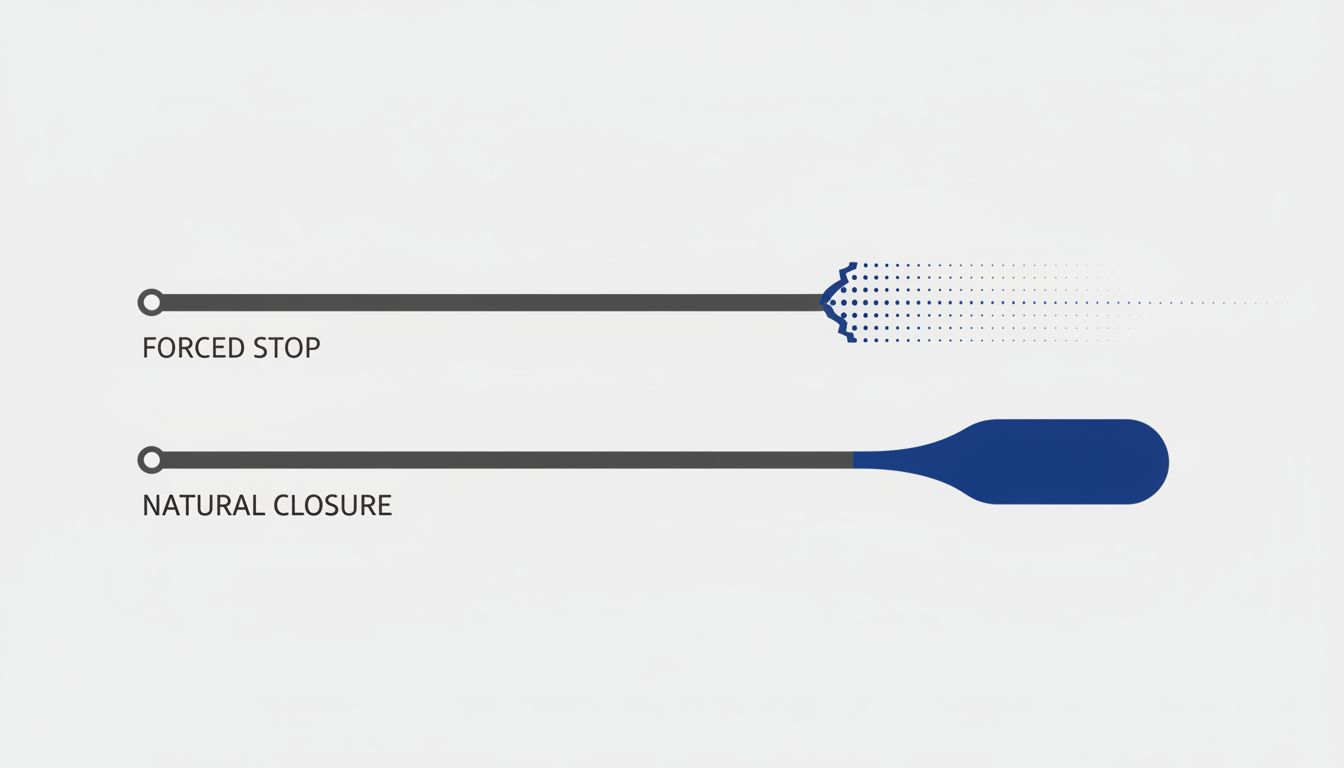
The implication is uncomfortable: finishing early without genuine closure doesn’t give you a better evening. It gives you a distracted one. You’d often be better off staying with the problem until you reach a natural stopping point, something that feels resolved enough to set down, and then stopping with actual finality.
The Workers for Whom Early Finishing Actually Helps
This isn’t a universal argument. There are knowledge workers for whom early, hard stops are the right call, and it’s worth being precise about who they are.
People who are genuinely depleted, not just temporarily frustrated, need rest more than they need closure. If you’ve been running at high intensity for weeks and your decision-making is visibly degraded, pushing through produces bad work and accelerates burnout. Early stopping is correct here.
People in execution-heavy roles with well-defined daily tasks, think customer support, project coordination, structured reporting, have work that does partition more cleanly. There’s no half-solved theorem waiting for them at home. For them, early finishing is straightforwardly good.
And anyone managing a health condition, family demands, or a situation where sustained focus genuinely isn’t possible should obviously design their schedule around reality, not an idealized model of deep work. Productivity advice that ignores your actual life is just performance.
What to Do Instead
The useful reframe here isn’t “work longer.” It’s “finish things.” The goal is to end sessions at genuine stopping points rather than arbitrary clock times, and to treat unfinished cognitive threads as a cost that requires accounting.
In practice this looks like a few specific habits. First, build a closing ritual that isn’t just shutting your laptop. Write down where you are, what the next step is, and what’s still unresolved. This is sometimes called a shutdown ritual, and its real function is to give your brain permission to stop. The Zeigarnik effect has an off switch: write it down.
Second, stop optimizing for when you finish and start optimizing for what state you finish in. Did you reach a natural pause, or did you abandon something mid-thought? Those produce very different evenings.
Third, be honest about what your productivity tools are actually measuring. Hours logged is not a useful metric. The quality of your cognitive state at the end of a session is closer to what matters.
The workers who consistently produce strong knowledge work tend not to be the ones who keep the strictest hours. They’re the ones who know when they’re actually done.