
The simple version
Most meetings exist not because someone thought carefully about what they needed, but because scheduling a meeting is the path of least resistance when you feel uncertain. The cancel button doesn’t fix that reflex.
Why meetings breed meetings
Here’s a thing that happens constantly in knowledge work: something feels unresolved, so someone schedules a meeting. The meeting produces three action items and two new open questions. Those questions generate follow-up meetings. By the time anything gets decided, you’ve spent four hours of collective time on a problem that one person could have written up in twenty minutes.
This isn’t cynicism. It’s how meetings actually spread. Research from organizational psychologists has found that people tend to treat meetings as evidence of coordination, not as tools for achieving it. If something feels important, a meeting makes it feel handled, even before anything gets decided. You get the psychological relief of having “done something” without the friction of actually doing it.
The calendar is very good at encouraging this. It presents meetings as the primary unit of collaboration. When you open it, you see blocks of time assigned to other people. Everything else, the documents, the decisions, the actual thinking, is invisible.
The three reasons bad meetings get scheduled
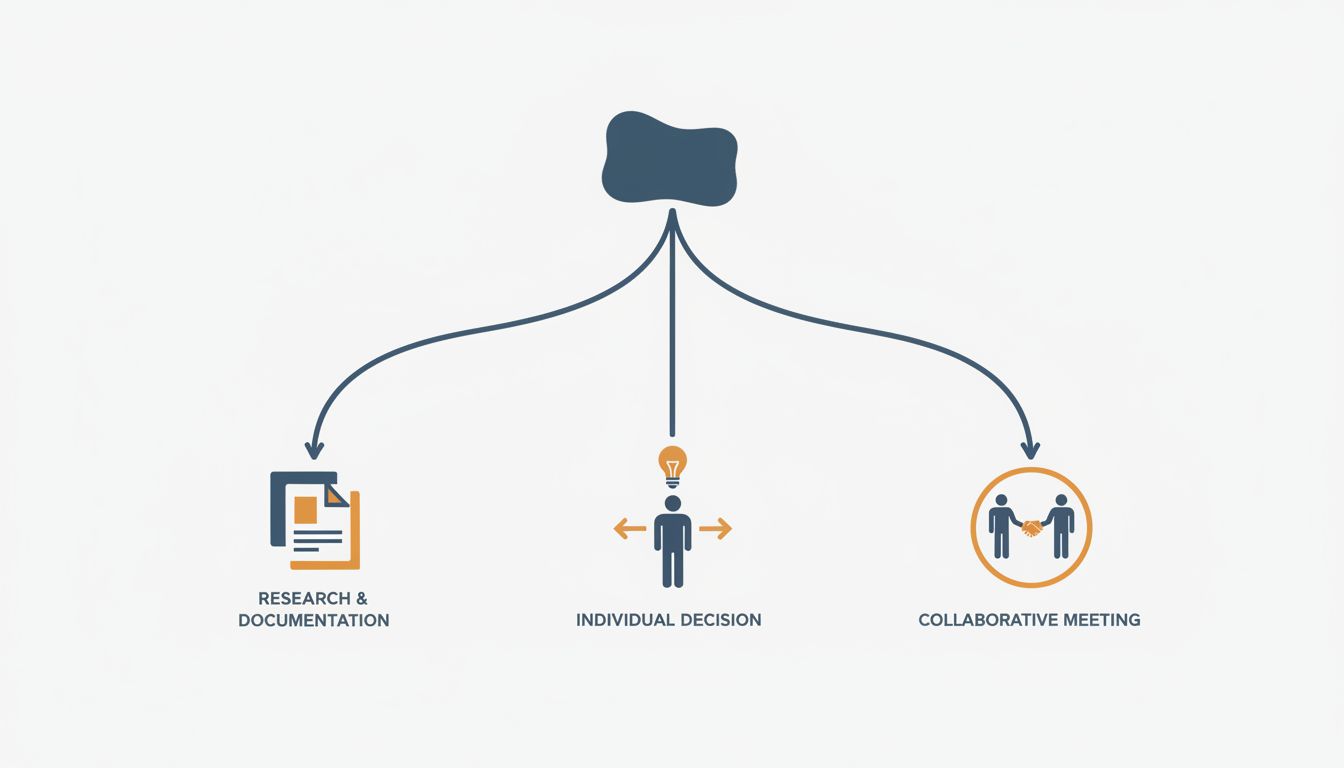
Most unnecessary meetings fall into one of three patterns.
The status update that should be a document. Someone needs to know what’s happening on a project, so a recurring meeting goes on the calendar. But status is information, not a conversation. If the goal is for people to know the current state of something, a shared doc or a brief async update does that job better. People can read it when it’s relevant to them, refer back to it later, and not spend forty-five minutes listening to updates about things that don’t affect their work.
The decision that one person is avoiding. Sometimes a meeting gets called not because a decision requires group input, but because the person who owns the decision is uncomfortable owning it. The meeting provides cover. “We discussed it as a team” distributes the responsibility even when one person had all the information they needed to just decide. This is worth noticing in yourself, not just in others.
The brainstorm that isn’t ready to happen yet. You’ve probably been in a meeting where the facilitator asks for ideas and gets silence, or a handful of obvious suggestions, because nobody had time to think before walking in. Good brainstorming requires preparation. Scheduling a meeting before you’ve given people the context and thinking time they need produces worse output than asking people to write down their ideas async first, then sharing them.
What to ask before you send the invite
One question cuts through most of this: what exactly needs to happen that can’t happen without everyone in a room (or a video call) at the same time?
If your honest answer is “I need people to know something,” that’s a document. If it’s “I need to make a decision and want input,” start by writing up your thinking and asking for written responses. You’ll often get better input than you’d get in a live meeting, and you won’t need to find a time that works for six people.
Meetings earn their place when you need real-time back-and-forth: working through a genuinely ambiguous problem, negotiating something where tone matters, or doing collaborative work that benefits from simultaneous presence. Those meetings are worth protecting. The others are worth questioning before you schedule them.
A practical test: before sending any meeting invite, write one sentence describing what will be different after the meeting than it is now. If you can’t write that sentence clearly, the meeting isn’t ready to be scheduled.
Why canceling isn’t enough
Canceling a meeting that shouldn’t have existed feels like progress. And it is, for that particular hour. But if the underlying reflex stays intact, you’ll schedule another one next week for the same kinds of reasons.
The fix isn’t just canceling more aggressively. It’s building the habit of asking, before you open the calendar, whether a meeting is actually the right tool. That means getting more comfortable sending a well-structured document instead of calling a kickoff. It means being willing to make a call and communicate it, rather than convening a group to share the discomfort of uncertainty. It means recognizing that your calendar fills up the same way a to-do list does, by accumulation, not by design.
The goal isn’t fewer meetings as a metric. It’s meetings that actually do something the alternatives can’t. When you get that balance right, the meetings you do have tend to be better, because people trust that their time is being used seriously.
That trust is harder to build than it sounds, and easier to lose than most managers realize.