The simple version
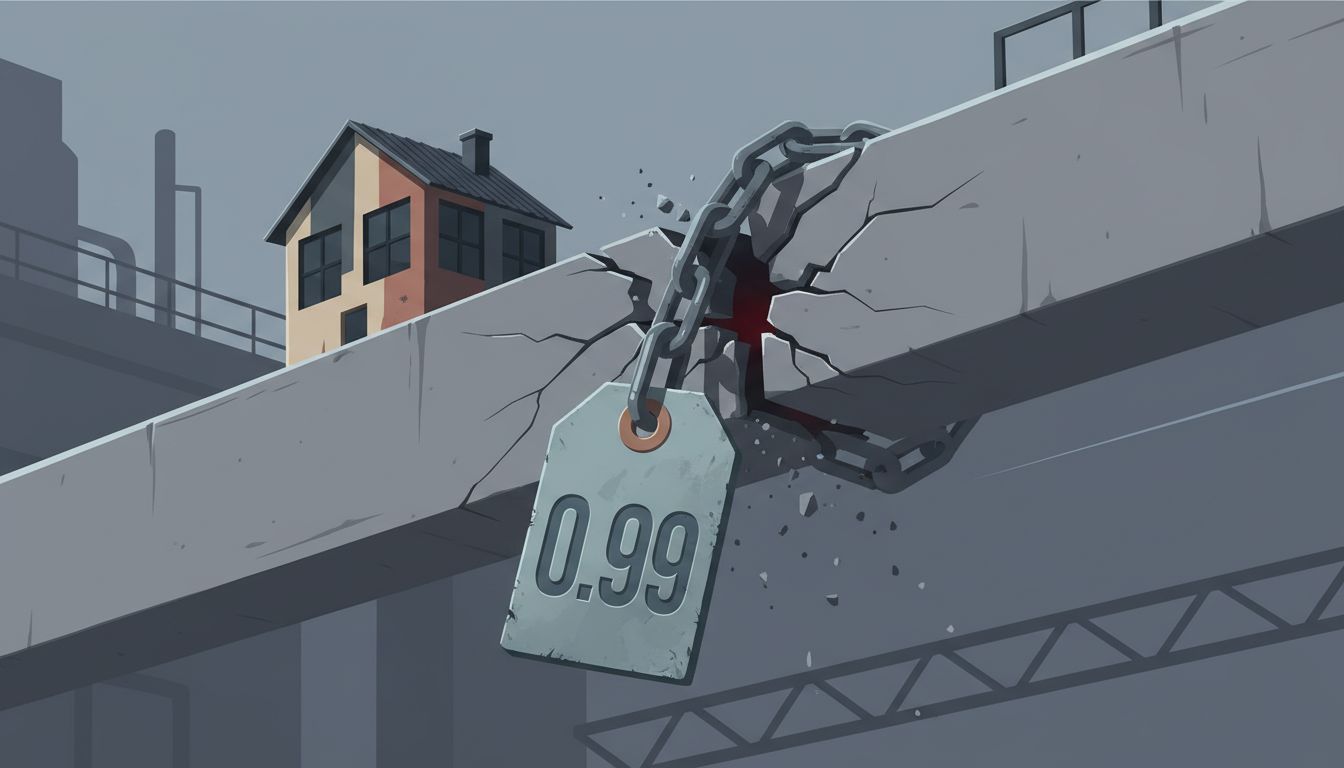
If you price your product too low, you won’t just make less money. You’ll attract the wrong customers, signal that your product isn’t worth much, and build a business that can’t survive even modest success.
The intuition that gets founders killed
Picture a two-person team launching a B2B project management tool. They’ve been at it for eighteen months, they believe in the product, and they’re terrified of rejection. So they price it at $9 per seat per month. The logic feels sound: low price means low friction, low friction means more signups, more signups means growth. They tell themselves they’ll raise prices once they have traction.
Three months later, they have 400 users and $3,600 in monthly recurring revenue. Their server costs are $800. Their time is worth something. One of them has a baby on the way. The math doesn’t work, but worse, the customers they’ve acquired are the ones who specifically chose them because they were the cheapest option. When they try to raise prices, half those customers churn. The ones who stay are the most demanding, least forgiving segment of their user base, because they were already squeezing every cent.
This is not a hypothetical. Variations of it happen constantly. The founders involved almost never see it coming.
Why price signals value, whether you intend it to or not
Buyers make inferences from price. This is well-documented in consumer psychology and it doesn’t stop applying because your customers are wearing business casual. When something is priced dramatically below alternatives, buyers don’t think “great deal.” They think “what’s wrong with it?”
This is especially true in B2B software, where the cost of a bad vendor decision isn’t just money. It’s implementation time, staff retraining, and the career exposure of whoever signed off on the contract. A procurement manager evaluating project tools is not looking for the cheapest option. They’re looking for the option they can defend. A $9 seat price doesn’t make them feel smart. It makes them nervous.
Why Pricing Your Product Lower Actually Kills the Sale gets into the psychological mechanics of this in more detail. The short version: price anchors perception, and perception is upstream of purchase.
The unit economics problem nobody talks about until it’s too late
Low prices aren’t just a perception problem. They’re a math problem.
Customer acquisition has a cost. For most startups, that cost is significant, because you’re paying for ads, sales time, onboarding, and support before you’ve seen a dollar. If your average contract value is low, you need an enormous volume of customers just to break even on acquisition. At scale, that becomes a fundraising dependency: you need outside capital not to grow, but to keep the lights on.
Companies that charge too little almost never recover because raising prices on existing customers is genuinely hard. It triggers churn, it triggers resentment, and it signals instability. The customers you attracted with low prices are precisely the customers most sensitive to price increases. You’ve selected for them.
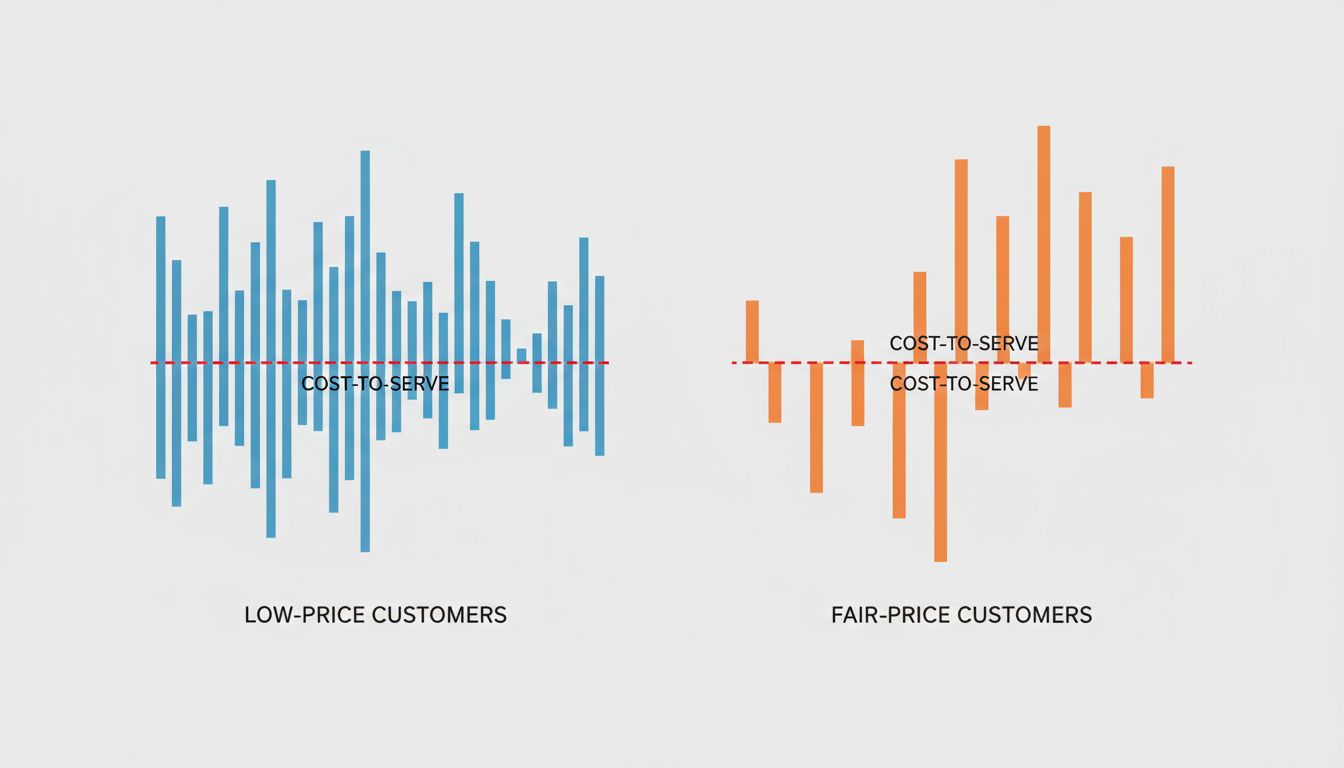
The other piece of the unit economics problem is support load. Low-priced customers frequently demand disproportionate support. They were attracted by accessibility and they treat support as a right rather than a service. Your cost to serve them is higher than your revenue from them, and because you have many of them, this problem scales badly.
What happens when growth arrives
Here’s the scenario founders don’t imagine when they’re pricing low to get traction: what if it actually works?
Growth at negative or near-zero margins is worse than no growth, because it requires you to scale infrastructure, support, and operations while your revenue can’t cover the cost. Many startups that raised venture capital on the strength of user growth discovered this painfully. Growth became an obligation they couldn’t fund without more fundraising, which required more growth, which required lower prices to sustain the rate.
The venture-subsidized price distortion that defined consumer apps in the 2010s is not a model most startups can replicate, and it wasn’t a great model even for the ones that tried it. Burning capital to acquire customers who will never pay enough to cover their cost is not a business. It’s a ponzi scheme where the exit event has to come before the math catches up.
For startups without a clear path to a massive fundraise, pricing low and growing fast is close to a guaranteed failure mode.
How to price without shooting yourself
The practical question is what to do instead, and the answer is simpler than founders usually expect.
Start by finding out what alternatives cost. Not to undercut them, but to understand the range buyers already accept. If every competing tool charges between $30 and $80 per seat, pricing at $25 isn’t a competitive advantage. It’s a liability you’ve voluntarily taken on.
Then talk to buyers before you finalize a price. Not to ask them what they’d pay (people are systematically bad at this), but to understand what they’re currently spending, what they’re trying to avoid, and what a failure in this category costs them. If using a bad project tool costs a 20-person team two hours of wasted time per week, you can do rough math on what that’s worth. Price toward value, not toward cost.
Charge enough that you can afford to support your customers well. A product with fewer customers paying fair prices and receiving excellent support is a better business than a crowded one where support quality collapses under volume.
Raise prices on new customers before you think you need to. It’s far easier to grandfather existing customers at lower rates and charge new ones more than to raise everyone at once. This is not a trick. It’s a sensible way to recalibrate without punishing early adopters.
The founders who survive are usually the ones who discovered early that their customers would pay more than expected, not less. Price like you believe your product is worth something. If you don’t believe that yet, the problem isn’t the price.