
The Setup
In 2019, a mid-sized software consultancy in Amsterdam was six weeks into a rewrite of a client’s data pipeline. The core problem was a race condition (a bug where two processes compete to write the same data, and whoever wins depends on timing rather than logic) that appeared only under production load. The senior engineer assigned to it, a developer I’ll call Lars, had spent the better part of two weeks staring at the code. He’d added logging. He’d added more logging. He’d drawn sequence diagrams on the whiteboard until the markers ran dry.
Nothing clicked.
On a Friday afternoon, his team lead told him to go home early. The client demo was on Monday. Spending the weekend at his desk would accomplish nothing except making him less sharp for the demo itself. Lars reluctantly closed his laptop and left.
Saturday morning, while making coffee, he understood exactly what was wrong. Not a hunch. The full picture. He could see the precise moment two worker threads were both reading a stale lock state from a cache layer that wasn’t invalidating on write. He wrote it down on his phone before the kettle finished boiling. By Sunday afternoon, the fix was in review.
This is not a feel-good story about work-life balance. It’s a story about how cognition actually works, and why knowledge workers keep accidentally discovering it the hard way.
What Actually Happened
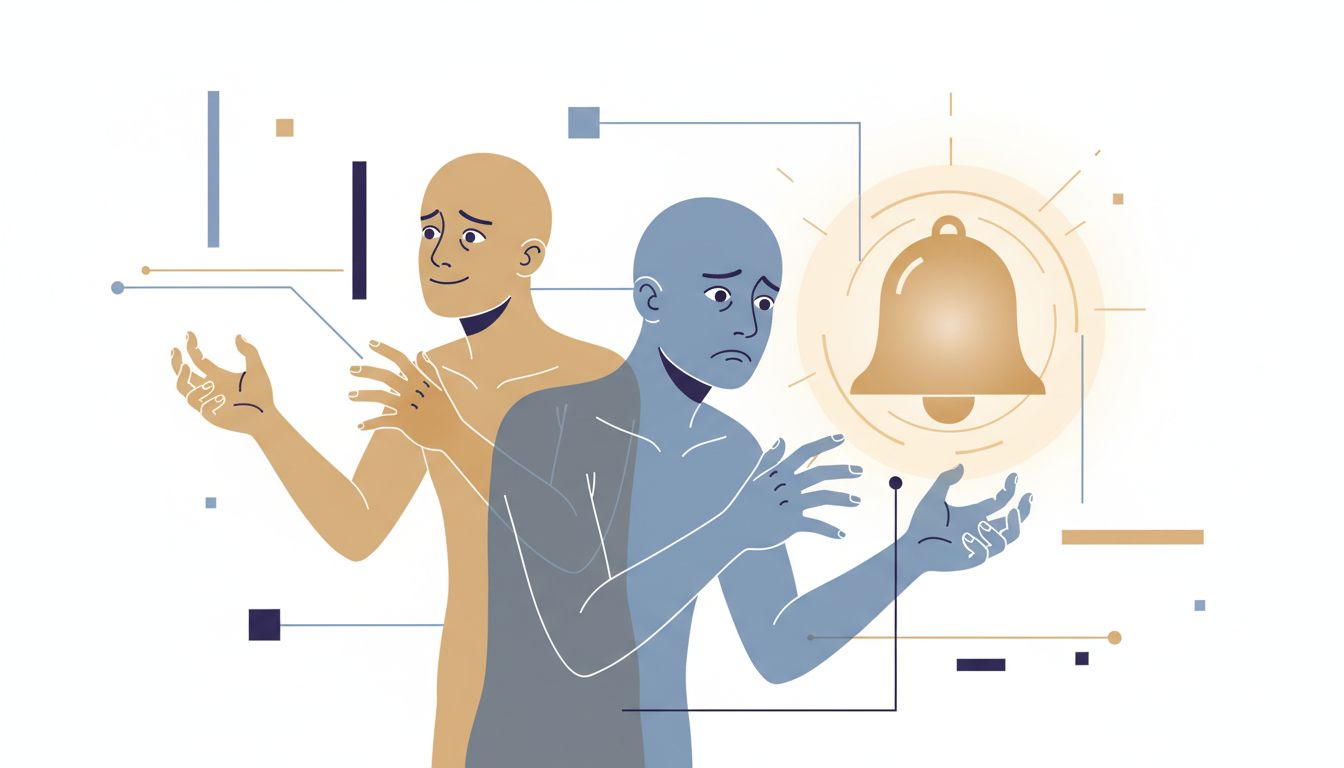
The phenomenon Lars experienced has a name in cognitive science: incubation. It’s the stage between active, effortful problem-solving and the moment of insight, and it is not passive. Your brain keeps working on the problem after you stop consciously engaging with it.
Neuroscience research on default mode network activity (the brain’s baseline state when you’re not focused on a task) suggests this isn’t mystical. When you step away from a problem, you stop suppressing the associative, wandering cognition that conscious focus actively inhibits. You start making connections across distant memory regions. The shower, the commute, the walk that “wastes” time is often when your brain finally gets to run the search query without your prefrontal cortex interrupting it every thirty seconds with a more obvious but wrong answer.
The race condition Lars was dealing with had a particular property that made it resistant to focused debugging: its cause was spread across three layers of the system. The lock logic was in one service, the cache invalidation was in another, and the timing dependency only emerged when both were under load. Staring at any one layer in isolation couldn’t reveal it. His brain needed to hold all three simultaneously, and that kind of broad synthesis is exactly what the default mode network is good at.
He wasn’t solving a simple bug. He was solving a distributed systems problem, and distributed systems problems often fail precisely because they don’t announce themselves clearly.
Why This Keeps Happening and Why We Ignore It
This pattern is extremely common among engineers and knowledge workers of every kind. Researchers studying creativity and problem-solving have documented it repeatedly across domains: mathematicians, writers, architects, product designers. The insight rarely arrives during the scheduled work block. It arrives in the gap.
The reason we keep ignoring this is straightforward: the gap is invisible to anyone watching. If Lars had told his team lead “I solved it during coffee on Saturday,” the organizational takeaway would be “Lars had a good idea over the weekend.” The two weeks of focused work that loaded the problem into his long-term memory, without which the Saturday insight would have been impossible, get no credit. Work is measured by the hours it occupies, not the cognitive processes it enables.
This creates a perverse incentive. The manager who watches Lars sit at his desk for two weeks and then go home early on Friday sees a productivity gap. The manager who understands what actually happened sees deliberate cognitive management. These two managers will make very different decisions about staffing, deadlines, and what “working” looks like.
There’s also a second failure mode: the engineer who recognizes this pattern and deliberately manufactures gaps often looks like they’re coasting. Taking a twenty-minute walk in the middle of a hard problem, blocking off Friday afternoons, refusing to context-switch onto urgent-but-not-important requests during a hard problem, all of these look like avoidance from the outside. The slower engineer is often worth more, but that’s a hard sell when the comparison is a visible body in a chair.
The Lessons Worth Extracting
The Amsterdam case study is useful precisely because it wasn’t exceptional. Lars wasn’t a genius who had a miraculous breakthrough. He was a competent engineer who accidentally gave his brain the conditions it needed. Here’s what that implies.
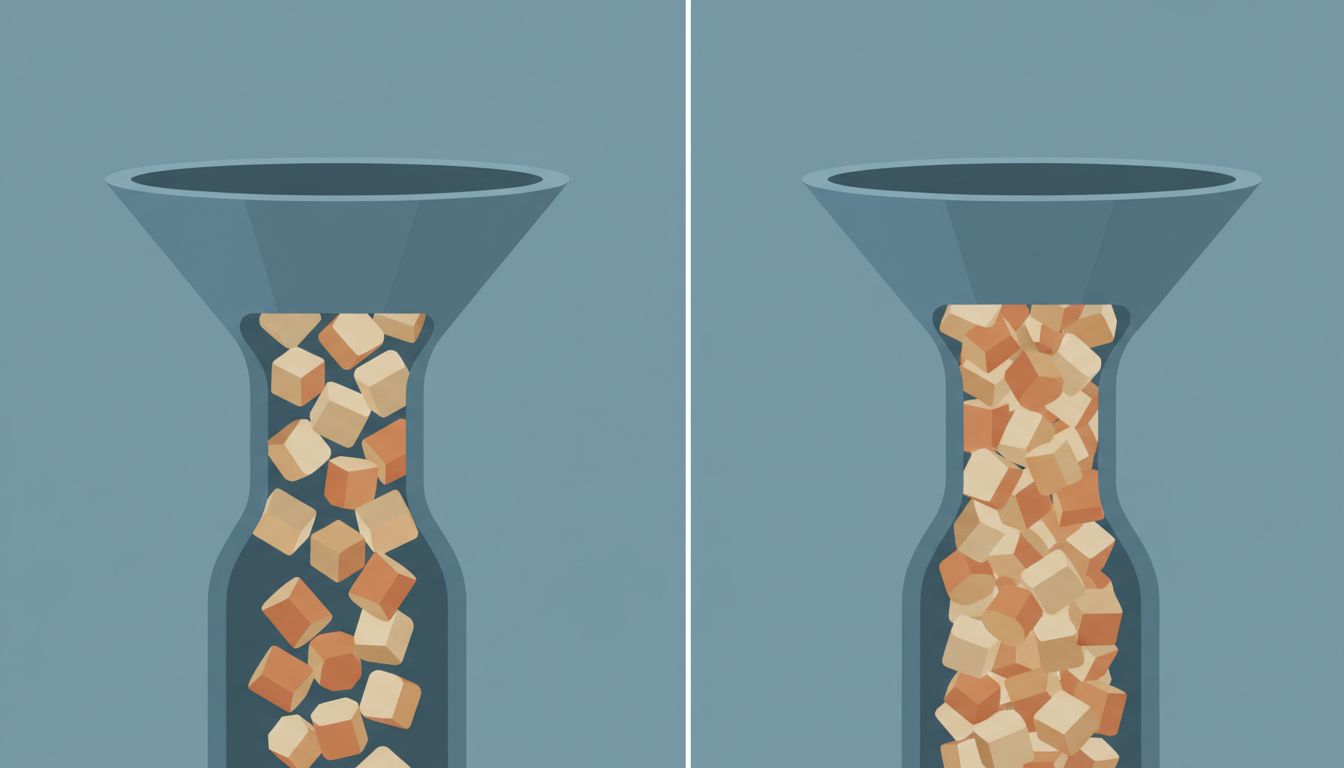
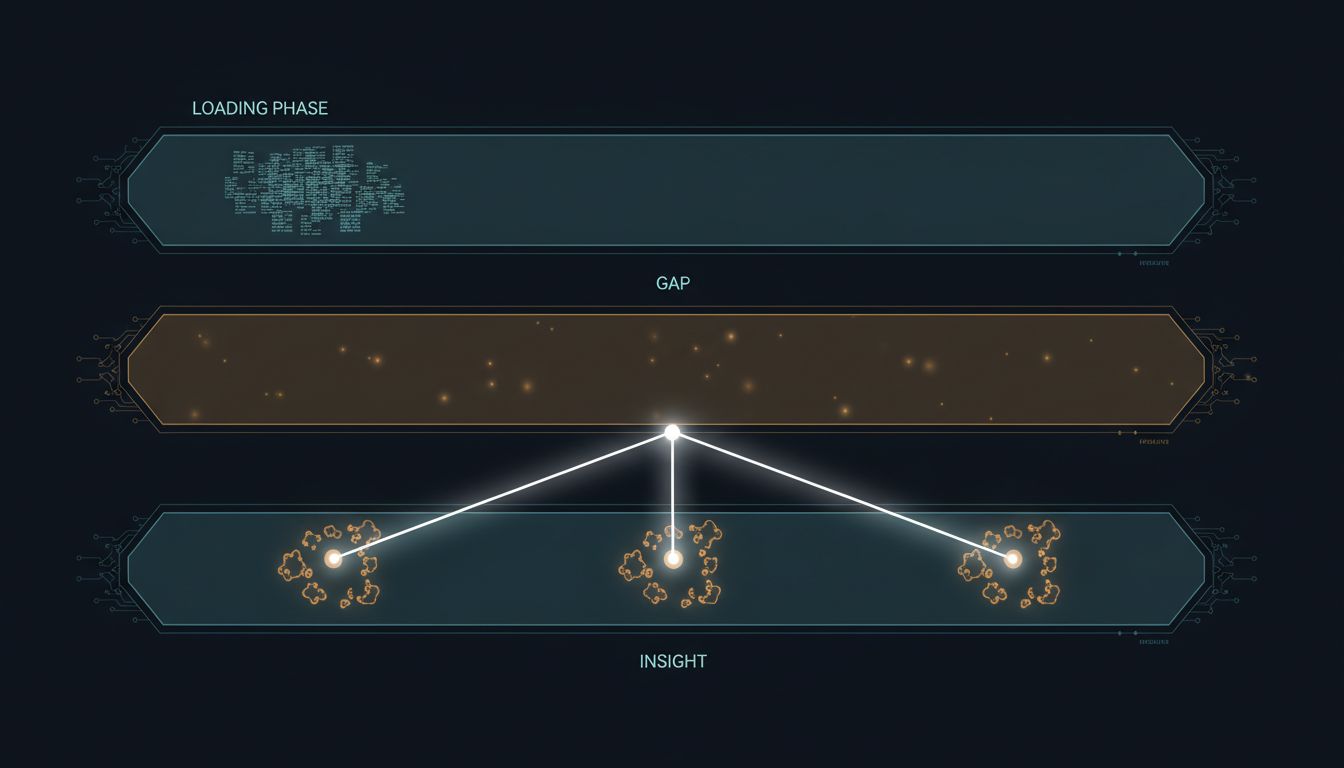
Hard problems need loading time, not just solve time. The two weeks Lars spent debugging without finding the answer weren’t wasted. They were the loading phase. The insight on Saturday only happened because his working memory was saturated with the problem’s details. You can’t skip this phase. What you can do is recognize when you’re in it, which means you’re closer to the insight than you think, not further.
Structured stopping is a skill. The team lead’s decision to send Lars home was not instinctive generosity. She knew from experience that a developer who has been grinding on a problem for two weeks without progress is usually past the point where more grinding helps. That’s a calibrated judgment, and it’s one most organizations never develop because they don’t track the outcomes carefully enough to build the pattern.
Context-switching is the enemy of incubation. If Lars had come home Friday and immediately picked up three other tasks, his brain would have had to start clearing the pipeline problem to make room. Cognitive load works like memory pressure on a system: if you fill it with other things, the background job gets paged out. The gap only works if it’s actually a gap, not a context switch to something equally demanding.
The insight window is short. Lars wrote down his realization before the kettle finished boiling. This is not a personal quirk. Insights that arrive through incubation are fragile because they’re coming from associative rather than working memory. If you don’t capture them immediately, the focused cognition that kicks back in when you start your day can displace them before you’ve converted them into something concrete. Carry something to write on.
What Organizations Get Wrong
Most productivity systems are designed to maximize the amount of time a person spends in active, focused work. That makes sense for jobs where output scales linearly with effort: data entry, manufacturing, customer service volume. It makes much less sense for work where the hard part is synthesis, novel problem-solving, or architectural judgment.
Knowledge work has a different production function. The output isn’t proportional to hours spent in focused effort; it’s proportional to the quality of the insights that emerge from a cycle of loading, incubation, and integration. Managing it like factory work produces exactly the wrong result: people who are busy all the time but never give their brains the conditions needed to actually solve hard problems.
Lars’s team lead understood this. She didn’t schedule the insight. She scheduled the conditions that made insight possible. That’s the actual managerial skill.
The Monday demo went fine.