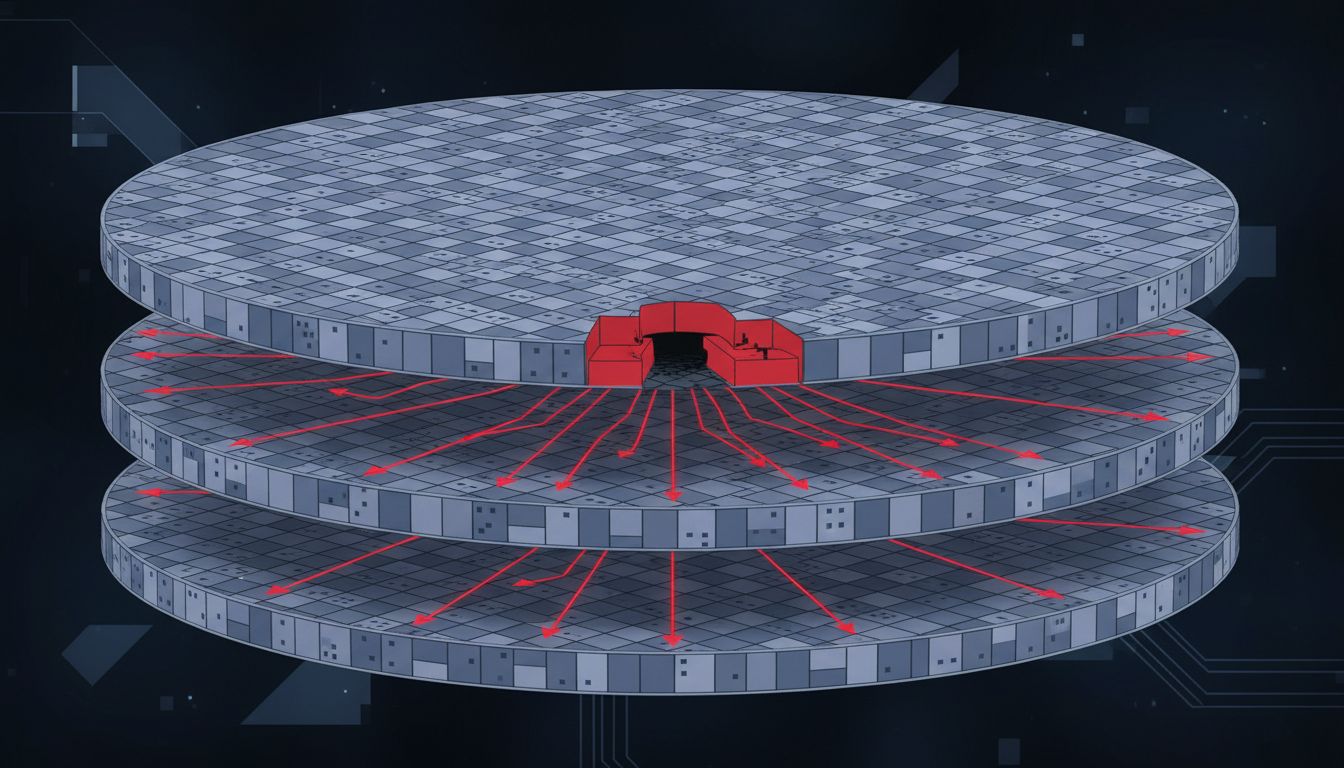
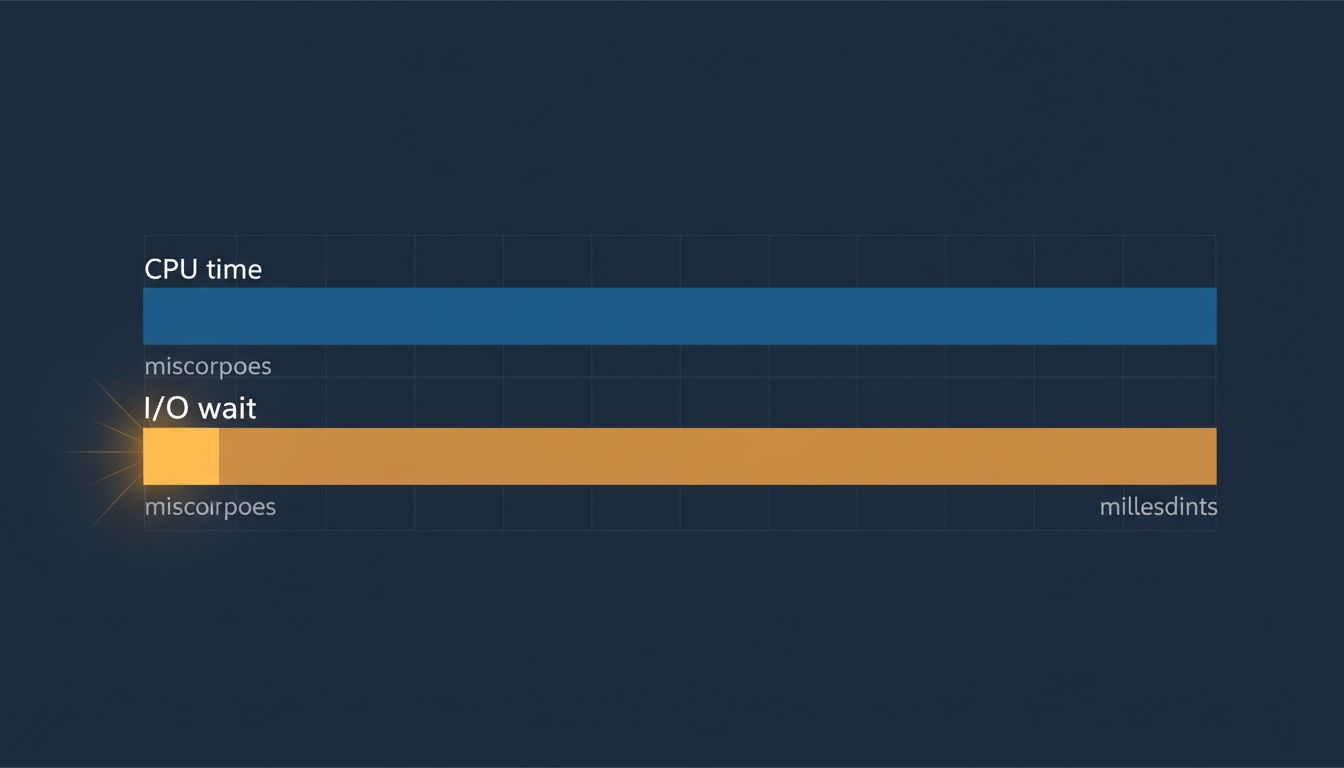
The simple version: A high-performance server spends most of its time waiting for data to arrive or storage to respond, not actually computing. Understanding that distinction is the key to understanding modern backend architecture.
What “Doing Work” Actually Means to a Server
When most people imagine a server under heavy load, they picture something like a very fast chef, constantly chopping and cooking. The reality is closer to a chef who spends 95% of their shift waiting for ingredients to be delivered from a warehouse two miles away.
A web server receiving a request typically needs to do several things: parse the incoming HTTP headers, maybe validate a token, query a database, fetch something from a cache, assemble a response, and send it back. The actual computation involved, the CPU instructions that manipulate data in registers, takes microseconds. The database query takes milliseconds. That’s a difference of roughly 1000x. The server isn’t slow because it can’t compute fast enough. It’s waiting for data to move across a network cable or come off a disk.
This matters enormously for how you build and scale systems.
The Two Kinds of Work: CPU-Bound vs. I/O-Bound
Computer scientists have a clean way to categorize this. Work is either CPU-bound (limited by how fast you can execute instructions) or I/O-bound (limited by how fast data can move in or out of the processor).
Most web services are I/O-bound. A typical API server handling user requests might spend 1-5% of its time doing actual computation and the rest waiting on network calls, database responses, or cache lookups. The numbers vary, but the direction is almost always the same.
CPU-bound work does exist in web infrastructure: image transcoding, video encoding, machine learning inference, cryptographic operations. These are the exceptions. The average CRUD application touching a relational database is almost entirely waiting.
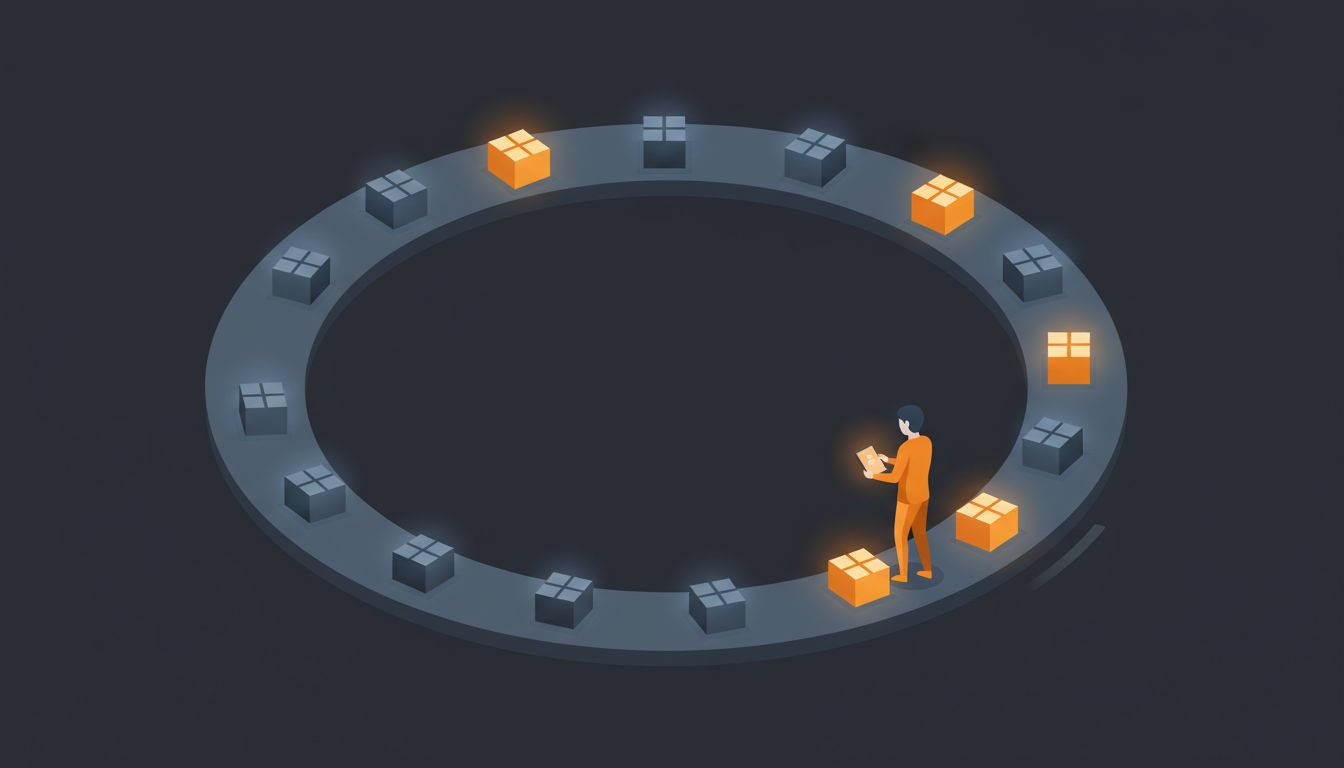
This is why you can run Node.js, a single-threaded JavaScript runtime, at serious scale. Node’s entire design philosophy is built around the observation that most server work is waiting, so you don’t need a thread per connection. You need a good system for saying “go do this, and when it’s done, come back here.” That’s the event loop, and it works well precisely because the work isn’t happening inside Node, it’s happening on a database server somewhere else.
Why This Changes How You Scale
If you misidentify the bottleneck, you spend money in the wrong place. This happens constantly.
A team notices their API slowing down under load. The instinct is to upgrade the servers: more CPU cores, more RAM. They do it, and the performance barely improves, because the server wasn’t the bottleneck. The database was. Every request was waiting 40ms for a query that could have been answered in 1ms with a proper index or a cache layer in front of it.
Conversely, if you have genuinely CPU-bound work (say, generating PDF reports or processing images on request), throwing more event-loop workers at it doesn’t help. You need actual parallelism: multiple processes or threads that can run on different CPU cores simultaneously.
The practical implication is that understanding your bottleneck is more important than almost any other architectural decision. Your app feels slow because of the network, not your code explains how this plays out at the client side. The same logic applies on the server: time disappears in transit, not in computation.
How High-Throughput Systems Are Actually Built
Nginx, the web server used by a large portion of the internet, can handle many thousands of concurrent connections on modest hardware. It does this through an event-driven architecture, similar to Node’s, that avoids the overhead of creating an operating system thread for every connection. Threads are expensive: each one requires memory for its stack, time to create and destroy, and CPU overhead to switch between. If you have 10,000 concurrent connections and each one is mostly waiting, spinning up 10,000 threads is wasteful. You’re paying the cost of parallelism for work that’s almost entirely idle.
The alternative is an event loop: a single thread that manages many connections, moving between them whenever one has data ready to process. The OS notifies the event loop when I/O is available (via mechanisms like epoll on Linux or kqueue on BSD systems), and the loop handles it. This is why a properly tuned Nginx instance can serve a surprising amount of traffic from hardware that wouldn’t impress anyone.
Redis, the in-memory data store, famously runs on a single thread for its core operations. This sounds like a performance limitation. In practice it’s a design choice that simplifies the code enormously while remaining fast enough for most use cases, because reading a value from RAM takes nanoseconds. The bottleneck is almost always getting data to and from Redis over the network, not Redis processing it.
What This Means if You’re Building Something
A few things follow from all this that are worth internalizing.
Profile before optimizing. The bottleneck in your system is empirical, not theoretical. Measure where time is actually going before deciding where to spend engineering effort. Tools like distributed tracing (Jaeger, Honeycomb) can show you exactly which part of a request is slow. More often than not, the answer is a database query or an external API call, not your application code.
Caching is often the most leveraged investment. If a server is spending most of its time waiting for the same data to come back from a database, serving that data from memory eliminates the wait entirely. The cheapest cloud option almost never is, but a well-placed cache layer frequently reduces load more than any hardware upgrade.
Concurrency models matter for the right reasons. Choosing between threads, async/await, and event loops shouldn’t be about what’s fashionable. It should be about whether your work is I/O-bound or CPU-bound, and at what scale the overhead of each model starts to matter.
The server handling a million requests per second is impressive. But the interesting engineering isn’t in the requests it handles. It’s in how the system was designed so each request spends as little time waiting as possible, and so the server can manage thousands of those waits simultaneously without breaking a sweat.