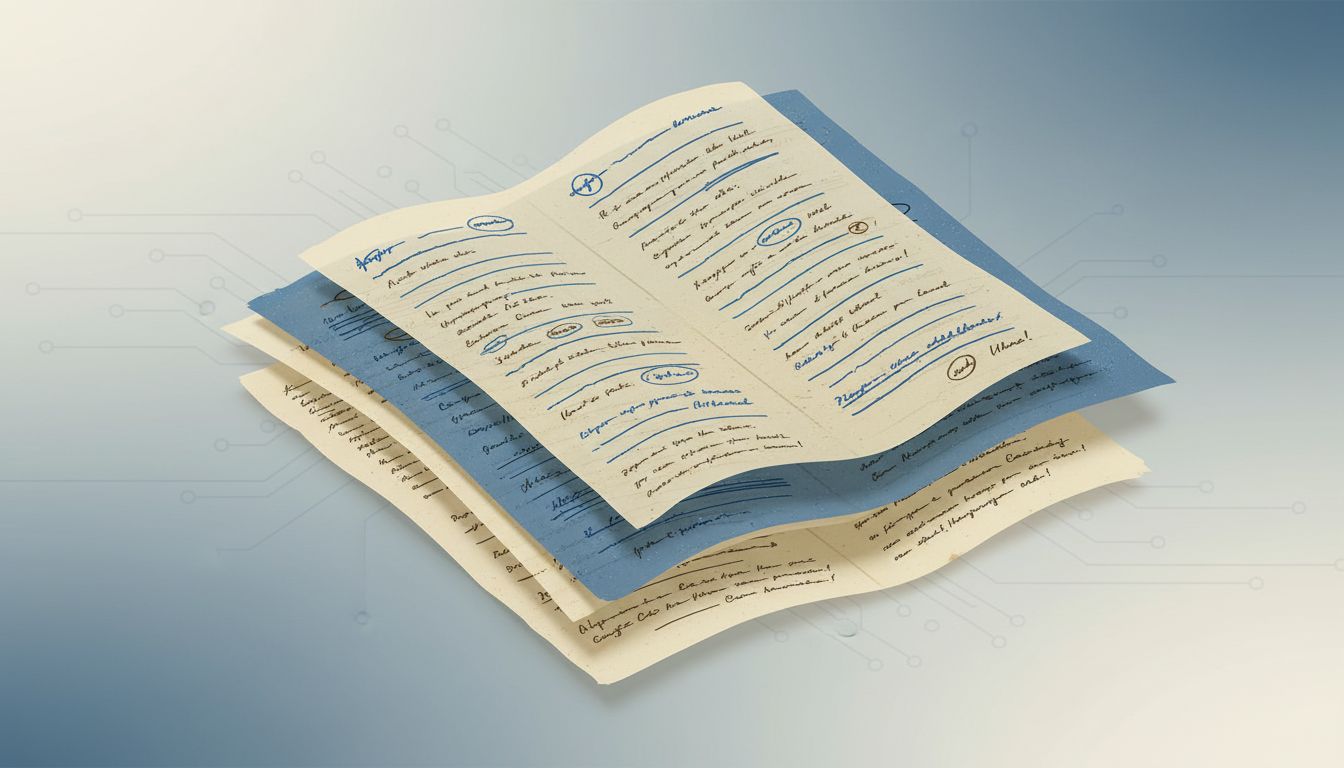
Every knowledge worker has one. A document that’s been open in a tab for weeks, maybe months. It gets updated in bursts, never feels complete, never gets formally shared. You’re slightly embarrassed by it. You keep meaning to clean it up.
That document is probably the most important one in your system.
This isn’t a comfort piece about accepting imperfection. There’s something structurally true about why perpetually-unfinished documents carry disproportionate value, and understanding the mechanism changes how you approach knowledge work entirely.
What Makes a Document “Finished”
When a document is finished, it becomes archival. It gets saved, maybe shared, and then it stops evolving. This is by design for certain artifacts: a post-mortem report, a formal spec, a published blog post. These are snapshots. They capture a state of understanding at a moment in time and preserve it.
But most of the work that actually drives decisions isn’t archival. It’s in-progress. It’s the messy middle where you’re actively figuring something out. Finishing a document prematurely freezes that process. You stop updating it not because the thinking is done but because the social contract around “finished documents” means you can’t keep revising without it feeling chaotic.
The unfinished document has no such contract. You can contradict yourself in it. You can write “this is probably wrong” and come back tomorrow and delete it. You can keep three conflicting hypotheses alive simultaneously. That’s not sloppiness. That’s how thinking actually works.
The Document as External Working Memory
There’s a concept in cognitive science called extended mind theory, proposed by Andy Clark and David Chalmers in a 1998 paper. The core claim is that cognitive processes don’t stop at the skull. When you use a notebook or a whiteboard as part of your thinking process, rather than just recording the results of thinking, those external artifacts become part of the cognitive system itself.
Your perpetually-unfinished document is functioning exactly this way. It’s not storing conclusions. It’s participating in the process of reaching them. The act of writing something down and returning to it later is structurally different from keeping it in your head, not because writing preserves it (though it does), but because re-encountering your own previous thinking from the outside gives you a kind of critical distance on it that pure internal recall doesn’t.
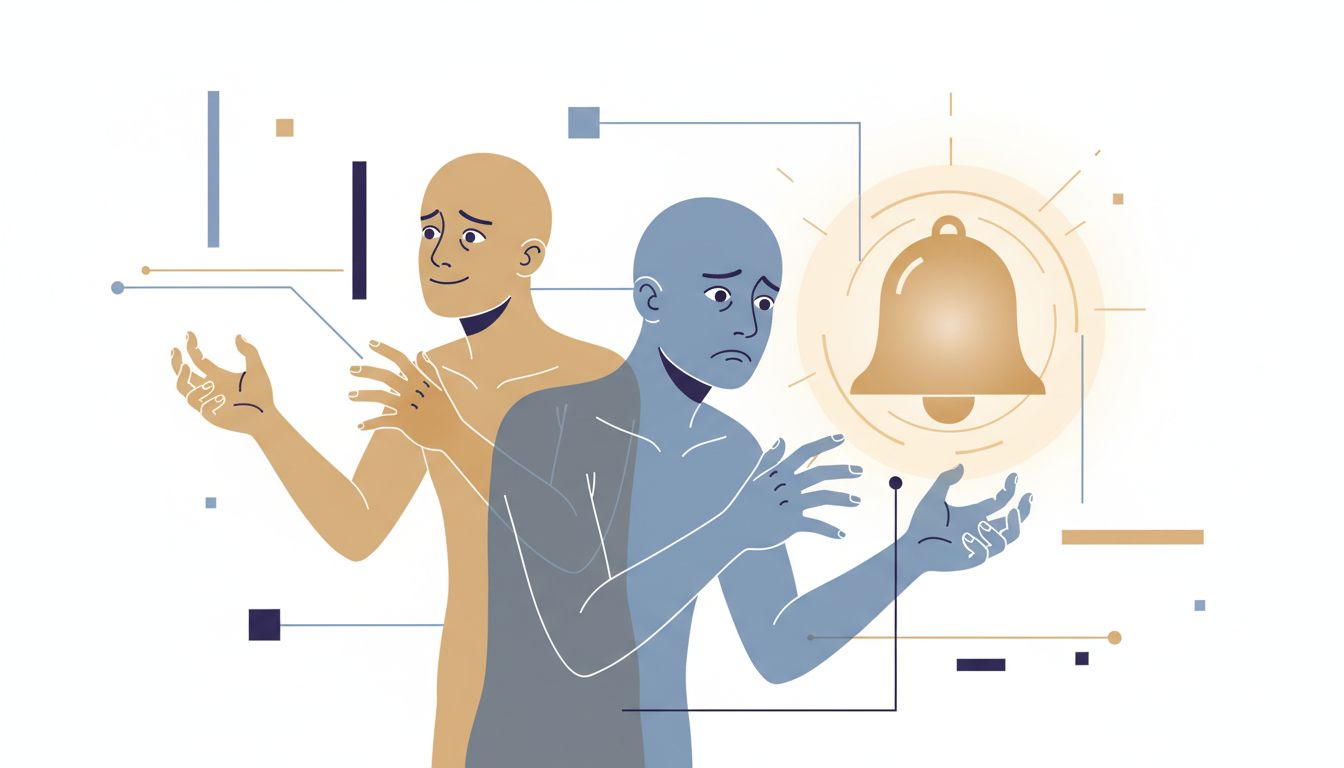
When you open that document and read “I think the caching layer is the bottleneck because X” and then realize you now have evidence that contradicts X, you’re doing something cognitively valuable that you literally cannot do with information held purely in memory. You’re arguing with your past self.
Why Completion Pressure Destroys These Documents
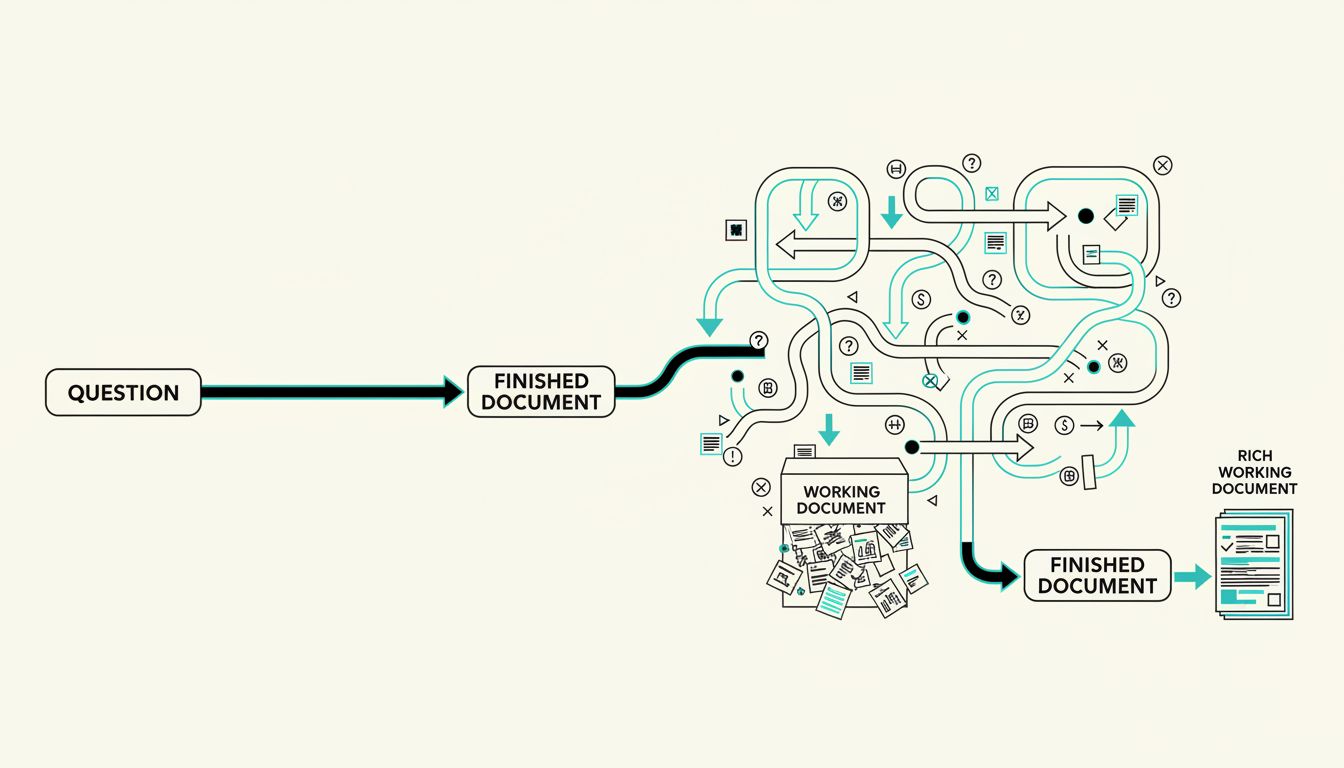
Here’s the failure mode I see constantly: someone has a rich, generative, evolving document about a problem they’re working through. Then they decide it’s time to “turn it into something.” They clean it up. They remove the contradictions. They write a clear narrative arc. They share it.
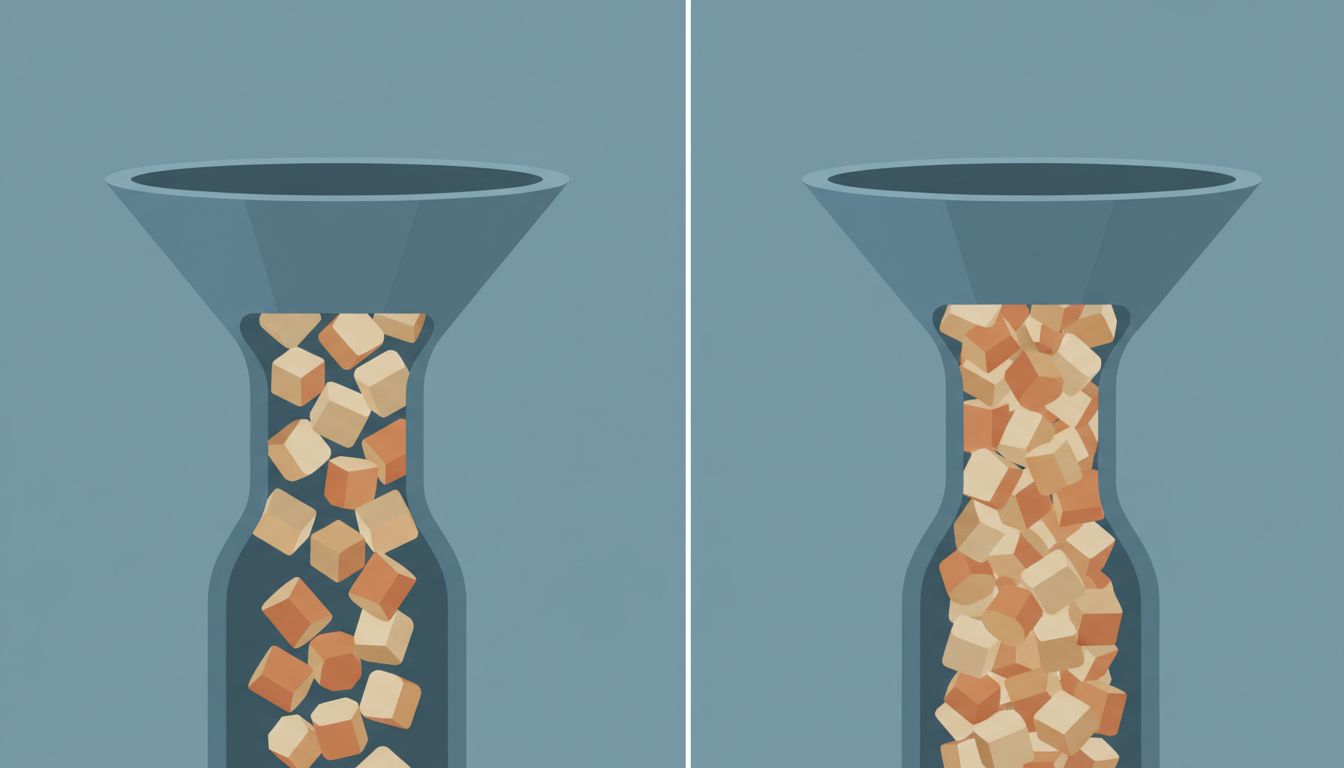
The cleaned-up version is often worse as a thinking tool than the messy original, and it also marks the death of the original. Nobody goes back to update the polished version because it now feels finished. The thinking process that document was supporting gets cut off.
This is related to a broader problem that productivity systems often create: the pressure to produce outputs mistakes outputs for thinking. Your productivity system may already be optimized for feeling busy rather than for actually working through hard problems. Turning your thinking document into a polished deliverable satisfies the output pressure while potentially terminating the cognitive work it was enabling.
The solution isn’t to never share or finalize anything. It’s to recognize that the messy working document and the clean shareable artifact are different tools for different jobs, and that the working document should survive the process of producing the artifact.
The Archaeology Problem
One thing the perpetually-unfinished document does that no finished document can: it accumulates geological layers of your thinking. If you date-stamp sections (even loosely, even just writing “late March” in the margin), you can look back and see not just what you concluded but how you got there.
This turns out to be surprisingly useful in a few specific situations.
When someone challenges a decision, you can often trace back through the document and find the exact point where you considered and rejected their alternative. You don’t have to reconstruct the reasoning from scratch or worse, confabulate it (which brains are uncomfortably good at). The reasoning is already there, frozen in time.
When a decision turns out to be wrong, the document shows you where your thinking went astray. This is more valuable than it sounds. Postmortems often suffer from hindsight bias, the retrospective feeling that the failure was obvious. A document that shows you genuinely didn’t have the information, or had it but reasonably interpreted it differently, is evidence against the false certainty that postmortems can produce.
And when you return to a problem after months away, the document lets you reconstruct context that you would otherwise spend days recovering. The time you “wasted” writing scattered notes was actually an investment with a real return date.
What Separates Useful Chaos from Just Chaos
Not every unfinished document is doing useful cognitive work. Some are just abandoned. The distinction matters.
A document that’s functioning as extended working memory has a few characteristics. It gets returned to, even if infrequently. It evolves, meaning new entries don’t just append but interact with old ones. It has accumulated contradictions that haven’t been resolved by deleting one side but by sitting with the tension. And it has a clear enough subject that you know what belongs in it.
A dead document has the opposite properties: it was last touched once, it contains a single burst of thinking with no follow-up, and you’ve honestly forgotten why you created it.
The maintenance requirement is minimal but not zero. Every few weeks, the useful unfinished document benefits from a quick pass, not to clean it up, but to add a new layer of “here’s what I think now.” That annotation is more valuable than the original entry in many cases because it shows movement.
One practical structure that works well: divide the document into a scratchpad section at the top (raw, timestamped, contradictory) and a distillation section at the bottom (your current best understanding, updated periodically). The scratchpad is the archaeology. The distillation is the working conclusion. Neither section is finished. Both are useful.
The Sharing Problem
The hardest part of taking this seriously is that perpetually-unfinished documents are private almost by necessity. Sharing them requires a level of trust in your audience that most professional contexts don’t support. A document full of contradictions and tentative hypotheses, when read by someone who doesn’t understand what they’re looking at, looks like confused thinking rather than active thinking.
This creates a real tension. The documents that are most useful for your own cognition are often the least shareable, and there’s organizational pressure to produce things that can be shared and evaluated.
One resolution: maintain the working document privately but produce shareable summaries from it, explicitly framed as summaries with a pointer to the fuller context for anyone who wants it. Most people won’t want it, and that’s fine. But the existence of the fuller context matters, both as intellectual honesty and as a resource for the few people who actually need it.
For teams, this points toward norms that explicitly value thinking artifacts alongside decision artifacts. A culture that only rewards polished deliverables will train people to skip the messy working phase, which means decisions get made with less of the cognitive infrastructure that good decisions require.
What This Means in Practice
The core shift is treating your unfinished working documents as first-class artifacts, not embarrassing drafts waiting to become real documents.
Keep them alive. Return to them. Let them contradict themselves. Date your additions loosely. When you produce a finished artifact from one, don’t delete the working document, archive it separately and link to the finished version from it.
Resist the urge to clean them up for their own sake. The mess is load-bearing. It represents the actual path your thinking took, including the dead ends, and dead ends are often where the most interesting recoverable information lives.
And when someone asks “is there a doc on this,” consider that the answer might be “there’s a working document that’s been evolving for eight months, and it’s more useful than a clean write-up would be, but you’d need context to read it.” That’s not a failure to produce documentation. That’s a different, more honest kind of documentation.