The simple version
When you write a clear document before a meeting, you do most of the cognitive work the meeting was meant to do. What’s left is faster, sharper, and often optional.
Why meetings feel necessary but rarely are
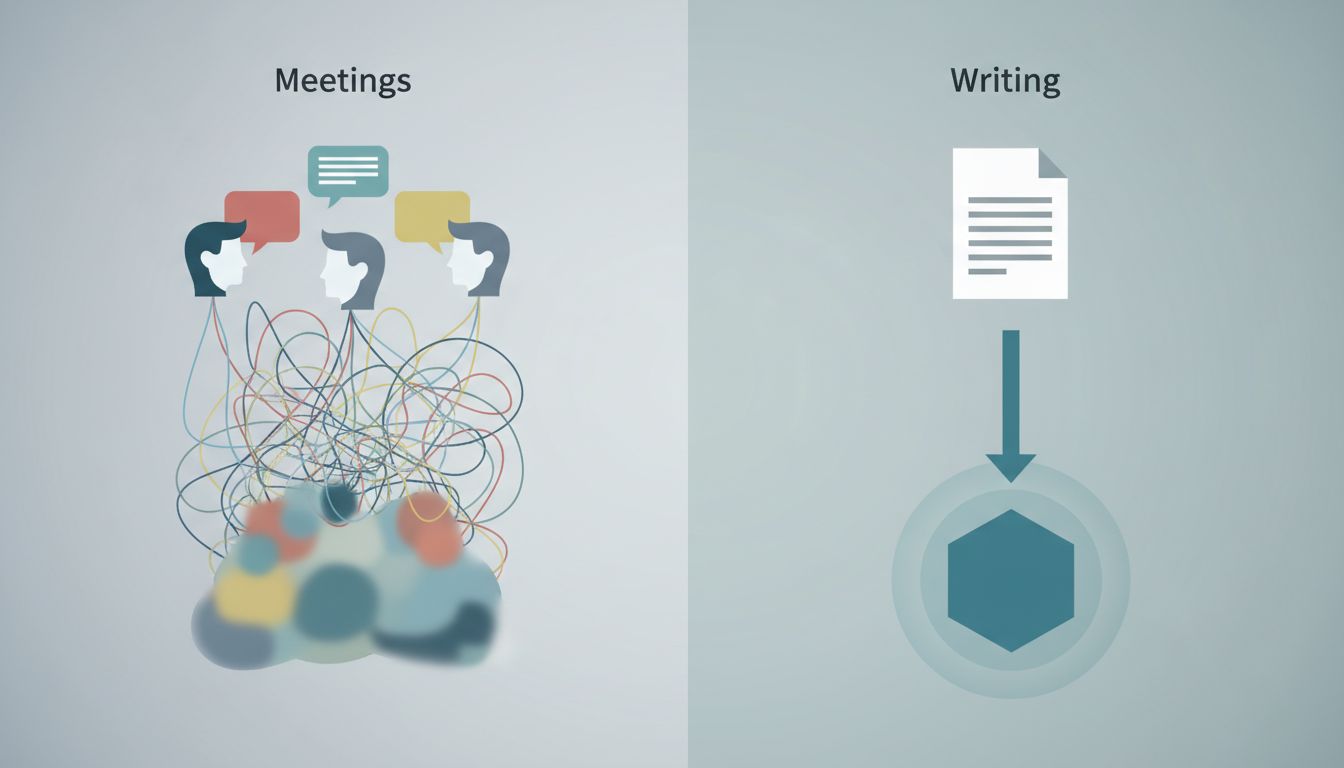
Meetings exist to solve a coordination problem: multiple people need to reach a shared understanding before making a decision. That’s a legitimate need. The problem is that most meetings try to do the thinking during the call, in real time, with everyone watching. This is a terrible environment for thinking.
Real-time group conversation optimizes for social smoothness, not clarity. People trail off rather than commit to a position. Someone with a half-formed objection stays quiet because there’s no good moment to interrupt. The loudest voice in the room shapes conclusions that should have been reached by evidence. What looks like collaborative decision-making is often just a negotiation of social comfort.
Writing breaks this pattern because it forces the author to actually finish a thought. You can’t hand-wave in a document the way you can in conversation. If your reasoning has a hole, the blank page finds it before your colleagues do.
What a pre-meeting document actually contains
The format matters less than the discipline. At Amazon, the internal practice involves writing a structured narrative memo, sometimes six pages, before meetings about significant decisions. Executives read silently at the start of the meeting. The memo has to stand on its own: context, reasoning, tradeoffs, a proposed decision. This isn’t a slide deck with bullet fragments. It’s actual prose that could be forwarded to someone who wasn’t in the room and would still be useful.
You don’t need Amazon’s formality to get most of the benefit. A useful pre-meeting document usually answers four questions:
- What problem are we solving? Not the symptom. The actual underlying issue.
- What options exist? Including the option of doing nothing.
- What’s your recommendation, and why? This is the hard part. It requires taking a position.
- What do you need from this meeting? A decision? Feedback on one specific risk? Introductions between two teams? Being explicit about this is surprisingly rare and surprisingly useful.
If you can’t answer question three, you’re not ready to have the meeting. That’s not a failure. That’s the document doing its job: surfacing that you need more information, not more faces in a video call.
The forcing function nobody talks about
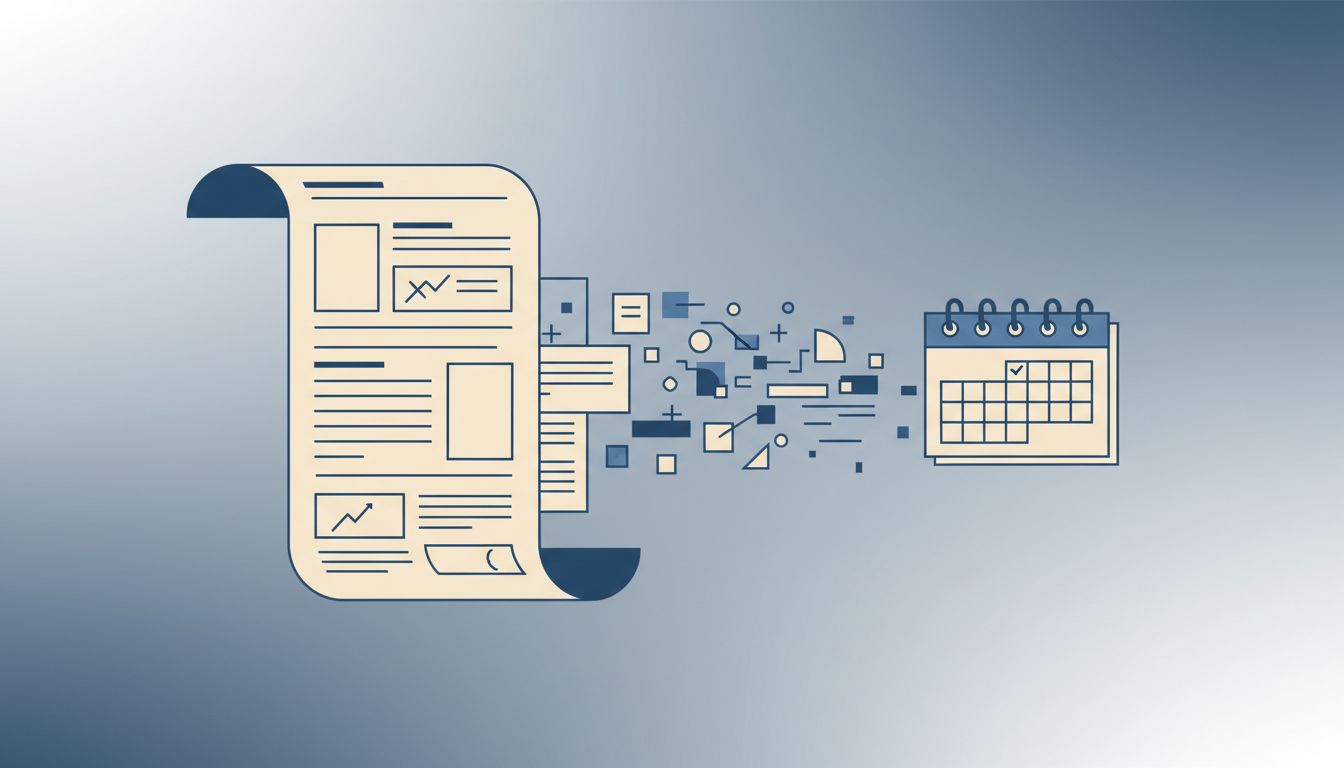
Writing the document changes what happens before the meeting even starts. When you send a two-page writeup 24 hours in advance and ask people to read it, two things happen.
First, people who would have shown up underprepared now have to engage with the material ahead of time. A meeting where everyone has read the same document starts several steps forward. You skip the 15 minutes of recapping context that already exists in writing.
Second, and more interesting: people often respond to the document via comments or a quick message before the meeting, and those responses reveal whether a meeting is even needed. If the document is clear and the recommendation is sound, the response might just be “looks good, let’s proceed.” That’s not a failed meeting. That’s a meeting that correctly identified it didn’t need to happen.
Asynchronous resolution of something that was scheduled as a synchronous meeting is pure gain. Everyone gets back an hour. The decision still gets made.
The cognitive cost hiding in your calendar
Context switching is expensive for anyone doing focused work. A one-hour meeting doesn’t cost one hour. It costs the hour plus whatever fragment of focused time surrounds it, because your brain doesn’t switch cleanly between modes. A meeting at 2pm can effectively write off an afternoon if you’re the kind of person who needs uninterrupted stretches to do good work. (Most people who build things are exactly that kind of person.)
The pre-meeting document reduces the total meeting load in two ways. It shortens meetings that do happen, because the group isn’t doing discovery from scratch. And it eliminates some meetings entirely, as described above. The compounding effect over weeks is significant. If you run or attend many meetings, shifting even a third of them to “document plus async response” changes your week in a way that blocking calendar time often fails to deliver.
The objection worth taking seriously
Some people argue that writing-first culture disadvantages those who think better verbally, or who aren’t native speakers of the document’s language. This is a real concern and deserves a real answer rather than dismissal.
The solution isn’t to abandon writing. It’s to write documents that invite response in multiple forms, and to be honest about what the document is: a thinking tool, not a performance. A memo that’s too polished can become a political artifact, a document you defend rather than one you use to find truth. The goal is clarity of thinking, not clarity of prose. Rough is fine as long as the reasoning is there.
Also worth noting: verbal-first meetings don’t actually solve the inclusion problem. They favor people who are comfortable speaking in groups, who process quickly in real time, and who have enough social capital to interrupt. Writing, done well, gives the quieter, more deliberate thinker a better shot than a meeting does.
The actual change to make
Before your next meeting, write a half-page document. Put the problem, your recommendation, and what you need from the meeting. Send it the day before. See what happens.
Most likely, the meeting gets shorter and sharper. Occasionally, you’ll get a reply that makes the meeting unnecessary. Rarely, you’ll realize while writing that you don’t have a clear enough recommendation yet, and postpone. All three outcomes are better than the default: a group of people in a room, figuring it out together in real time, and calling it collaboration.