
The simple version
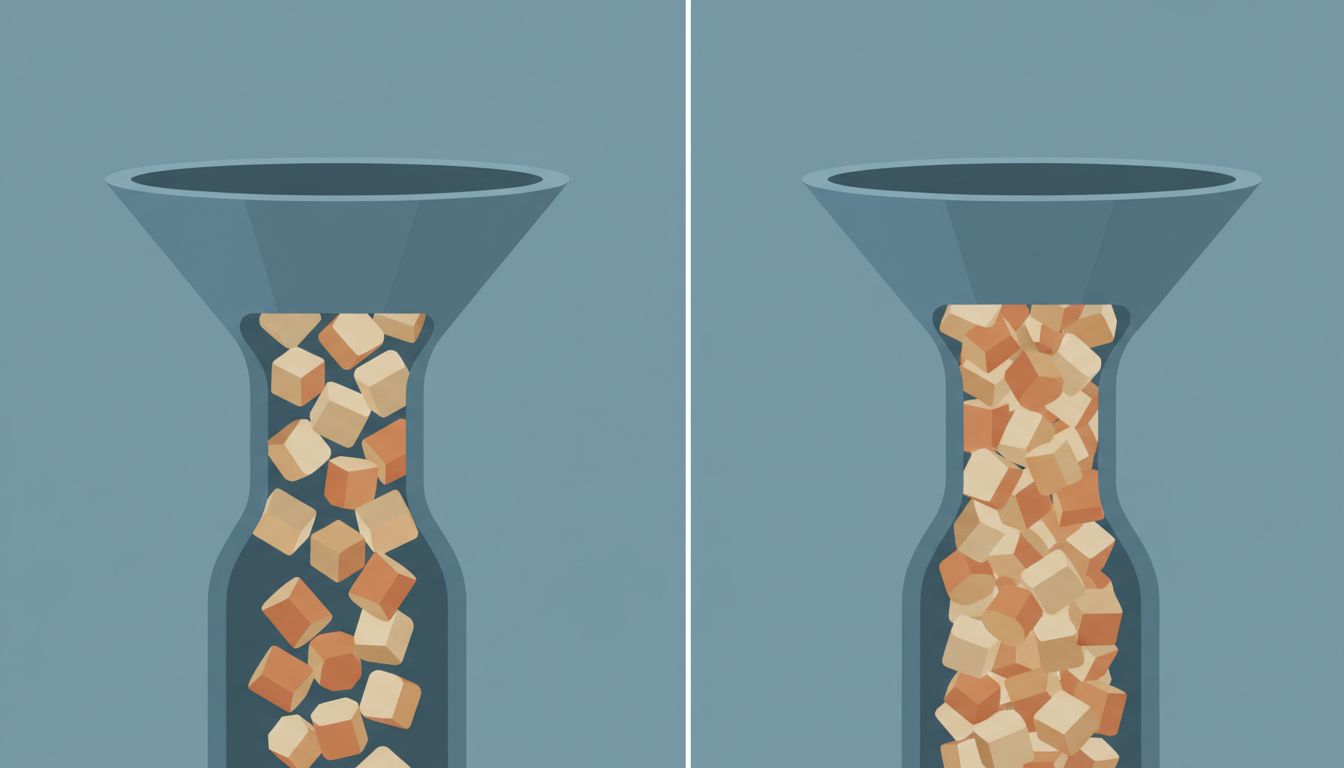
When you see a notification and don’t fully resolve it, your brain keeps a background process running on it, quietly consuming the mental resources you need for focused work. Ignoring isn’t the same as clearing.
Why your brain doesn’t let go
Psychologists have a name for this. In the 1920s, Bluma Zeigarnik observed that waitstaff could recall uncompleted orders in detail but forgot completed ones almost immediately. The brain, it turns out, allocates persistent attentional resources to unfinished tasks as a kind of reminder mechanism. This is the Zeigarnik effect, and it was not designed with your Slack notification volume in mind.
When you glance at a message and swipe it away without acting on it, you haven’t completed the task. You’ve just deferred it while leaving the loop open. Your working memory logs it as pending. That log doesn’t disappear when you go back to your code, your writing, or your spreadsheet. It sits there, firing low-level interrupts at whatever you’re trying to do.
The cruel irony is that the brief glimpse made things worse than not seeing it at all. Before you saw the notification, the task didn’t exist in your mental workspace. After you saw it and didn’t handle it, it does, and it’s competing for the same limited bandwidth you need for deep work.
The compounding cost over days
Here’s where the three-day timeline in the headline becomes literal. Research by Gloria Mark at UC Irvine found that after an interruption, it takes an average of around 23 minutes to fully return to a task. But that figure assumes you deal with the interruption. When you partially process something and defer it, the interruption cost doesn’t pay itself off, it rolls over.
You accumulate these open loops across the day and across the week. The notification from your project manager three days ago that you meant to reply to. The Slack thread you marked unread to “deal with later.” The email you read on your phone at 10pm and decided was a morning problem. Each one is a small but real drain on your available focus. Stack enough of them and you end up in what some researchers describe as “attention debt,” a state where you feel mentally exhausted despite not having accomplished much, because so much of your capacity went to background processing.
This also explains why Sunday evenings often feel more anxious than Friday evenings, even though you’re theoretically more rested. You’ve spent the weekend accumulating unresolved professional loops without the ability to close them.
The mistake: treating notifications as an inbox
Most people manage notifications the way they manage email: check, defer, check again later, feel vaguely bad. This pattern is so normalized that it feels like the only option. It isn’t.
The core problem is that notifications are not an inbox. An inbox is a system you revisit on your own schedule. Notifications are designed to pull your attention at their schedule, and when you half-respond to them, you get the worst of both models. You took the interruption but didn’t close the loop.
The more effective mental model: a notification is either something you handle now, something you deliberately schedule, or something you delete. There is no fourth category called “I’ll remember this.” You won’t remember it cleanly. You’ll just carry it.
This connects to a broader point about finishing fewer tasks per day can mean more gets done. Shallow half-completions aren’t neutral. They actively degrade the quality of the work you do manage to focus on.
What to actually do about it
Four things, in order of how quickly you can implement them.
First, audit your current open loops. Spend ten minutes writing down every unresolved communication or task you’re vaguely aware of. Not to handle them right now, but to externalize them. Getting them out of your working memory and into a trusted list actually quiets the Zeigarnik effect. Your brain stops nagging you when it believes a system is tracking the thing. This is the core insight behind most “capture” advice in productivity systems, and it works.
Second, batch your notification checks. Pick two or three windows per day when you check messages, and close or silence everything outside those windows. The goal isn’t to respond faster. The goal is to handle each batch completely so you’re not carrying open loops. When you check, resolve, schedule, or delete. Don’t browse.
Third, make your deferral explicit. When you genuinely can’t handle something now, don’t just swipe it away. Put it on a list with a time, or send a quick reply saying you’ll respond by a specific point. Both actions close the loop. “I’ll get to this” is open. “I’ll reply Thursday morning” is closed.
Fourth, do a short loop-clear at the end of your day. Five minutes to review what’s unresolved and either handle the quick ones or park the rest in your system. This is especially useful for preventing Sunday-evening anxiety, because you’re not carrying a week of open loops into your time off.
None of this requires a new app or a productivity overhaul. It requires treating the notification as a decision point, not a to-do pile. The notification you ignored three days ago isn’t the problem. The open loop you created by ignoring it is. Close the loops, and your focus takes care of itself.