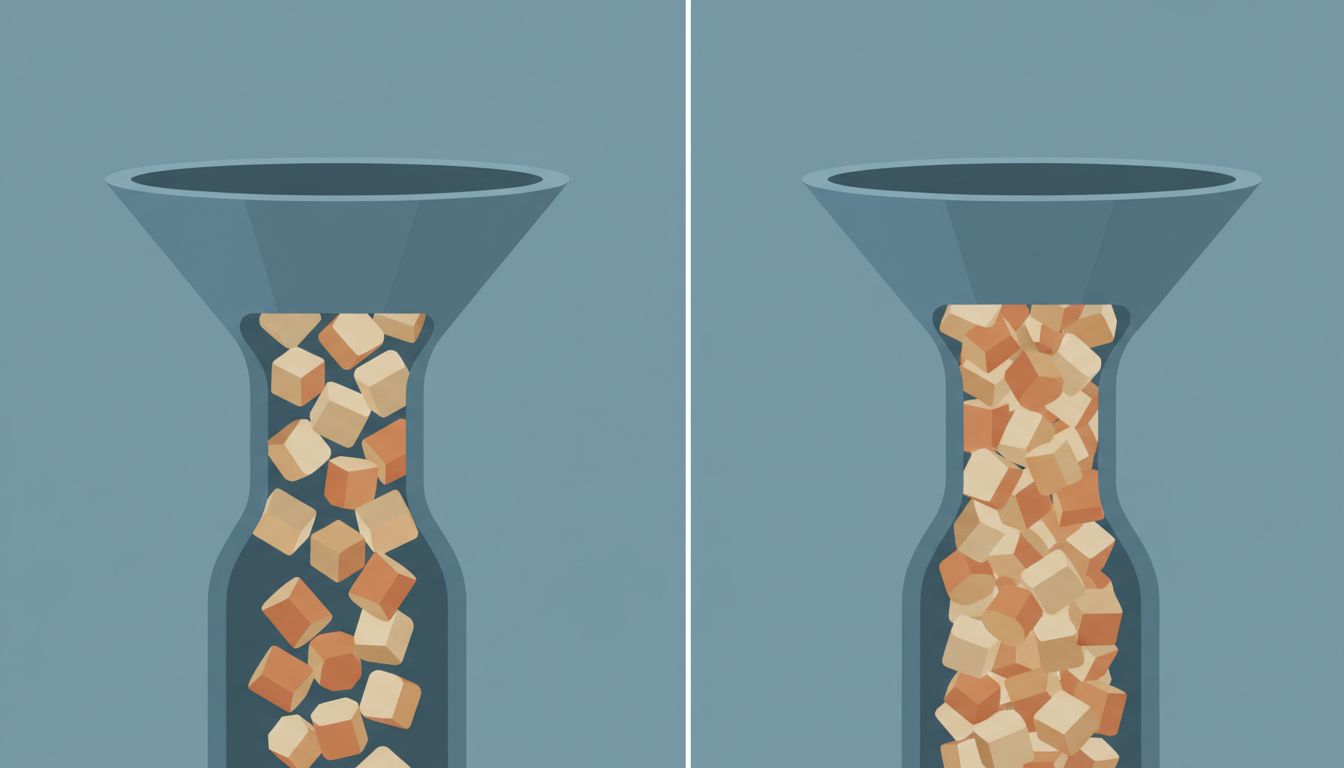
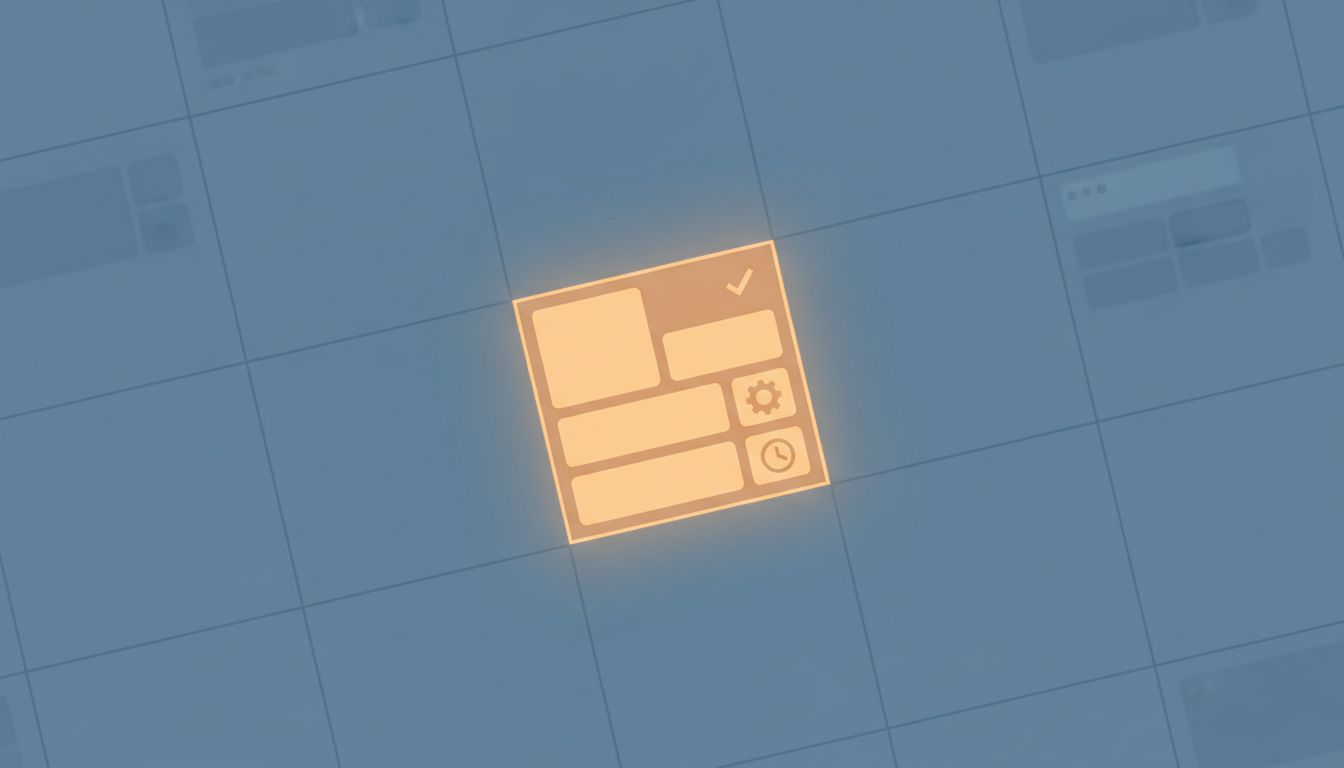
Deep work, as Cal Newport defined it, is cognitively demanding work performed in a state of distraction-free concentration. The concept is simple enough that people immediately feel like they understand it. They open their calendar app, drag out a two-hour block labeled “Deep Work,” and feel productive before they’ve done a single thing.
Then the block arrives. They sit down, open whatever project they were supposedly going to focus on, and spend forty minutes figuring out where they left off. Or they stare at the task and realize they never defined what “done” looks like for that session. Or they finish the block having done real work, but not the work that would have moved anything important forward.
The calendar block is not the system. It’s just a reservation. What actually makes deep work function is everything you put around that block. Here’s what most practitioners get wrong, and how to fix it.
1. You’re Blocking Time Without Specifying an Output
A block that says “Deep Work: Product Spec” is almost useless. A block that says “Draft the API authentication section of the product spec, ending with a complete decision on token expiry strategy” gives your future self an actual target.
This matters because your brain handles approaching a session differently depending on whether it knows what success looks like. Vague intentions produce vague work. When you sit down with a specific output defined, you spend your first five minutes orienting, not your first forty. The cognitive cost of “figuring out where to start” is one of the most reliable ways to waste a deep work session without realizing it.
Before you place any deep work block on your calendar, write a one-sentence output definition in the event description. Not a task, not a topic. An output. “Finish” is a verb that points somewhere.
2. You’re Scheduling Deep Work at the Wrong Time of Day
Most people know they have a peak cognitive window. Most people then proceed to fill that window with email, Slack, and the morning standup, and schedule their deep work block for 2 PM when they’re running on fumes.
This is backwards, and it’s worth being blunt about it: if you consistently place deep work during your low-energy hours because those are the hours nobody is scheduling meetings, you are optimizing for social convenience at the cost of actual output quality. Research on circadian rhythms and cognitive performance consistently shows that most people’s peak alertness occurs in the mid-to-late morning window, though this varies by chronotype. The point is that you probably know when your window is. Schedule the block there, and treat it with the same defensiveness you’d give to a meeting with your CEO.

3. You’re Not Accounting for Ramp-Up and Ramp-Down
A 90-minute deep work block that starts immediately after a meeting is not a 90-minute deep work block. It’s more like 50 minutes, because your brain doesn’t context-switch cleanly. Residual attention from whatever you just did bleeds into your focus time. You’re physically present at your desk but mentally still half-resolving the loose threads from the meeting.
This is well-documented. Gloria Mark’s research at UC Irvine found that it takes an average of about 23 minutes to fully return to a task after an interruption. Starting a focus session is its own form of transition. Build buffer time before your deep work blocks. Even 10 to 15 minutes of low-demand administrative work between a meeting and a deep work session gives your attention time to settle. If you can put a hard gap between meetings and your focus block, do it. If you can’t, at least stop treating your deep work block as starting the moment the meeting ends.
4. You’re Treating Every Deep Work Session as Identical
Not all deep work is the same. Writing a first draft from a blank page is different from editing a document that already exists. Designing a system architecture is different from debugging code. These tasks have different cognitive profiles, different warm-up requirements, and different optimal session lengths.
Most people maintain one generic “deep work” category and apply a single block length (usually 90 minutes or two hours) to everything. The smarter approach is to develop a small taxonomy for yourself. For many knowledge workers, there are roughly three modes: generative work (creating from scratch, high ambiguity), analytical work (evaluating, deciding, debugging), and refinement work (editing, improving something that already exists). Each mode benefits from slightly different session lengths and prep rituals. Generative work often needs longer runways. Refinement work can be more time-boxed. If you pay attention to how you feel at the end of different kinds of sessions, you’ll start to see the patterns.
5. You’re Not Protecting the Edges of Your Blocks
The block itself is protected. Everything adjacent to it is chaos. This is the most common structural failure in deep work calendars.
If your deep work block ends at noon and you have a meeting at 12:05, you will start winding down mentally at 11:45. If your calendar before the block has meetings stacked right up to its start time, you’ll arrive mentally scattered. The block needs margin on both sides. Treat the thirty minutes before and after a deep work session as functionally part of that session. That means not filling them with high-demand tasks or back-to-back meetings. The tasks you finish fastest are rarely the ones that matter, and the scramble to clear quick items right before a focus session is one of the most reliable ways to undermine it.
6. You’re Not Reviewing What the Sessions Actually Produced
Most deep work practitioners block time and then move on. They don’t track what sessions produced versus what they planned to produce. Without that data, you can’t improve your blocking strategy.
A simple end-of-week review that takes five minutes is enough. For each deep work block you had: what did you plan to produce, what did you actually produce, and what got in the way? Over a few weeks, patterns emerge fast. You’ll discover that your Tuesday morning blocks are consistently your best and your Thursday afternoon blocks are consistently wasted. You’ll notice that “writing” sessions where you had no outline produced half the output of sessions where you had even rough notes prepared. This isn’t journaling for its own sake. It’s debugging your own system, which is the only way to get better at using it.
The calendar block is where most people stop building their deep work system. It’s actually just the first step. The output definition, the timing, the margins, the session taxonomy, and the review loop are what turn a reserved calendar slot into something that reliably moves your most important work forward.