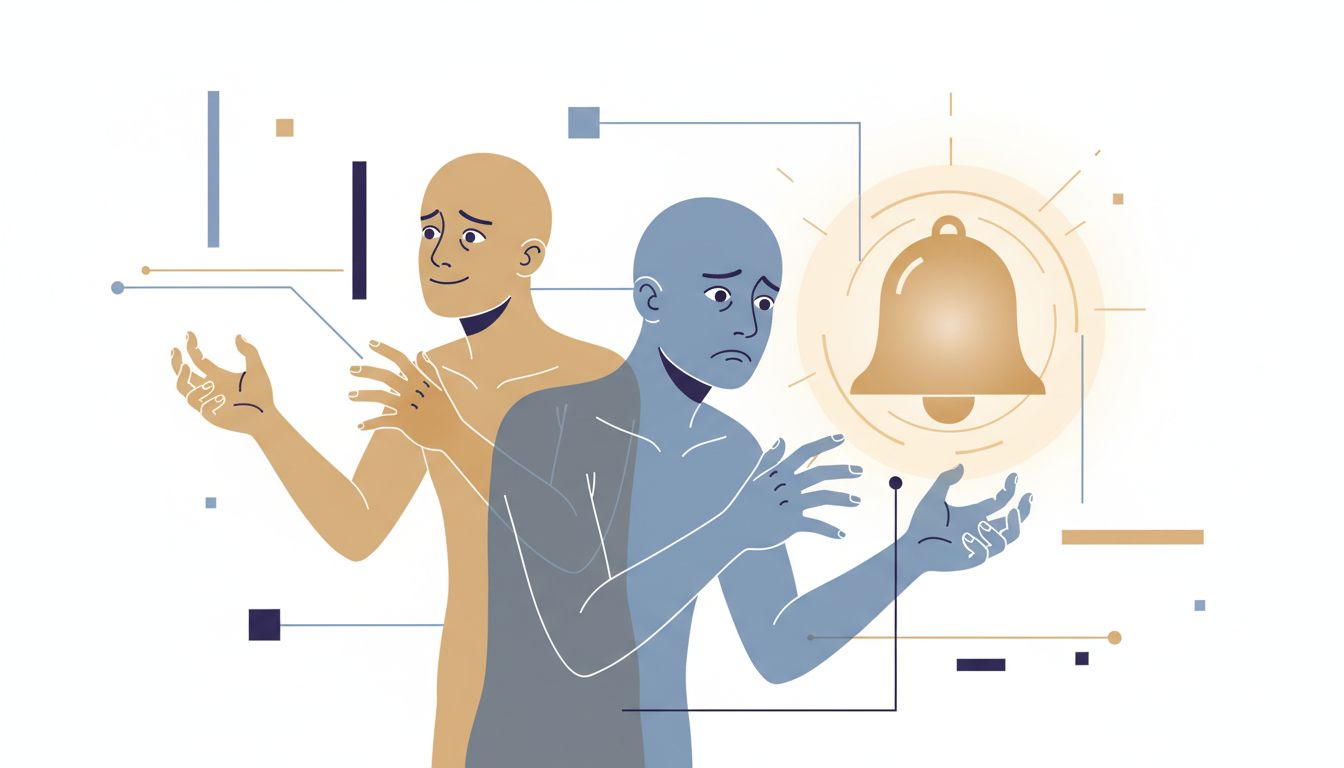

The meeting you canceled this morning did more useful work than the one you attended. That’s not a paradox. It’s what happens when you stop confusing presence with progress.
Meetings have a peculiar status in knowledge work: they feel like output. You were there. You talked. Things were discussed. But activity is not the same thing as work, and the feeling of productivity is not productivity. The canceled meeting, by contrast, gave back something finite and irreplaceable: uninterrupted time. And uninterrupted time is where actual thinking happens.
Context-switching has a real cost, and meetings are the main culprit
In software, context-switching refers to the overhead a processor incurs when it stops executing one process and starts another. The CPU has to save its current state, load a new one, and warm up caches that are now cold. The actual execution is often less expensive than the switching itself.
Human cognition works similarly. Research by Gloria Mark at UC Irvine found that after an interruption, it takes an average of more than 23 minutes to return to the original task. A 30-minute meeting that breaks up a morning doesn’t cost 30 minutes. It effectively costs the meeting plus the recovery overhead on both sides of it, which can easily consume two to three hours of productive capacity.
This means a calendar that looks like it has “plenty of time” between meetings can actually be useless for deep work. Scattered 45-minute gaps don’t add up to one productive 45-minute session. They’re context-switch overhead masquerading as availability.
Attendance is often a social obligation, not a functional requirement
Most recurring meetings have more attendees than they need. The extra people are there for visibility, inclusion, or vague future relevance. They’ll sit through 40 minutes of discussion that doesn’t concern them to receive two minutes of updates they could have gotten from a written summary in 90 seconds.
The organizational psychology behind this is understandable. Meetings confer status. Being in the room signals that you matter, that you’re a stakeholder, that decisions happen with you present. But that incentive structure is precisely the problem. It fills rooms with people who are performing attendance rather than contributing to outcomes.
When you cancel a meeting, or decline one, you’re often breaking a social contract rather than avoiding actual work. The work gets done anyway, usually faster, via a Slack thread, a shared doc, or someone just making the decision they already had enough information to make.
Written async work compounds in ways that spoken meetings don’t
A meeting produces almost nothing durable by default. Notes, if anyone takes them, are a lossy compression of what happened. Decisions are made verbally and then have to be reconstructed later when people disagree about what was agreed.
Written async communication, a well-structured document, a detailed PR description, a clear issue comment, is inherently reusable. Someone who joins the team six months later can read the reasoning. The person who was sick that day doesn’t have a gap in their understanding. The decision is recorded in its context, not extracted from someone’s memory.
This compounds over time. Teams that default to writing things down build a knowledge base. Teams that default to meetings build a calendar and lose the institutional memory when someone quits.
The counterargument
Some meetings genuinely cannot be replaced. A team working through a genuinely ambiguous architectural decision benefits from real-time back-and-forth, where one person’s partial idea completes another’s half-formed thought in ways that a comment thread can’t replicate. Relationship-building between people who don’t know each other well is harder to do asynchronously. And there are situations, genuine crises, major strategic pivots, moments requiring emotional calibration, where being in a room together (physical or virtual) matters.
The argument isn’t that meetings have no value. It’s that the threshold for calling one should be much higher than it is in most organizations, and that the default should be async-first. Most status updates, most “alignment” calls, most recurring syncs that never have a clear agenda: these are meetings that survive on habit and social inertia, not on their actual contribution to getting things done. The meetings that actually work are the ones that couldn’t have been an email, and most meetings could have been an email.
The meeting you attended is already costing you
There’s a useful thought experiment here. Before scheduling or accepting a meeting, ask: what specific decision or output will exist at the end of this that could not exist without a real-time conversation? If the answer is vague, or if the answer is “we’ll be aligned,” cancel it. Write the summary you would have sent after the meeting and send it before. See how many replies you get that resolve the issue without anyone having to block out time.
You’ll find that a significant fraction of meetings are actually load-bearing in only one direction: they make the organizer feel like they’re managing. That’s a real need, but it’s not a need that requires an hour of everyone else’s attention.
The most productive thing you did this week probably happened in a quiet two-hour stretch with no notifications. The meeting you canceled is why that stretch existed.