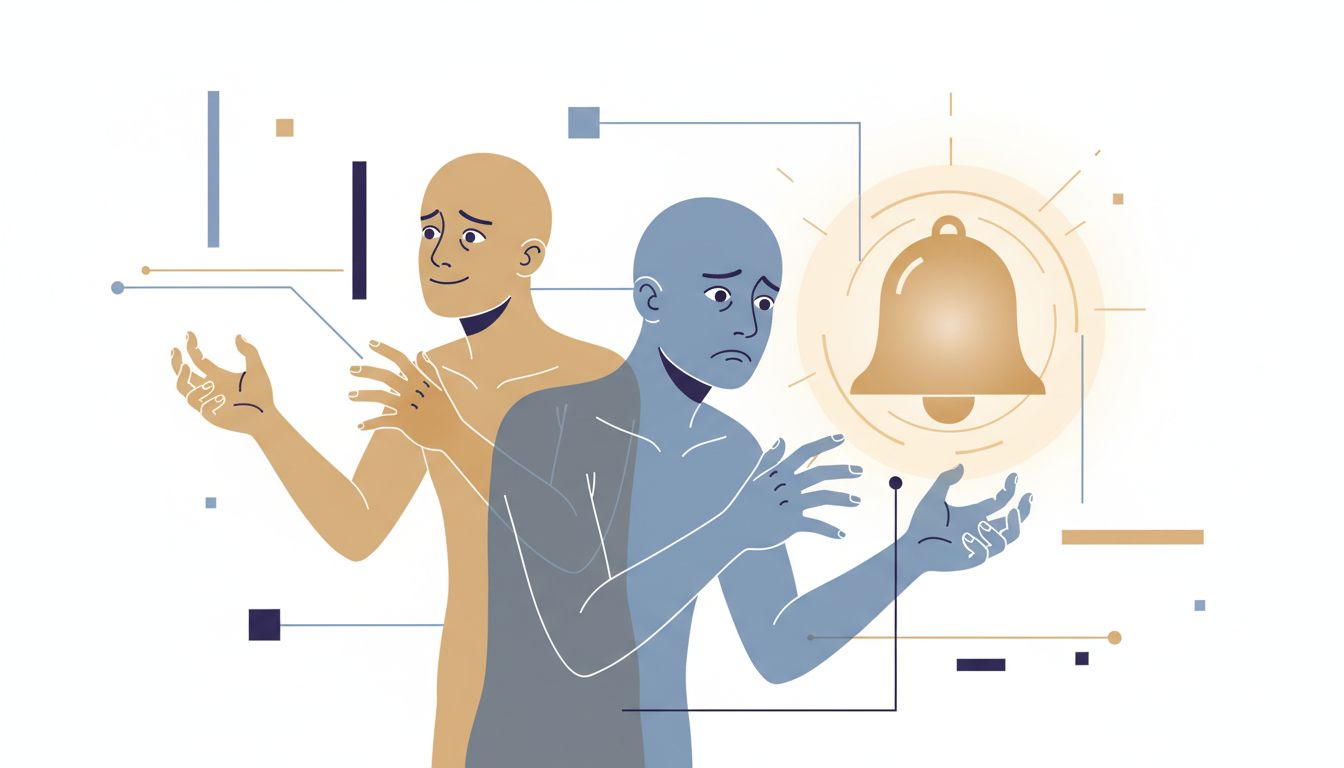
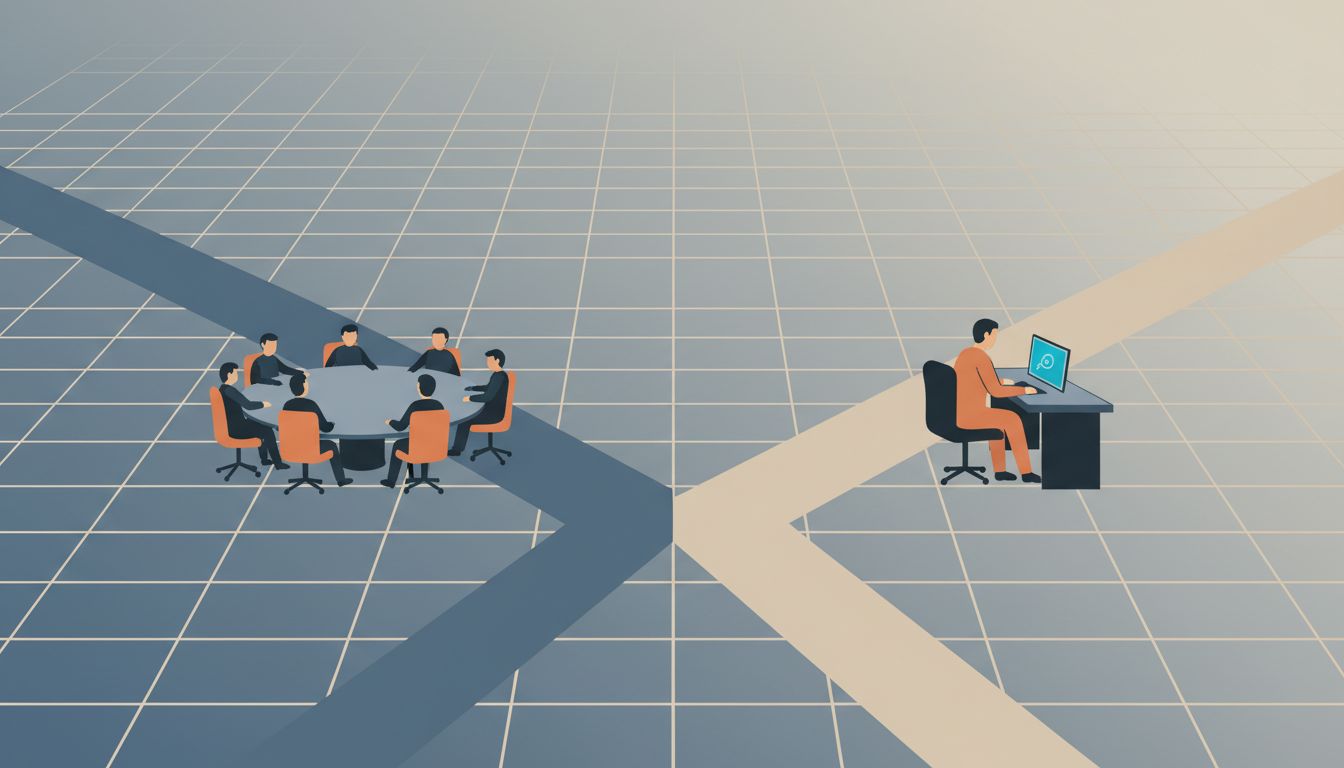
The calendar is not a neutral tool. Every block you accept is a bet that synchronous, real-time coordination will produce more value than whatever the attendees would have done with that time instead. Most of those bets lose.
The meeting you canceled yesterday, the one you felt vaguely guilty about, probably produced more output than the one you sat through. Not despite your absence, but because of it.
Meetings interrupt the work that actually ships
Knowledge work runs on something called flow state, a term from psychologist Mihaly Csikszentmihalyi’s research on deep concentration. Getting into flow takes roughly 15-20 minutes of uninterrupted focus. Getting knocked out of it takes one Slack ping or one calendar notification. A single 30-minute meeting in the middle of a morning doesn’t cost 30 minutes. It fractures the surrounding time into blocks too small to use, because your brain is either anticipating the interruption or recovering from it.
Paul Graham wrote about this in 2009 with his distinction between a “maker’s schedule” and a “manager’s schedule.” Managers think in one-hour blocks. Makers (engineers, writers, designers, anyone producing something) think in half-day units. A meeting at 2pm ruins the entire afternoon for a maker. This isn’t a preference. It’s how the work actually gets done.
When you canceled that meeting, you gave each attendee back a potential half-day of functional work. That is not a small thing.
The meeting’s work usually happened anyway
Here’s what I’ve noticed consistently: when you cancel a meeting that was scheduled to “discuss” or “align on” something, the thing still gets resolved. Someone sends a document. Someone makes a decision asynchronously. The question gets answered in a thread. The work finds a path.
This tells you something important. A large fraction of meetings are scheduled not because synchronous communication is necessary, but because it’s the default. The calendar is the path of least resistance. Scheduling a meeting feels like doing something, and it offloads the cognitive work of figuring out whether a meeting is actually the right tool.
A document forces the author to think clearly before sharing. A meeting lets everyone think out loud together, which feels productive but often just means the sharpest person in the room drives the outcome while everyone else performs participation. The document would have gotten you there faster and left a record.
Attendance creates a false sense of contribution
There’s a particular kind of meeting that large organizations specialize in: the one where most attendees are there to “be kept in the loop.” They don’t make decisions. They occasionally ask clarifying questions. They are, functionally, an audience.
Being in that room feels like working. It has all the social signals of work: other people are present, topics are being discussed, the calendar said this was important. But the attendee who skipped and spent that hour on actual output contributed more to the project. The loop-keeping meeting is, in many cases, just organizational anxiety made collective.
This compounds at scale. If eight people attend a meeting where two of them are doing the real cognitive work, you haven’t had a meeting, you’ve had a two-person conversation with six witnesses. The witnesses paid for that with their most productive hours.
The counterargument
None of this means meetings are useless. That’s the overcorrection that turns organizations into a pile of unread documents and unresolved ambiguities.
Some work genuinely requires synchronous communication. Early-stage problem exploration, where the shape of the problem isn’t clear yet, benefits from real-time back-and-forth. Conflict resolution almost always requires direct conversation because tone and nuance matter too much to survive async. Relationship-building across teams, the kind of social trust that makes everything else work faster, doesn’t happen in a shared document.
The point isn’t that you should cancel every meeting. It’s that the default should be cancellation (or better, never scheduling in the first place), and meetings should earn their place by being the genuinely right tool for the specific communication need. Most aren’t. As covered in Most Meetings Should Never Have Been Scheduled, the real problem is upstream: meetings get booked because no one has decided they shouldn’t be.
The guilt you feel when you cancel is also worth examining. It’s mostly social, not logical. You’re worried about seeming unavailable or uninterested. But your team doesn’t need your physical presence in a room to know you’re engaged. They need your best work. Those are often in direct competition.
The decision you should be making
Before you accept any meeting, ask one question: is real-time, synchronous conversation actually necessary here, or is it just convenient? If the answer is “we need to discuss,” that’s not a yes. Discussion can happen in writing. If the answer is “we need to make a decision together in real time because the decision space is genuinely unclear and multiple perspectives need to interact,” that’s closer to a yes.
The meeting you canceled yesterday? Odds are it was the former. The people who would have attended are doing better work right now because you made that call. Stop feeling guilty about it.