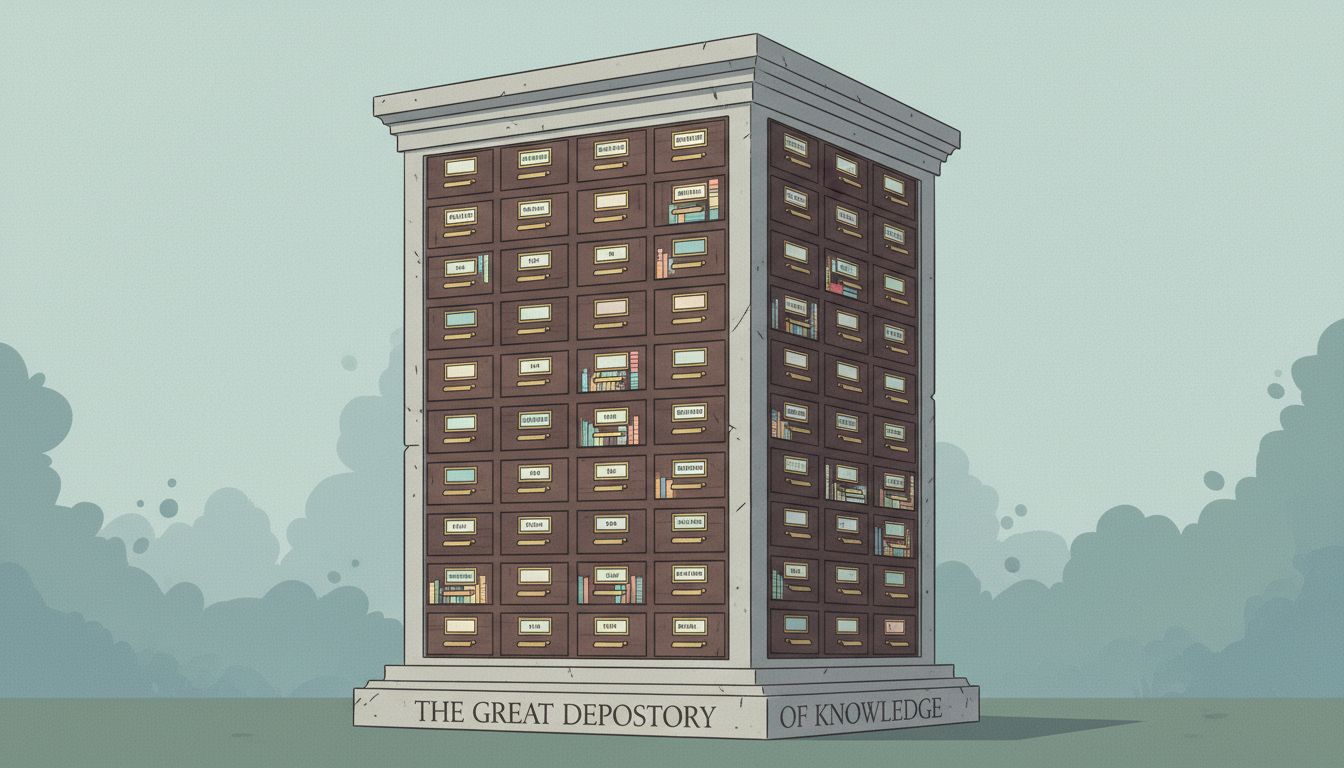
The second brain has become the productivity world’s favorite hobby. Notion databases with color-coded tags. Obsidian vaults with bidirectional links stretching across hundreds of files. Roam Research graphs that look like neural tissue. People spend weekends migrating their notes from one tool to another, refining their folder taxonomy, and watching YouTube tutorials on the PARA method. And somehow, the ideas they capture never quite make it into their actual work.
Here is the uncomfortable truth: most personal knowledge management systems are not thinking tools. They are anxiety-management tools dressed up as productivity systems. The act of capturing, tagging, and organizing a note feels productive, which is exactly why it substitutes so easily for the harder work of actually using what you’ve saved.
Capturing is not thinking
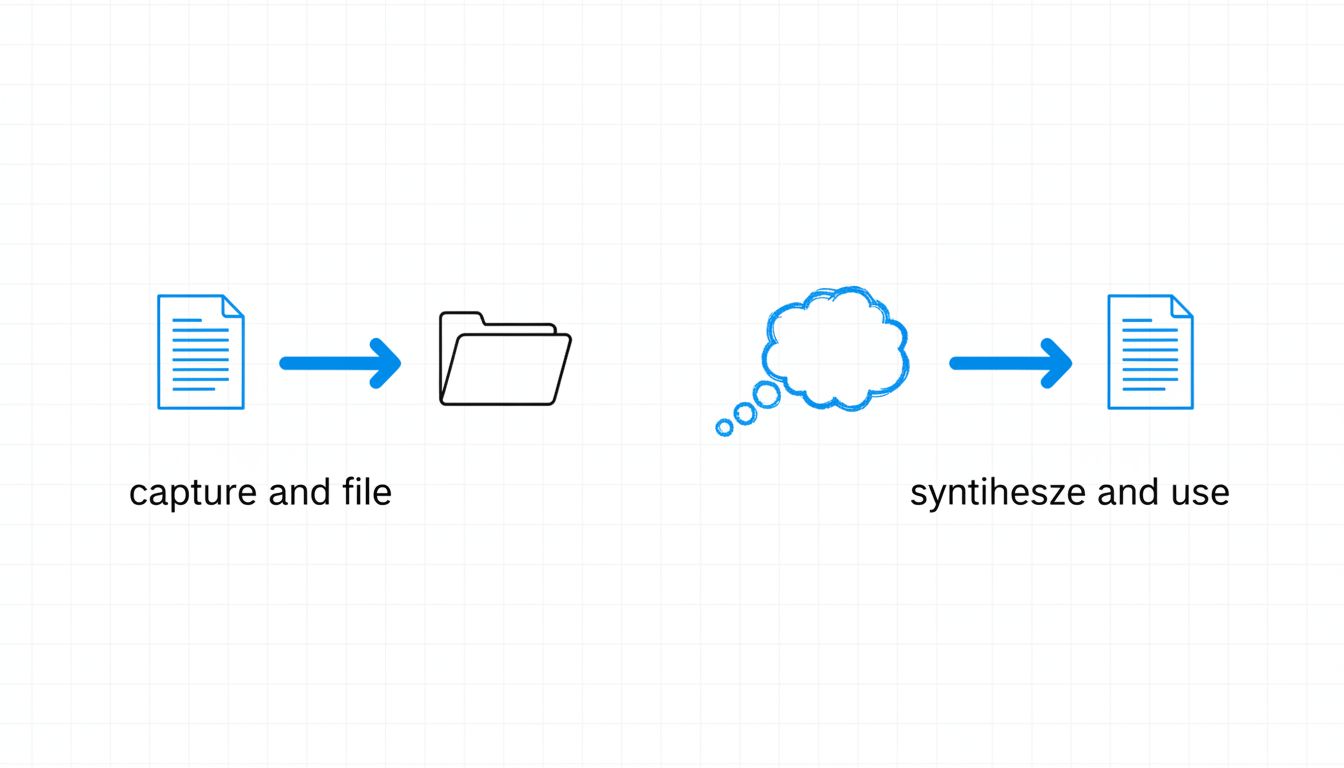
When you clip an article to Notion, highlight a passage in Readwise, or drop a link into your inbox, you have done the easiest possible thing with that idea. You have moved it from one place where you won’t engage with it to another place where you won’t engage with it, except now you feel better because it’s organized.
The cognitive work, the part that actually changes how you see a problem, happens when you struggle to explain an idea in your own words, connect it to something you already believe, or try to apply it and find out it doesn’t quite fit. None of that happens at capture time. None of that is encouraged by most note-taking workflows. You are rewarded for the filing, not the thinking.
Tiago Forte’s Building a Second Brain popularized the idea of an external system that offloads memory so your brain can focus on higher-order thinking. That premise is reasonable. The execution, as most people practice it, is not. The book’s own PARA framework (Projects, Areas, Resources, Archives) is sensible, but it gets applied by people who spend three hours reorganizing their Archives folder and zero hours pulling notes into an actual project deliverable.
The retrieval problem nobody talks about
A good system is not one that stores everything. It’s one that surfaces the right thing at the right moment. Most second brains fail at this completely.
Search helps, but only if you remember to search, and only if you remember what you’re looking for. The real problem is that you usually don’t know what you need until you’re in the middle of a problem. The note you took six months ago about decision-making under uncertainty is genuinely useful right now while you’re choosing a vendor, but nothing about your workflow surfaces it. It sits in your Resources folder, correctly tagged, completely inert.
This is why writing, not tagging, is the only reliable retrieval mechanism. When you write a short synthesis note, a few sentences connecting a new idea to an old one, you are doing the encoding work that makes retrieval possible later. Your brain doesn’t index tags. It indexes meaning, story, and surprise. Systems that skip synthesis and jump straight to archiving are building storage that their own users can’t effectively search.
The tool upgrade is a procrastination loop
There is a reliable cycle in productivity communities. A new tool appears. Early adopters build elaborate systems. They post screenshots. Others migrate. Within a year, the conversation shifts to which new tool handles backlinks or AI summarization better, and the migration begins again.
The problem this solves is never “I am not thinking clearly enough.” It is always “my current tool has a limitation that the new one fixes.” But the limitation is almost never the tool. The best productivity system is one you’d be slightly embarrassed to show someone because it’s so simple. The people doing the best thinking you know are probably using a text file, a paper notebook, or a lightweight app they’ve used for years without ever reconsidering it.
Upgrading your note-taking tool is the productivity equivalent of buying new running shoes instead of going for a run.
The counterargument
Fair pushback: some people genuinely use their systems well. Researchers, writers, and consultants who work across long time horizons do benefit from robust external storage. If you’re writing a book over three years, a well-organized vault of sources and ideas is genuinely useful. If you’re consulting across multiple client engagements simultaneously, structured notes are how you maintain context without burning memory.
The PARA framework, used faithfully, does prioritize project-linked notes over reference hoarding. And tools like Obsidian’s graph view, dismissed by skeptics as aesthetic rather than functional, do occasionally surface unexpected connections that spark real insight.
The argument here is not that note systems are useless. It’s that the way most people actually use them converts a potentially useful practice into a completeness fetish. You end up optimizing for a full, well-organized vault rather than for better output. The system becomes the point.
What actually works
Capture less. When you lower the capture threshold to “anything interesting,” you build a collection, not a knowledge base. Raise the bar: only save something if you can write one sentence right now about why it matters to a current project or question.
Write in your own words before you file. A two-sentence synthesis, written immediately after reading, is worth more than a perfectly tagged clip you’ll never revisit. The friction is the point. If it’s too hard to summarize, you probably don’t understand it well enough to use it yet.
Connect to projects, not topics. A note that lives in a topic folder (“psychology,” “strategy,” “design”) is a note without a job. A note that lives under an active project has somewhere to be. Reorganize around what you’re actually working on, not what you find interesting in the abstract.
Review by doing, not by reading. The only review habit that pays off is the one that happens at the moment of work: before writing a proposal, before a client meeting, before designing a feature. Scheduled weekly reviews of your entire vault are mostly theater.
Your second brain is only useful if it makes your first brain work better. Right now, for most people, it’s just giving the first brain permission to forget everything it captures. That’s not offloading cognitive work. That’s abandoning it.